End the carrier nightmare: getting your cat used to the carrier and to travel
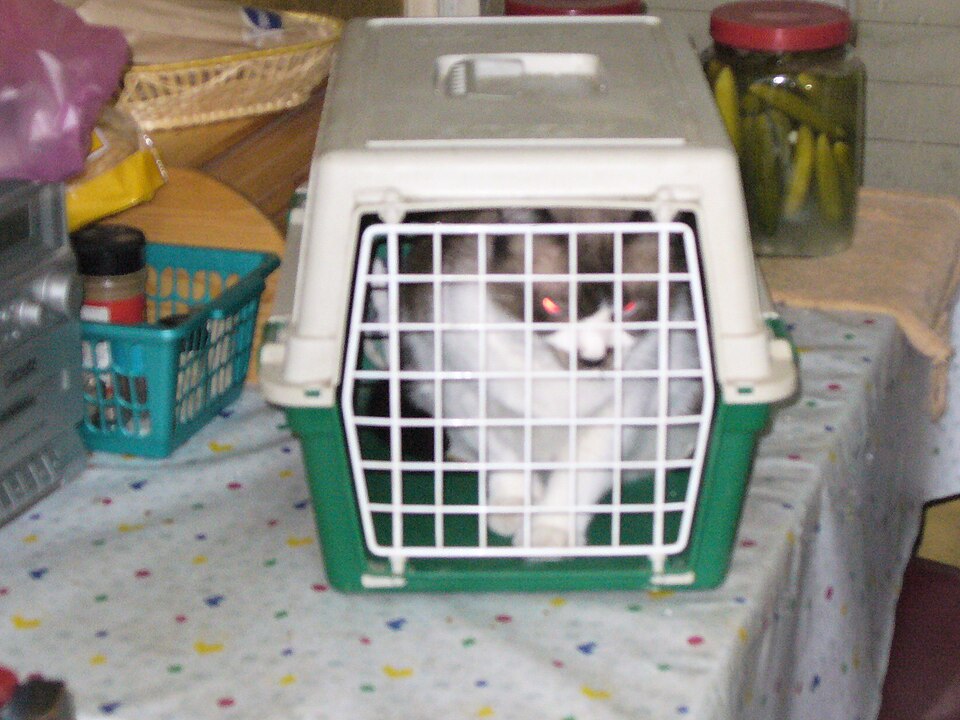
The moment you take the carrier out of the closet, your cat vanishes. You try to get it out from under the bed, it scratches, you sweat, and you're late for the vet appointment. This scene is familiar in most cat households. The reason is simple: to your cat, the carrier is a sign that only bad things are coming. The solution is simple too, but it takes patience: turn the carrier into an ordinary, even well-loved, object in your home.
- Choose a sturdy, easy-to-clean plastic carrier with a removable top; the vet can examine your cat inside the carrier.
- Leave the carrier open at home long before a trip; put a blanket with a familiar smell and some treats inside.
- In the car, secure the carrier; the footwell behind the front seat or the back seat with the seat belt fastened around it are good spots.
- Never leave your cat alone in the car; heatstroke can be fatal.
- Don't force your cat into the carrier, and don't open the carrier during the journey.
Choose the right carrier
According to International Cat Care, a good carrier should be secure (so your cat can't escape) and easy to clean. The most practical option is a sturdy plastic carrier: it's easy to wash and has a secure door and ventilation holes.
The most important feature: a carrier whose top half can be removed. That way, the vet can examine your cat in the bottom half of the carrier without pulling it out by force. For a frightened cat, this makes a big difference.
- Cardboard boxes and very light plastic boxes are only suitable for short trips.
- Choose for the weather: a carrier with good airflow for hot weather, and one that isn't drafty but is still ventilated for cold weather.
- If you have more than one cat, use a separate carrier for each; the airflow is better.
Make the carrier part of your home
International Cat Care's most important piece of advice is this: let your cat get used to the carrier long before a trip. Ideally, the carrier becomes one of your cat's resting places.
- Leave the carrier out. Don't put it away in the closet; keep it with the door open somewhere your cat often passes.
- Make it comfortable inside. Put in a soft blanket that carries your cat's scent.
- Pair it with good things. Leave treats or a toy inside. Some cat owners also try serving meals inside the carrier.
- Go step by step. Once your cat is used to going in and out of the carrier, close the door for a short while, then open it and give a treat. At each step, wait until your cat is relaxed before moving on to the next.
- Do short practice runs. Lift the carrier, carry it a few steps, put it down, open it. Then a little longer around the house.
Sprays containing synthetic cat pheromones can help some cats relax. If you use one, International Cat Care recommends spraying it 15–20 minutes before you put your cat in the carrier.
Swinging the carrier by its handle alone makes your cat feel unsteady. Carry the carrier supported from underneath, close to your chest.
Vet day
- If the carrier is already part of your home, your cat will use it on its own; you'll just need to close the door.
- Never force your cat into the carrier. Chasing a cat that runs away makes the next time harder.
- New sounds, sights and smells can frighten your cat. International Cat Care recommends covering the carrier with a blanket or towel on the way and at the clinic; your cat sees less of its surroundings and can stay calmer.
- On long trips, in case of accidents, put a plastic sheet under the carrier and bring a spare blanket and paper towels.
Traveling by car
According to International Cat Care, it's dangerous for a cat to roam free in the car. The carrier should be secured so it won't slide during sudden braking, and it should have good airflow.
- Where? The footwell behind the front seat, or the back seat with the seat belt fastened around the carrier.
- Where not? The trunk or the back of a hatchback; ventilation there is poor.
- If your cat meows: Talk to it in a calm, soothing voice; but don't take it out of the carrier.
According to International Cat Care, heatstroke can be fatal for cats. Parking in the shade and leaving the windows cracked is not enough. If you stop for a break in hot weather, eat outside with the carrier next to you, or keep all the doors open.
Long journeys
- Put an absorbent pad on the floor of the carrier, and bring a spare familiar blanket.
- If possible, offer water throughout the journey; bowls that attach to the carrier let you add water without opening the door.
- A litter box is only practical in a large crate; your cat probably won't use one during the trip anyway.
- Ask your vet when to feed your cat before the trip, and what can be done if your cat finds travel very hard.
When you arrive
When you get to a new place, take your cat into a single, safe room; put out water and a little food. Your cat may not eat until it gets used to its surroundings; that's normal. If you've moved, or if you've adopted an adult cat, International Cat Care recommends that the cat stay indoors for at least two to three weeks to get to know its new surroundings, and that its identification (such as a microchip) be kept up to date.
If you're traveling abroad from Turkey with a cat, you need a microchip, a pet passport and PETVET registration (PETVET is Turkey's national pet registration system); you also need to check the destination country's vaccination and testing rules separately. Details: PETVET registration and microchips.
Frequently asked questions
My cat hides when it sees the carrier. Can we start over?
Yes. Leave the carrier out with the door open for a few weeks without going anywhere; put a blanket and treats inside. As your cat learns that the carrier is no longer "a sign of bad things to come," it will start to come closer.
Can I carry my cat in my arms?
It's not recommended, even for short distances. A frightened cat can suddenly bolt and get lost in traffic or in an unfamiliar place. A secure carrier is always the better choice.
Can cats travel by plane?
Airline rules vary; according to International Cat Care, most airlines don't allow cats to travel in the cabin, and cats are usually carried in a temperature- and pressure-controlled hold. Plan the trip well ahead and ask the airline about its carrier rules.

Keep track of your pet's care in TüylümLog vet visits, vaccine and medication dates, and we'll remind you when it's time. Share it all with your family in Home.
Sources
- International Cat Care · Travelling with your cat
- International Cat Care · Visiting your vet (cat owner guide, PDF)
- International Cat Care · Helping your new cat or kitten settle in
By Tüylüm · Published and last checked: October 24, 2026. Spotted a mistake? Write to [email protected] and we'll fix it right away. Photos are from Wikimedia Commons, used under the license shown below each photo.