Rabbit grooming: brushing, molting and nail checks
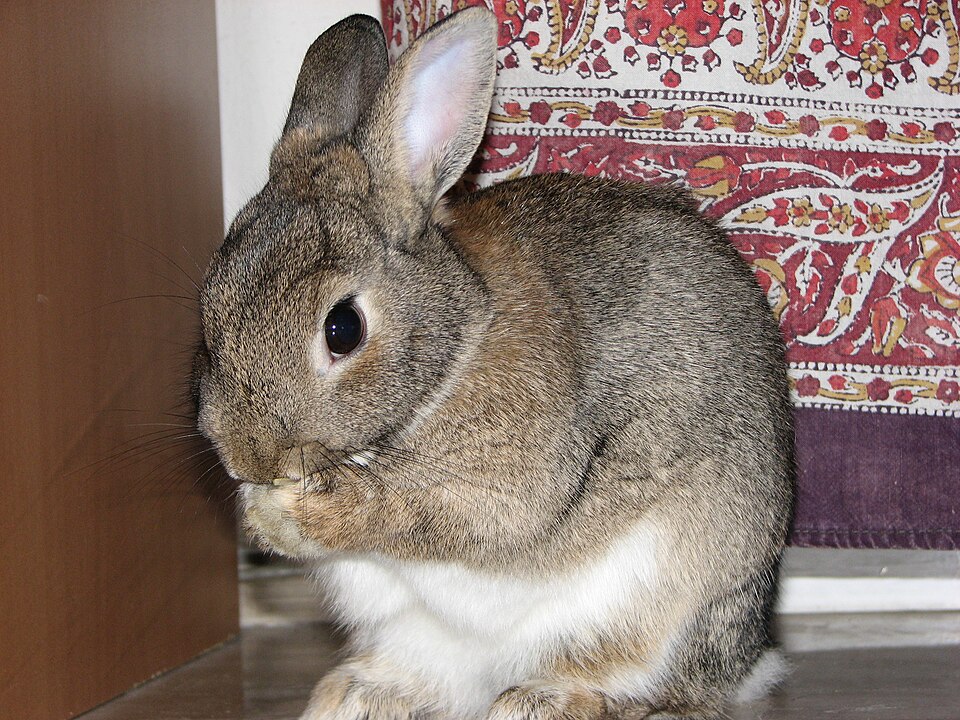
Rabbits are very clean animals. According to the Rabbit Welfare Association & Fund (RWAF), just like cats, they spend a lot of time grooming themselves; rabbits that live together groom each other too. So why brush them? According to the RWAF, rabbits swallow a lot of fur while grooming, and unlike cats, they can't vomit. That's why it's important to remove as much loose fur as possible by brushing. Brushing is also a great way to bond with your rabbit and look it over from head to tail.
- How often: The RWAF recommends brushing every day, ideally. According to RSPCA Australia, a weekly brush is usually enough for a short-haired rabbit except when it's molting; long-haired rabbits should be brushed every day.
- Molting: According to the RWAF, adult rabbits usually molt twice a year, in spring and fall. During this time, brushing more than once a day may be needed.
- Brushes: A rubber nubbed brush or mitt, a soft brush and a wide-toothed comb. Molting tools made for cats and dogs aren't suitable (RWAF).
- No baths: According to the RWAF, routine bathing is unnecessary and can be harmful.
- Nails: The RSPCA recommends checking nails at least once a week. According to the RWAF, nails should be level with the fur.
- Never on its back: According to the RWAF, turning a rabbit on its back to "trance" it is extremely cruel; the rabbit has actually frozen in fear.
Molting: when and how?
According to the RWAF, a young rabbit's baby coat is replaced by a transitional coat at about 5 months; then the adult coat comes in. From then on, rabbits usually molt twice a year, in spring and fall. But because pet rabbits live in very different conditions from wild rabbits, their molts can be more irregular; some, especially house rabbits, seem to molt almost constantly. According to the RWAF, rabbits living in centrally heated homes, especially those with heavy coats, can molt nonstop; the RWAF's advice here is to brush your rabbit and vacuum your home every day.
According to the RWAF, a molt usually starts at the head, spreads down the neck and back, then down the sides, and finishes on the rump. Some rabbits have no set pattern; fur comes out in patches all over. You may see a line across the coat showing where the molt has reached; the skin can look darker where new fur is growing through.
The RWAF's advice: get to know what's normal for your rabbit, so you can spot a problem early. According to the RWAF, a molt sometimes gets stuck; this usually happens on the flanks, just above the tail and on the belly. Pay special attention to these areas when brushing.
How to brush
- Start early: The RWAF recommends getting your rabbit used to being brushed ahead of time, so frequent brushing during a molt isn't stressful for it. RSPCA Australia also recommends using rewards and making brushing part of the daily routine as early as possible, starting with short sessions.
- Sit on the floor: According to the RWAF, sit on the floor with your rabbit. Rabbits are ground-dwelling animals and don't like being placed up high.
- Short and often: According to the RWAF, you may need to brush more than once a day during a molt. Splitting brushing into a few short sessions is less stressful than one long session.
- Down to the skin: The RWAF recommends parting the fur and brushing down to the skin. You need to remove not just the top layer but also the undercoat that's being shed; otherwise mats form inside the coat.
- Never on its back: According to the RWAF, some people hold a rabbit on its back so it stays still. This is extremely cruel; the rabbit is actually playing dead out of fear. On handling: how to hold a rabbit.
Which brush, which comb?
According to the RWAF, a rabbit's skin is much more delicate than a cat's or a dog's and tears easily. That's why choosing the right tool matters.
| Tool | When? | RWAF's note |
|---|---|---|
| Rubber nubbed brush or mitt | During a molt | Fairly gentle but removes loose fur well; still, use it carefully. |
| Soft brush | Everyday grooming | Many rabbits enjoy it; on its own it's not enough during a molt. |
| Wide-toothed comb, flea comb | Long fur, molting | Useful; use carefully to avoid injury. |
| Slicker brush with sharp ends | Not recommended | Often too harsh; easily scratches the skin. |
| Molting tools for cats and dogs | Not recommended | Not suitable for rabbits. |
Long-haired rabbits
According to the RSPCA, long-haired breeds need more frequent brushing to prevent matting. RSPCA Australia is even clearer: a long-haired rabbit's entire coat (including the armpits, groin, belly and feet) must be combed or clipped every day; combing takes 20 to 40 minutes a day. The fur on the hind feet is thicker and protects the feet; leave it alone. According to RSPCA Australia, soft brushes are useless on long-haired rabbits: the top looks lovely, but mats build up underneath.
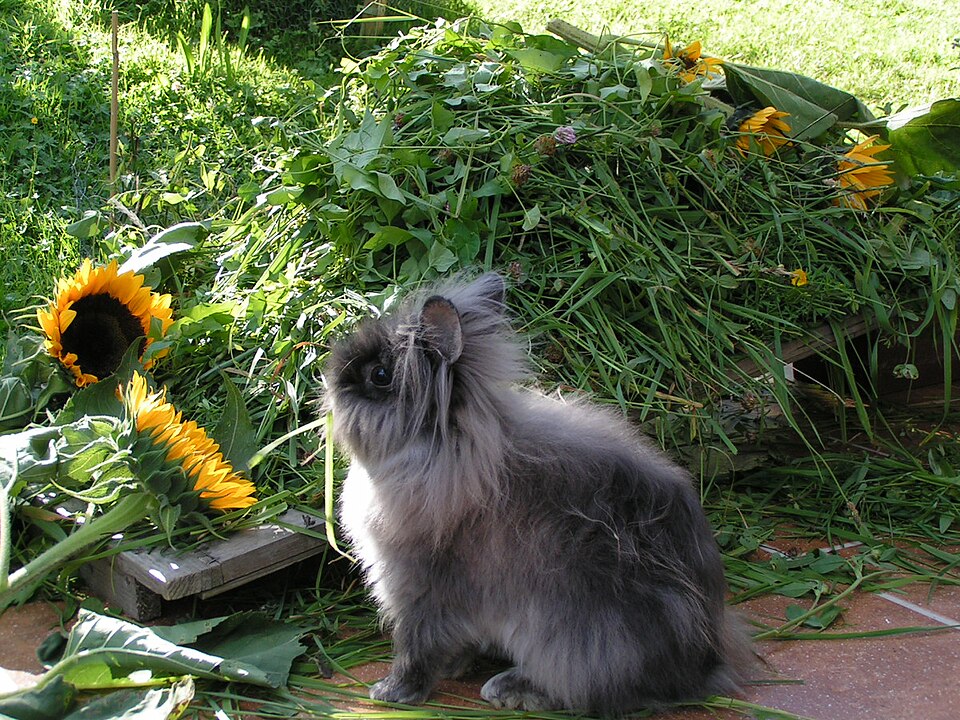
According to RSPCA Australia, if you don't think you'll have time to brush every day, a short-haired breed may be the better choice.
According to the RWAF, if a mat won't brush out, first try teasing it apart with your fingers, without ever tugging on the fur. If you haven't been shown how and aren't confident, don't try to cut the mat out with scissors; rabbit skin tears and cuts very easily. Take your rabbit to your vet for mats you can't untangle; they can clip the fur with a suitable clipper.
No baths
According to the RWAF, routinely bathing a rabbit is completely unnecessary and can be very harmful to it. Frequent washing, with or without shampoo, strips away the natural oils that keep the coat healthy. Rabbits panic in water; while thrashing around, they can break their spine or a leg. Wet fur clumps together and is very hard to dry; a rabbit left damp can get chilled and become ill. According to the RWAF, there's no need to bathe a rabbit even during a molt; what it needs is frequent brushing. The RWAF also strongly advises against ever dyeing a rabbit's fur.
According to the RWAF, rabbits whose rear end often gets dirty usually have an underlying health problem. If your rabbit's rear end is dirty, don't try to bathe it; talk to your vet without delay. For summer checks: rabbits in hot weather.
Brushing is also a check-up
According to the RWAF, brushing isn't only about removing loose fur; it's also a chance to look your rabbit over from head to tail:
- Eyes: Are they clean and bright?
- Ears: Are they clean, with no discharge or bad smell?
- Feet: Any injuries or scrapes?
- Rear end: Is it clean?
- Body: Not too fat, not too thin; any lumps or bumps?
According to the RWAF, constant access to hay or grass is even more important than usual during a molt; also make a habit of checking the droppings every day.
If you notice lumps, bumps, injuries or discharge from the eyes, ears or nose while brushing, if you see flaky or crusty skin, or if your rabbit's droppings become smaller, drier or fewer, talk to your vet without delay.
Checking nails
According to the RWAF, rabbits have five toes on their front feet and four on their back feet, and their nails are made for digging. Wild rabbits' nails wear down as they dig and hop over hard surfaces; pet rabbits often have nothing to wear their nails down. So their nails may need regular trimming. According to the RWAF, overgrown nails change the angle at which a rabbit puts its feet down and strain its joints; they can also catch on something and tear.
- Look once a week: The RSPCA recommends checking the front teeth and nails at least once a week; both grow quickly.
- The guide: According to the RWAF, nails should be level with the fur. Rex rabbits, whose fur is very short, are the exception.
- Learn first: According to the RWAF, there's a vein and a nerve inside each nail; if it's cut, the rabbit feels pain and bleeds a lot. If you're not confident, ask your vet or vet nurse to trim them; they can also show you how it's done.
- The right tool: According to the RWAF, ordinary scissors or human nail clippers can split the nails and hurt your rabbit. The RWAF recommends scissor-type pet nail clippers.
- Not on its back: The RWAF reminds owners never to turn a rabbit on its back to trim its nails, either.
In Tüylüm, you can add the Brushing task to the Today tab to keep up the brushing habit. With Weight tracking, you can also easily see changes in your rabbit's weight.
Frequently asked questions
How often should I brush my rabbit?
The RWAF recommends brushing every day, ideally. According to RSPCA Australia, a weekly brush is usually enough for a short-haired rabbit outside of molting; long-haired rabbits should be brushed every day. During a molt, more than one short session a day may be needed.
My rabbit is shedding a lot. Is that normal?
According to the RWAF, rabbits usually molt twice a year; rabbits living in centrally heated homes may molt almost constantly. Get to know what's normal for your rabbit. If you see flaky or crusty skin, talk to your vet.
Can I trim my rabbit's nails myself?
According to the RWAF, it's usually not hard once you've had clear instruction; but because there's a vein and a nerve inside the nail, first ask your vet or vet nurse to show you how. Don't use human nail clippers, and never turn your rabbit on its back.

Keep track of your pet's care in TüylümLog vet visits, vaccine and medication dates, and we'll remind you when it's time. Share it all with your family in Home.
Sources
- Rabbit Welfare Association & Fund · Grooming Rabbits
- Rabbit Welfare Association & Fund · Moulting
- Rabbit Welfare Association & Fund · Rabbit Nails
- Rabbit Welfare Association & Fund · Bathing Rabbits
- RSPCA · How to keep your rabbit healthy
- RSPCA Australia · How do I groom my rabbits?
By Tüylüm · Published and last checked: October 26, 2026. Spotted a mistake? Write to [email protected] and we'll fix it right away. Photos are from Wikimedia Commons, used under the license shown below each photo.