Rabbits in hot weather: preventing heatstroke and summer checks
Imagine wearing a thick fur coat that you can never take off, even in the July heat. That's a bit like summer for a rabbit. According to the PDSA, rabbits have dense fur, they don't sweat and they can't cool down by panting. They lose body heat mostly through their skin and ears. That makes them very vulnerable to heatstroke.
- Ideal temperature: According to the RSPCA, the ideal range for rabbits is 10–20 °C (50–68 °F); the PDSA recommends that their living space ideally be 18–20 °C (64–68 °F).
- Shade: Your rabbit's area should be in the shade during the hottest hours of the day. Shade moves during the day, so check again in the afternoon.
- Ice bottle: Freeze a bottle of water, wrap it in a towel and put it where your rabbit can lean against it.
- A fan alone isn't enough: According to the RWAF, it just moves hot air around; put a frozen bottle in front of it.
- Emergency: If you suspect heatstroke, move your rabbit somewhere cool and shady and call your vet right away.
Why are they so sensitive?
According to the PDSA, any rabbit can get heatstroke, but the risk is higher for some: rabbits that are pregnant, overweight, flat-faced, very young or very old, or unwell, and rabbits prone to stress. According to the PDSA, most cases happen when a rabbit is shut in a hot place where it can't cool down: a greenhouse, a hutch or a hot room.
The RSPCA reminds owners never to keep rabbits in glass structures such as greenhouses or conservatories; these places heat up very quickly. The PDSA also stresses that on a hot day a rabbit should never be left in a car, not even for a short time or in the shade.
Keeping cool indoors
Rabbits that live indoors are affected by the heat too. Here's what the RWAF and the RSPCA recommend:
- Close the curtains: The RWAF recommends keeping curtains or blinds and windows closed during the hottest hours of the day and opening them in the cooler evening.
- A breeze: According to the RSPCA, opening a window to let a breeze through helps keep indoor pets cool.
- Fan and ice bottle: According to the RWAF, a fan on its own just moves hot air around and doesn't cool your rabbit. Point the fan at a frozen bottle, and keep its cable out of your rabbit's reach.
- Cool floor: According to the RWAF, marble is the surface that stays coolest; grass works too.
- Direct sun: According to the RSPCA, your rabbit's area shouldn't get direct sunlight; keep it away from sunny windows.
In the garden and on the balcony
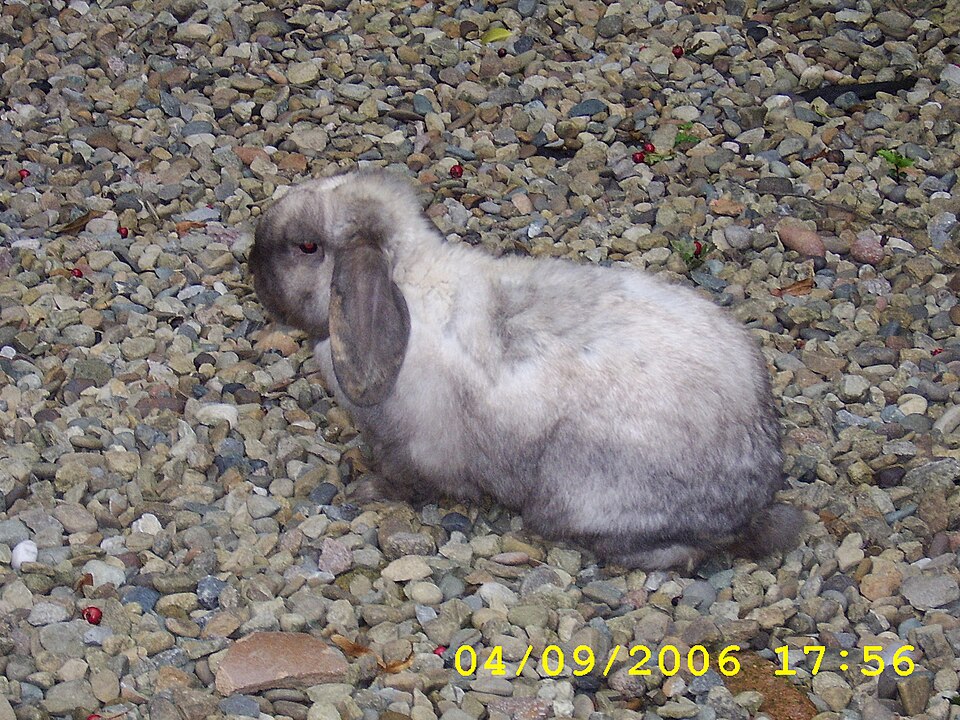
- Shade: Your rabbit's area should be in the shade during the hottest hours of the day. The RWAF says you can use an umbrella or a reflective cover; the PDSA recommends shade made from natural materials such as branches, leaves or wood, because plastic can trap heat.
- Ventilation: According to the PDSA, the living space and run need to be well ventilated.
- Ice bottle: According to the RSPCA, freeze a half-full plastic bottle, wrap it in a towel and put it where your rabbit can lean against it; in case it leaks, put it in the run, not inside the shelter. The RWAF recommends swapping melted bottles for fresh ones.
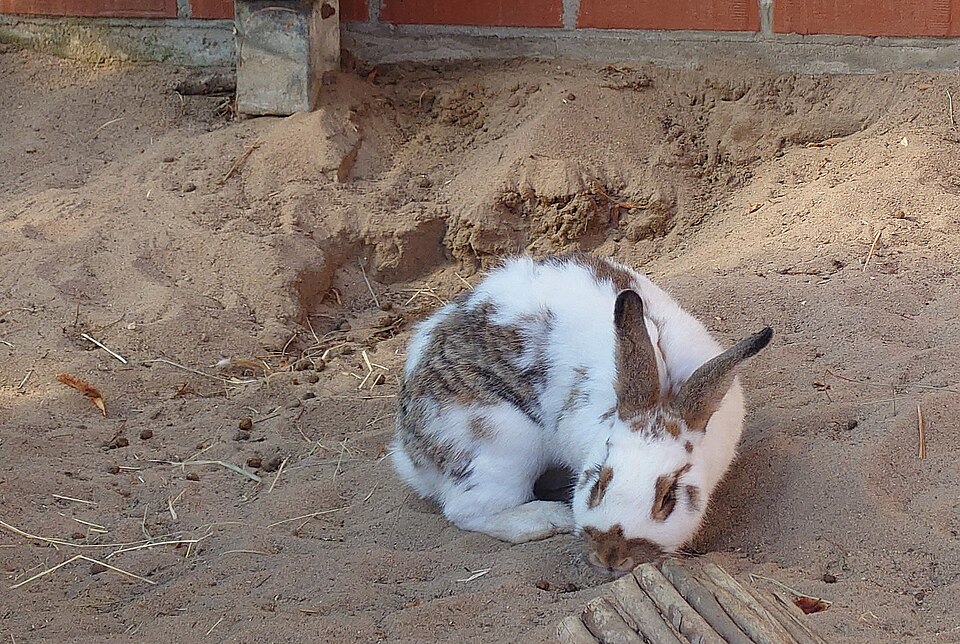
- Digging: According to the RWAF, you can let rabbits dig, as long as they can't escape.
Water: always, plenty and cool
According to the RSPCA, animals drink more water in hot weather, so put out extra water. The RWAF recommends fresh, cool water at all times in a heavy ceramic bowl, and the PDSA wants the water kept somewhere out of direct sunlight.
Summer checks: fur and the rear end
Summer isn't just about heat. According to the PDSA, flies are at their most active in summer, and flystrike (myiasis), which happens when flies lay eggs in a rabbit's fur, is a painful and life-threatening condition. Rabbits with a dirty or wet rear end are especially at risk.
- Check every day: The PDSA recommends making sure every day that your rabbit is clean and dry and that there are no eggs or maggots in its fur; look especially at its rear end. The RSPCA recommends checking twice a day in summer.
- Cleaning: According to the PDSA, soiled bedding, wet bedding and droppings should be cleaned out at least once a day.
- Grooming: The RSPCA recommends regular grooming to remove dead fur; the PDSA wants long-haired rabbits groomed regularly.
- Fly protection: Ask your vet which product is suitable and how often to use it.
According to the PDSA, if you see even a single maggot on your rabbit, it's an emergency: call your vet right away and go without waiting. Don't try to clean the maggots off at home, and don't dip your rabbit in water; according to the PDSA, both can cause pain and shock. If possible, take its bonded companion with you.
Signs of heatstroke
Some of the signs listed by the RWAF and the PDSA:
| Sign | Source |
|---|---|
| Fast, shallow or open-mouthed breathing | RWAF, PDSA |
| Red, hot ears | PDSA |
| Lethargy, weakness or confusion | RWAF, PDSA |
| Wetness or drooling around the nose or mouth | RWAF |
| Stumbling, trembling | PDSA |
| Lying stretched out and not responding, collapse | RWAF, PDSA |
If you suspect heatstroke, immediately move your rabbit somewhere cool and shady and call a vet who is experienced with rabbits without waiting. According to the RWAF, heatstroke can be fatal very quickly. Your vet will tell you over the phone what you can do before you set off. For the journey, take your rabbit in a well-ventilated carrier, in a car with air conditioning or with the windows open.
In summer, you can add the daily fur and rear-end check as a daily task in Tüylüm's Today tab. Everyone in your Home sees the same list, so the check doesn't get forgotten.
Frequently asked questions
Can I give my rabbit ice?
The method our sources recommend is to wrap a frozen water bottle in a towel and put it where your rabbit can lean against it. Always wrap the bottle so your rabbit doesn't touch the ice directly.
Can I cool my rabbit down by bathing it?
Don't dip your rabbit in water. According to the RWAF, some rabbits will tolerate a water mist; if so, spray behind the ears so that water doesn't get inside them. If you suspect heatstroke, call your vet right away.
We have air conditioning at home. Do I still need to be careful?
Yes. Check the room temperature, drafts and whether your rabbit's area gets direct sunlight. According to the RSPCA, the ideal range for rabbits is 10–20 °C (50–68 °F), and the area should be away from drafts.

Keep track of your pet's care in TüylümLog vet visits, vaccine and medication dates, and we'll remind you when it's time. Share it all with your family in Home.
Sources
- PDSA · Heatstroke in rabbits
- Rabbit Welfare Association & Fund · Hot weather care
- RSPCA · Keeping rabbits and rodents cool in summer
- PDSA · Flystrike in rabbits
- RSPCA · Keeping rabbits in your home
By Tüylüm · Published and last checked: October 24, 2026. Spotted a mistake? Write to [email protected] and we'll fix it right away. Photos are from Wikimedia Commons, used under the license shown below each photo.