Litter training a rabbit: where does the box go, and what goes in it?
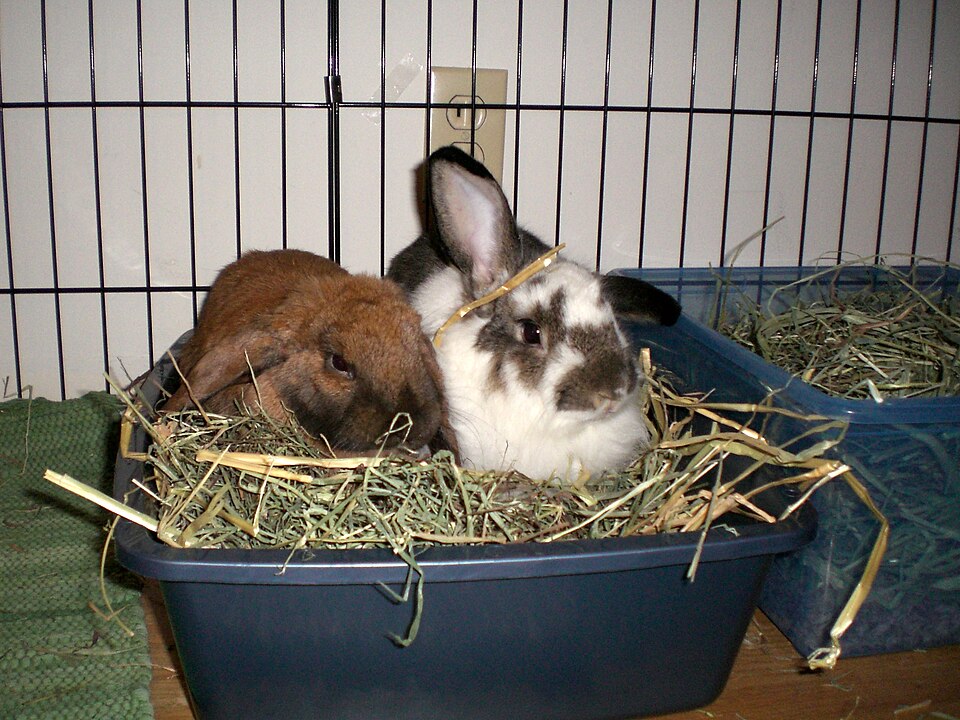
If you think a rabbit will leave droppings everywhere, we have good news for you. According to the RSPCA, wild rabbits create specific toilet areas for urine and droppings, and use them to mark their territory and communicate with each other. A pet rabbit also usually picks one or a few corners as its toilet. According to RSPCA Australia, most rabbits take to a litter box quite easily; there may be the occasional accident, and that's about it.
- Number: According to the RSPCA, the ideal is one box per rabbit, plus one extra.
- Location: The corner your rabbit chooses itself; away from the sleeping area and reachable at all times.
- Litter: According to the RSPCA, newspaper, hay or straw, shredded paper, or paper-based, non-clumping, non-expanding cat litter.
- Never: According to the RWAF, clumping cat litter and sawdust.
- Hay nearby: According to the PDSA, rabbits like to go to the toilet while they eat; put a hay rack next to the box.
- Cleaning: According to the RSPCA, clean the toilet area every day and the whole living space once a week.
First, choose the box
According to RSPCA Australia, cat litter boxes work well for rabbits too. The RSPCA recommends one box per rabbit, plus one extra. RSPCA Australia says one large box may be enough for two rabbits, but more boxes are needed if you have more rabbits or if one of them is reluctant to use the box.
Where should the box go? The rabbit largely makes that decision. According to the RSPCA, rabbits need to reach their toilets at any time, and the toilet area should be away from the sleeping area. Once a rabbit is used to one spot, it won't want to use another.
Litter training, step by step
According to the RSPCA, litter training should happen in the rabbit's usual living space. If your rabbit has just come home, the RSPCA recommends leaving it in its own space for at least 48 hours at first; this time helps it get used to new sounds and smells, learn where its boxes are and settle into litter training.
- Watch the corner: According to RSPCA Australia, see which corner your rabbit picks for the toilet and put the box right there. The PDSA also recommends starting by putting the box in your rabbit's favorite toilet spot.
- Add its scent: According to the RSPCA, putting a little used litter and a few droppings in the box encourages the rabbit to use it.
- Put hay next to it: According to the PDSA, rabbits like to "chew and poo." Putting a hay rack next to the box, or spreading a layer of feeding hay over the box, can make the rabbit more likely to use it. The RSPCA also suggests hanging a hay rack over the box, so the rabbit can eat while it's in the box.
- Reward it: The PDSA suggests turning litter training into a fun exercise: every time your rabbit hops into the box and uses it, give it a small treat.
- Move the box slowly: If you want the box in a slightly different place, RSPCA Australia recommends moving it 2–6 cm (about 1–2 inches) each day.
- Expand the space slowly: According to RSPCA Australia, once your rabbit is using the box consistently, you can gradually open up more of your home to it.
What goes in the box?
Choosing the litter matters. According to RSPCA Australia, rabbits spend long periods sitting and resting in their litter box, and may even eat the litter while they're there. That's why many litters made for cats aren't safe for rabbits.
| Suitable | Not suitable |
|---|---|
| Newspaper or shredded paper (RSPCA) | Clumping cat litter (RWAF, RSPCA Australia) |
| Hay or straw (RSPCA) | Sawdust (RWAF) |
| Paper-based, non-clumping, non-expanding cat litter (RSPCA) | Pine, cedar and other softwood shavings (RSPCA Australia) |
| Paper pellets (RWAF) | Clay litter with deodorizing crystals (RSPCA Australia) |
According to the RWAF, if a rabbit swallows clumping clay litter, it can clump in the gut and cause serious problems. Newspaper is easy to find but covered in ink; the RWAF recommends making sure your rabbit doesn't eat it and covering it with a layer of straw.
According to RSPCA Australia, once you find the litter your rabbit likes, stick with it; changing the litter suddenly can make your rabbit stop using the box.
Cleaning: how often?
According to the RSPCA, toilet areas should be cleaned every day, and the rabbit's whole living space thoroughly cleaned once a week. The more rabbits you have, the more often you'll need to clean.
RSPCA Australia explains why: rabbits don't bury their droppings the way cats do. The droppings stay on top of the litter, while urine trickles down to the bottom. So even if the top of the box looks clean, ammonia from the urine building up underneath can irritate your rabbit's eyes and airways.
- Don't just scoop the droppings: According to RSPCA Australia, removing only the droppings lets urine build up. Depending on how many rabbits use the box, empty it completely every 1–2 days, rinse it and refill it with clean litter.
- Non-toxic cleaner: The RSPCA recommends using only non-toxic cleaning products and letting the space dry before your rabbit goes back in.
- A familiar smell: According to the RSPCA, putting a little used bedding back after cleaning lets your rabbit come back to a familiar scent.
If it goes outside the box
First, know this: according to the RSPCA, rabbits may also leave a few scattered droppings around their space to mark their territory. That's a natural marking behavior. But if your rabbit's toilet habits were regular and have changed, look for the reason.
- Was it startled? According to RSPCA Australia, a rabbit frightened by a sudden noise may drop pellets as it runs away. Ask everyone at home to avoid sudden, loud noises.
- Has something changed at home? A new baby, a new pet or a disrupted routine can stress a rabbit. RSPCA Australia suggests keeping your rabbit in its own room, where its box is, for a while.
- Has the litter changed? A sudden change of litter can also make a rabbit stop using the box.
- Has it picked a new corner? According to RSPCA Australia, the easiest fix is to put a second box there; if that's not possible, block its access to that corner.
- Is it unneutered? According to RSPCA Australia, unneutered male rabbits may mark their territory by peeing and pooping in many places. Talk to your vet about neutering.
According to RSPCA Australia, extra weight, joint or back pain and some health problems can make it harder for a rabbit to get into the box. The RSPCA warns that if a rabbit doesn't go to the toilet for a while, it can be an emergency. If your rabbit's toilet habits have changed suddenly, if it has trouble getting into the box or if it's producing fewer droppings, talk to your vet without delay.
In Tüylüm, you can add the Toilet / litter cleaning task to the Today tab to keep track of daily cleaning. Food & litter supplies also calculates when your hay and litter will run out and reminds you before they do.
Frequently asked questions
My rabbit lies in its litter box. Is that normal?
Yes. According to RSPCA Australia, rabbits may sit and rest in their litter box for long periods, and even eat the litter. That's why you should never use unsafe litters such as clumping cat litter.
Can I use cat litter?
Only paper-based, non-clumping, non-expanding cat litter. According to the RWAF, clumping clay litter can clump in the gut if swallowed; RSPCA Australia also considers clay litter with deodorizing crystals unsafe.
Is it enough to scoop out the droppings every day?
According to RSPCA Australia, no: urine builds up at the bottom of the box, and the ammonia can irritate your rabbit's eyes and airways. Empty the box completely every 1–2 days depending on how many rabbits use it; the RSPCA also recommends cleaning toilet areas every day.

Keep track of your pet's care in TüylümLog vet visits, vaccine and medication dates, and we'll remind you when it's time. Share it all with your family in Home.
Sources
- RSPCA · Keeping rabbits in your home
- RSPCA · Creating the right home for your rabbit
- RSPCA Australia · How do I litter train my rabbit?
- PDSA · Creating the ideal home for your rabbits
- PDSA · Preventing boredom in rabbits
- Rabbit Welfare Association & Fund · Bedding and Litter
By Tüylüm · Published and last checked: October 26, 2026. Spotted a mistake? Write to [email protected] and we'll fix it right away. Photos are from Wikimedia Commons, used under the license shown below each photo.