What do rabbits eat? Why hay matters so much, and the right proportions
Cartoon rabbits munch on carrots. But the foundation of a real rabbit's diet is hay. This isn't just a matter of preference: a rabbit's teeth keep growing throughout its life, and what wears them down properly is hay, chewed with a side-to-side motion for hours. A rabbit fed the wrong diet can develop painful spurs on its teeth that make eating impossible.
- 85 percent hay or grass: According to the Rabbit Welfare Association & Fund (RWAF), unlimited good-quality hay is the foundation of a healthy diet. There's no such thing as too much hay.
- 10 percent leafy greens: Such as arugula, lettuce (not iceberg), watercress, parsley, dill and mint.
- 5 percent pellets: Pellets or nuggets are a supplement; they don't replace hay.
- Avoid muesli-style mixes: Rabbits pick out the bits they like and leave the rest.
- Make changes slowly: According to the RSPCA, any change in diet should be made gradually over 14–28 days.
Why is hay so important?
According to the RWAF, hay has two vital jobs:
1. It wears down the teeth
A rabbit's teeth never stop growing. Hay is eaten with a side-to-side chewing motion, and that motion is exactly what wears the teeth down. According to the RWAF, rabbits that don't eat enough hay can develop painful spurs on their teeth, and these spurs can stop a rabbit from eating. The RWAF stresses that, left untreated, this is why many pet rabbits starve to death.
2. It keeps digestion moving
Long-fiber hay keeps a rabbit's gut working constantly. According to the RWAF, rabbits graze all day in the wild, and at home they need to be able to reach unlimited hay at all times. Good hay is high in fiber (at least 20 percent), moderate in protein and low in fat, starch and sugar.
According to the RWAF, good hay is dry and sweet-smelling, with no dust, mold or stones in it. Fresh grass is the best option, but hay is a strong alternative because it's available all year round. Alfalfa (lucerne) hay is richer; the RWAF recommends giving it only as a treat.
The right proportions
| Food | Share recommended by the RWAF |
|---|---|
| Hay or grass | About 85%, unlimited |
| Leafy greens | About 10% |
| Pellets (nuggets) | About 5% |
According to the RWAF, pellets should be thought of as a dietary supplement; they don't replace hay. Talk to your vet about how many pellets to give, based on your rabbit's weight and condition.
Safe greens
Greens recommended by the RWAF:
- Leafy greens (should make up most of it): Arugula, romaine lettuce, lamb's lettuce, watercress, beet greens, carrot tops, radish tops, dandelion leaves.
- Cabbage family (in moderation): Kale, broccoli, cauliflower, spring greens, Chinese cabbage, cabbage, Brussels sprouts. The RWAF says these are safe for healthy rabbits in moderate amounts.
- Herbs: Basil, cilantro, dill, mint, parsley, thyme. Parsley is safe but higher in calcium than many herbs; the RWAF recommends rotating it.
- Occasionally: Spinach is safe but rich in oxalates; the RWAF recommends giving it only occasionally.
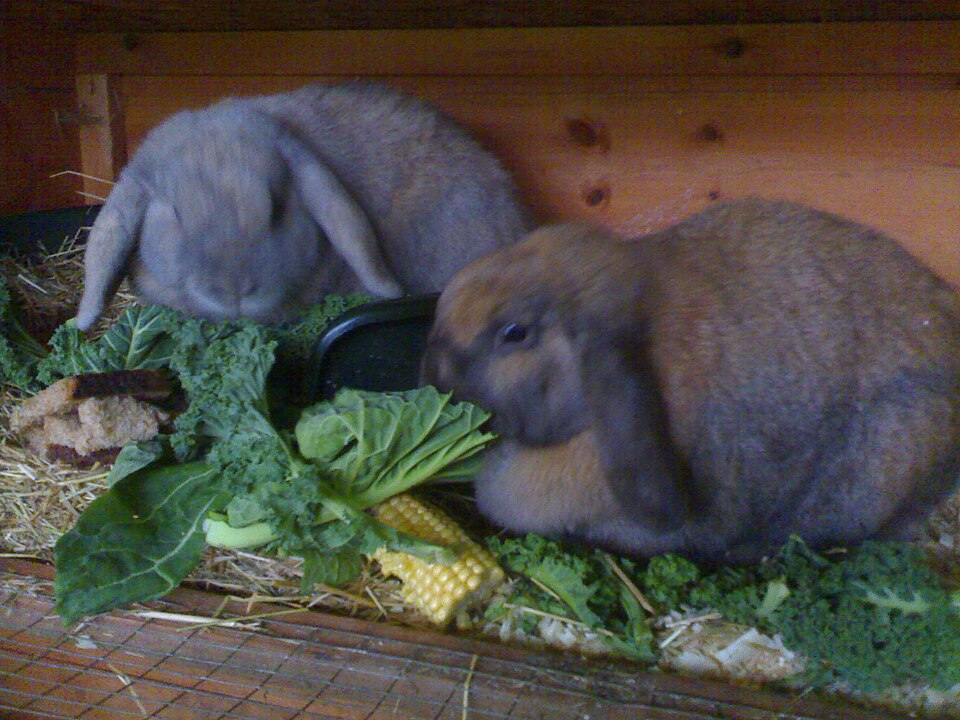
According to the RWAF, potatoes and potato leaves, tomato leaves and stems, eggplant, chili peppers and plants from the onion family aren't suitable for rabbits and can be harmful. Iceberg lettuce isn't recommended because it has very little nutritional value. The ASPCA also notes that avocado can cause heart damage and death in rabbits.
What about carrots and fruit?
The RSPCA is very clear: carrots aren't a rabbit's main food, and they shouldn't be. Carrots, fruit and root vegetables are high in sugar; according to the RSPCA, giving them often can lead to weight gain and digestive problems, so they should only be occasional treats. Carrot tops are a good alternative to carrots. Be careful with apples: according to the RSPCA, apple seeds are poisonous.
Why aren't muesli-style foods recommended?
The RWAF, the RSPCA and the PDSA recommend avoiding muesli-style foods, which are mixes of grains, pellets and dried pieces. The RWAF's biggest concern is selective feeding: a rabbit can pick out the tastiest pieces and leave the rest, so it doesn't get a balanced diet. Good-quality, uniform pellets should be chosen instead.
Changing the diet
A rabbit's digestive system is sensitive to sudden changes. The RSPCA recommends changing food gradually over 14–28 days, reducing the old food while increasing the new one. Introduce new greens one at a time and in small amounts, too.
According to the RSPCA, if your rabbit isn't eating enough, you should take it to a vet right away. If its droppings have become soft, or their amount and texture don't return to normal within 24 hours, talk to your vet as well.
Water
According to the RSPCA, rabbits need access to clean, fresh water throughout the day; a rabbit left without water can become seriously ill. Change the water twice a day and clean the bowl every day.
Frequently asked questions
How much hay should I give my rabbit?
According to the RWAF, there's no limit on hay: rabbits need to be able to reach unlimited hay at all times. Hay should make up about 85 percent of the diet.
Can rabbits live on vegetables alone?
The RWAF doesn't think so: on a diet based only on greens, it's very difficult or impossible for a rabbit to get the indigestible fiber it needs. Hay always comes first.
Is the colorful rabbit food sold in pet stores any good?
Muesli-style mixes aren't recommended by the RWAF, the RSPCA or the PDSA; a rabbit can pick out the pieces it likes and leave the rest. Good-quality uniform pellets and plenty of hay are a better choice.

Keep track of your pet's care in TüylümLog vet visits, vaccine and medication dates, and we'll remind you when it's time. Share it all with your family in Home.
Sources
- Rabbit Welfare Association & Fund · What to feed pet rabbits
- Rabbit Welfare Association & Fund · Safe vegetables and herbs for pet rabbits
- Rabbit Welfare Association & Fund · Feeding muesli-style rabbit food
- RSPCA · What do rabbits eat?
- ASPCA · People foods to avoid feeding your pets
- PDSA · Feeding your rabbits
By Tüylüm · Published and last checked: October 24, 2026. Spotted a mistake? Write to [email protected] and we'll fix it right away. Photos are from Wikimedia Commons, used under the license shown below each photo.