Rabbit-proofing your home: cables, plants and slippery floors
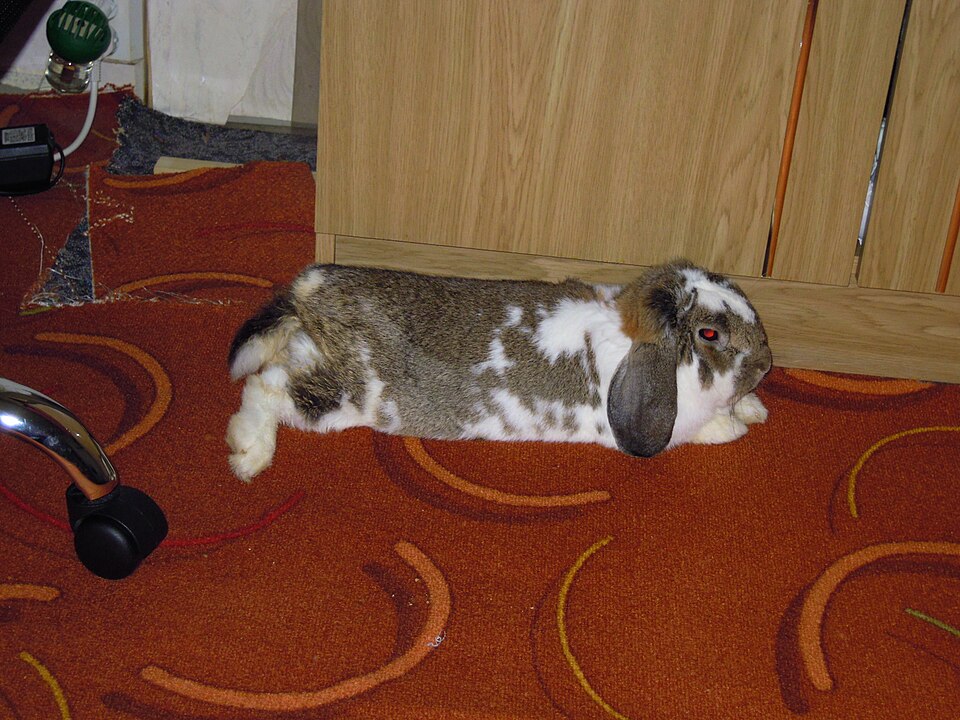
A rabbit roaming freely around the house brings a whole new kind of joy to your home: it races down the hallway, twists in midair and comes over to touch you with its nose. But that same rabbit can chew through a phone charger cable in a few seconds. Rabbits love to chew and dig; these are natural behaviors for them. That's why, before you open your home to a rabbit, you need to look at it through its eyes.
- Cables: According to the RSPCA, electrical cables and wires should be covered or moved out of reach.
- Plants: Houseplants should be non-toxic or placed up high. The RWAF recommends treating all houseplants as poisonous.
- Floors: Slippery laminate, wooden floors and tiles need to be covered, or those areas closed off.
- Dangerous areas: Spots like the area around the oven should be blocked off.
- Supervision: Always stay with your rabbit when it's outside its safe area.
Get down on the floor first
A rabbit sees the world from just a couple of hand spans off the ground. When you're preparing a room, crouch down and look around: cables hanging from behind the sofa, a charger under the coffee table, a flowerpot by the window, a leaf that has fallen on the floor. The RSPCA recommends making every area your rabbit can reach rabbit-friendly.
Cables: danger number one
According to the RSPCA, rabbits love to chew, so electrical cables and wires should be covered or put somewhere out of reach.
- Cable protectors: Run cables through hard plastic cable channels or protective tubing.
- Lift them up: Route cables behind furniture, off the floor.
- Block them off: Put a barrier in front of corners with outlets and bundles of cables.
- Don't forget hidden cables: Check the cables under the bed, behind the wardrobe or along the edge of the rug.
If you find a chewed cable, unplug the device first, then replace the cable. If you think your rabbit may have bitten into the cable, call your vet without waiting.
Plants: up high or not at all
According to the RSPCA, houseplants should be non-toxic or placed up high, and you should make sure fallen leaves and flowers don't land where your rabbit can reach them. The Rabbit Welfare Association & Fund (RWAF) is even more cautious: treat all houseplants as poisonous, keep them at a height your rabbit can't reach, and don't put them in rooms your rabbit goes into.
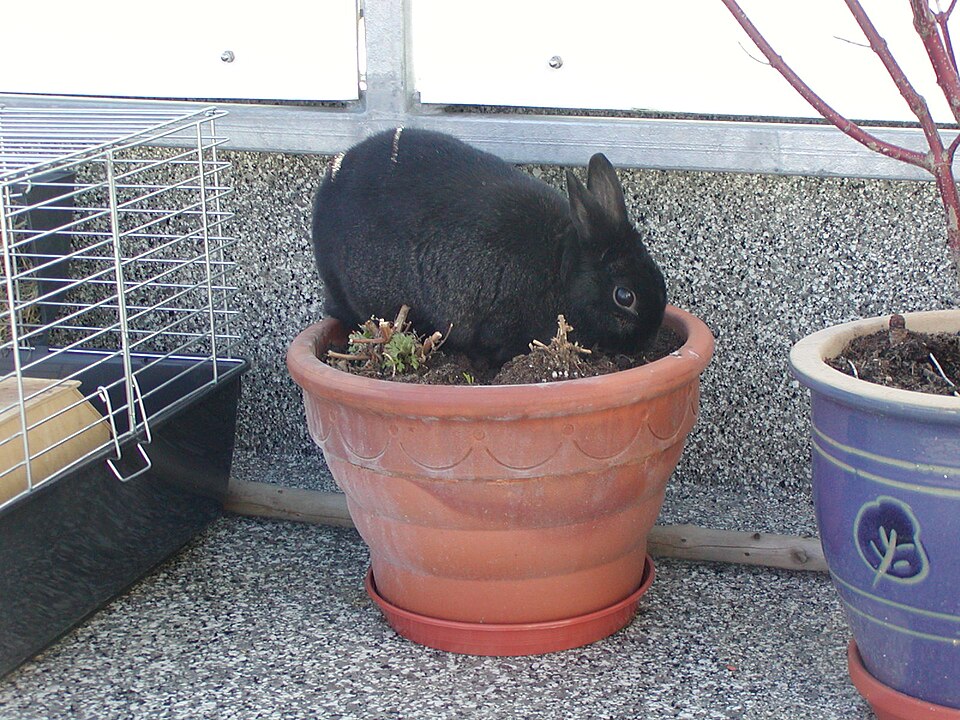
Some of the garden plants the RWAF lists as poisonous to rabbits:
| Group | Examples |
|---|---|
| Bulb flowers | Snowdrop, hyacinth, crocus, daffodil, tulip |
| Flowers | Buttercup, foxglove, primrose, larkspur, columbine, monkshood |
| Climbers and shrubs | Ivy, periwinkle, privet, holly, yew |
The RWAF stresses that this list is not complete, and if you're not sure about a plant in your garden, it gives a short rule: if in doubt, leave it out. The RWAF also points out that a rabbit that has eaten a poisonous plant often doesn't look ill right away, and by the time symptoms appear it may be too late.
Don't wait for symptoms to appear. Take the plant's name or a photo of it and call your vet right away.
Slippery floors and wire floors
According to the RSPCA, the floor of your rabbit's living area, and ideally of everywhere it can reach, should be solid and non-slip. Shiny laminate, wood and tiles are slippery for rabbits; you can cover these surfaces or keep your rabbit out of those areas. Avoid wire floors: according to the RSPCA, they can cause foot problems.
The oven, the kitchen and other dangerous corners
The RSPCA recommends blocking off dangerous areas such as the space around the oven. It also asks owners to be especially careful about toxic substances and cables. Keep cleaning products, medicines and chemicals in a closed place your rabbit can't reach.
Temperature and drafts
According to the RSPCA, the ideal temperature for rabbits is 10–20 °C (50–68 °F). Keep your rabbit's area away from drafts, radiators and fireplaces. In hot weather, rabbits can suffer from heat stress: rabbits in hot weather.
Let it chew, but the right things
Chewing is in a rabbit's nature; you can't stop it completely. According to the RSPCA, keeping your rabbit busy and stimulated makes it less likely to chew your belongings. The RSPCA also reminds owners that rabbits love to dig.
- Digging box: According to the RSPCA, a box filled with shredded paper or child-safe sand meets your rabbit's need to dig.
- Hiding places: A dark sleeping area and one hiding place per rabbit, plus a spare.
- Litter trays: One per rabbit, plus a spare. According to the RSPCA, newspaper, hay, shredded paper or a paper-based cat litter that doesn't clump or expand is suitable.
- Plenty of hay: Hay is both food and something to chew. More details: rabbit diet.
Other pets and supervision
According to the RSPCA, you need to make sure the other animals in your home don't harm or frighten your rabbit, and even if they've been introduced well, you should never leave them together unsupervised. The RSPCA also recommends supervision at all times whenever your rabbit is outside its safe area.
Checklist
- Cables are covered or out of reach.
- Houseplants are up high or not in the rooms your rabbit goes into.
- Slippery floors are covered or closed off.
- The oven and kitchen corners are blocked off.
- Cleaning products and medicines are in a closed cupboard.
- The area is away from drafts, radiators and fireplaces.
- A digging box, hiding places, litter trays and plenty of hay are ready.
- Your rabbit is never left unsupervised with other pets.
Frequently asked questions
My rabbit chews the sofa and the baseboards. What should I do?
According to the RSPCA, keeping your rabbit busy makes it less likely to chew your belongings. Offer plenty of hay, safe things to chew and a digging box, and temporarily block off the areas it chews.
Can I let my rabbit roam the whole house?
Every area your rabbit can reach needs to be rabbit-proofed, and you need to stay with it while it's out. Starting with one safe room and expanding the space little by little makes the preparation easier.
Which houseplants are safe?
The RWAF recommends treating all houseplants as poisonous and keeping them out of your rabbit's reach. The safest option is not to keep any plants in the rooms your rabbit goes into.

Keep track of your pet's care in TüylümLog vet visits, vaccine and medication dates, and we'll remind you when it's time. Share it all with your family in Home.
Sources
- RSPCA · Keeping rabbits in your home
- Rabbit Welfare Association & Fund · Poisonous plants for rabbits
- RSPCA · Rabbit behaviour
By Tüylüm · Published and last checked: October 24, 2026. Spotted a mistake? Write to [email protected] and we'll fix it right away. Photos are from Wikimedia Commons, used under the license shown below each photo.