Food and water bowls: which bowl, where to put it, and why keep them apart?
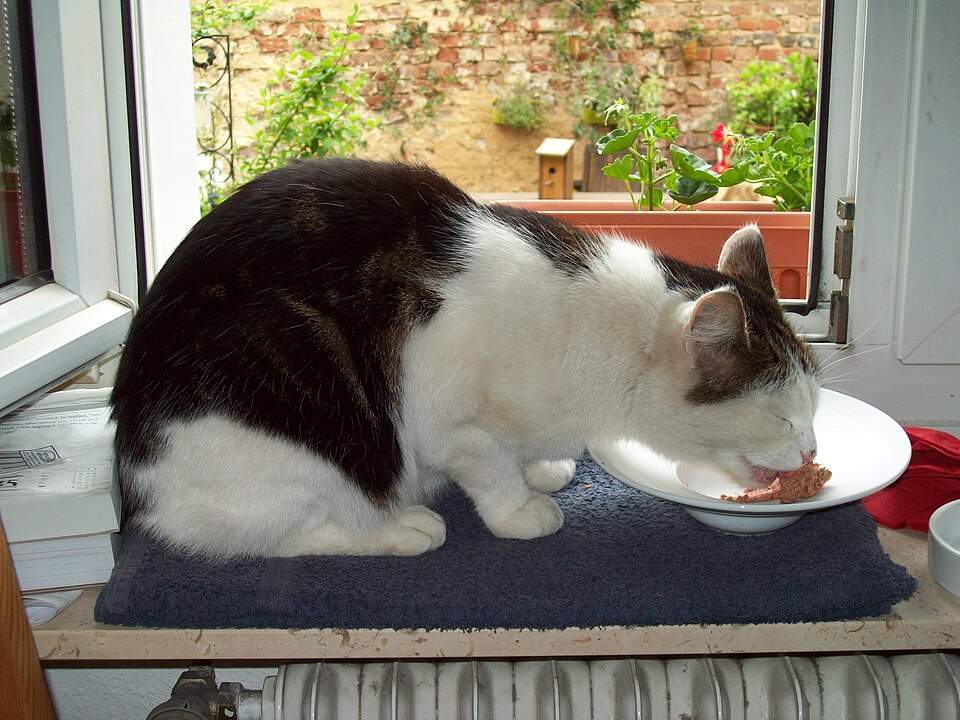
We drink while we eat; so putting a cat's food and water bowls side by side feels completely natural to us. But according to Cats Protection, one of the most common reasons cats don't drink from their water bowl is exactly this: where the bowl is. Cats prefer to drink away from their food. In this article, we lay out a simple setup, from the bowl's material and location to cleaning and multi-cat homes, based on advice from International Cat Care, Cats Protection and the US Food and Drug Administration (FDA).
- Separate spots: The water bowl shouldn't sit right next to the food, but in its own spot; both should be away from the litter box.
- The bowl: Wide, shallow, glass or ceramic; your cat's whiskers shouldn't touch the sides.
- Water: Fill the bowl to the brim; avoid double bowls that combine food and water in one piece.
- Location: Quiet and calm; away from busy doors and the washing machine. Your cat should be able to reach the bowl from all sides.
- Several cats: Feed each cat in a separate spot; one water bowl per cat, plus one extra.
- Cleaning: According to the FDA, wash the food bowl with soap and hot water after each use.
Why keep food and water apart?
Cats Protection links this to the cat's ancestor, the African wildcat. Wildcats also eat and drink in different places, so the gut contents of their prey don't contaminate the water they drink. In other words, it's about hygiene. International Cat Care also says putting water right beside the food can stop some cats from drinking, because food can easily end up in the water.
This doesn't mean you have to move the water to another room. According to International Cat Care, each water bowl should have its own spot; having it in the same room can even help your cat drink after eating (especially on a dry food diet). Just make sure the bowl is far enough away that food can't fall into it.
Single-piece bowls with food and water compartments side by side look practical. According to International Cat Care, these bowls are often too small and put food and water right next to each other; the organization recommends avoiding them. According to International Cat Care, your cat will drink more when food and water are offered in separate places.
Which bowl?
According to International Cat Care, cats generally like wide, shallow bowls. There are two reasons: your cat doesn't have to put its head inside the bowl while eating and drinking, so it can keep seeing its surroundings; and its sensitive whiskers don't touch the sides.
| Material | What the experts say |
|---|---|
| Glass | According to International Cat Care, it helps your cat judge where the surface of the water is |
| Ceramic | The material recommended by International Cat Care and Cats Protection |
| Plastic | According to International Cat Care, it can hold odors cats dislike; according to Cats Protection, it can also taint the taste of the water |
| Stainless steel | According to International Cat Care, its reflective surface can frighten some cats; it's also noisy when a collar tag clinks against it |
Fill the water bowl to the brim. According to International Cat Care, most cats like to drink from a full bowl; that way, they can drink without lowering their heads and keep an eye on their surroundings. Some cats even like drinking from a glass; the organization recommends a non-breakable one if you're putting it on a raised surface.
For cats with limited mobility or older cats, International Cat Care recommends bowls raised a little off the floor, because bending down and crouching can be uncomfortable. As an example, the organization suggests placing the bowl on top of a box.
Where should they go?
Putting International Cat Care's and Cats Protection's advice together gives this list:
- A quiet, calm corner: Your cat shouldn't see other cats while it eats. International Cat Care points out that the kitchen may be too busy for this.
- Away from busy areas: Heavily used doors, hallways and noisy machines like the washing machine.
- Away from the litter box: Both the food and the water bowl. We covered where to put the litter box in our litter box guide.
- Away from the cat flap and glass doors: Cats Protection recommends keeping bowls away from the cat flap and glass patio doors.
- A little away from the wall: According to International Cat Care, drinking with its back to the room can make a cat feel vulnerable; your cat should be able to reach the bowl from all sides. Cats Protection recommends leaving the choice to your cat: if you move the bowl away from the wall and your cat still drinks facing the wall, that's fine too.
- Away from strong smells: International Cat Care recommends avoiding strong scents, such as perfume and plug-in air fresheners, around your cat's feeding area.
- A water bowl on every floor: If your home has more than one floor, your cat shouldn't have to go up or down the stairs to find water.
How to offer water
- At room temperature: According to International Cat Care, flavor is reduced in cold liquids; offer water at room temperature where possible.
- Try different types of water: According to Cats Protection, some cats dislike the chlorine in tap water. International Cat Care recommends tap water if it's safe for people to drink, but if your cat doesn't like it, trying filtered water, boiled water left to cool, or still spring water.
- Rainwater: According to International Cat Care, many cats like drinking from puddles; rainwater collected in a clean container mimics this. Cats Protection suggests putting a large plant drip tray outside for this and cleaning it regularly.
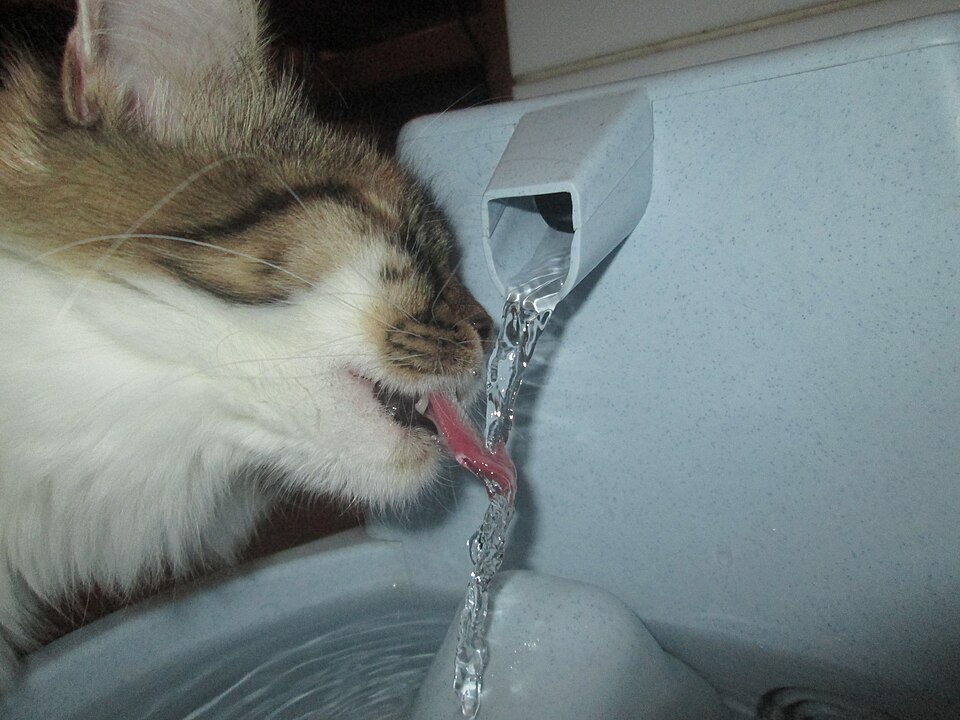
According to International Cat Care, some cats like to drink from running water. The options the organization lists: a pet water fountain (introduced gradually), a dripping tap, or a ping pong ball dropped into a large bowl of water. The ball becomes a toy for your cat and also keeps the water moving.
Cleaning and storing food
The FDA's advice on pet food is simple:
- Wash the bowl: Wash the food bowl, scoop and measuring cup with soap and hot water after each use.
- Don't use the bowl as a scoop: Don't scoop food with the bowl itself; use a clean scoop or measuring cup that you only use for pet food.
- Wash your hands: Wash your hands with soap and hot water for at least 20 seconds before and after handling pet food.
- Leftover wet food: Promptly refrigerate (tightly covered) or throw out leftover canned or pouched food.
- Dry food: Store it in a cool, dry place, below 80 °F (27 °C) according to the FDA, in its original bag with the top tightly folded down.
In its guide to senior cats, International Cat Care also recommends not leaving uneaten wet food out for more than an hour. As for water, Cats Protection's reminder is clear: your cat should always have fresh water.
If you have more than one cat
According to International Cat Care, cats hunt alone and eat alone. Being forced to eat together can lead to tension in multi-cat homes. The organization's advice:
- Don't line up the bowls: Feed each cat in a separate spot, ideally where it can't see the other cats.
- Block the view: Put a wall between the cats (different rooms) or feed them at different heights; one on the floor and one on a table, for example.
- Keep bowls out of corners: Your cat should be able to face any direction so it can watch its surroundings while eating.
- Spread out water bowls too: According to International Cat Care, cats may avoid drinking altogether if challenged by another cat. Put water bowls in different parts of the home, away from food; at least one water bowl per cat, plus one extra.
- Microchip feeders: Feeders that open only for the cat you've registered can be placed in separate spots.
According to International Cat Care's feeding guide, the ideal is 2–3 feeding and drinking areas for each cat in the home. If you're introducing two cats, also see our article on introducing a second cat.
If your cat won't drink from its bowl
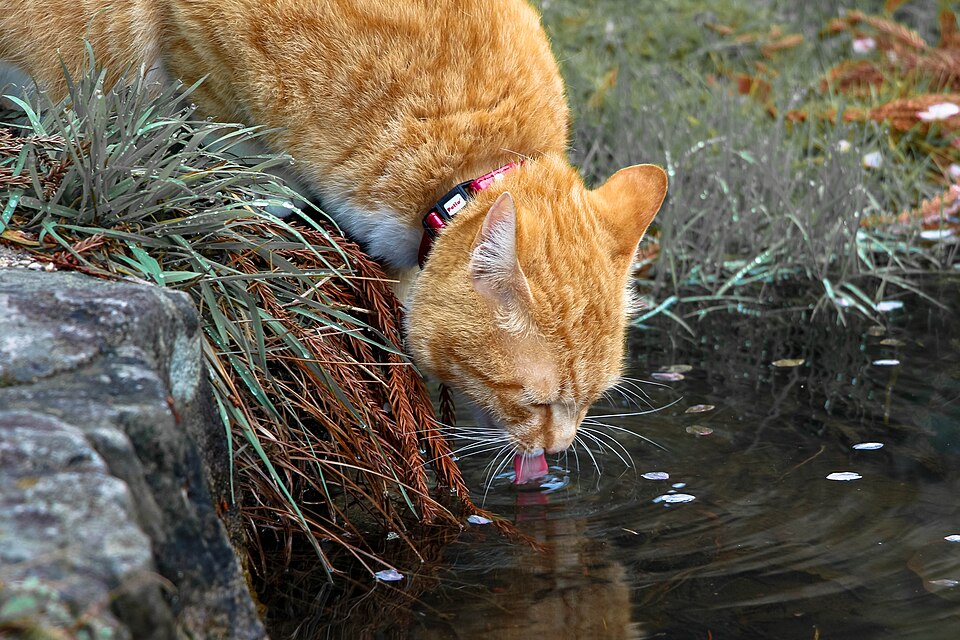
According to Cats Protection, many owners are surprised that their cat ignores its bowl and drinks from the toilet or a pond instead. The organization's first suggestion is to look at where the bowl is: is it next to the food, close to the litter box, pushed against the wall? Then look at the bowl itself and the water: if it's plastic, try ceramic; if it's narrow, get a wider one; try filtered water instead of tap water. International Cat Care recommends making changes gradually; cats don't like sudden changes to their food or water.
If your cat's drinking habits have changed, if it's drinking much more or much less than usual, talk to your vet without delay. According to Cats Protection, this kind of change can be a sign of a health problem.
You can check off refreshing the water bowl and washing the bowls as daily care tasks on Tüylüm's Today tab. Food & litter supplies also calculates when your food will run out and reminds you before it does.
Frequently asked questions
How far apart should the food and water bowls be?
The sources don't give an exact distance. According to International Cat Care, each water bowl should have its own spot; it can be in the same room, as long as it's far enough away that food can't fall into the water.
Do I need a water fountain?
No. According to International Cat Care, a fountain is one option for cats that like running water; a dripping tap or a ping pong ball floating in a large bowl can also work. If you buy a fountain, get your cat used to it gradually.
Are stainless steel bowls bad?
Not at all. International Cat Care lists stainless steel among suitable bowls for multi-cat homes. But its reflective surface and the noise when a collar tag clinks against it can bother some cats; if your cat seems wary, try glass or ceramic.

Keep track of your pet's care in TüylümLog vet visits, vaccine and medication dates, and we'll remind you when it's time. Share it all with your family in Home.
Sources
- International Cat Care · Making your home cat friendly
- International Cat Care · How to encourage your cat to drink
- International Cat Care · Feeding your cat or kitten
- International Cat Care · Multi-cat households
- Cats Protection · Behaviour focus: drinking water
- FDA · Tips for safe handling of pet food and treats
By Tüylüm · Published and last checked: October 28, 2026. Spotted a mistake? Write to [email protected] and we'll fix it right away. Photos are from Wikimedia Commons, used under the license shown below each photo.