Food and water for the hedgehog in your yard: a shallow dish, the right food, no milk or bread
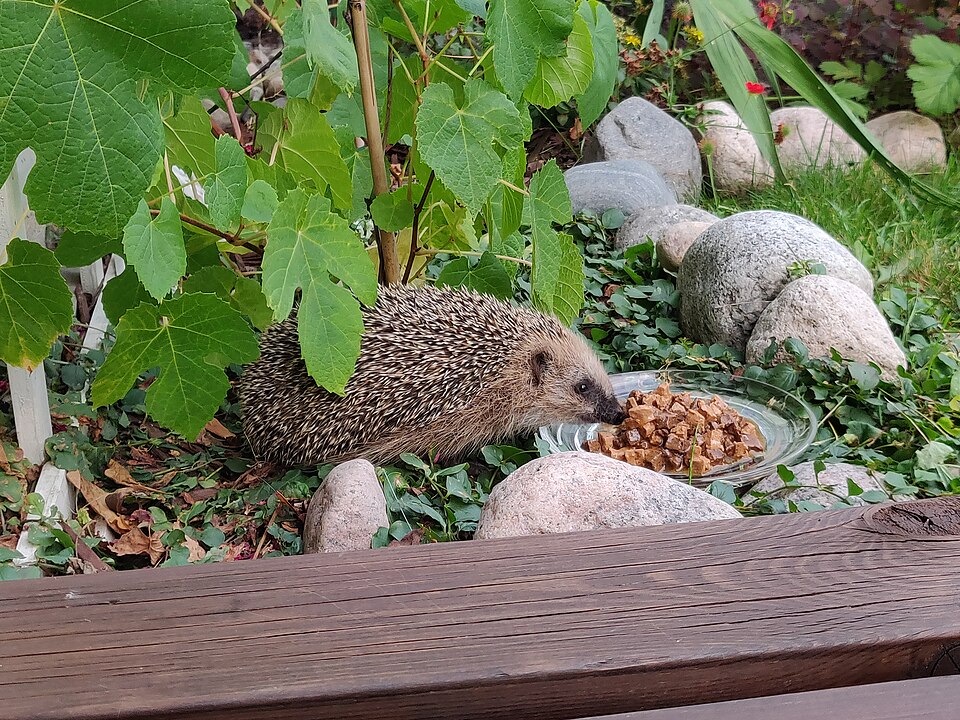
One evening you spot a hedgehog under the bushes in your yard and want to give it something. The thought is lovely, but what's right for a hedgehog isn't what's on your table. Hedgehog Street, the RSPCA and the British Hedgehog Preservation Society (BHPS) are remarkably aligned: a shallow dish of water and, if you like, meaty cat or dog food. Not milk, not bread. This article is only about wild hedgehogs. We covered the bigger picture of a hedgehog-friendly yard in the wild hedgehog in your garden; here we zoom in on food and water.
- Water: Clean water in a shallow dish. According to the BHPS, it's the only drink a hedgehog should be offered.
- Food (optional): Meaty wet cat or dog food, or dry cat food. It's only a supplement; hedgehogs find most of their food in nature, mainly insects and worms.
- No milk or bread: Hedgehogs can't digest lactose; bread offers them almost no nutrition.
- Where: Around sunset, in a sheltered spot, a few yards away from any hedgehog house.
- Cleaning: Clean the dishes regularly and don't wash them with your own dishes.
What do hedgehogs actually eat?
According to Hedgehog Street, in the wild hedgehogs mainly eat earthworms, ground beetles, caterpillars, earwigs and millipedes. Food from people is only a supplement. So a food dish doesn't replace the other things that make a yard good for hedgehogs, such as a wild corner for insects and a pesticide-free garden.
Water: the most important part
Hedgehog Street recommends putting out a shallow dish of water, especially in cold or dry spells when natural food is scarcer. The RSPCA also asks for fresh water in a shallow dish, especially in warm weather. According to Hedgehog Street's summer FAQ, in heatwaves it's a good idea to put out several shallow dishes of water; topping them up and cleaning them daily helps prevent disease from spreading. The BHPS puts it simply: water is the only drink that should be offered.
According to Hedgehog Street's history page, hedgehogs are lactose intolerant: they can't digest the sugar in milk, and it makes them ill. The RSPCA also says milk can cause diarrhea. Old tales claim hedgehogs drink milk straight from cows, but the only thing to leave out for them is water.
What can you put out, and what shouldn't you?
| Food | What the sources say |
|---|---|
| Meaty wet cat or dog food | Recommended by Hedgehog Street, the RSPCA and the BHPS |
| Dry cat or kitten food | Recommended by Hedgehog Street; the BHPS lists dry cat biscuits and the RSPCA lists crushed cat or dog biscuits |
| Specially made hedgehog food | According to Hedgehog Street it's sold; products that resemble pet food with a high meat content are the most suitable |
| Milk | According to Hedgehog Street, the RSPCA and the BHPS, don't offer it |
| Bread | According to Hedgehog Street it's low in energy and of little value; according to the RSPCA it offers no nutritional benefit |
The sources don't give amounts, so we don't either. If a hedgehog looks thin or ill, don't try to feed it yourself; see the hedgehog that needs help.
When and where?
Hedgehog Street suggests putting food out around sunset, in a shallow dish or a feeding station in a sheltered part of the yard. Two more notes:
- Not inside the hedgehog house: According to Hedgehog Street, don't put food inside a hedgehog home, as it can attract predators; place it at least a couple of yards away.
- Split it up: According to Hedgehog Street, splitting food across several sites may reduce aggression at the food dish.
- Check daily: According to the RSPCA, top up food and water every day and remove uneaten food.
A feeding station that keeps out cats and rats
A dish in the open can attract cats, foxes and rats too. The advice from Hedgehog Street and the RSPCA:
- Keep big animals out: Hedgehog Street suggests a design that larger animals can't easily enter, such as a piece of piping or a shelter made of bricks and paving stones. The RSPCA also says a feeding station with a tunnel entrance keeps cats from taking the food and shelters it from the weather.
- Cat deterrent: According to Hedgehog Street, a shallow water dish at the entrance and a brick maze inside can help keep cats away.
- Against rats: According to Hedgehog Street's summer FAQ, a small saucer placed over the food bowl can help: hedgehogs knock it off, rats can't. Adding water to dry food may also deter rats.
- Change the routine: Hedgehog Street suggests moving the feeding station and varying feeding times; if hedgehogs visit at the same time each evening, leave food out for only a couple of hours.
Cleaning: stopping disease from spreading
Hedgehogs are generally solitary. According to Hedgehog Street, when food draws several hedgehogs together, shared food can spread disease between them, and possibly to people. The sources' cleaning advice:
- Refresh daily: Top up the food and water dishes every day and remove uneaten food (RSPCA).
- Wash outdoors: According to the RSPCA, wash the dishes outdoors with hot, soapy water and rinse well; avoid washing them in the kitchen.
- Wash separately: Hedgehog Street recommends not washing hedgehog dishes with your own plates and bowls.
If a hedgehog in your yard looks sick or injured, don't try to treat it with food and water. Contact your local wildlife authority, a wildlife rehabilitation center or a veterinarian. In Türkiye, that means your regional General Directorate of Nature Conservation and National Parks (DKMP) office, a wildlife rehabilitation center or a veterinarian.
Tüylüm is for the pets at home; it doesn't track wild hedgehogs. But if you have a cat or dog, Food & litter supplies calculates when the food will run out and reminds you before it does. Keeping the food you set aside for a hedgehog separate from your pet's supply makes it easier to track.
Frequently asked questions
Can I soak bread in water for a hedgehog?
Hedgehog Street and the RSPCA say bread offers a hedgehog almost nothing. Soaking it in milk is a definite no: hedgehogs can't digest lactose. Meaty cat or dog food and water are better options.
Do I have to put food out every night?
No. According to Hedgehog Street, food from people is only a supplement; hedgehogs find most of their food in nature. If you like, put out only water.
Will the food dish attract my cat too?
It can. Hedgehog Street and the RSPCA suggest a feeding station with a tunnel entrance or a piece of piping that cats and other large animals can't enter.

Keep track of your pet's care in TüylümLog vet visits, vaccine and medication dates, and we'll remind you when it's time. Share it all with your family in Home.
Sources
- Hedgehog Street (PTES and BHPS) · Feeding hedgehogs
- Hedgehog Street · Summer FAQ
- Hedgehog Street · History of the hedgehog
- RSPCA · Hedgehogs in the garden
- British Hedgehog Preservation Society · Hedgehog FAQ
This article is for general information only; it is not a diagnosis or treatment advice and does not replace a visit to a veterinarian. Talk to your vet about decisions on your pet's health. By Tüylüm · Published and last checked: November 9, 2026. Spotted a mistake? Write to [email protected] and we'll fix it right away. Photos are from Wikimedia Commons, used under the license shown below each photo.