Gerbil care: deep bedding, tunnels and never alone
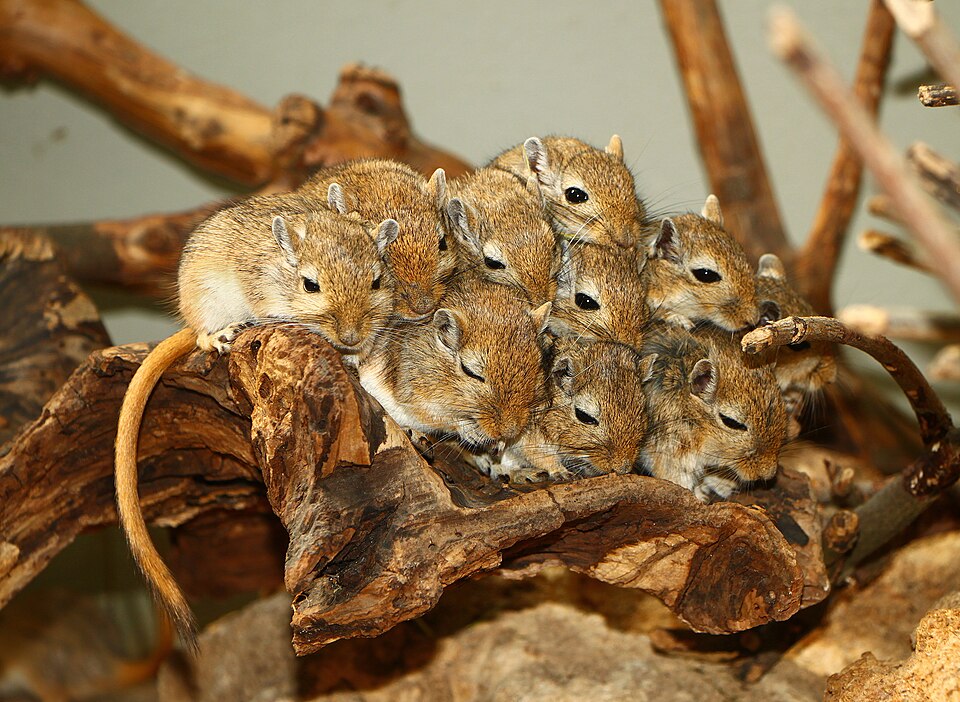
Stand in front of a gerbil tank for a few minutes and you'll be watching a tiny construction site: tunnels being dug, bits of hay being carried around, pieces of cardboard being dragged into the nest. According to the RSPCA, gerbil burrows in the wild can go down as deep as 1.7 meters underground and stretch 6–8 meters horizontally, with tunnels, food stores and nest chambers inside. The species most often kept as a pet is the Mongolian gerbil (Meriones unguiculatus). According to the RSPCA, its scientific name means "little clawed warrior." To be happy, this little warrior needs two things: deep bedding it can dig in, and its own family.
- Never alone: According to the RSPCA, gerbils should live with other gerbils and never be kept on their own.
- A tank, not a cage: A glass-walled tank with a wire mesh lid. Blue Cross and Wood Green recommend at least 100 cm in length for two to four gerbils.
- Deep bedding: According to the RSPCA, 20–30 cm; the tank should be about 50 cm high.
- Sand bath: Fine, dust-free sand suitable for gerbils. Blue Cross doesn't recommend chinchilla dust.
- Never hold it by the tail: According to the RSPCA, a gerbil in danger can shed the skin of its tail.
Getting to know the gerbil
According to the RSPCA, gerbils live 3–4 years, sometimes longer. Because they've adapted to dry climates, they produce very little urine; according to Blue Cross, this makes it quite easy to keep their home clean and odor-free. According to the RSPCA, gerbils have furry soles on their feet, so they aren't good climbers. Their back legs are long compared with their front legs; they use them for digging and for drumming rapidly on the ground to warn of danger.
When are gerbils awake? According to the RSPCA, they are usually active during the day. Blue Cross says they can also be active in the evening and at night, which is why Blue Cross and Wood Green recommend not putting the tank in a bedroom that's in use. As Blue Cross puts it, the problem isn't you disturbing them, it's them disturbing you at night.
Living space: tanks and tunnels
According to the RSPCA, gerbils need a special home (a gerbilarium) with glass walls, a sturdy wire mesh lid and a solid base. A solid base is needed so you can add bedding that soaks up the small amount of urine gerbils produce and lets them dig. According to the RSPCA, cages with metal bars aren't recommended: gerbils can slip and injure their legs or feet, and chewing the bars can damage their teeth. According to Blue Cross, a hamster cage isn't suitable for gerbils.
| Feature | What the sources recommend |
|---|---|
| Floor area | At least 100 cm in length for two to four gerbils (Blue Cross, Wood Green) |
| Height | About 50 cm, so they can stand up fully on the surface after digging (RSPCA) |
| Bedding depth | 20–30 cm (RSPCA) |
| Lid | Sturdy, well-ventilated wire mesh (RSPCA, Blue Cross) |
| Temperature | 20–24 °C (68–75 °F) (RSPCA) |
According to the RSPCA, an adult gerbil is about 12 cm long; the tank should be tall enough for the gerbil to stand up on the surface even after it has dug. Wood Green points out that fish tank lids aren't suitable and that a well-ventilated wire mesh lid is needed.
- Mix the bedding: Blue Cross recommends adding pieces of cardboard, hay and paper for nesting into a thick, dust-free bedding; cardboard gives the tunnels structure. Wood Green also recommends mixing at least two types of bedding for stability.
- Heavy items first: According to Wood Green, place heavy toys before adding the bedding, or put them on sturdy platforms, so they don't slip and fall onto the gerbils while they dig.
- Nest box: The RSPCA recommends a dark nest box that's big enough for a food store and for turning around comfortably, with more than one entrance, so a dominant gerbil can't trap the others inside.
- Tubes: According to the RSPCA, tubes should be at least 5 cm in diameter, or gerbils can get stuck. Tunnels made of wood or hay are ideal rather than plastic ones.
- A flat stone: According to Blue Cross, it makes a lookout spot and wears down their claws; according to the RSPCA, gerbils also use it to leave their scent.
- Wheel: The RSPCA recommends a large-diameter, solid wheel with no central axle. According to Blue Cross, tails can get caught and injured in wheels with rungs.
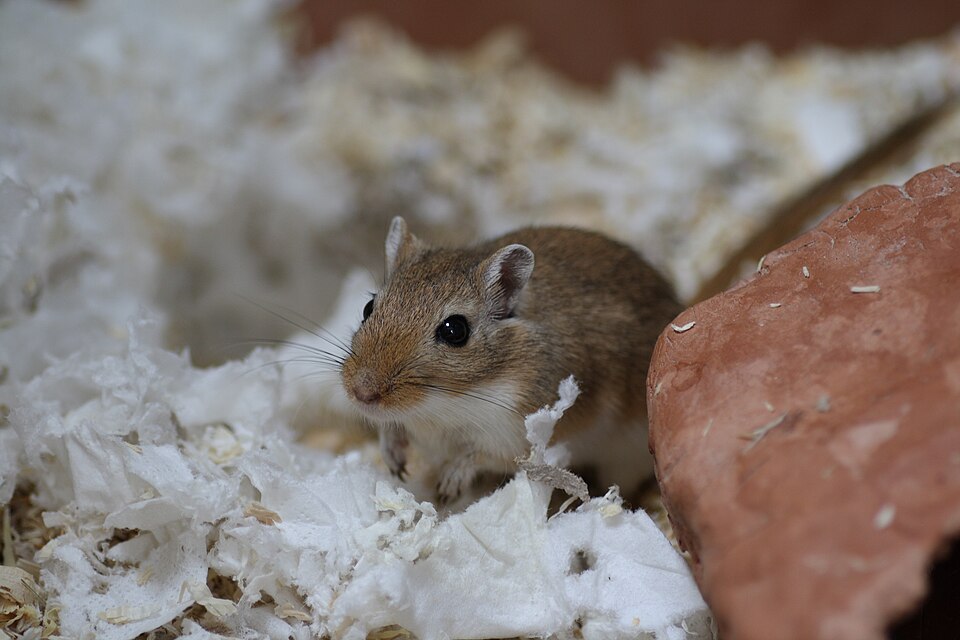
- Sawdust: According to the RSPCA, it can cause breathing problems. Wood Green says wood shavings and sawdust can do a lot of harm to gerbils' skin and airways.
- Garden soil: According to the RSPCA, it can carry harmful bacteria or parasites.
- Soft materials like cotton wool and fluff: They can wrap around legs, and if swallowed, they can cause digestive problems (RSPCA, Blue Cross).
According to the RSPCA, the cage should be indoors, in a dry, draft-free place; it shouldn't be put in front of a window that gets direct sunlight or next to a radiator. Gerbils communicate at ultrasonic frequencies; according to the RSPCA and Blue Cross, keep the tank away from sources of ultrasound such as televisions, computer screens, vacuum cleaners and running water.
Digging: a gerbil's greatest passion
According to the RSPCA, gerbils need to be able to dig and hide at any time, day or night. As prey animals, they are naturally timid and protect themselves from predators in their deep burrows. According to Blue Cross, cardboard tunnels such as toilet paper rolls can be placed both on top of and inside the bedding.
According to the RSPCA, a gerbil digging over and over in one corner for long periods can be a sign that its environment doesn't suit it. Add more enrichment and hiding places; if needed, move them to a deeper home where they can dig their own burrows.
Sand bath
Gerbils love rolling in sand. According to Blue Cross, a bath of sand that's safe for gerbils keeps their fur clean and healthy. Wood Green recommends a large glass or ceramic dish and gerbil sand that is dust-free and calcium-free, and adds that the sand should be sieved every other day. According to Blue Cross, some gerbils use the bath as a toilet; if that happens, change the sand.
Blue Cross says chinchilla bath dust can cause breathing problems in gerbils. Choose a dust-free sand sold for gerbils.
Companionship and introductions
According to the RSPCA, gerbils are clever, social animals; in the wild they live in family groups made up of a mother and father pair and their young. That's why they need to live with other gerbils and should never be kept on their own.
The easiest option is to get young gerbils of the same sex from the same litter or from a compatible group together. According to the RSPCA, established groups usually won't accept a new gerbil; a possible exception is pups younger than five weeks. According to Blue Cross, adult gerbils older than ten weeks can behave aggressively toward newcomers joining the group, and females are often more aggressive than males. According to Wood Green, introducing an adult gerbil that has been left alone to others can be very difficult.
- Side by side, but apart: The RSPCA recommends housing new gerbils separately but side by side for about a week before putting them together.
- Swap scents: Swap used bedding between the two homes (RSPCA).
- Good signs: According to the RSPCA, grooming each other and touching noses show that they're bonding.
- Separate them if they fight: If aggression starts, the gerbils may need to be separated (RSPCA). According to Wood Green, fights can break out suddenly in large groups, especially among females; an injured gerbil should see a vet right away.
When gerbils are frightened, they drum their back feet rapidly on the ground, and according to the RSPCA, this sends the whole group running into the burrow. The RSPCA points out that this drumming can also happen out of excitement and doesn't always mean stress. According to Blue Cross, if it happens often, consider moving the tank to a quieter corner of the house.
Food and water
According to Blue Cross, a gerbil's staple food should be a ready-made food made specifically for gerbils; fresh vegetables and fruit can be given alongside it, plus the occasional mealworm. Wood Green recommends scattering the daily food around their home rather than putting it in a bowl: gerbils forage for hours, which keeps them busy and reduces squabbles over food.
According to Blue Cross, potato, rhubarb and tomato leaves are poisonous to gerbils. Wood Green recommends avoiding colored chew sticks and mineral and salt blocks; in some cases they can be harmful.
Wood Green recommends giving water from a bottle with a metal spout. According to Blue Cross, gerbils can chew plastic, so check every day that the bottle is working and isn't damaged. Gerbils also love to hoard food; according to Blue Cross, taking away their whole stash stresses them, so only clear out fresh food that has gone bad, every day.
Handling and health checks
According to the RSPCA, gerbils don't like being picked up, and if they feel threatened they can get frightened and become aggressive. First let them get used to your voice and your presence, then stroke them gently. The RSPCA recommends pumpkin seeds as a reward. Lift a gerbil by cupping both hands and supporting its whole body; hold it over a table or while you're sitting down so it doesn't fall.
According to the RSPCA, gerbils in danger can shed the outer layer of skin and fur on their tail, leaving the bone and muscle exposed. Wood Green says the tail can be damaged or lost completely.
Wood Green recommends giving gerbils a health check every week. Healthy front teeth should be light yellow, straight and evenly worn against each other. Monitor its weight with a small kitchen scale, and watch out for unexpected or ongoing weight loss or gain. If you see fur loss, red or flaky skin, wounds, lumps, discharge or noisy breathing, talk to your vet. On teeth and chewing materials: why rodents chew.
You can log weekly weigh-ins in Tüylüm's Weight tracking. With Food & litter supplies, you can see when the bedding and bath sand will run out and get a reminder before they do.
More of our rodent articles: rodents.
Frequently asked questions
Can I get just one gerbil?
No. According to the RSPCA, gerbils are social animals and should never be kept on their own. Blue Cross recommends getting two or more young gerbils of the same sex from the same litter or from a compatible group.
Can a gerbil live in a hamster cage?
According to Blue Cross, a hamster cage isn't suitable for gerbils. According to the RSPCA, gerbils can slip and get injured in cages with metal bars, and chewing the bars can damage their teeth. A tank with a wire mesh lid that can hold deep bedding is a better fit.
My gerbil is thumping its back feet. Why?
According to the RSPCA, when gerbils sense a threat, they warn the group by drumming their back feet rapidly on the ground; it can also happen out of excitement. According to Blue Cross, a sudden noise or a person may have startled them. If it happens often, consider moving the tank somewhere quieter.

Keep track of your pet's care in TüylümLog vet visits, vaccine and medication dates, and we'll remind you when it's time. Share it all with your family in Home.
Sources
- RSPCA · Gerbils
- RSPCA · Creating a good home for gerbils
- RSPCA · Keeping gerbils together
- RSPCA · Understanding gerbil behaviour
- Blue Cross · Caring for your pet gerbil
- Wood Green · Gerbil care guide (PDF)
By Tüylüm · Published and last checked: October 24, 2026. Spotted a mistake? Write to [email protected] and we'll fix it right away. Photos are from Wikimedia Commons, used under the license shown below each photo.