Degu care: a big family, dust baths and a sugar-free menu
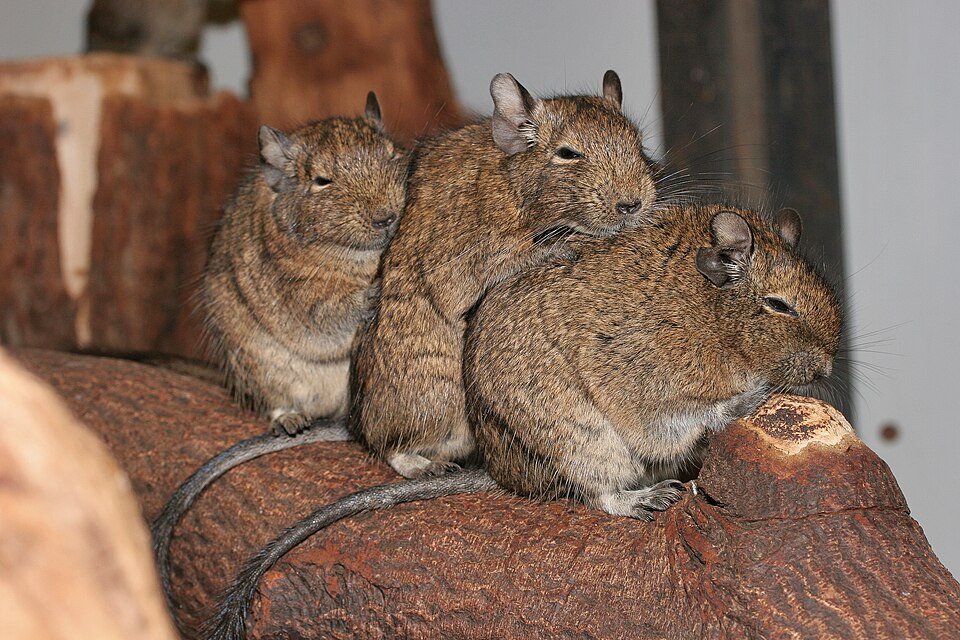
On the dry slopes of Chile, small gray-brown rodents stand at the mouths of their burrows, keeping watch... According to the RSPCA, degus are native to northern and central Chile and can be found at high elevations (1,200 m) in the Andes. According to Blue Cross, in the wild they live in groups of up to 100 in complex burrows with nests and food stores. They're awake during the day, and they're chatty: according to the RSPCA, they chirrup and squeak at each other. To be happy at home, they need a big family, a spacious cage and a menu that stays away from sugar.
- Never alone: According to the RSPCA, degus need to live with other degus; a degu kept on its own can get depressed.
- A long commitment: According to the PDSA, they live six to eight years on average, sometimes nine.
- A large, multi-level metal cage: According to Blue Cross, at least 90 × 60 × 120 cm for two to five degus.
- A cool room: According to the RSPCA, the temperature in their enclosure should be no higher than 20 °C (68 °F).
- Dust baths: According to the RSPCA, two or three times a week for about 20 minutes.
- Plenty of hay, no sugar: Most of the diet is hay; no fruit and no foods with molasses (RSPCA, PDSA).
Getting to know the degu
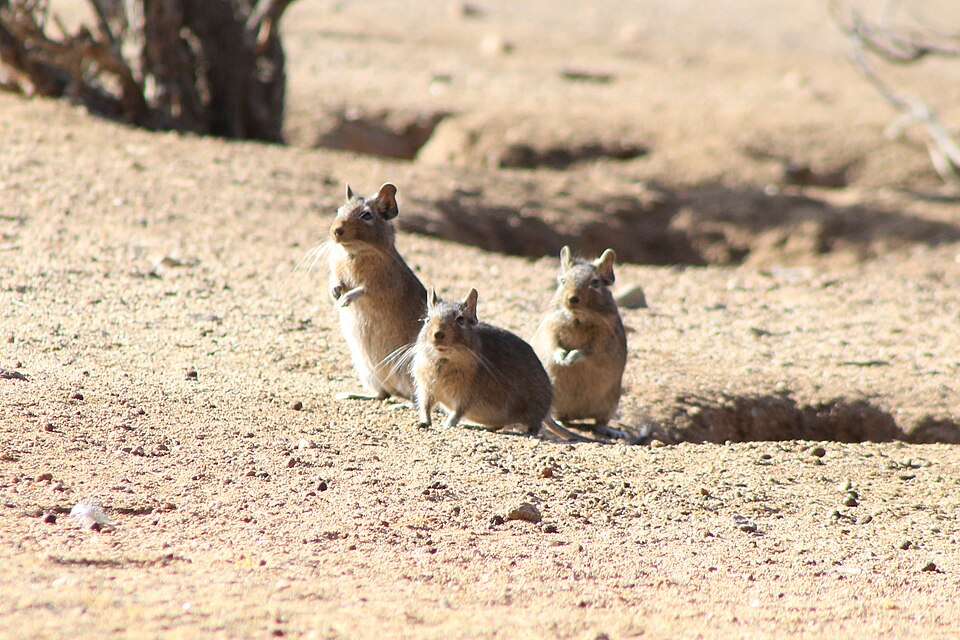
According to Blue Cross, degus are closely related to guinea pigs and chinchillas. According to the RSPCA, they're active during the day, sleep at night, and spend lots of time digging and chewing. Their teeth are interesting too: according to the RSPCA, degu teeth are naturally a yellow-orange color, and white teeth can be a sign of poor health.
Degus have only been kept as pets for a relatively short time. According to the RSPCA, experts are still learning how best to care for them, so it recommends registering your degus with an exotics specialist vet who has experience treating this species. The PDSA is also frank: degus need a lot of daily time, a lot of space and a controlled diet; they may not be the best beginner pet.
Companionship: at least two degus
According to the RSPCA, degus groom each other and sleep side by side, and no matter how much time they spend with people, they need other degus. The RSPCA advises never housing a degu alone unless a vet or clinical animal behaviorist advises it.
| Group | What the sources recommend |
|---|---|
| Same-sex pairs or groups | A good option to avoid unwanted babies (RSPCA, PDSA) |
| One neutered male with females | Can be compatible (RSPCA, PDSA); wait six weeks after neutering before introducing them (Blue Cross) |
| More than one male in a mixed group | Never; even neutered males may fight if females are present (RSPCA) |
Make sure there's enough of everything: according to the RSPCA, nest boxes should be large enough for all of them to rest together, and there should be enough hiding places for each to shelter on their own.
If you're adding a new degu to the group, be patient; according to the PDSA, degus can be extremely territorial. Here are the PDSA's and Blue Cross's introduction steps:
- Side by side, in separate cages: Put the cages about 10–15 cm (4–6 in) apart, so they can smell and see each other but can't bite (PDSA).
- Swap scents: Give each group its own bed, toys and dust bath, and swap them over every day. Keep going like this for a week or two, until they're sleeping close to each other (PDSA, Blue Cross).
- Meet on neutral ground: In a space that isn't either group's cage, with lots of treats and clean toys, for 15–30 minutes; every day for a week (PDSA).
- Watch the signs: Grooming and sitting close together are good signs. If you see rearing up, constant teeth chattering, fur pulling, blood or biting, separate them immediately (PDSA).
- A shared home: If all goes well, move them into a fully cleaned cage with no scent (PDSA).
According to the PDSA, if meetings keep ending in fights, your degus probably aren't compatible; don't force them.
The cage: spacious, tall and sturdy
Degus climb, jump and chew. According to the PDSA, the cage should be metal, because degus can easily chew through plastic and wood.
| Feature | What the sources recommend |
|---|---|
| Size | At least 90 × 60 × 120 cm for two to five degus, not including stands (Blue Cross); the bigger the better (PDSA) |
| Levels | Multi-level, with ramps and platforms (PDSA, Blue Cross) |
| Roof | A solid roof; their main predators in the wild are birds of prey (RSPCA) |
| Floor | Solid, with a deep layer of bedding for digging (RSPCA, Blue Cross) |
| Wheel | A solid wheel, 35 cm (14 in) in diameter (Blue Cross); degus should be able to run with a flat back (PDSA) |
| Location | At waist height, on a shelf or table (RSPCA) |
- Bedding and nests: The RSPCA recommends hay, shredded paper and paper tissues; non-toxic wood shavings also work. Degus should have constant access to hay-filled nest boxes (RSPCA). More details: how to choose rodent bedding
- Branches: Pear, apple or beech branches; not wood that may be toxic, such as cedar, and not plastic toys (RSPCA).
- A digging box: Blue Cross recommends a digging box filled with organic soil and sand.
- No glass tanks: According to the RSPCA, fish tanks and glass vivariums don't let enough air circulate; degus can develop breathing problems.
- Time out of the cage: According to the PDSA, half an hour or more a day, in a large exercise pen or a secure room. Cover any wires and exposed wood; according to Blue Cross, degus will chew almost anything.
Temperature and light
Degus don't cope well with heat. According to the RSPCA, the temperature in their enclosure should be no higher than 20 °C (68 °F); the cage should be in a cool part of the home, away from radiators and other heat sources. Blue Cross recommends 18–21 °C (64–70 °F) and reminds us that degus are prone to heatstroke. Also keep the cage out of direct sunlight and away from windows (Blue Cross, PDSA).
According to the RSPCA, if your degu is lying still, flat on their stomach, they could be overheating. Talk to your vet without delay.
According to the RSPCA, degus should live in a room with light during the day and darkness at night, with the lights going on and off at more or less the same time every day.
Dust baths
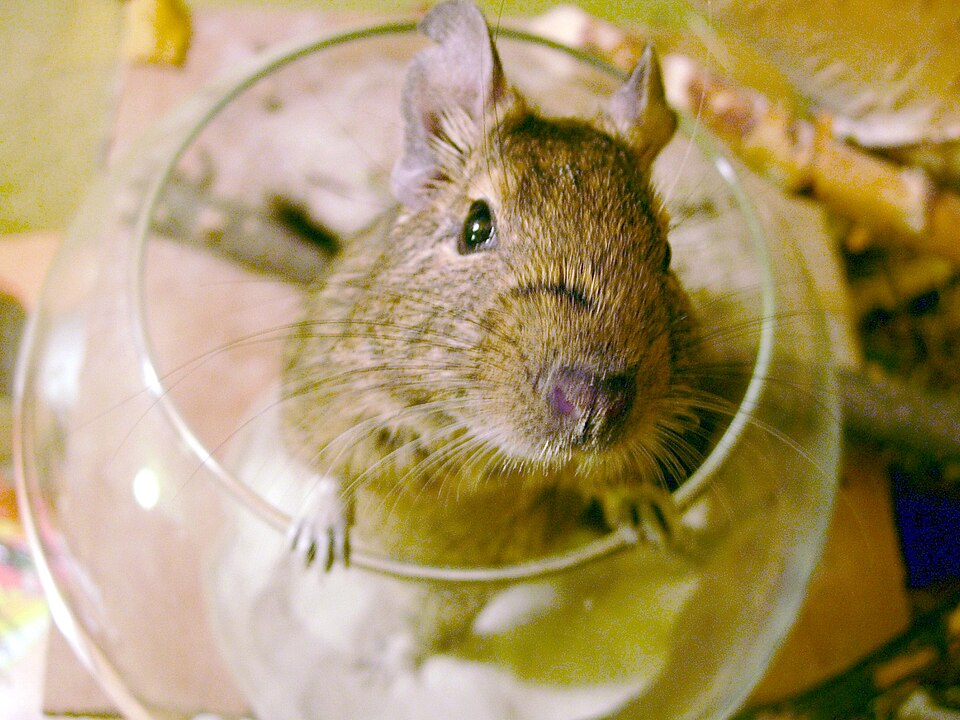
Degus keep their fur clean by rolling in sand.
- The bowl: Shallow, heavy and big enough for the degu to roll around in (RSPCA).
- The sand: A suitable bathing sand; the RSPCA considers chinchilla sand ideal. It should be about 4 cm (1.5 in) deep (RSPCA).
- How often: According to the RSPCA, two or three times a week for about 20 minutes. Blue Cross recommends about three times a week for 20–30 minutes, and adds that you should also offer a dust bath after handling.
- Take it out afterward: According to the PDSA, don't leave the sand in all the time; their skin may become too dry.
Diet: plenty of hay, no sugar
According to the PDSA, degus are herbivores and are very prone to diabetes; according to Blue Cross, they can't digest or process sugar and carbohydrates. That's why they need a diet that's high in fiber and low in sugar and fat (PDSA).
- Hay: Unlimited, good-quality hay; the majority of their diet (RSPCA, PDSA). It keeps both their gut and their constantly growing teeth healthy (PDSA, Blue Cross).
- Pellets: A small, measured portion. The PDSA recommends one to two tablespoons (10 g) a day; Blue Cross, one tablespoon. If you can't find degu pellets, guinea pig or chinchilla pellets without molasses will do (RSPCA, PDSA).
- Greens: Go easy. The RSPCA recommends a small, measured portion; the PDSA says no more than once or twice a week.
- Scatter it: Scatter the pellets around the cage; degus forage as they would in the wild, and it reduces tension over food (PDSA, Blue Cross).
- Fruit: According to the RSPCA, many fruits are high in sugar; don't give them. The PDSA allows an occasional bit of apple.
- Sugary vegetables: According to the RSPCA, carrot, sweet potato, beetroot and parsnips can also be high in sugar; only in very small pieces, occasionally.
- Foods with molasses, sugary rodent chews and commercial treats: According to the PDSA and the RSPCA, many of these are too sugary.
- Food for other species: Rabbit, hamster and gerbil foods aren't suitable for degus (RSPCA, PDSA), and neither are chinchilla mixes with dried fruit (RSPCA).
Introduce new foods gradually (RSPCA, PDSA).
Handling: from below, not from above
According to the PDSA, degus don't like being picked up; they prefer being stroked and given treats in their cage, and if you're patient, they'll take a treat from your hand. According to the RSPCA, they can find people stressful until you've formed a positive relationship with them; treats help you build it.
- Let them climb onto your palm: The RSPCA recommends letting your degu climb onto the palm of your hand on their own, then gently picking them up in your cupped hands.
- Don't reach from above: According to the RSPCA, hands swooping down from above stress degus; in the wild, they run away from predators approaching from above.
- Chest and hind legs: According to the PDSA, place one hand around their chest and support their hind legs with the other; hold them close to your body and to the ground.
- A tube, or the floor: The PDSA suggests letting your degu run into a tube and walk out of it onto your hand. According to Blue Cross, some degus enjoy climbing on you while you sit on the floor in a safe area.
According to the RSPCA, picking a degu up by the tail is stressful and can hurt them. According to the PDSA, a scared degu can drop part of their tail as a defense mechanism; Blue Cross also says the skin and fur covering the tail can come off. If this happens, talk to your vet without delay.
Cleaning
According to the RSPCA, clean the toilet and feeding areas every day and the rest of the enclosure at least once a week; remove hoarded food before it goes moldy. The PDSA recommends a deep clean every two weeks. Afterward, put back a little of the used but unsoiled bedding (RSPCA, PDSA); Blue Cross recommends about a third, because degus rely on familiar smells to feel safe.
For rodents, Tüylüm's Today tab comes with ready-made Food, Water and weekly Cage cleaning tasks; you can also add the Dust bath task from the suggestions. With Food & litter supplies, you can see when the hay and bathing sand will run out. If you save your exotics vet's details in My vet, you can call them right away when you need to.
More of our rodent articles: rodents. For a similar species: chinchilla care.
Frequently asked questions
Can I keep just one degu?
No. According to the RSPCA, degus are social animals and can get depressed if they're kept on their own. Get at least two degus: a same-sex pair or group, or a neutered male with females.
How big should a degu cage be?
Blue Cross recommends a multi-level metal cage of at least 90 × 60 × 120 cm for two to five degus; according to the PDSA, the bigger the better.
My degu eats their own droppings. Is that normal?
Yes. According to the PDSA and the RSPCA, degus eat their own droppings to get nutrients and keep their digestive system healthy. But if you notice any change in their eating, drinking or toileting habits, the RSPCA recommends talking to your vet.

Keep track of your pet's care in TüylümLog vet visits, vaccine and medication dates, and we'll remind you when it's time. Share it all with your family in Home.
Sources
- RSPCA · Degus
- RSPCA · Creating a good home for degus
- RSPCA · Keeping degus together
- RSPCA · What to feed a pet degu
- PDSA · Degus as pets
- Blue Cross · Degu care
By Tüylüm · Published and last checked: October 26, 2026. Spotted a mistake? Write to [email protected] and we'll fix it right away. Photos are from Wikimedia Commons, used under the license shown below each photo.