Rabbits in the yard: a safe outdoor space against predators, escapes and garden chemicals
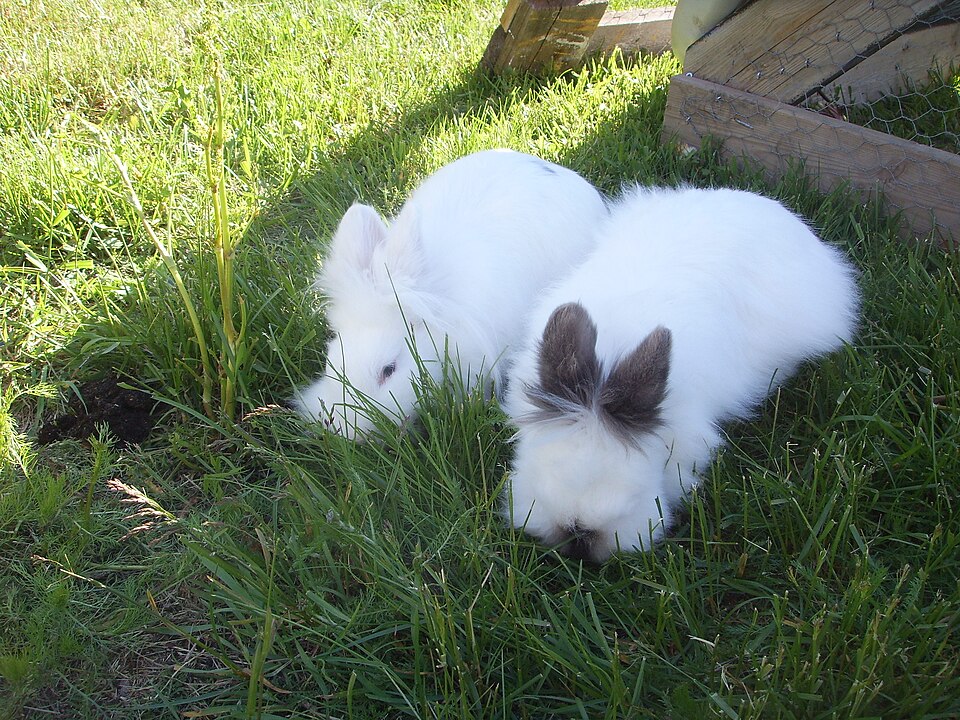
A rabbit grazing on the lawn, scratching at the soil or stretching out in the sun can be the best view in the yard. According to the Rabbit Welfare Association & Fund (RWAF), daily access to grass is great for a rabbit's teeth and digestion, and it keeps the rabbit busy too. But an outdoor space has three big dangers: predators, digging out and garden chemicals. In this article, we explain what you can do about them. For space requirements, start here: starting life with a rabbit.
- Wire: According to the RWAF, thick, welded wire, not chicken wire. The RWAF recommends at least 16-gauge wire with 13 mm (½ inch) openings.
- Locks: A bolt you can padlock; all doors, locks and catches should be sturdy (RWAF).
- Day and night: According to the RWAF, foxes are out during the day as well and can easily get over a 1.8-meter (6 ft) fence.
- Digging barriers: Wire buried in the ground, a wire skirt or paving slabs along the edge (RWAF).
- Chemicals: According to the RWAF, weedkillers, slug pellets and fertilizers are toxic to rabbits; keep them locked away.
- Supervision: When your rabbit roams free in the yard, keep it in sight at all times (RWAF).
Predators: not just foxes
According to the RWAF, foxes are strong, determined predators: they can easily get over a 1.8-meter (6 ft) fence, and they're out both day and night. That's why the RWAF says rabbits need to be in a fox-proof area day and night. Foxes can bite through thin wire, pull at weak mesh until it bends, dig under poorly secured panels or push through them; they exploit every weak spot in a structure.
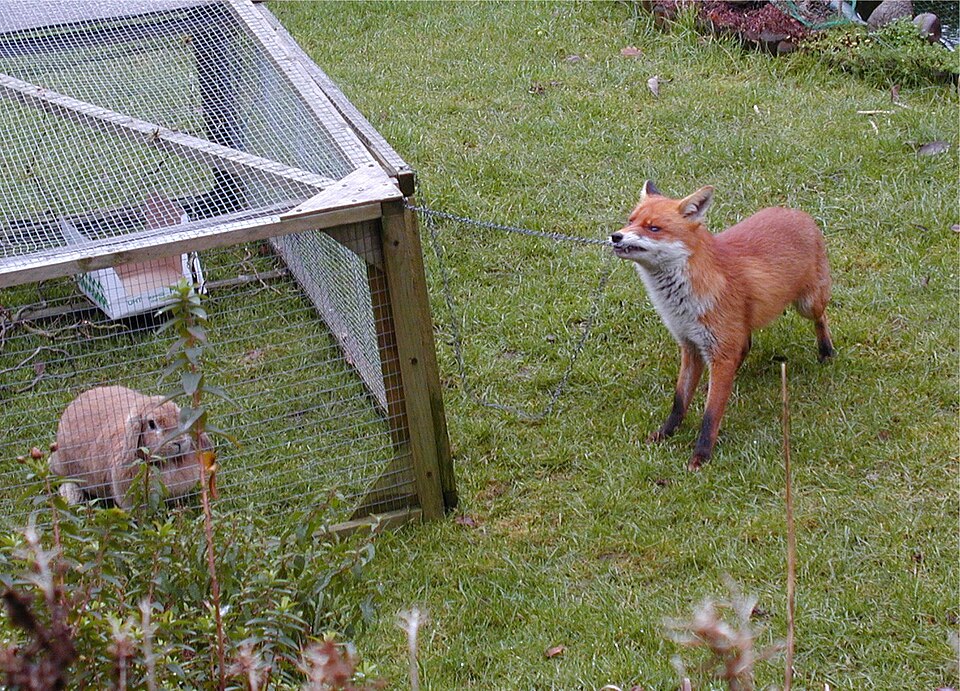
The danger isn't limited to foxes. According to RSPCA Australia, a rabbit's space must also be protected against dogs, cats and birds of prey; the RWAF also lists smaller predators such as stoats and weasels. The RSPCA recommends placing rabbits' housing where they can't see or smell predators such as foxes, birds of prey and unfamiliar cats and dogs.
The right wire, sturdy fixings
The safety of an outdoor space depends largely on the wire. The RWAF's recommendations:
| Topic | RWAF recommendation |
|---|---|
| Wire type | Welded wire. Chicken wire is soft and flexible; it won't stand up to a predator. |
| Thickness | At least 16-gauge (about 1.6 mm, according to the RWAF); 12-gauge is even better. The lower the number, the thicker the wire. |
| Openings | 13 mm × 13 mm (½ × ½ inch). Most ready-made runs have 25 mm (1 inch) openings; that keeps out foxes and rats but not smaller predators. |
| Material | Stainless steel. Galvanized wire has a zinc coating; if a rabbit chews the wire, it can swallow zinc. |
| Fixings | Very strong U-shaped nails instead of wire staples. A single layer of wire is safer attached to the inside of the run. |
| Lock | A bolt you can padlock. |
The RWAF also warns that rabbits have got their heads stuck in the mesh and been injured in some ready-made runs; read the reviews before you buy. The RWAF's guide for house rabbits going outside in winter adds: whatever the weather, the run must be sturdy, including all doors, locks and catches.
Don't let it dig its way out
Digging is in a rabbit's nature, so a run on grass can easily turn into an escape tunnel. According to the RWAF, a rabbit that digs its way out from under the enclosure is also left exposed to predators.
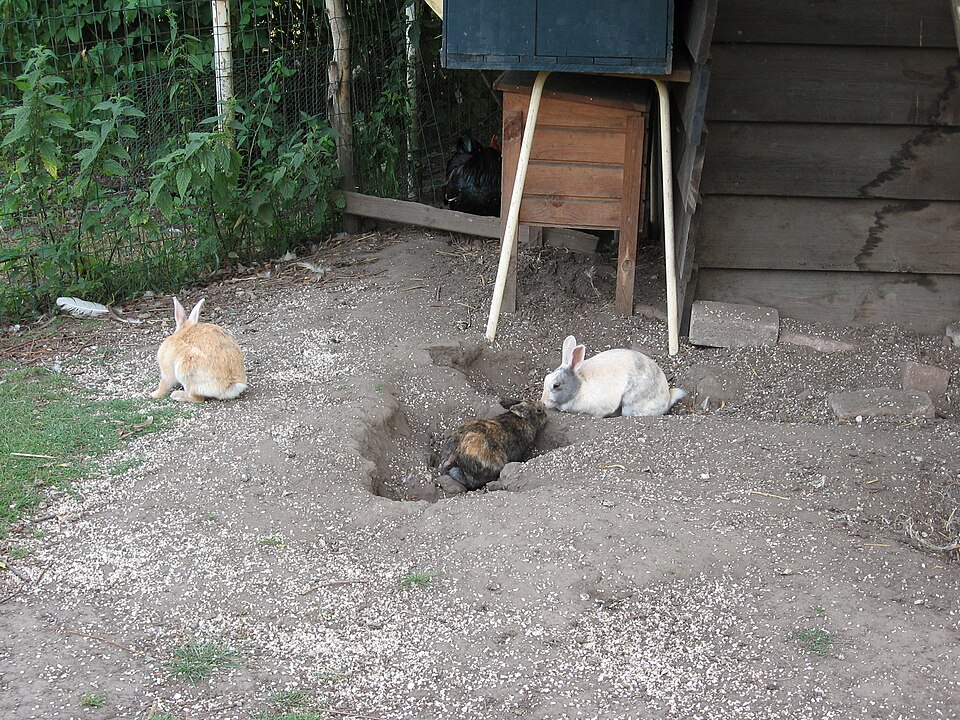
- Keep an eye on holes: The RWAF recommends filling in any holes regularly.
- Wire skirt: According to the RWAF, you can bury wire in the ground along the edge of the enclosure or yard, and lay a wire skirt flat into the yard from the base of the fence. Rabbits like to dig in corners and along edges.
- Slabs along the edge: The RWAF also lists laying paving slabs around the perimeter as an option.
- Floor wire under the soil: The RSPCA doesn't recommend wire floors, because they can hurt a rabbit's feet. Instead, it suggests digging down in the run, laying wire below ground level and covering it with soil and grass.
- Somewhere else to dig: According to the RWAF, a rabbit on concrete, slabs or decking can't dig out, but it still needs to dig; give it a dig box filled with earth. Details: why do rabbits dig and chew?
Housing: raised, sturdy, with places to hide
- Raised off the ground: According to the RSPCA, outdoor shelters should be raised off the ground; this deters predators and keeps the shelter from getting damp. Wire walls should be heavy-gauge, with strong fastenings.
- Hiding places: The RSPCA recommends as many hiding places as there are rabbits, plus one; hiding places should have more than one entrance. The RWAF also recommends an enclosed hiding place with two exits, where the rabbit feels safe.
- Shade and airflow: The RWAF recommends keeping the enclosure out of direct sunlight and at least partly covered, and RSPCA Australia recommends good ventilation. For summer: rabbits in hot weather.
- Flies and mosquitoes: RSPCA Australia recommends protecting the space against flies and mosquitoes with netting, and keeping rats and mice out too.
- Wood: According to the RWAF, most rabbits chew their housing. Make sure the wood hasn't been treated with anything toxic; if you use a preservative, it should be pet-safe, dried and sanded down. A rabbit can escape from housing weakened by chewing, or a predator can get in; keep the housing in good repair at all times.
Garden chemicals and plants
According to the RWAF, weedkillers, slug pellets, fertilizers and other chemicals found in many yards are toxic to rabbits, and many of them are deadly. Keep them locked away; better still, look into gardening methods that don't use poisons. For plants your rabbit can reach: rabbit-proofing your home.
If you think your rabbit has gotten into a garden chemical or a plant that may be toxic, don't wait for signs to appear; note the name of the product or plant and talk to your vet without delay.
Free roaming: always in sight
According to the RWAF, if rabbits roam free in all or part of the yard, they must be supervised at all times. Running on the grass is great, but the rabbit should also have an enclosed hiding place with two exits where it feels safe. RSPCA Australia says house rabbits benefit from being taken out to a safe outdoor space three to four times a week.
According to the RWAF, rabbits are most active at dawn and dusk. That's why the RWAF recommends having the hutch permanently attached to the run: the rabbit decides for itself when to shelter and when to play. This space must also be fox-proof day and night.
If your rabbit escapes, you can use Tüylüm's Lost pet poster to make a poster with its photo and share it in WhatsApp groups, neighborhood pages and on social media. If you save your clinic's details in My vet ahead of time, you can call your clinic right away in an emergency.
Frequently asked questions
Is chicken wire good enough for a rabbit run?
No. According to the RWAF, chicken wire is soft and flexible and won't stand up to predators; foxes can shred it in minutes. The RWAF recommends welded wire of at least 16-gauge with 13 mm (½ inch) openings.
My yard has high walls. Can I leave my rabbit outside at night?
According to the RWAF, foxes can easily get over a 1.8-meter (6 ft) fence and are out both day and night; no yard is completely safe from foxes. Your rabbit should be in a fox-proof space with strong wire and locks, day and night.
My rabbit escapes by digging under the run on the grass. What can I do?
The RWAF recommends filling in holes regularly and laying a wire skirt or paving slabs along the edge of the space. The RSPCA also suggests laying wire under the ground and covering it with soil and grass. To meet your rabbit's need to dig, give it a separate dig box.

Keep track of your pet's care in TüylümLog vet visits, vaccine and medication dates, and we'll remind you when it's time. Share it all with your family in Home.
Sources
- Rabbit Welfare Association & Fund · Outdoor Rabbit Housing
- Rabbit Welfare Association & Fund · Understanding Zinc Poisoning, Wire Types, and Fox-Proofing
- Rabbit Welfare Association & Fund · Digging
- Rabbit Welfare Association & Fund · Indoor Rabbits Going Outside in Winter
- RSPCA · Creating the right home for your rabbit
- RSPCA Australia · Where should I keep my rabbits?
By Tüylüm · Published and last checked: October 26, 2026. Spotted a mistake? Write to [email protected] and we'll fix it right away. Photos are from Wikimedia Commons, used under the license shown below each photo.