Pet rat care: clever, playful and never alone
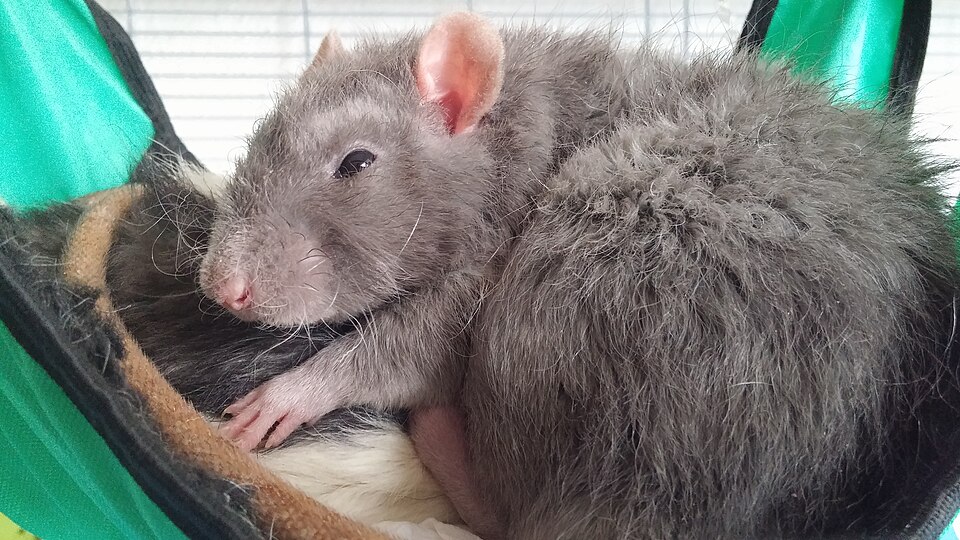
When you tickle a rat, you won't hear a thing, but it's laughing. According to the RSPCA, scientists have found that happy or excited rats make sounds too high-pitched for the human ear to hear, and that this is the rats' "laughter." What's more, rats remember the people who tickle them and play with them, and they prefer to spend time with them. Pet rats are descended from the brown rat (Rattus norvegicus); they are clever, clean and extremely social.
- Never alone: According to the RSPCA, rats shouldn't be kept on their own; keep at least two, as a same-sex or neutered pair or group.
- A big, multi-level cage: According to Blue Cross, at least 90 × 60 × 120 cm for two to five rats, with a solid floor rather than wire.
- Play outside the cage every day: According to Blue Cross, at least an hour a day, in a room that has been made rat-safe.
- Clever and trainable: According to the RSPCA, they can learn to come to their name, give a high five and fetch a ball; training should only be done with rewards.
- Sensitive lungs: According to the PDSA, they are very prone to respiratory diseases; don't use dusty bedding, and keep the cage clean and well ventilated.
Why at least two rats?
According to the RSPCA, rats play together, eat together, look after their elders and sleep together in one big "rat pile." They are social animals and should never be kept on their own. According to the PDSA, although rats enjoy spending time with people, they need one or two rat companions to stay happy and healthy. According to Blue Cross, rats that live alone can even become depressed.
The easiest option is a same-sex pair or a small group. The PDSA says that keeping siblings from the same litter together reduces the chance of fighting. If you're thinking about a mixed pair or group, the male must be neutered; according to Blue Cross, rats can breed as early as five weeks of age.
Rats often play-fight, and this can sometimes look like real fighting. Here's how the PDSA tells the two apart:
| What you see | According to the PDSA |
|---|---|
| They take turns chasing and pinning each other down | Play |
| The "bites" don't cause harm and are aimed at the scruff | Play |
| Their fur stands on end | Fighting |
| One or both have wounds; bites are at the base of the tail or on the sides | Fighting |
| The weaker one hides from the other and acts tense | Fighting |
According to the PDSA, if rats are often fighting for real, they need to be separated. According to Blue Cross, unexpected fighting in a group that gets along can be a sign of a health problem or pain; talk to your vet.
The cage: big, multi-level and well ventilated
According to Blue Cross, the best home for rats is a wire cage, and the bigger and taller the better, because rats are very active and love to climb. For two to five rats, the cage should be at least 90 × 60 × 120 cm (length × depth × height), not counting the stand. According to Blue Cross, hamster cages aren't big enough for rats, and aquarium-style glass tanks aren't suitable because they don't have enough ventilation.
- Solid floor: According to the RSPCA, the PDSA and Blue Cross, the floor should be solid, not wire or mesh; wire floors can cause foot problems.
- Narrow bar spacing: According to the RSPCA, the gaps between the bars should be too narrow for a rat to get its head through; if the head fits, the whole body will too.
- Levels and furnishings: The RSPCA recommends shelves, tunnels, ropes, hammocks, ladders and hiding places, but the furnishings shouldn't take up all the space.
- Hiding places: According to the RSPCA, there should be one more hiding place than there are rats, and each should have more than one exit. Large cardboard tubes work as both hiding places and something to chew.
- Good ventilation: According to the PDSA, a cage with poor airflow can lead to serious lung problems.
According to the RSPCA, the ideal temperature for rats is 19–23 °C (66–73 °F). The cage shouldn't get direct sunlight, and it should be somewhere that isn't too bright during the day and stays dark at night; bright light can damage the eyes of white (albino) rats with red eyes in particular. The RSPCA also recommends not keeping the cage in a conservatory, garage, bathroom or air-conditioned room, and keeping it away from strong smells such as air fresheners and cigarette smoke.
Rats can hear high-frequency sounds that we can't. According to the RSPCA, the cage shouldn't be near sources of sound such as alarms, doorbells, vacuum cleaners, speakers, televisions, computer screens and the kitchen sink.
- Sawdust and dusty wood shavings: According to the RSPCA, the PDSA and Blue Cross, they can cause breathing problems.
- Cedar and pine shavings, newspaper: According to the PDSA, they can be toxic.
- Soft nesting materials like cotton wool and fluff: They can wrap around toes and injure them, and if swallowed, they can block the gut (PDSA, RSPCA).
- Scented or colored bedding: The RSPCA and Blue Cross don't recommend it; rats have a very sensitive sense of smell.
The PDSA recommends a paper-based bedding or a washable fleece cage liner; the RSPCA suggests white paper tissue and hay for nesting.
Cleaning and smell
According to the PDSA, rats can smell: their urine contains a lot of ammonia, and exposure to ammonia can lead to respiratory diseases. That's why regular cleaning matters not just for the smell but for their health.
- Every day: Check the cage and remove soiled bedding (PDSA).
- Once a week: Clean the whole cage thoroughly with a pet-safe cleaner (PDSA, Blue Cross).
- While they're awake: According to the RSPCA, clean while the rats are awake, not in the middle of the day while they're sleeping.
- A familiar smell: Put back a handful of old bedding that isn't soiled (RSPCA, PDSA).
- Litter training: According to the PDSA, teaching rats to use a litter tray is surprisingly easy: put a tray in the corner they usually use and reward them when they use it.
Intelligence, play and enrichment
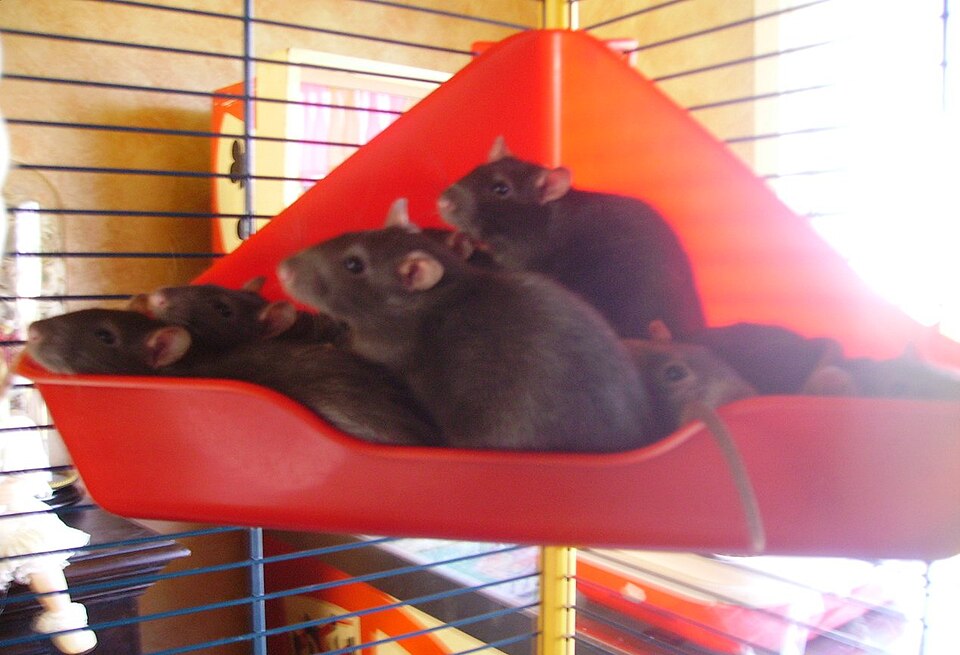
According to the RSPCA, rats have very strong memories: they memorize routes, remember what they've learned and recognize people. They learn quickly; they can learn to come to their name, give a high five, fetch a ball and roll over. The RSPCA recommends training only with rewards and never punishing a rat.
The RSPCA describes a happy rat like this: its ears may turn pink, and when it's in the mood to play, it jumps and leaps off the ground ("popcorning"). A content rat may softly grind its teeth, but the RSPCA reminds owners that this can also be a sign of stress, anxiety or pain, so you need to look at its body language as a whole. According to the RSPCA, a very happy rat may vibrate gently and make its eyes bulge in and out ("boggling"). But if its eyes bulge more than usual or don't go back into their sockets, it can be a sign of stress or illness; see a vet right away.
- Time outside the cage: According to Blue Cross, at least an hour a day. Prepare the room first: close doors and windows, block off gaps in the floorboards, remove potted plants because some can be toxic, and cover cables with protective tubing.
- Foraging: The RSPCA recommends scattering part of the food around the cage, mixing it into clean bedding or hiding it in cardboard tubes.
- Digging box: According to the RSPCA, rats love to dig; under supervision, you can give them a box filled with clean sand or compost.
- Ropes: According to the RSPCA, rats both climb and chew ropes; they should be made of natural fibers like cotton and replaced as they fray. Swap their toys around regularly, too.
- Water play: Some rats love playing with water. According to the RSPCA, a shallow dish filled with room-temperature water should only be offered under supervision; the rat should be able to get in and out on its own and should never be forced.
According to the RSPCA, rats and other rodents should never be put in exercise balls; they stop them from exploring their surroundings and cause a lot of stress. Whiskers should never be trimmed either: rats find their way in the dark and keep their balance with their whiskers.
Getting used to handling and holding them correctly
According to the PDSA, rats that get used to people at a young age very rarely bite and are easy to handle. According to the RSPCA, because rats sleep during the day, the best times to feed and handle them are the morning and the evening.
- Don't force it: According to the RSPCA, rats should be given a choice; they shouldn't be forced into anything, and they should be allowed to investigate new things at their own pace. According to Blue Cross, rats handled correctly from a young age form a strong bond with you.
- Hold correctly: According to Blue Cross, place one hand under its chest just behind the front legs and hold it securely without squeezing; support its back legs with your other hand.
- Hold it close to your body: The PDSA recommends holding your rat close to your body so it feels secure; many rats love sitting on a shoulder.
- Never by the tail: According to Blue Cross, holding a rat by its tail can injure it.
- Supervise children: According to the PDSA, young children should stroke and hold rats close to the ground.
Diet in brief
According to the RSPCA, give rats pellets made specifically for them; rabbit, guinea pig or hamster foods don't meet their needs. Small amounts of fruit, vegetables, cooked egg and grains can be part of the daily portion. The RSPCA recommends feeding twice a day, in the morning and evening, and serving food in a ceramic bowl rather than a metal one; metal bowls make ultrasonic sounds. Put out more than one water bottle so they can all drink at the same time. According to the PDSA, rats gain weight easily.
According to the RSPCA, onions, citrus fruits, walnuts, rhubarb, grapes, raisins and chocolate are harmful to rats. Sugary and fatty foods, such as dairy products, should only be used as small rewards during training. According to the RSPCA, rats can't vomit; if you suspect yours has eaten something harmful, call your vet right away.
Health: nose, eyes and breathing
According to the PDSA, rats are very prone to respiratory diseases. If you see watery eyes, a runny nose, a head tilted to one side, difficulty breathing, wheezing, sneezing or weight loss, go to a vet right away, because infections can get worse quickly. According to the PDSA, tumors are also very common in rats; if you notice a lump on your rat's body, talk to your vet.
According to the PDSA, glands in a rat's eyes produce a reddish-brown fluid; it can look like blood or a nosebleed, and it increases when the rat is stressed. Blue Cross says it isn't blood, but that you should still talk to a vet.
The RSPCA says that teaching rats to step onto a scale in exchange for a treat makes regular weighing easier. If you log the weigh-ins in Tüylüm's Weight tracking, you can easily spot a sudden gain or loss.
More of our rodent articles: rodents. On teeth and chewing: why rodents chew.
Frequently asked questions
Is it enough if I get one rat and give it lots of attention?
No. According to the RSPCA, rats should never be kept on their own; according to Blue Cross, rats that live alone can become depressed. The time it spends with you is very valuable, but it doesn't replace a rat companion.
Do rats smell?
According to the PDSA, they can smell because of the ammonia in their urine if the cage isn't cleaned regularly. The RSPCA, on the other hand, says rats are very clean animals that groom themselves every day. Removing soiled bedding every day, doing a full clean once a week and litter training all reduce the smell.
Are rats noisy at night?
According to the PDSA, rats are active in the evening and at night, so they can be noisy at those times. According to Blue Cross, they like being somewhere they can see you, but when choosing a spot for the cage, keep in mind that they might disturb your sleep at night.

Keep track of your pet's care in TüylümLog vet visits, vaccine and medication dates, and we'll remind you when it's time. Share it all with your family in Home.
Sources
- RSPCA · Rats
- RSPCA · Creating a good home for rats
- RSPCA · Rat behaviour
- RSPCA · What to feed rats
- PDSA · Rats as pets
- Blue Cross · Caring for your rat
By Tüylüm · Published and last checked: October 24, 2026. Spotted a mistake? Write to [email protected] and we'll fix it right away. Photos are from Wikimedia Commons, used under the license shown below each photo.