Rabbits and children: why rabbits don't like being cuddled, and how to spend time together
Bringing a rabbit into a home with children often starts with "kids love them, they'll cuddle it." The picture painted by the Rabbit Welfare Association & Fund (RWAF) and the RSPCA is a bit different: a rabbit is a prey animal, and being picked up often feels to it like being caught by a predator. This article collects those two organizations' advice for rabbits and children. We also covered how to hold a rabbit in Handling your rabbit correctly.
- Laps aren't affection: According to RWAF, rabbits don't enjoy being picked up; instinct reads it as a predator catching them.
- Floor level: The RSPCA recommends interacting at ground level where possible, and young children only at floor level.
- Supervision: Every interaction between a child and a rabbit should be supervised by an adult.
- Lifting: According to the RSPCA, only adults or responsible older children who have been taught how should lift a rabbit.
- Adults responsible: Care, cleaning and vet costs are an adult's job.
Why don't rabbits like laps?
RWAF writes that rabbits don't enjoy being picked up, that their instinct reads it as a predator catching them, and that they often react because of it. The organization says good rabbit owners usually handle their rabbits only for health checks and get most enjoyment from watching natural behaviors. RWAF also notes that rabbits are rarely cuddly and may bite or scratch when stressed.
The RSPCA points to a similar sensitivity about lifting: a rabbit's spine is fragile and can be seriously or fatally injured if the rabbit struggles. A rabbit's reaction depends on its past handling; rabbits handled from a young age tend to be more relaxed, while those handled little or roughly may find human contact distressing. The RSPCA's warning: never hold a rabbit on its back, because it may go still and look calm while actually being stressed.
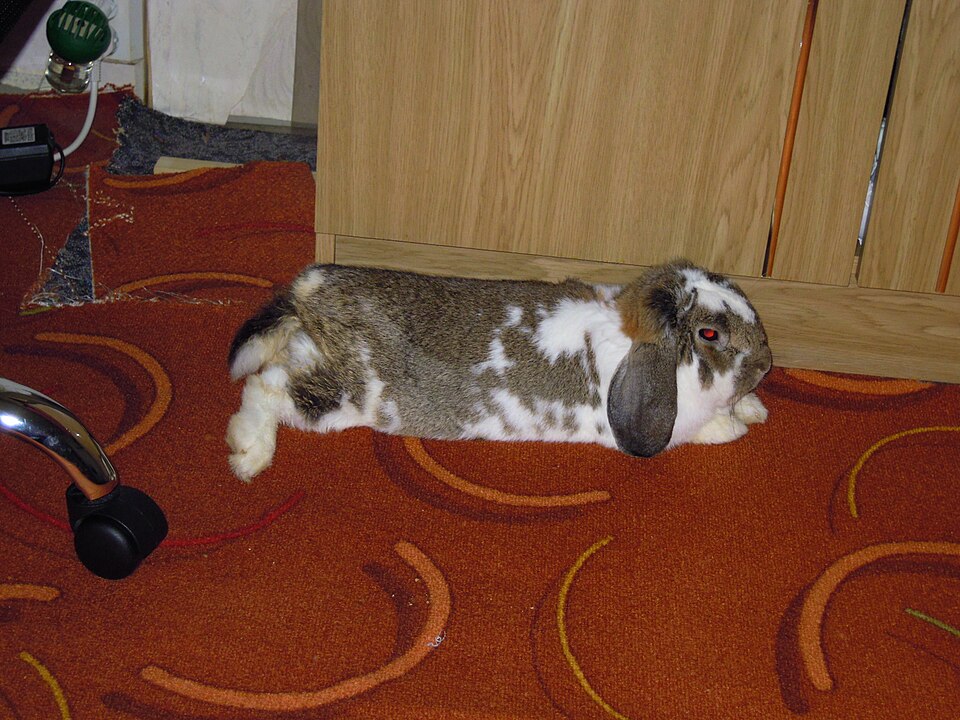
Spending time together on the floor
The RSPCA and RSPCA Australia say the same thing: interact at floor level when possible. That's less scary for the rabbit and lowers the risk of a fall if it escapes your arms. RSPCA Australia recommends that younger children only interact with rabbits at floor level. The RSPCA also suggests avoiding slippery surfaces, and a towel can help the rabbit feel steadier.
- Sit on the floor: Have your child sit down and let the rabbit come over if it wants to.
- Move slowly: RSPCA Australia recommends approaching slowly and keeping your voice low and calm; rabbits startle easily.
- Don't startle: Sudden movement, shouting or running can scare a rabbit; according to RSPCA Australia, a startled rabbit can panic and injure itself.
- Let the rabbit choose: According to RWAF, bonding takes time and patience, on the rabbit's terms. That can be hard to explain to children, which is why an adult should be present.
Adult supervision and lifting
The RSPCA wants an adult to supervise every interaction between children and rabbits. Only adults, or responsible older children who have been taught how to hold a rabbit, should lift one, and only under close supervision. The RSPCA's description of correct holding: support the back and bottom with one hand, and hold all four feet against your body so the rabbit feels secure; never lift by the ears. You'll find the details in Handling your rabbit correctly.
Adults are responsible for care
On its "Think you want a rabbit?" page, RWAF says rabbits are not good pets for children, and gives reasons: rabbits are rarely cuddly, as prey animals they can bite or scratch under stress, and bonding takes patience. The page describes a familiar story of children pestering their parents for a rabbit and then losing interest, after which the rabbit may be left alone in a hutch or abandoned.
Daily cleaning, fresh hay and bedding, annual vaccinations and vet visits, and a lifespan of more than ten years are among the obligations RWAF lists. So an adult needs to take responsibility for these jobs; a child can help, but responsibility stays with the adult. Remember too that a rabbit needs a large space and a companion: see our space article.
A quiet space
RSPCA Australia writes that rabbits startle easily, and the RSPCA recommends as many hiding places as there are rabbits. For hiding ideas, see our enrichment article.
If your rabbit has fallen, is limping, or struggled while being lifted, talk to your veterinarian without waiting; according to the RSPCA, a rabbit's spine can be seriously injured when it struggles. For a child's bite or scratch, see a health professional too. Tüylüm is a record-keeping tool; it doesn't diagnose.
With My home you can add family members to your rabbit's tracking and share care tasks among the adults in the Today tab. You can save the child's good moments with the rabbit as photos in the Memory book.
Frequently asked questions
My child wants to hold the rabbit. What should I do?
The RSPCA recommends that only adults or responsible older children who have been taught how, under close supervision, lift a rabbit. For younger children, sitting together on the floor is a better fit.
Is a rabbit a good first pet for a child?
RWAF says rabbits are not good pets for children: rarely cuddly, demanding to care for, and long-lived.
My rabbit bit me. Is it angry?
According to RWAF and the RSPCA, a rabbit is a prey animal and may bite or scratch when stressed. Look at how it was held and how it reacted; if it repeats, talk to your veterinarian.

Keep track of your pet's care in TüylümLog vet visits, vaccine and medication dates, and we'll remind you when it's time. Share it all with your family in Home.
Sources
- Rabbit Welfare Association & Fund · Think you want a rabbit?
- RSPCA · Handling rabbits
- RSPCA Australia · How can I socialise my rabbits with people and other rabbits?
This article is for general information only; it is not a diagnosis or treatment advice and does not replace a visit to a veterinarian. Talk to your vet about decisions on your pet's health. By Tüylüm · Published and last checked: November 9, 2026. Spotted a mistake? Write to [email protected] and we'll fix it right away. Photos are from Wikimedia Commons, used under the license shown below each photo.