Keeping your rabbit's mind busy: foraging, tunnels, platforms and play
Enough space and a companion cover only part of what a rabbit needs; the mind needs work too. The Rabbit Welfare Association & Fund (RWAF) and PDSA base this "enrichment" on natural behaviors: searching for food, hiding, watching from a height, digging. This article focuses on foraging, tunnel, platform and toy ideas. Digging and chewing have their own article: Why do rabbits dig and chew?
- Make them search: Scatter hay and food, or tuck it into tunnels or under a pile of hay, instead of using a bowl.
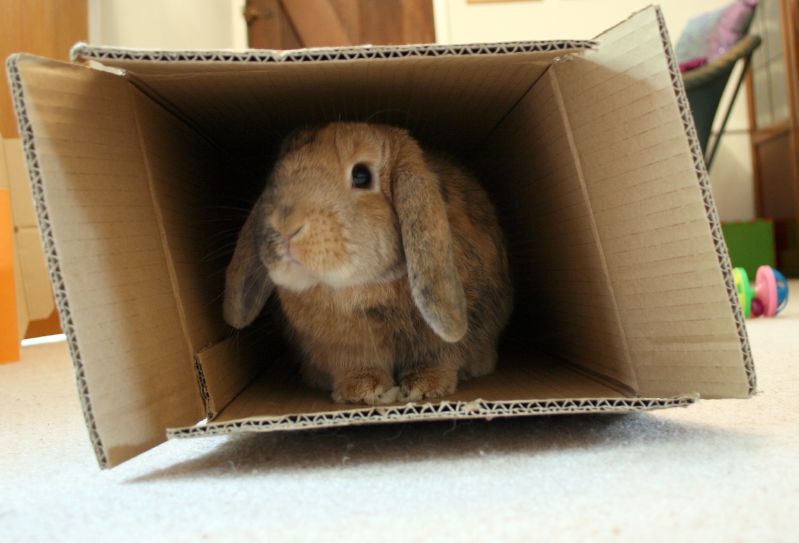
- Hiding spots: Tunnels and boxes with an entrance and an exit; a rabbit doesn't want to be trapped.
- Height: Sturdy platforms give your rabbit a lookout.
- Rotate: Swap toys and layout now and then, but keep the sleeping spot and tunnels where they are.
- Together: Pay attention to what your rabbit chooses; sit on the floor and don't force contact.
Why enrichment?
RWAF writes that wild rabbits spend most of their time foraging (the page says 80 percent). So for a pet rabbit too, the most natural play is looking for food. RWAF ties tunnels and platforms to the instincts of a prey animal: feeling safe and watching the surroundings. PDSA treats company (rabbits should never be kept alone) and a large living space as the foundation; the play ideas build on top.
Foraging games
Putting RWAF and PDSA together gives this list:
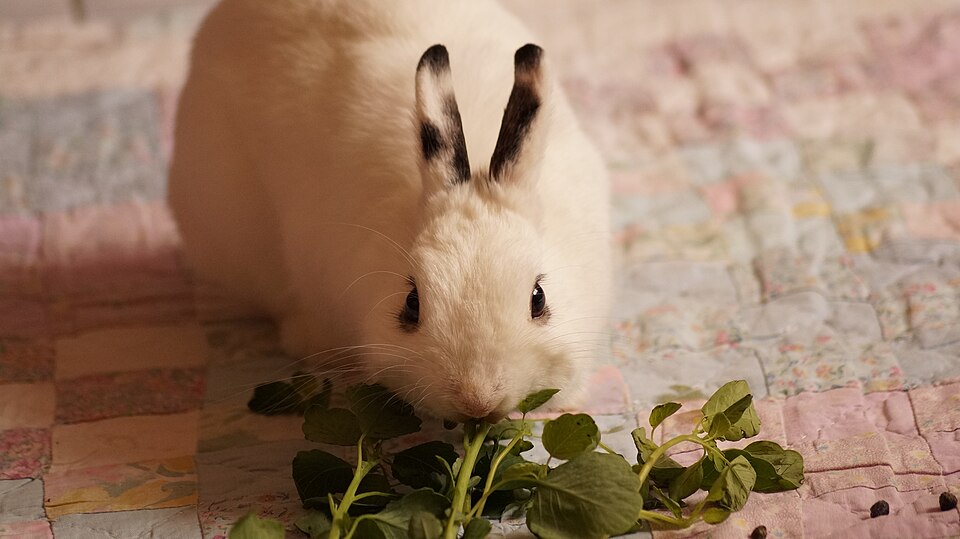
- Scatter it: RWAF suggests scattering food around the enclosure, putting it in tunnels or hiding it under hay instead of serving it in a bowl. PDSA suggests mixing pellets into the hay so the rabbit has to search.
- Hay-filled tube: A toilet paper roll stuffed with hay is one of RWAF's ideas. PDSA also suggests a cardboard tube stuffed with hay, or hollow rubber toys; hanging them from the enclosure makes it harder.
- Paper bags and willow tunnels: RWAF lists paper bags and willow tunnels stuffed with hay and fresh herbs.
- Muffin tin: According to RWAF, an old muffin tin can hold hay in each hole with pellets or treats hidden underneath.
- Treat ball: Balls that release pellets as the rabbit nudges them are on RWAF's list.
- Forage tray: PDSA suggests a shallow tray or planter filled with hay or shredded paper, with treats such as mint, sage, parsley, apple or carrot and fresh (uncut) grass; refresh the treats daily.
- Fresh forage: RWAF counts fresh plants as free, healthy enrichment. We collected the plants that appear on the charities' lists in our greens article.
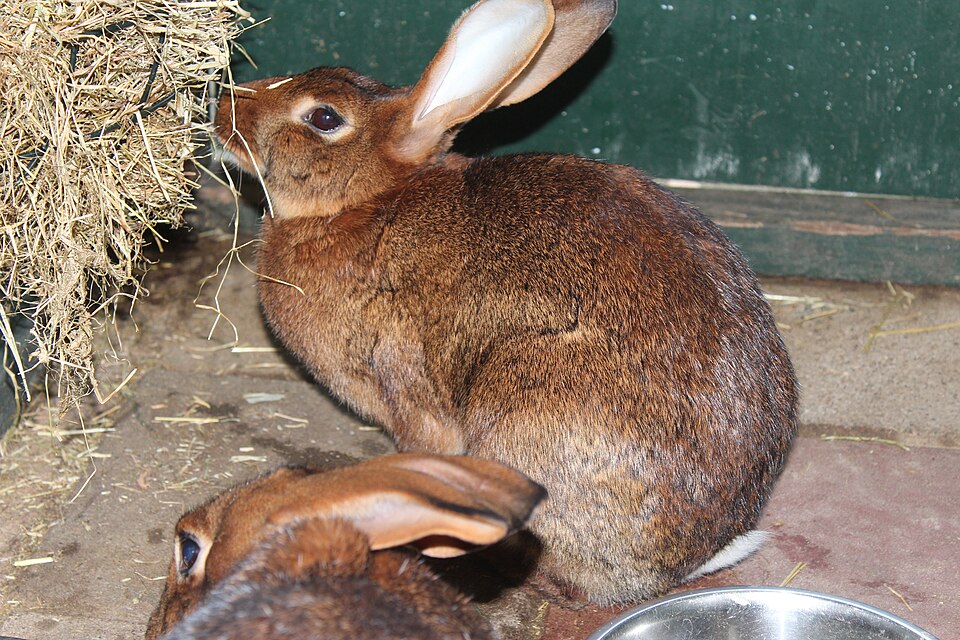
Hay is always the foundation of the diet; see What do rabbits eat? for the details. Treats like apple and carrot are sugary, so only a tiny amount; PDSA says to cut back regular meals on days when you give treats.
Tunnels, boxes and hiding
According to RWAF, tunnels encourage activity and also stand in for a burrow. They can be bought or homemade; RWAF's example is a cardboard box with a hole at each end. The key rule: provide both an entrance and an exit. RWAF says that as a prey animal the rabbit avoids being trapped. PDSA also suggests cutting two holes in a box, or filling a tissue box with hay or scrunched cardboard.
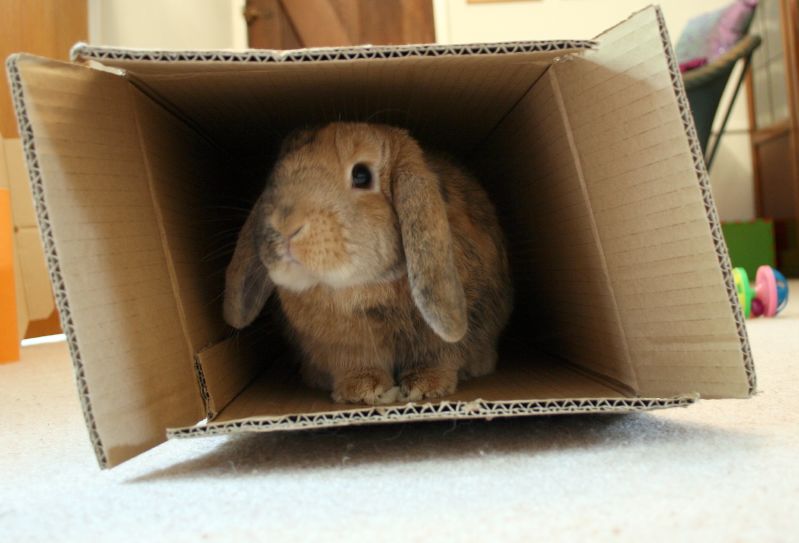
Expect the cardboard to be chewed and knocked down: RWAF reminds owners to replace boxes from time to time.
Platforms and height
RWAF suggests a block of wood or a sturdy box as a platform; it can double as a tunnel. PDSA suggests lookout spots at different heights, such as straw bales, crates or stumps. The top should be non-slip and reachable by jumping. PDSA also recommends checking with a vet before adding platforms.
RWAF adds that at least 1 meter (about 3 feet) of height lets a rabbit rear up and stretch, which helps prevent spinal deformity and lets them check for predators. For space dimensions, see our rabbit space article.
Rotate the toys
PDSA suggests putting some toys away and swapping them every week or two, and cleaning unused toys with a pet-safe detergent. RWAF also suggests moving toys and furniture around now and then while keeping the main sleeping area and tunnels in the same place, so the rabbit's home base stays secure.
| Idea | What the source says |
|---|---|
| Willow balls and toys | RWAF: even tossing the ball aside counts as play |
| Safe branches | RWAF lists willow, hazel, apple and blackthorn; PDSA lists apple, aspen, birch, maple and willow |
| Preparing branches | PDSA says to rinse them first and avoid roadside branches |
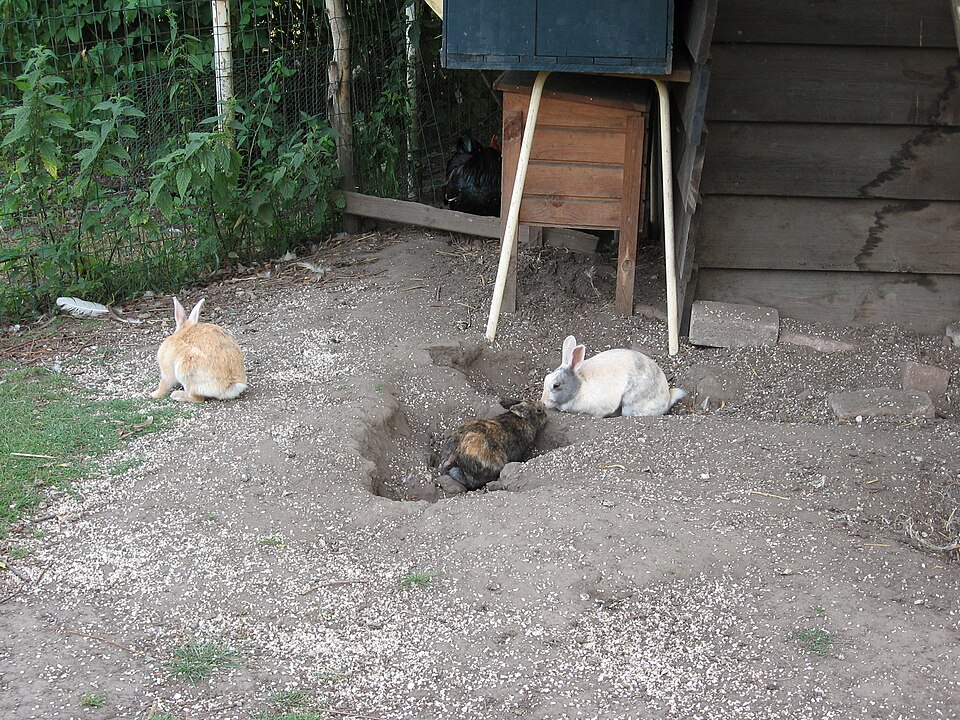
| Digging pit | RWAF: a large litter tray or planter filled with earth; change it regularly |
Spending time together
The RSPCA recommends interacting with rabbits at ground level where possible, which is less stressful for them. So sitting on the floor and letting your rabbit come to you is a good start. PDSA counts rewarding the rabbit each time it uses the litter tray as an idea that can double as a game.
If your rabbit suddenly withdraws, stops moving or stops eating, talk to your veterinarian without waiting. Tüylüm is a record-keeping tool; it doesn't diagnose.
You can add rotating toys and refreshing the digging box as daily care tasks in the Today tab. Photos of your rabbit's favorite games can go in the Memory book.
Frequently asked questions
My rabbit ignores toys. Is that normal?
According to RWAF, play can be as small as nudging a ball aside. Foraging is the first choice for most rabbits, so try hiding hay first. If behavior changes suddenly, talk to your veterinarian.
Are cardboard boxes safe?
RWAF and PDSA recommend boxes as tunnels and hiding places. Your rabbit will chew them, so replace them when worn and keep a hole at both ends.
How often should I change the toys?
PDSA suggests swapping toys every week or two. RWAF suggests keeping the main sleeping spot and tunnels fixed.

Keep track of your pet's care in TüylümLog vet visits, vaccine and medication dates, and we'll remind you when it's time. Share it all with your family in Home.
Sources
- Rabbit Welfare Association & Fund · Rabbit Housing Enrichment
- PDSA · Preventing boredom in rabbits
- RSPCA · Handling rabbits
This article is for general information only; it is not a diagnosis or treatment advice and does not replace a visit to a veterinarian. Talk to your vet about decisions on your pet's health. By Tüylüm · Published and last checked: November 9, 2026. Spotted a mistake? Write to [email protected] and we'll fix it right away. Photos are from Wikimedia Commons, used under the license shown below each photo.