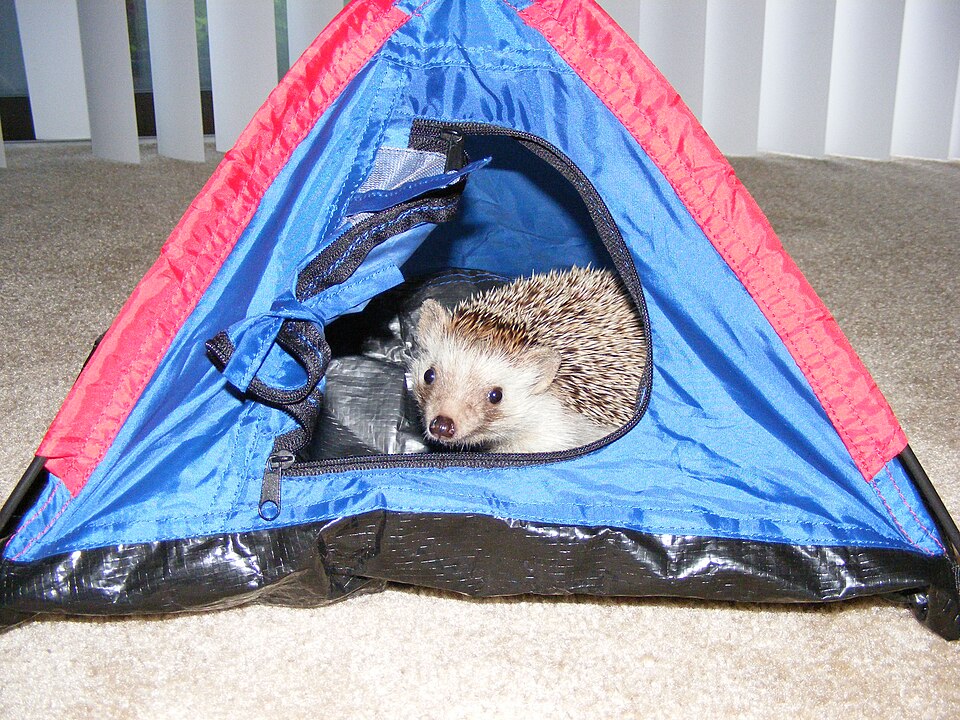
Temperature for African pygmy hedgehogs: why cold is dangerous and how warm the cage should be

When winter comes, we tend to think of many animals settling down for a long sleep; but for the African pygmy hedgehog in your home, it's a completely different story. According to the Royal Veterinary College, it's a tropical species from Central Africa and isn't prepared for the cold at all. On a winter night when the heating is turned down, or when the cage ends up in a cold corner by the window, your hedgehog may start to slow down and become sluggish. This isn't "hibernation"; it's a state that can be dangerous for a hedgehog. In this article we explain, based on veterinary sources, how to keep your hedgehog warm and safe.
- The right temperature: According to Merck, the ideal range is 24–29 °C (75–84 °F); the University of Illinois also recommends 24–29 °C.
- Not hibernation: According to an article by a vet in Vet Times, African hedgehogs don't truly hibernate; at extreme temperatures they can go into periods of sluggishness (torpor).
- Torpor is unhealthy: According to Merck, this state can suppress the immune system, disrupt how the organs work and lead to starvation.
- Heat is a problem too: According to Merck, an environment that's too hot can also lead to torpor. Keep the cage out of direct sunlight.
- Measure, don't guess: The University of Illinois recommends using at least two thermometers in the cage. If you find your hedgehog sluggish or cold, call your vet right away.
Not hibernation, but torpor
According to Merck, if a hedgehog is kept in a very cold or very hot environment, it can go into a sluggish state (torpor), and this state is considered unhealthy: it can suppress the immune system, disrupt how the organs work and lead to starvation. The University of Illinois also says that temperatures outside the right range can cause torpor, reduced activity and a weakened immune system.
According to an article in Vet Times by exotic animal vet Joanna Hedley, African hedgehogs, unlike their European relatives, don't truly hibernate; but if they're exposed to extreme temperatures, they can go into periods of torpor. Hedley stresses that extra heating is necessary to prevent torpor. The Royal Veterinary College also notes that keeping a hedgehog within the right temperature range is important for preventing problems such as infections.
According to the University of Illinois, a hedgehog kept at an unsuitable temperature becomes less active; according to Merck, torpor can also lead to nervous system signs such as wobbling. If your hedgehog is sluggish, much less active than usual, unresponsive or feels cold to you, call your vet without waiting. Your vet will tell you over the phone what to do until you set off.
How warm should the cage be?
The ranges the sources recommend are close to each other, but not the same:
| Source | Recommended temperature |
|---|---|
| Merck Veterinary Manual | Ideal 24–29 °C (75–84 °F) (general range 22–32 °C / 72–90 °F) |
| University of Illinois | 24–29 °C (75–84 °F) |
| Royal Veterinary College | 24–30 °C (75–86 °F) |
| University of Florida | About 21–27 °C (70–81 °F) |
All of these ranges cover roughly 24–27 °C (75–81 °F). Decide on the target range for your own home, and your hedgehog's age and health, together with your vet. And don't forget the extremes: Merck's general range is 22–32 °C (72–90 °F); anything below or above that isn't suitable for a hedgehog.
Where to put the cage
The University of Florida wants the cage kept away from drafts, direct sunlight and cold spots. The Royal Veterinary College also recommends keeping the cage out of direct sunlight, so the temperature doesn't swing too much.
- Not in front of a window: The space in front of a sunny window can get very hot during the day and very cold at night.
- No drafts: Doorways and spots in front of windows that are opened often are drafty.
- Cold floors and outside walls: Remember the University of Florida's advice to "keep it away from cold spots", especially in winter.
- Humidity: Merck prefers low humidity, below 40%.
- Light schedule: According to Merck, hedgehogs avoid bright light, but they should still have a schedule of about 12 hours of light a day.
Heating: a warm corner and a cool corner
If your home isn't warm enough, you'll need an extra heat source. The sources recommend:
- Merck: A heating pad placed under the cage, or a ceramic heater made for reptiles, can be used.
- University of Florida: The cage should have a small, warm corner where your hedgehog can go to warm up, but can move away from if it gets too hot.
As the University of Florida recommends, set things up so your hedgehog can both warm up and move away when it needs to: a warm corner and a cooler side. Talk to your vet about which heater to choose and how to keep the temperature steady.

Thermometers: don't guess, measure
The University of Illinois recommends using at least two thermometers in the cage. If the heater is at one end of the cage, it helps to see the temperature at each end separately. Check the thermometers especially at these times:
- Winter nights: After the radiators or heating are turned down, and toward morning, when the room is at its coldest.
- Summer afternoons: When the house is at its hottest; the upper limit of Merck's general range is 32 °C (90 °F).
- When the seasons change: In the weeks when the heating is switched on or off.
- When the cage is moved: The temperature in the new spot may be different from the old one.
A daily look: how does your hedgehog seem?
Your hedgehog itself tells you as much as the thermometer does. According to the sources, a healthy hedgehog looks like this:
- Curious: According to Merck, healthy hedgehogs, even if they're shy at first, open up and explore their surroundings.
- Nose and breathing: According to Merck, the nose is normally moist and the hedgehog licks it often; its breathing makes no noise.
If, in the evening when it usually wakes up, your hedgehog isn't getting active as usual, hasn't touched its food or seems sluggish, check the room temperature first, then call your vet without waiting. According to Merck, hedgehogs tend to hide signs of illness, and the signs are often vague: lethargy, weakness, loss of appetite. Take small changes seriously.
Watch out in summer too
You need to protect your hedgehog not only from the cold but also from too much heat. According to Merck, an environment that's too hot can also put a hedgehog into torpor; according to the Vet Times article, too, hedgehogs can go into periods of torpor at extreme temperatures. The University of Florida and the Royal Veterinary College want the cage kept out of direct sunlight. In summer, keep the cage away from sunny spots and monitor the room temperature with a thermometer. If your hedgehog is lethargic, isn't moving or is behaving unusually, call your vet without waiting.
For the other things you need to know when starting life with a hedgehog: African pygmy hedgehog care. For setting up the cage: hedgehog cages and wheels.
You can add your own task to Tüylüm's Today tab, for example "Check the cage temperature" in the evenings. Everyone in your Home sees the same list, so whoever is looking after your hedgehog won't forget the check.
Frequently asked questions
Should my hedgehog hibernate in winter?
No. According to the vet's article in Vet Times, African hedgehogs don't truly hibernate; they go into torpor at extreme temperatures, and according to Merck this state of torpor is unhealthy. Keep your hedgehog within the recommended temperature range all winter long.
Is one thermometer enough for my hedgehog's cage?
The University of Illinois recommends at least two thermometers. If the heater is at one end of the cage, the two ends will have different temperatures, so two thermometers give you a more accurate picture.
My hedgehog seems quieter than usual and cold this morning. What should I do?
Call your vet without waiting. According to Merck, the torpor a hedgehog falls into in the cold is unhealthy; it can suppress the immune system and disrupt how the organs work. Your vet will tell you what to do until you set off.

Keep track of your pet's care in TüylümLog vet visits, vaccine and medication dates, and we'll remind you when it's time. Share it all with your family in Home.
Sources
- Merck Veterinary Manual · Management of Four-Toed (African Pygmy) Hedgehogs
- University of Illinois College of Veterinary Medicine · How to Care for Your Hedgehog
- University of Florida College of Veterinary Medicine · How to care for your pet hedgehog
- Merck Veterinary Manual · Diseases of Four-Toed (African Pygmy) Hedgehogs
- Vet Times · Joanna Hedley, African pygmy hedgehog care (2011, PDF)
- Royal Veterinary College, Beaumont Sainsbury Animal Hospital · African pygmy hedgehog care (PDF)
By Tüylüm · Published and last checked: October 24, 2026. Spotted a mistake? Write to [email protected] and we'll fix it right away. Photos are from Wikimedia Commons, used under the license shown below each photo.