Hedgehog cages and wheels: a large floor, a solid surface and a safe nest
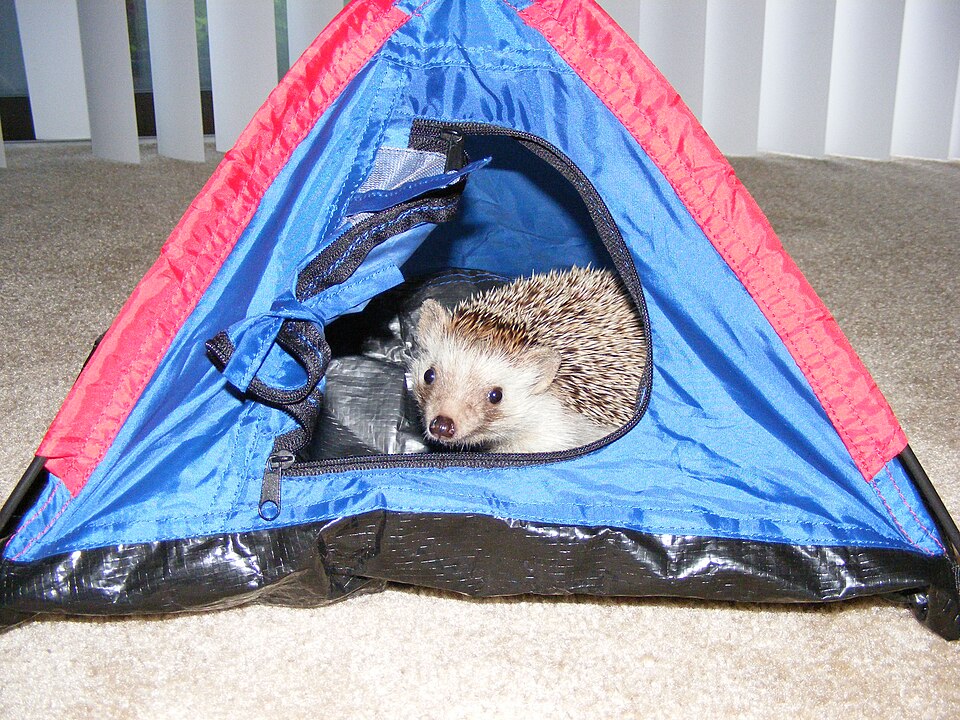
During the day, your hedgehog sleeps curled up like a ball of yarn in its hiding place; when evening comes, it roams every corner of the cage, digs through the bedding and runs on its wheel. According to the RSPCA, African pygmy hedgehogs are very active animals that cover long distances in the wild, and they are often kept in small cages that don't suit them. A good cage means a small world where your hedgehog can roam, dig, hide and run all night long.
- A large floor: Merck and the University of Illinois recommend a floor area of at least 60 × 90 cm; the Royal Veterinary College recommends the biggest cage you can find.
- No wire floors: Wire floors can trap legs and tear off nails.
- Escape-proof: Hedgehogs are good climbers and can escape through small holes. The cage should be secure, preferably with a lid, and well ventilated.
- A wheel with a solid surface: A wheel whose running surface has no wire or bars, big enough for your hedgehog to use comfortably.
- Regular cleaning: According to the University of Illinois, droppings should be picked up every day, the bedding changed midweek and the whole cage washed once a week.
How big should it be?
| Source | Recommended floor area |
|---|---|
| Merck Veterinary Manual | At least 0.6 × 0.9 m |
| Royal Veterinary College | The biggest cage you can find |
| University of Illinois | At least about 60 × 90 cm |
| University of Florida | About 120 × 60 cm |
According to the University of Florida, the cage should be large because hedgehogs love to explore; a large cage also has better ventilation.
Cage type: no escapes, no wire floors
According to the University of Florida, large terrariums or guinea pig cages with solid bottoms are good options for hedgehogs. Merck also considers large plastic storage bins and single-level wire cages with plastic bases suitable, as long as the spacing between the bars is right.
- Floor: Solid floors only. According to the University of Florida, wire floors can trap legs or tear off nails.
- Bar spacing: According to Merck, widely spaced bars can trap legs; also according to Merck, fractures can happen when a leg gets caught in the cage wire or the wheel.
- Lower walls: According to the University of Illinois, in a cage with wire walls, at least the bottom 30 cm of the walls should be solid, so your hedgehog doesn't climb and injure its toes.
- Lid and ventilation: Merck wants the cage to be secure, preferably with a lid, and well ventilated.
The sources disagree here. Merck doesn't recommend glass aquariums because their ventilation is poor; the University of Illinois, on the other hand, gives a smooth-sided glass aquarium as an example, and the Royal Veterinary College considers a large, well-ventilated glass or plastic tank suitable. Whichever cage you choose, make sure air circulates well, and if you can't decide, ask your vet.
Bedding: soft, absorbent and dust-free
According to Merck, bedding should be soft and absorbent, and at least in some areas it should be 8–10 cm deep so your hedgehog can dig.
- Suitable options: Merck sees recycled paper bedding as a good choice; aspen shavings, alfalfa pellets and hay are also acceptable. The University of Florida recommends paper pellets or kiln-dried pine or aspen shavings.
- What to avoid: According to the University of Illinois, shavings from aromatic woods such as cedar, and dusty materials, can irritate the airways; the University of Florida also says cedar shavings can irritate the lungs. The Royal Veterinary College doesn't recommend fine sawdust or wood chips. Merck wants you to avoid rough, dusty or scented bedding, as well as string or loose fabric fibers that can wrap around toes.
A hide: an absolute must
According to Merck, a hide is essential for a hedgehog; hedgehogs avoid bright light. The University of Illinois recommends a box, a ready-made hut or a PVC pipe; the University of Florida lists a fabric sleeping bag or an igloo-shaped nest.
- According to the University of Illinois, the hide shouldn't have sharp edges, and its entrance should be wide enough that your hedgehog won't get stuck.
- According to Merck, string and loose fabric fibers can wrap around toes. If you use a fabric sleeping bag, replace it when it comes apart at the seams or starts to fray.

The wheel: a solid surface, big enough
Merck strongly recommends a wheel. The running surface should be solid metal or plastic, because legs can get trapped in wire wheels. According to Merck, solid-surface wheels are also easier to clean.
- Size: According to the University of Florida, the wheel should be big enough for your hedgehog to use comfortably; large wheels made for chinchillas can be good options. Our sources don't give a specific diameter.
- No bars or gaps: According to the University of Florida, the wheel's running surface should be solid, with no spaced bars.
- Cleaning: Include the wheel in the daily droppings cleanup too.
According to the University of Illinois, wheels with wire running surfaces can cause serious injuries such as broken legs. Replace any old wire wheel in the cage with a solid-surface wheel right away.
Dishes, litter box, toys and cleaning
- Water dish: According to the University of Florida, water can be given in a bottle; if your hedgehog chews the bottle or struggles with it, switch to a bowl heavy enough not to tip over, since chewing can damage its teeth.
- Litter box: The University of Florida says some owners use a very shallow litter box, which can be filled with soft pellets or paper towels. Don't use clumping or clay cat litter. According to the Royal Veterinary College, hedgehogs can be litter trained, but they are usually very messy animals and the cage needs frequent cleaning.
- Toys: Merck says the environment can be enriched with paper or plastic tunnels, hay and climbing structures. According to the University of Florida, toys shouldn't have small gaps where feet, nails or noses could get stuck.
Cleaning routine
Based on the recommendations of the University of Illinois and the Royal Veterinary College:
- Every morning: Remove leftover food (Royal Veterinary College).
- Every day: Pick up droppings. Include the wheel in this daily check too.
- Midweek: Change the bedding.
- Once a week: Wash the whole cage from top to bottom.
According to Merck, hedgehogs can carry Salmonella without showing signs; always wash your hands after cleaning the cage, and don't wash cage items in the kitchen.
Time outside the cage
Merck allows supervised exercise outside the cage. The Royal Veterinary College also supports supervised roaming in a limited area of the house, but reminds you to block access to anything your hedgehog could chew, eat or damage. According to Merck, gut blockages in hedgehogs often happen because they swallow rubber, hair or carpet fibers. Check the room before playtime: no cables, rubber or small objects lying around.
According to Merck, one of the causes of limping in hedgehogs is a foot or toe getting constricted by fibrous material; Merck also checks the toes for wrapped fibers during exams. Look at your hedgehog's feet regularly; if you see swelling or limping, call your vet.
When setting up the cage, don't forget about temperature: temperature for hedgehogs. To help a new hedgehog settle in: why hedgehogs raise their spines.
With Tüylüm's Food & litter supplies feature, you can keep track of your hedgehog's food and bedding: it calculates when your supplies will run out and reminds you before they do. Cage cleaning comes as a ready-made task for hedgehogs in the Today tab.
Frequently asked questions
Is a small hamster cage enough for a hedgehog?
Look at the cage's floor size. Merck and the University of Illinois recommend at least 60 × 90 cm, and the RSPCA stresses that this species is often kept in small, unsuitable cages. Cages smaller than this aren't enough for a hedgehog.
The wheel is very noisy at night. Can I take it out?
Merck strongly recommends a wheel; it's an important source of exercise for a hedgehog. Instead of removing the wheel, you could choose a solid-surface model that runs well, and put the cage somewhere other than the room you sleep in.
One of my hedgehog's feet looks swollen. What should I do?
Call your vet without waiting. According to Merck, a foot or toe getting constricted by fibrous material is one of the causes of limping in hedgehogs. Even if you can see something wrapped around the foot, don't try to cut it off yourself.

Keep track of your pet's care in TüylümLog vet visits, vaccine and medication dates, and we'll remind you when it's time. Share it all with your family in Home.
Sources
- Merck Veterinary Manual · Management of Four-Toed (African Pygmy) Hedgehogs
- Merck Veterinary Manual · Diseases of Four-Toed (African Pygmy) Hedgehogs
- Royal Veterinary College, Beaumont Sainsbury Animal Hospital · African pygmy hedgehog care (PDF)
- University of Florida College of Veterinary Medicine · How to care for your pet hedgehog
- University of Illinois College of Veterinary Medicine · How to Care for Your Hedgehog
- RSPCA · Keeping African pygmy hedgehogs as pets
By Tüylüm · Published and last checked: October 24, 2026. Spotted a mistake? Write to [email protected] and we'll fix it right away. Photos are from Wikimedia Commons, used under the license shown below each photo.