My hedgehog foams at the mouth and spreads it on its spines: what is self-anointing?
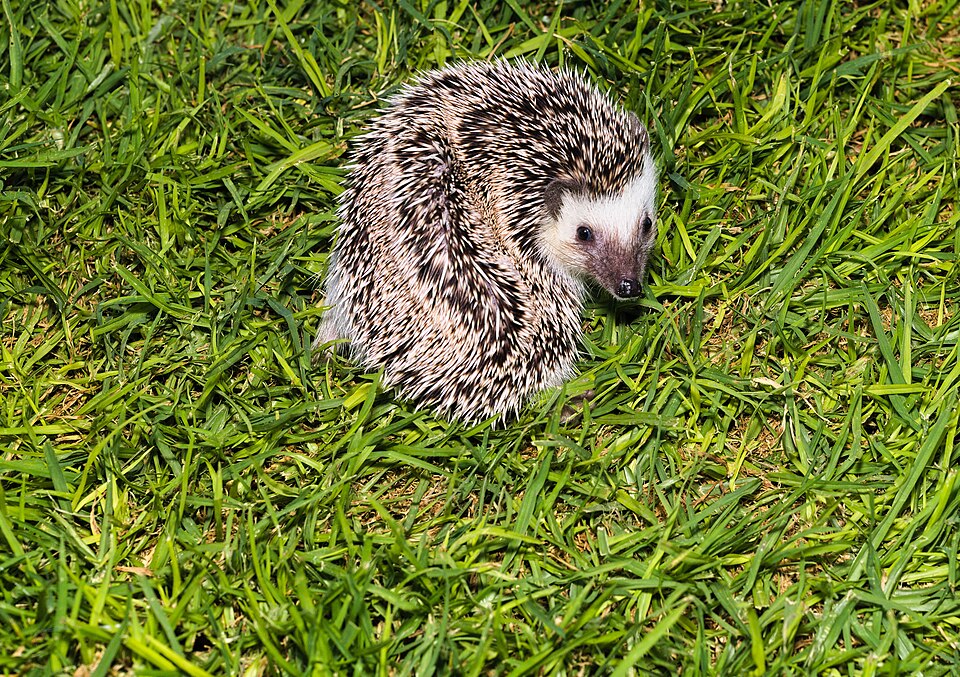
You put a shoe you've just bought, or a food it has never smelled before, in front of your hedgehog. First it brings its nose closer, then it starts to lick and chew. A few seconds later, white foam appears in its mouth, and the hedgehog, almost bending itself in two, spreads the foam over its spines. People who see this for the first time are often scared: "Is my hedgehog sick?" Most likely not. This is a well-known hedgehog behavior called self-anointing (sometimes also called anting), and scientists have been trying to figure it out for years.
- What happens: According to Merck, the hedgehog licks, bites or holds a substance in its mouth, produces frothy saliva and spreads it over its spines.
- What triggers it: Especially strong or unfamiliar smells. A huge variety of substances can set off this behavior.
- Why it does it: According to Merck, its purpose is unknown. Explanations such as defense, scent camouflage or communication have been suggested.
- Who does it more: In a study of European hedgehogs, young hedgehogs self-anointed more often than adults, and males more often than females.
- When to worry: It isn't the behavior itself that matters, but the signs that come with it. If your hedgehog isn't eating, is lethargic, or has bleeding or swelling in its mouth, call your vet.
What does self-anointing look like?
As Merck describes it, the behavior usually goes like this:
- Exploring: The hedgehog comes across a new object or smell, especially a pungent substance; it licks it, bites it or holds it in its mouth.
- Foam: It works up frothy saliva in its mouth.
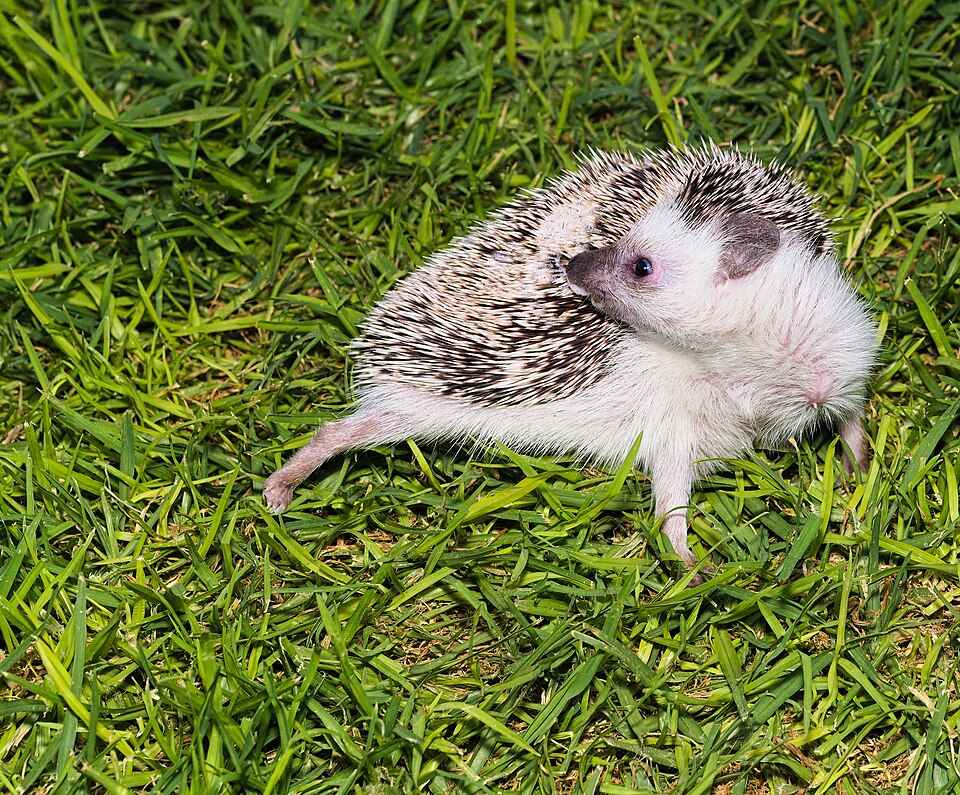
- Spreading: According to Merck, the hedgehog spreads this frothy mixture over its spines with its long tongue.
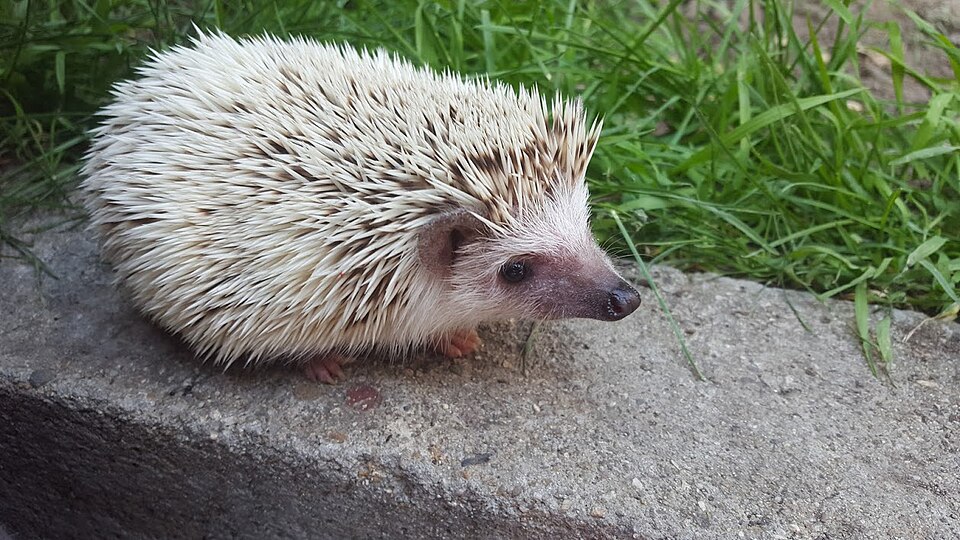
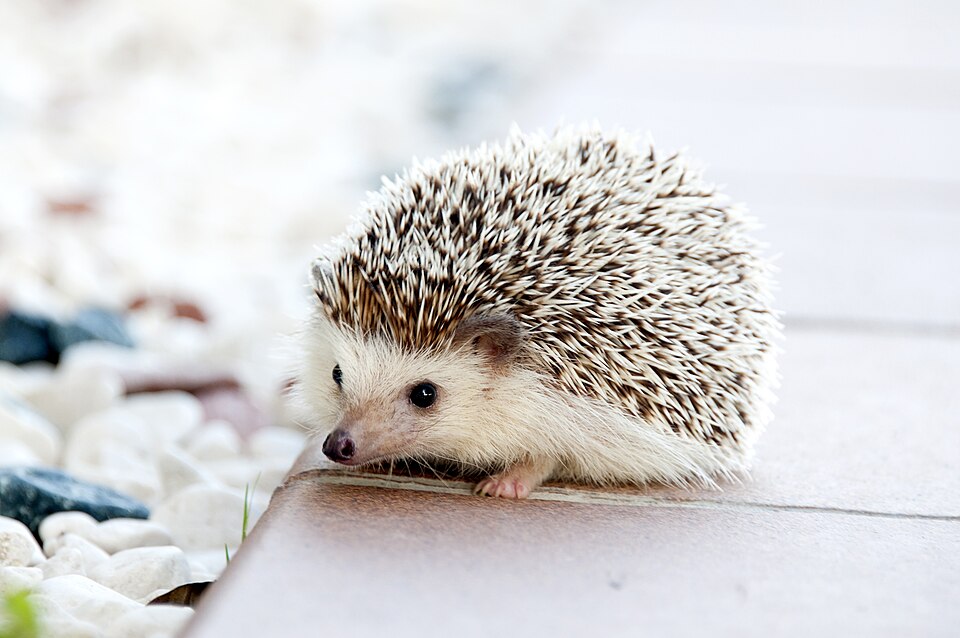
As you can see in the cover photo and the photo below, the hedgehog may bend its body during this time to get the foam onto its spines.
What can set it off?
According to Merck, many substances can set off this behavior, especially pungent ones; one of the photo captions Merck shares also describes a hedgehog self-anointing after coming across a new object or smell.
The list is surprisingly long. According to hedgehog researcher Nigel Reeve (University of Surrey Roehampton), speaking to National Wildlife magazine, hedgehogs self-anoint with a great many substances, and most of them aren't toxic at all; the magazine's examples include leather, painted wood and even dog feces. At home, too, unfamiliar smells such as a leather shoe, a new food or new bedding can catch your hedgehog's interest.
Why does it do it? Possible explanations
The short answer: nobody knows for sure. Merck says the purpose of this behavior is unknown; a study published in 2005 also notes that many ideas have been put forward to explain self-anointing in hedgehogs, but that its function is still poorly understood. The main explanations:
| Explanation | Based on |
|---|---|
| Defense: spreading irritating substances on the spines to make itself more "painful" to a predator | Brodie (Nature, 1977): the observation that hedgehogs take toxic secretions from toad skin into their mouths and lick them onto their spines |
| Scent camouflage or communication | Nigel Reeve (National Wildlife, 2005): most of the substances used aren't toxic; the view that the reason is most likely to mark the body with scent |
| A behavior linked to age, sex and season | D'Havé and colleagues (2005): observations of seven European hedgehog populations |
The defense idea
According to Brodie's study, published in Nature in 1977, hedgehogs take the toxic secretions in toads' skin into their mouths and lick them onto their spines. Brodie suggests that toad skin is just one of the irritating substances hedgehogs use for self-anointing, and that having these substances on the spines probably increases the pain, or the risk of infection, for an animal trying to catch the hedgehog.
The scent idea
Reeve, on the other hand, points out that hedgehogs also self-anoint with substances that are mostly non-toxic, and thinks the reason is most likely to mark the body with scent, for camouflage or communication. The same article also passes on the researchers' warning not to jump to conclusions about this behavior.
Clues from the European hedgehog
In their study published in the journal Acta Theriologica in 2005, D'Havé and colleagues looked at seven populations of European hedgehogs (Erinaceus europaeus). Their findings:
- Traces of self-anointing were seen in more than 11% of observations.
- Young hedgehogs in their first year of independent life self-anointed more often than adults.
- Male hedgehogs showed more traces of self-anointing than females.
- In adults, the behavior peaked in the summer months; in young hedgehogs, there was no clear seasonal pattern.
The researchers concluded that the behavior clearly depends on sex, age and season. Keep in mind that this study was done on European hedgehogs, not African pygmy hedgehogs; we don't know whether the same results apply to the hedgehog in your home.
Should you be worried?
Merck describes self-anointing as a behavior typical of hedgehogs. Still, keep an eye on the following:
- Watch what it puts in its mouth: According to Brodie's observation, hedgehogs can also use toxic substances for this. Don't leave cleaning products, medicines or chemicals where your hedgehog roams.
- Signs that come with it: According to Merck, dental and gum disease and oral tumors are common in hedgehogs, while signs of illness are often vague: lethargy, weakness, loss of appetite. If foam comes from its mouth all the time and not only while it's self-anointing, if your hedgehog isn't eating, or if you see bleeding or swelling in its mouth, call your vet.
- If its behavior changes suddenly: If you notice a sudden change in your hedgehog's overall behavior, ask your vet.
- Wash your hands: According to Merck, hedgehogs often carry Salmonella without showing signs. Always wash your hands after touching foamy spines, holding your hedgehog or cleaning its cage.
In short, if your hedgehog is self-anointing, usually all you need to do is watch, make sure its surroundings are safe, and wash your hands afterward.
If you're also curious about your hedgehog's other behaviors, such as hissing and rolling into a ball: why hedgehogs raise their spines. To start life with a hedgehog: African pygmy hedgehog care.
You won't forget the first time your hedgehog self-anoints. You can keep a photo of it by adding it to the Memories section in Tüylüm.
Frequently asked questions
Is self-anointing a sign of illness?
Merck describes this behavior as a known behavior typical of hedgehogs. The signs that come with it matter more than the behavior itself: if your hedgehog isn't eating, is lethargic, or has bleeding or swelling in its mouth, call your vet.
My hedgehog does this with every new object. Is that normal?
According to Merck, this behavior can be set off especially by pungent substances and by new objects or smells, so it's not surprising that your hedgehog self-anoints when it comes across new things. Make sure the objects your hedgehog can reach are harmless.
Do young hedgehogs do it more often?
In a study of European hedgehogs, young hedgehogs in their first year self-anointed more often than adults. We couldn't find a source showing whether the same is true for African pygmy hedgehogs.

Keep track of your pet's care in TüylümLog vet visits, vaccine and medication dates, and we'll remind you when it's time. Share it all with your family in Home.
Sources
- Merck Veterinary Manual · Overview of Four-Toed (African Pygmy) Hedgehogs
- Merck Veterinary Manual · Management of Four-Toed (African Pygmy) Hedgehogs
- Merck Veterinary Manual · Diseases of Four-Toed (African Pygmy) Hedgehogs
- Nature · Brodie (1977), Hedgehogs use toad venom in their own defence
- Acta Theriologica · D'Havé et al. (2005), Gender, age and seasonal dependent self-anointing in the European hedgehog
- National Wildlife Federation · Meet the Hedgehog (National Wildlife magazine, 2005)
By Tüylüm · Published and last checked: October 24, 2026. Spotted a mistake? Write to [email protected] and we'll fix it right away. Photos are from Wikimedia Commons, used under the license shown below each photo.