Betta fish care: the small jar myth and what they really need
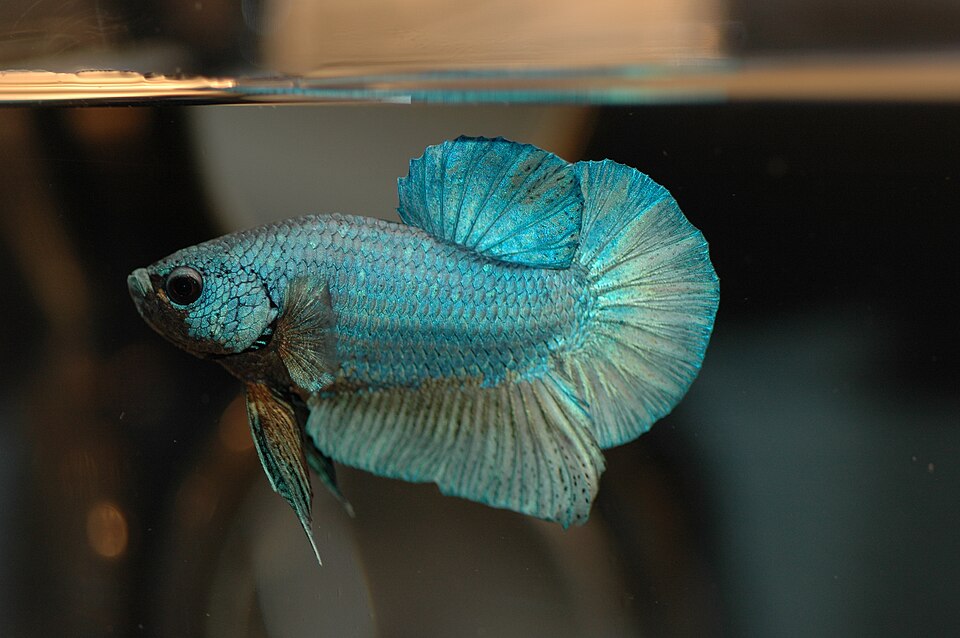
In the aquarium shop, there are little plastic cups lined up on the shelves, each with a betta waving its colorful fins. That sight gave rise to the idea that a betta can live happily in a tiny jar. An article from the University of Illinois College of Veterinary Medicine, based on the views of a vet who specializes in zoological medicine, says the opposite: bettas often live in containers too small to allow normal swimming and hiding behavior, and they shouldn't live in bowls. OATA also stresses that the small containers in shops are a temporary setup and shouldn't be copied at home. In this article we've gathered what a betta really needs.
- A tropical fish: A heater is a must. According to RSPCA Australia, the water should be kept between 24–26 °C (75–79 °F); room temperature usually isn't enough.
- No small containers: OATA recommends a tank of at least 20 liters for a single male.
- A filter is a must, the current gentle: Bettas like calm water; a strong current and suction can damage their long fins.
- Never two males in the same tank: According to OATA, they'll fight until one is badly injured or dies.
- Bubble nests are normal: According to RSPCA Australia, males building bubble nests on the water's surface is natural behavior.
Being able to breathe air doesn't mean "low maintenance"
Bettas are labyrinth fish. According to OATA, a special labyrinth organ lets them breathe air from the water's surface. This is one source of the small-container myth: "It breathes air anyway." But OATA's warning is clear: this ability doesn't mean a betta needs less care than other fish; it still needs a suitable tank and an adequate filter.
This trait has a consequence: according to RSPCA Australia, bettas like to take air from the surface now and then, even when there's plenty of oxygen in the water. That's why you must always leave a gap between the water's surface and the lid. But a lid is needed too: according to RSPCA Australia, bettas are very good jumpers.
The small container myth
According to OATA, shops may keep bettas in small containers with little decoration, but these are temporary setups with powerful filtration and shouldn't be used as a model at home. According to RSPCA Australia, small tanks and bowls don't give a betta enough space to meet its physical and mental needs. According to the University of Illinois, in a larger tank a betta can show its normal behaviors, and fewer toxic substances build up in the water.
| Source | Recommended tank for a single betta |
|---|---|
| OATA | At least 20 liters (at least 60 liters for a group of females) |
| RSPCA Australia | Ideally 20 liters or more; 10 liters as the absolute minimum |
| University of Illinois | 5 gallons (about 19 liters) or larger |
One more myth: the betta that feeds by nibbling the roots of a plant in a vase. According to the University of Illinois, this isn't true. Plants are good for hiding and exploring, but they aren't a food source; in the wild, bettas eat insects and insect larvae.
Heat: warm and steady
According to the University of Illinois, many people don't know the betta is a tropical fish. According to RSPCA Australia, the water should be kept between 24–26 °C (75–79 °F), and the range the University of Illinois recommends is similar (about 24–27 °C, or 75–80 °F). Since most homes are cooler than this, the tank needs a submersible heater with a thermostat. Check the temperature with a thermometer.
According to RSPCA Australia, a suitable heater won't fit in a small bowl. The small lamps placed on top of some bowls are presented as if they provide enough heat, but these lamps are switched off at night and, depending on the room, give either too little or too much heat. According to RSPCA Australia, the only way to get a steady, suitable temperature is a submersible aquarium heater.
According to OATA, to reduce temperature swings, the tank should be kept away from drafts, heat sources and direct sunlight.
The filter and a gentle current
According to OATA, a filter is a must, whatever the size of the tank. But bettas don't like a strong current:
- An adjustable filter: According to RSPCA Australia, bettas prefer a low current like their natural habitat; choose a filter with an adjustable flow.
- Watch the suction: According to the University of Illinois, a low-flow filter keeps delicate fins from getting caught in the filter's suction and damaged.
- Water changes: OATA recommends a partial water change of 25% at least once a week; RSPCA Australia says 10–25% weekly. How to do it: aquarium water changes.
- Tap water: According to the University of Illinois, the chlorine and chloramine in tap water can make a fish sick; use a water conditioner. Pure (distilled) water, on the other hand, shouldn't be used because it lacks important minerals.
- Testing: OATA recommends testing the water once a week. If you're setting up a new tank, cycle the filter first: setting up your first aquarium.
Decor: mind the long fins
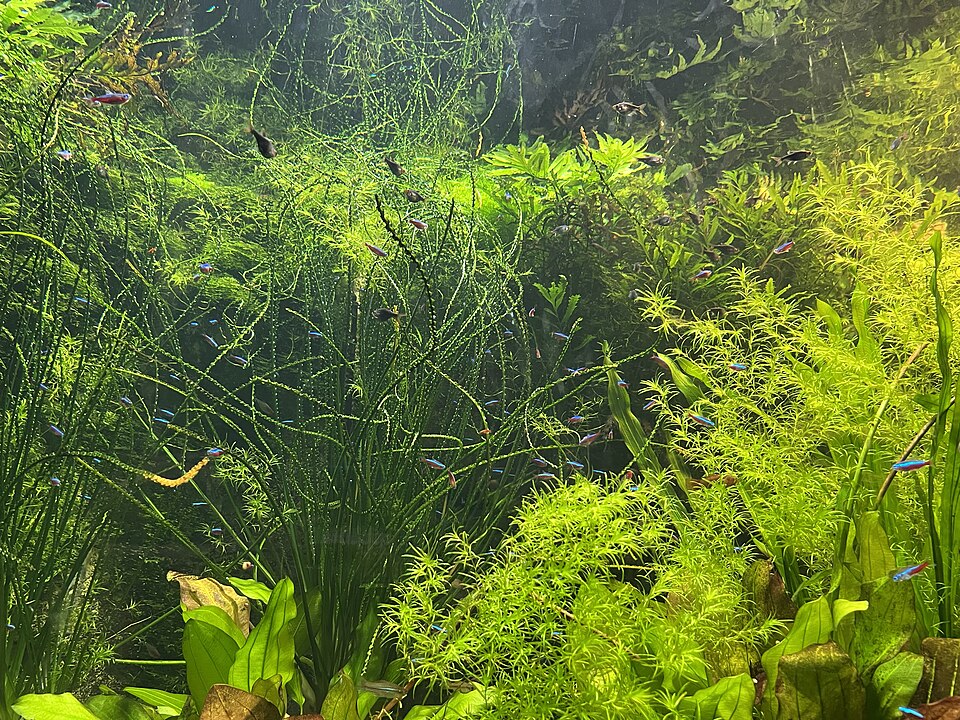
According to RSPCA Australia, in the wild bettas live in densely planted waters, and they feel safe in a tank full of plants and hiding places; they then become more active and curious.
- No sharp edges: According to OATA, sharp or very rough ornaments and artificial plants can tear long fins. According to RSPCA Australia, long-finned males in particular are prone to fin tears; the substrate should be smooth.
- A resting spot near the surface: According to RSPCA Australia, tall plants with broad leaves help a betta rest near the surface at night.
- Swimming space: According to the University of Illinois, decorations shouldn't take up most of the tank; bettas like to explore every part of it.
- Heavy tails: According to the RSPCA, selective breeding can have negative effects on animal welfare; for example, the very heavy tails of "rose-tailed" bettas can lead to health problems.
- No mirrors: According to RSPCA Australia, a mirror should never be put in the tank. A male betta thinks it's seeing another male in the mirror, keeps flaring its fins, and this leads to stress and exhaustion.
Companions: never two males
There's a reason the betta is called the "Siamese fighting fish". According to OATA, males are very aggressive, and if two males are put together they'll fight until one is badly injured or, more likely, dies. The RSPCA also lists male bettas among the fish that fight with their own kind.
- Females: According to OATA, females are much calmer and can be kept in groups of at least four females.
- Male and female: According to RSPCA Australia, they should be put together only for breeding; they may attack each other before or after spawning.
- Other species: According to OATA, males generally don't attack other species, but because of their long fins they're often on the receiving end of fin nipping by other fish. RSPCA Australia doesn't recommend that beginners keep a male betta with other fish; aquarium snails or large shrimp can be suitable companions. If you're going to set up a community tank, keep a spare tank ready in case a fight breaks out.
- Loneliness: According to the University of Illinois, bettas don't get lonely in their tanks, but they can get bored in a small one.
How to add a new fish to the tank: adding new fish to your aquarium.
Bubble nests: don't worry
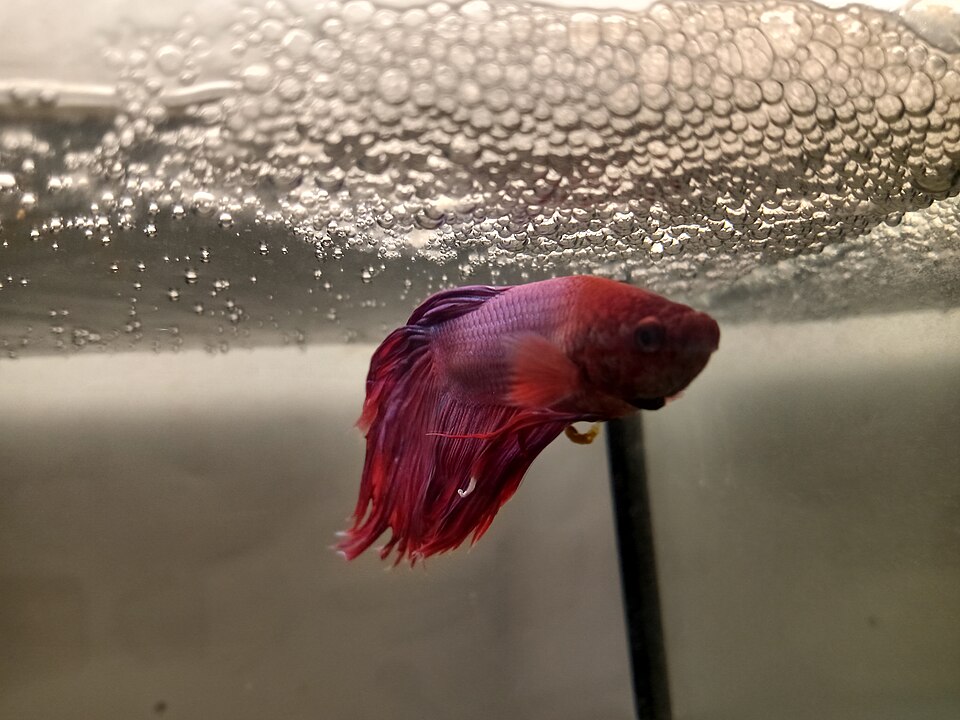
One morning you may see small clusters of bubbles in a corner of the water's surface. According to RSPCA Australia, male bettas sometimes build bubble nests that show they're ready to breed; they're usually made of bubbles of different sizes in a somewhat sheltered corner, and they're normal behavior. According to OATA, this delicate structure is made with bubbles blown from the mouth, sometimes held together with bits of plant.
Feeding
According to OATA, bettas should be fed good-quality flakes or pellets; there are also pellets made especially for bettas. According to the University of Illinois, bettas are carnivores and should be fed a balanced diet every day; protein-rich treats such as bloodworms or brine shrimp can be given in moderation. On the amount, the sources agree: once a day, as much as it can finish in a few minutes with nothing left over. According to RSPCA Australia, overfeeding is very common in bettas and leads to obesity, and uneaten food pollutes the water. More detail: overfeeding fish.
According to RSPCA Australia, it's normal for some bettas to rest in a corner. But a betta that hides all the time, looks sluggish and doesn't respond to its owner may be stressed or sick. According to OATA, test the water first; if you're still worried, talk to a vet who treats fish.
If you notice a change in your betta's behavior or appetite, you can log it in Tüylüm under Health › Complaint history. How long it has been going on appears at the top of the vet summary.
Frequently asked questions
Why shouldn't a betta live in a jar?
None of the sources consider small containers suitable. A small container has no room to swim or hide, toxic waste builds up quickly, and according to RSPCA Australia, a suitable heater won't fit. OATA recommends a filtered, heated tank of at least 20 liters for a single male betta.
Can I keep my male betta with a female?
According to RSPCA Australia, a male and a female should be put together only for breeding; they may attack each other before or after spawning.
My betta always stays near the top of the tank. Is that normal?
According to RSPCA Australia, bettas take air from the surface now and then and like to rest near the surface; it's also common for them to claim the upper part of the tank as their own. But if you notice a change, such as hanging at the surface or swimming erratically, test the water and, if needed, talk to your vet.

Keep track of your pet's care in TüylümLog vet visits, vaccine and medication dates, and we'll remind you when it's time. Share it all with your family in Home.
Sources
- OATA · How to look after Siamese fighting fish (Bettas)
- RSPCA Australia · How should I care for my Siamese fighting fish?
- University of Illinois College of Veterinary Medicine · Your betta needs more than a bowl
- RSPCA · Keeping fish together
- RSPCA · Keeping freshwater fish as pets
By Tüylüm · Published and last checked: October 24, 2026. Spotted a mistake? Write to [email protected] and we'll fix it right away. Photos are from Wikimedia Commons, used under the license shown below each photo.