How much do birds sleep? Darkness, quiet and the right light schedule
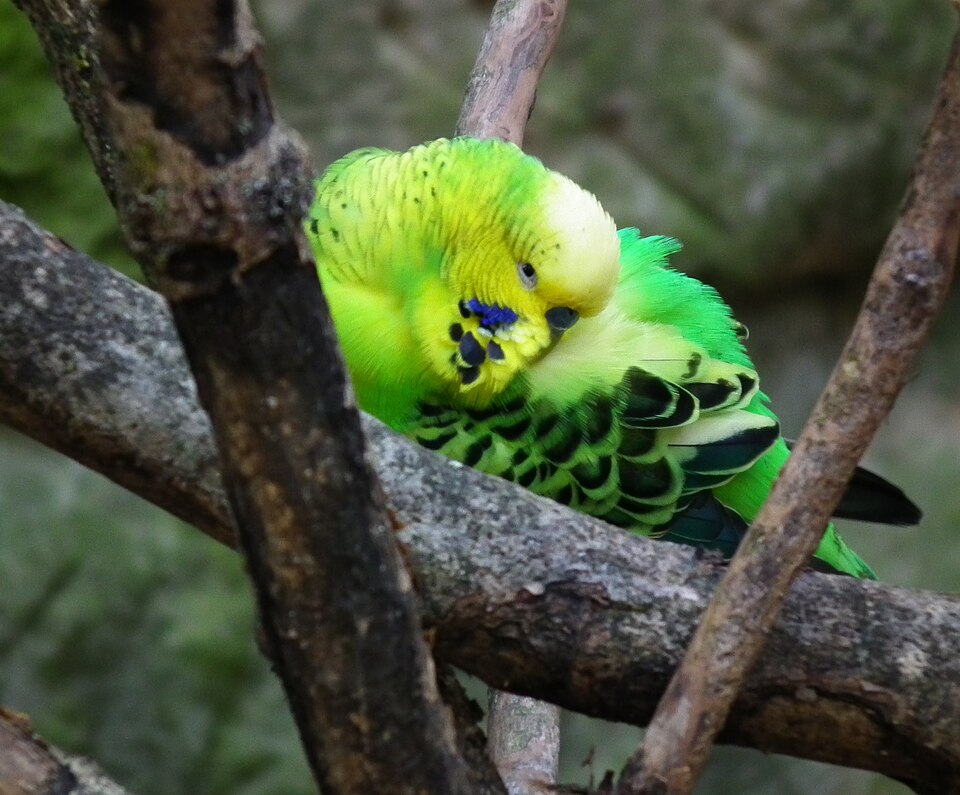
In the evening, the TV is on in the living room, the lights are bright and the conversation goes on. In the cage in the corner, your bird has fluffed up its feathers and is blinking, trying to sleep. For us, it's an ordinary evening; for the bird, it may be a night of broken sleep. A bird's sleep schedule is closely tied to light and day length. In this article, we explain how your bird can get a restful night, using advice from the Association of Avian Veterinarians (AAV), the UC Davis School of Veterinary Medicine, the RSPCA and the Royal Veterinary College.
- A long night: According to a handout from UC Davis's behavior service, the best is 10–12 hours of uninterrupted sleep every night.
- Dark and quiet: According to the AAV, a bird's sleep is easily interrupted by light and noise; a separate room for sleeping is often needed.
- Same time every night: According to UC Davis, birds prefer a consistent sleep schedule; a timer makes it easier.
- Natural day length: According to the AAV, most birds do well on a schedule that follows the natural day-night cycle; longer days can increase breeding behavior.
- How many hours? Talk to a vet experienced with birds about how much dark, quiet sleep your bird needs.
Why is sleep so important?
According to the AAV, adequate sleep is essential to a bird's health and well-being. Parrots are prey animals in the wild, with very sharp vision and hearing. That's why, according to the AAV, their sleep is easily interrupted by light and noise.
The AAV says inadequate sleep can contribute to stress, behavioral changes and sometimes increased breeding behavior. The reason for that last one is light: according to the AAV, in many bird species, longer days signal that breeding season has arrived. Artificial lighting in our homes makes it harder for birds to read these natural cues. The UC Davis handout also lists sleep deprivation among the causes of stress in birds.
How many hours of darkness?
According to a handout from the UC Davis School of Veterinary Medicine's clinical behavior service, the best is 10–12 hours of uninterrupted sleep every night. Rather than giving a fixed number, the AAV says most birds do well on a sleep schedule that follows the natural day-night cycle. Some birds, though, may need more sleep and a shorter light period, such as birds showing excessive breeding behavior. The AAV's advice is clear: talk to a vet experienced with birds about how many hours of quiet, dark, uninterrupted sleep your bird needs.
In practice, this means setting your bird's bedtime based on its morning. A simple calculation for a 10–12-hour night:
| Your bird wakes up at | Bedtime for 10–12 hours of darkness |
|---|---|
| 6:30 a.m. | 6:30 – 8:30 p.m. |
| 7:00 a.m. | 7:00 – 9:00 p.m. |
| 8:00 a.m. | 8:00 – 10:00 p.m. |
According to UC Davis, birds prefer a consistent sleep schedule. You can use a timer to turn the lights off at the same time every night.
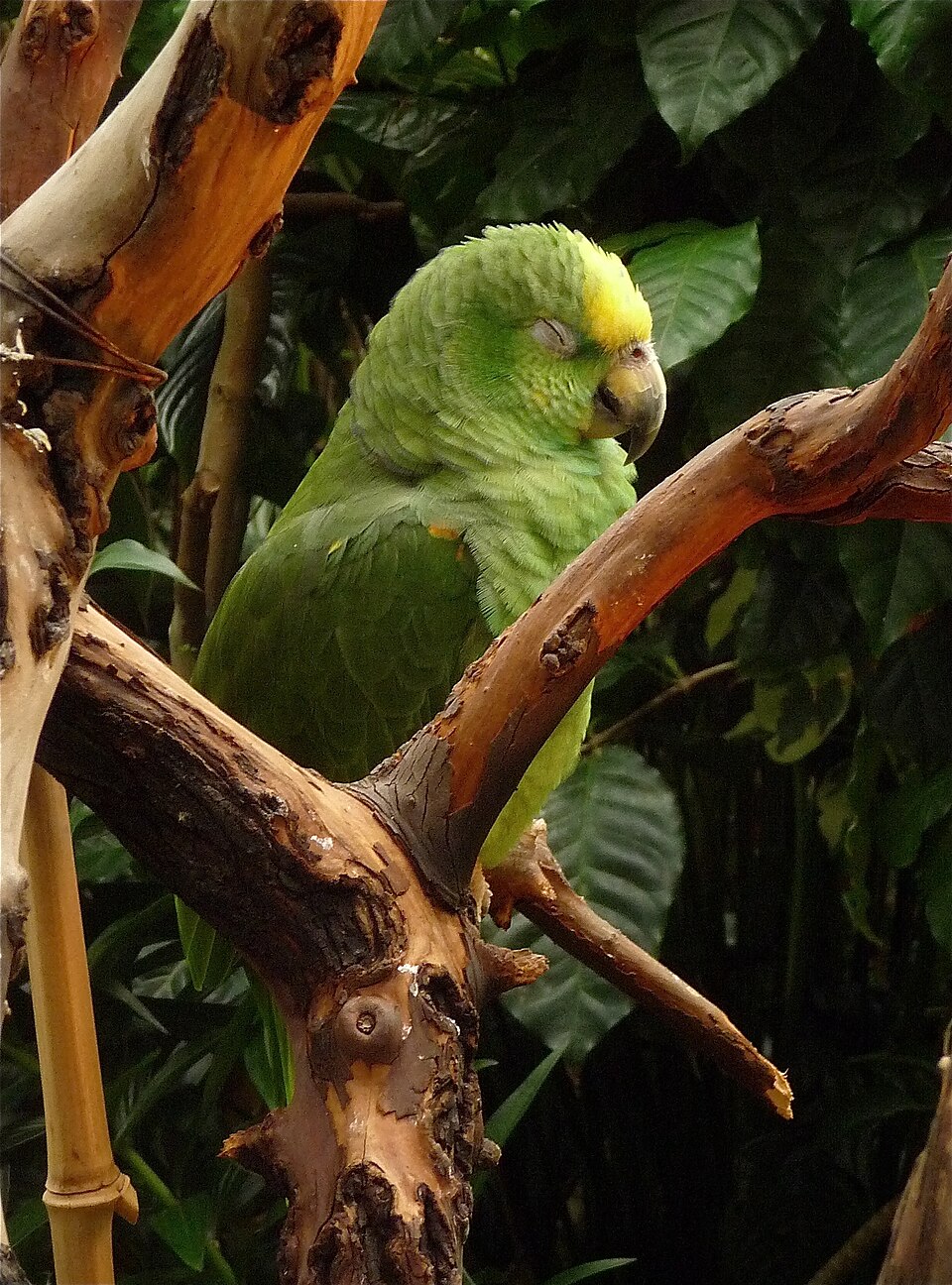
A separate sleeping room or sleeping cage
If there's light and noise in the living room until midnight, your bird can't sleep well there. According to the AAV, parrots often need a separate room for sleeping to protect them from these interruptions. Another AAV suggestion is to set up a separate sleeping cage for your bird in a busy household; that way, at night, your bird can sleep somewhere quiet and dark, away from the room where the family stays up late. The Royal Veterinary College also recommends that a cockatiel's cage ideally be used only at night or when the bird is unsupervised.
- Dark: Don't let light leak into the room where your bird sleeps. According to the AAV, light is one of the main things that interrupt sleep.
- Quiet: Choose a room away from the TV, music and late-night conversation.
- Temperature: According to the RSPCA, the right temperature for birds from tropical and subtropical habitats is 12–26 °C (54–79 °F). Keep the cage away from radiators, stoves and drafts.
- A sense of safety: The RSPCA recommends placing the back of the cage against a solid wall and covering the top with a cloth, so the bird feels safe from threats from behind and above.
- Timer: Use one to switch the lights off and on at the same time every day.
Is a cage cover enough?
In many homes, a cover goes over the cage at night. The RSPCA recommends covering the top of the cage with a cloth so the bird feels safe from threats from above. But according to the UC Davis handout, covering the cage at night may not always provide the best rest; a separate dark room may be needed for the bird to rest properly. So a cover can help, but on its own it may not be enough in a living room where the light and noise never stop.
Daylight matters too
According to the RSPCA, birds living indoors need artificial lighting that gives off UVA and UVB and is as close to natural daylight as possible. These lamps should stay on for as long as the bird would have daylight in the wild. There shouldn't be any glass or plastic between the lamp and the bird, because these block the rays. There should also be shaded spots where the bird can get away from the light.
According to the Royal Veterinary College, a bird lamp should be fitted above the cage, shining downward; bright light hitting the bird from the side can irritate its eyes. The AAV sees a natural light schedule that fits the season as a form of enrichment in itself. For more on cage placement and light: where should a bird cage go?
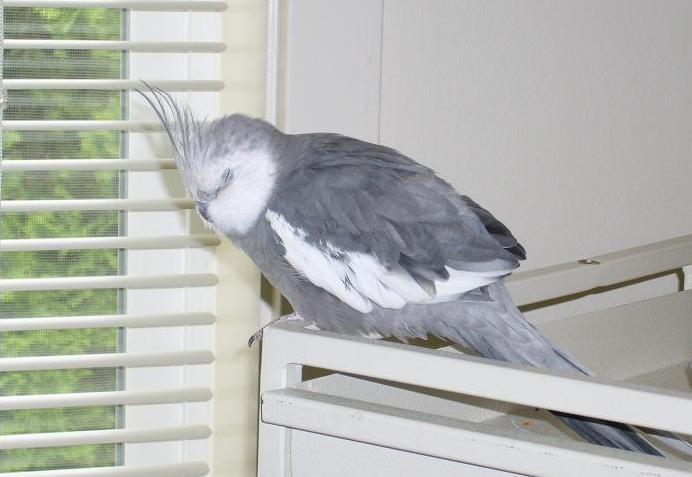
If your bird panics at night
Because of their sharp eyes and ears, birds can wake up and panic at a sudden light or noise at night. According to the RSPCA, if something makes a bird panic, it might fly off and crash-land or hit something. In a moment like that, here's the order the RSPCA suggests:
- Stay calm and don't step in right away. Wait a few seconds and let your bird recover.
- When your bird seems settled, move slowly toward it and offer your hand for it to step up.
- Don't rush over to grab your bird; that could scare it even more. Don't force it onto your hand; wait for it to come to you.
- Then make the room dark and quiet again. Think about what startled your bird: light leaking into the room, or a noise at night?
If your bird is bleeding after a fright, can't use a wing or a foot, or has night frights again and again, talk to your vet without delay.
If you're leaving your bird with someone while you're on vacation, write down its bedtime and the room it sleeps in as a Pet sitter note in Tüylüm. With My home, everyone in the family sees the same routine, so nobody leaves the living room lights on in the evening.
Frequently asked questions
Do I have to cover the top of the cage?
It's not required, but it can help. The RSPCA recommends covering the top of the cage with a cloth so your bird feels safe. According to UC Davis, though, a cover may not always provide the best sleep; what matters most is that your bird sleeps somewhere dark and quiet.
Days are long in summer. Should I still put my bird to bed early?
According to the AAV, most birds do well on a schedule that follows the natural day-night cycle. But in many species, longer days signal breeding season, and some birds may need a shorter light period. Talk to a vet experienced with birds about the right schedule for your bird.
The cage is in the living room. Can my bird sleep while the TV is on?
According to the AAV, a bird's sleep is easily interrupted by light and noise. If your living room stays bright and noisy until late in the evening, consider setting up a separate sleeping cage for your bird in a quiet, dark room.

Keep track of your pet's care in TüylümLog vet visits, vaccine and medication dates, and we'll remind you when it's time. Share it all with your family in Home.
Sources
- Association of Avian Veterinarians · Providing Adequate Sleep
- Association of Avian Veterinarians · Sleeping cage
- UC Davis School of Veterinary Medicine (Clinical Animal Behavior Service) · Feather-picking in parrots, handout
- RSPCA · Housing and environments for pet birds
- RSPCA · Bird behaviour: keeping your pet bird happy
- Royal Veterinary College (RVC Exotics Service) · Cockatiel care (December 2024)
By Tüylüm · Published and last checked: October 26, 2026. Spotted a mistake? Write to [email protected] and we'll fix it right away. Photos are from Wikimedia Commons, used under the license shown below each photo.