Bonding with your bird: hand taming and the "step up" cue, step by step
You open the cage door, and your bird flees to the farthest corner. You hold out your hand, and it flaps away. This is perfectly normal with a new bird: at first, your hand is something huge and unfamiliar to it. Trust isn't built in a day, but with the small steps the RSPCA recommends, most birds will gradually start landing on your hand, and even look forward to it.
- Let it calm down first: According to the RSPCA, only hold out your hand once your bird seems calm, and let it come to you.
- Short sessions: A few short sessions a day, playful and relaxed.
- Rewards: Your bird's favorite food, a gentle head scratch or a toy it loves. Reward the right behavior the moment it happens.
- The first cue: "Step up / step down": your bird stepping up onto your hand, or onto a stick you're holding, and stepping off again.
- Never: Hitting or punishing, shouting, sudden movements.
When should you start?
Only ask your bird to step up onto your hand once it seems calm. According to the RSPCA, give a frightened bird a few seconds to recover first; once it has calmed down, approach slowly, hold out your hand and, without forcing it, let it come to you.
The RSPCA's basic rule applies from the very beginning: always go at your bird's pace. If your bird seems uneasy, stop.
What should sessions be like?
Keep sessions short. When getting a bird used to a travel carrier, for example, the RSPCA recommends two or three short sessions a day over several days. According to the RSPCA, sessions should be playful, relaxed and soothing.
According to the Merck Veterinary Manual, birds are social animals and can get lonely if they don't get enough attention. Bored birds can develop behavior problems such as biting, screaming and feather plucking. Merck suggests hiding small pieces of food around the cage for your bird to search out. The RSPCA also wants birds to spend at least six hours out of the cage every day, interacting and playing with toys. Toy ideas: toys and enrichment for birds.
Rewards
According to the RSPCA, you should give rewards and praise the moment your bird does the right thing, or tries to. Good rewards include:
- Your bird's favorite foods (choose ones that are safe for your bird: foods that are harmful to birds)
- A gentle head scratch, if your bird enjoys it
- Its favorite toy
Give the reward along with a soft, encouraging voice.
Hand taming, step by step
- Stay calm and move slowly. The RSPCA recommends not moving your hands quickly, and stopping if your bird seems uneasy.
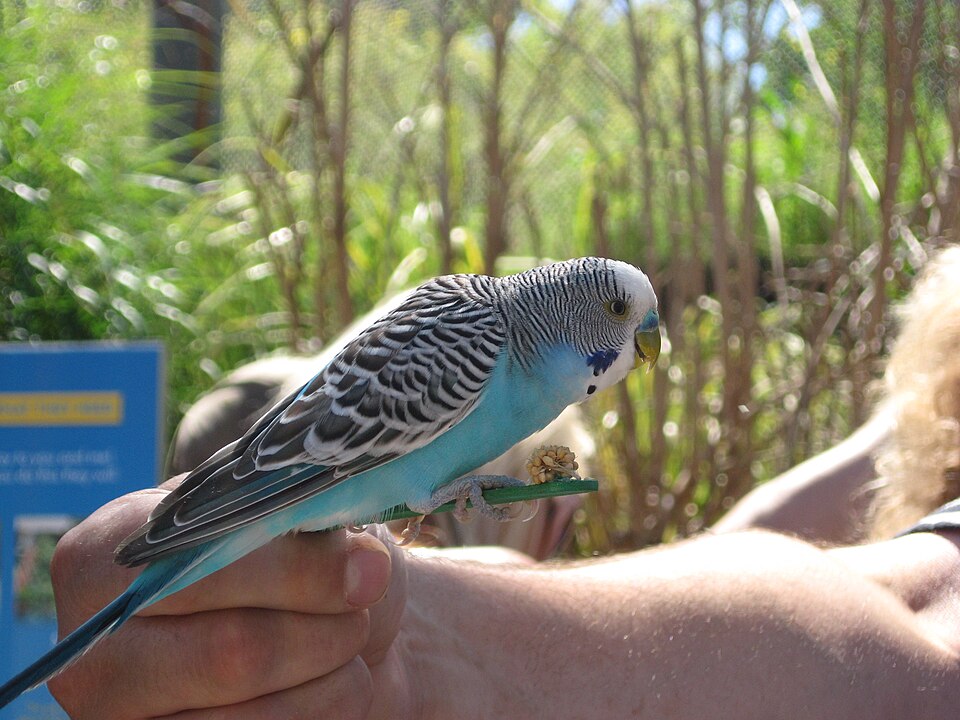
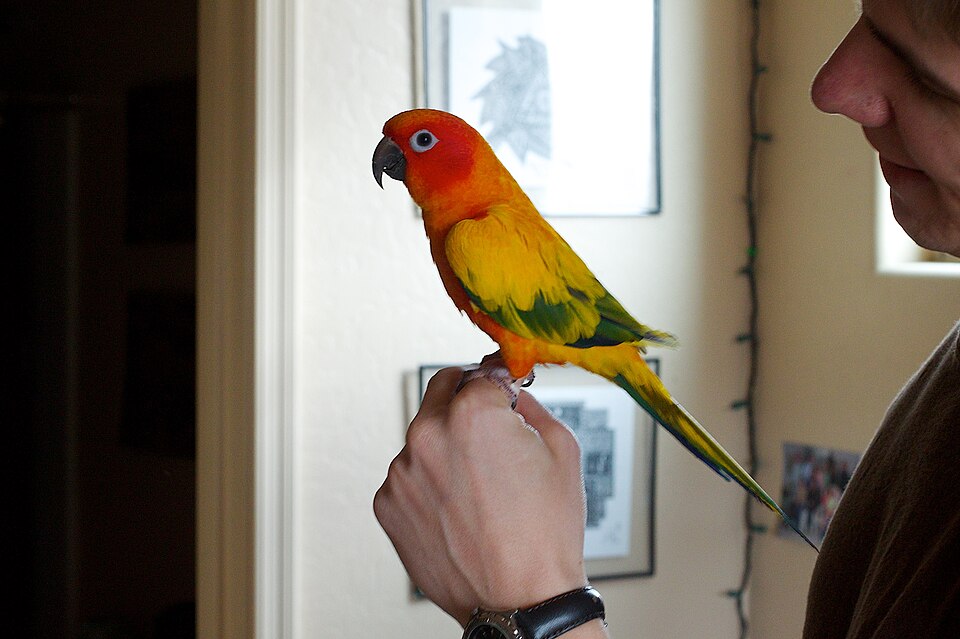
- Teach the "step up" cue. According to the RSPCA, the first cue to teach is "step up / step down": your bird stepping up onto your hand, or onto a stick you're holding, and stepping off again. Reward your bird as soon as it steps up.
- Use a stick if needed. According to the RSPCA, your bird can also step up onto a stick or perch you're holding. For birds that have a biting problem, the RSPCA particularly recommends teaching them to step up onto and off a handheld stick.
- Repeat gently. The RSPCA recommends reinforcing the behavior you want with gentle repetition; reward your bird when it does the right thing, or tries to.
- Be careful with strangers. According to the RSPCA, don't let strangers approach or handle your bird unless it shows interest first.
What to avoid
- Hitting and punishing: Never hit your bird. According to the RSPCA, any kind of punishment, including putting your bird back in its cage or scolding it, can make problems worse.
- Sudden movements and loud noises: The RSPCA stresses not frightening your bird with sudden movements and loud noises.
- Carrying it on your shoulder: The RSPCA recommends not carrying your bird on your shoulder: you lose eye contact, and the risk of being bitten and of your bird flying off goes up.
If your bird reacts badly, the RSPCA's advice is to step out of sight for a few minutes, then start again.
Teaching your bird to talk
According to the species table in the Merck Veterinary Manual, the ability to talk varies a lot from species to species. African grey parrots are among the best mimics, but they don't like talking in front of strangers. Most Amazon parrots talk and sing well. Budgies can learn to talk. Macaws can talk but usually know fewer words, and some cockatoos talk in a soft, quiet voice.
If you're going to try teaching your bird to talk, the same rule applies: as the RSPCA says, keep sessions playful and relaxed, and don't force your bird.
Reliable information
The RSPCA gives an interesting warning: not everything you find online about bird training is reliable. If you're having a behavior problem with your bird, get help from a vet experienced with birds or a bird behaviorist.
Frequently asked questions
My bird bites me. What should I do?
First, tell the difference: according to the RSPCA, it's normal for a bird to use its beak while climbing or holding on, and that isn't biting. If the grip turns into a bite that hurts, stay calm, gently take your bird off you without saying anything, and step away; start again a few minutes later. According to Merck, bored birds can develop problems such as biting, so make sure your bird has things to keep it busy. If the biting continues or has only just started, talk to a vet experienced with birds to rule out health problems.
Does wing clipping make training easier?
According to the Merck Veterinary Manual, some people have their bird's flight feathers clipped, especially to stop it flying away during training; because this can hurt the bird if done wrong, it should always be left to a professional. The RSPCA, however, is against wing clipping: a bird with clipped wings that gets frightened and jumps by reflex can fall and be seriously injured. If you're thinking about wing clipping, talk to your vet experienced with birds first.
Can an older bird be hand tamed too?
According to the Merck Veterinary Manual, some species are easier to tame when they're young. If you're working with an adult bird, don't rush: the RSPCA's basic rule applies to every bird. Always go at your bird's pace, and stop if it seems uneasy.

Keep track of your pet's care in TüylümLog vet visits, vaccine and medication dates, and we'll remind you when it's time. Share it all with your family in Home.
Sources
- RSPCA · How to train your pet bird
- RSPCA · Bird behaviour: keeping your pet bird happy
- RSPCA · How to fly pet birds safely
- Merck Veterinary Manual · Behavior of Pet Birds (pet owner version)
- Merck Veterinary Manual · Choosing a Pet Bird (pet owner version)
- Merck Veterinary Manual · Grooming and Routine Care of Pet Birds (pet owner version)
By Tüylüm · Published and last checked: October 24, 2026. Spotted a mistake? Write to [email protected] and we'll fix it right away. Photos are from Wikimedia Commons, used under the license shown below each photo.