Lovebird care: a pair or a single bird, the cage, chewing and diet
There's a reason they're called "lovebirds": these birds are very social with their partners and their owners. They're only about 15 cm (6 in) long, but they have plenty of energy; they love to climb, chew and shred paper. In this article, we explain what a lovebird needs, using advice from the Merck Veterinary Manual, the World Parrot Trust, the US animal welfare organization MSPCA-Angell and the RSPCA.
- A small African parrot: According to the Merck Veterinary Manual, lovebirds come from Africa; 4–5 species are commonly kept as pets, and they can live up to 20 years.
- As a pair: MSPCA-Angell recommends keeping them in pairs, since they need so much attention and affection.
- Careful with other birds: According to MSPCA-Angell, they can be very aggressive toward other birds, and different lovebird species will fight each other.
- Cage: According to MSPCA-Angell, at least 81 × 50 × 50 cm (32 × 20 × 20 in) for a pair; the World Parrot Trust recommends at least 1.2 m (4 ft) in length.
- Keen chewers: Dye-free paper, wood and leather toys; a shallow dish or a fine mist for bathing.
- Diet: According to the RSPCA, seeds should make up no more than a tenth of the diet.
Getting to know the lovebird
According to the Merck Veterinary Manual, lovebirds come from Africa. Among the 4–5 species most commonly kept as pets are the peach-faced (rosy-faced), black-masked, blue-masked and Fischer's lovebirds. According to Merck, they can live up to 20 years; their voices are sweet and usually not loud. During breeding season, though, they can be moody.
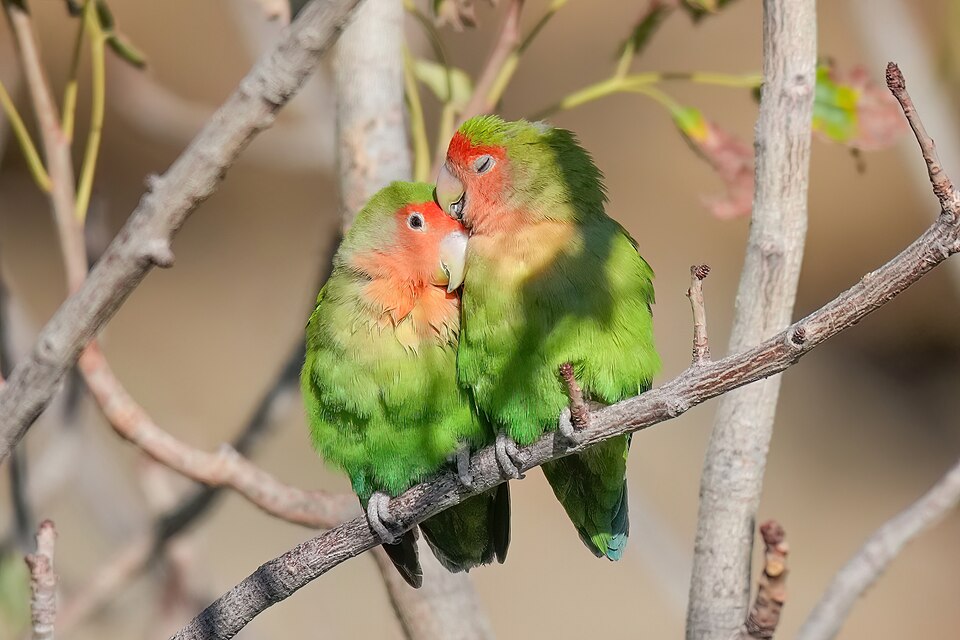
The best known is the rosy-faced lovebird. According to the World Parrot Trust, it's about 15 cm (6 in) long and weighs 46–63 g (1.6–2.2 oz). In the wild, it lives in Namibia, South Africa's Northern Cape Province and southwestern Angola, in dry wooded areas, savannas and woodland along canyons. It's usually seen in groups of 5–20 birds; where grass seeds are ripening or near water, hundreds may gather. In cool weather, they huddle together on branches.
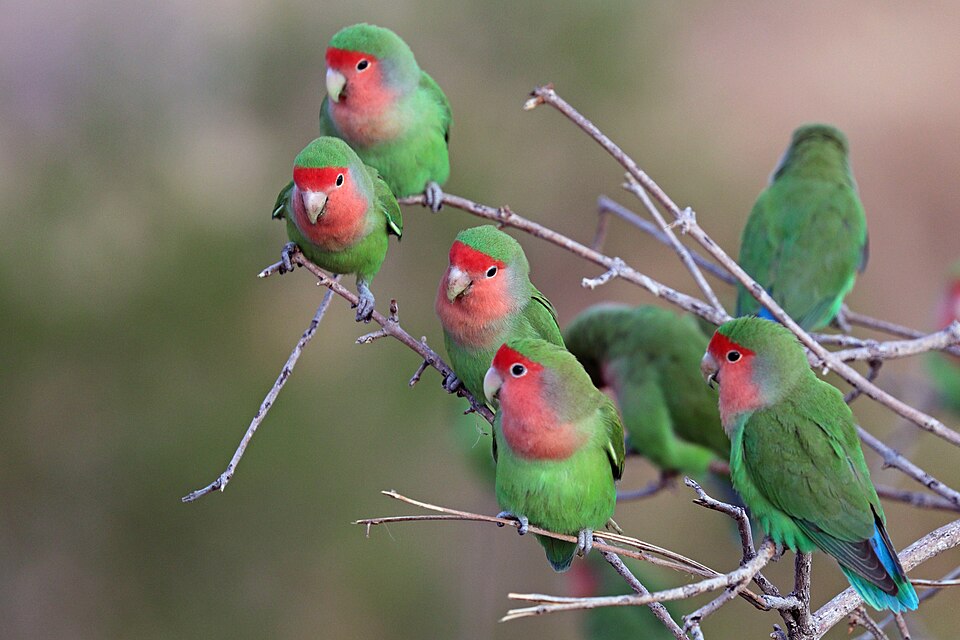
A fun detail: according to the World Parrot Trust, the female rosy-faced lovebird carries nesting material, especially strips of bark, to the nest by tucking it between her rump feathers.
A pair or a single bird?
According to MSPCA-Angell, lovebirds are very social with their owners and partners and need a lot of attention; that's why they're best kept in pairs. The RSPCA also lists lovebirds among the species that breed in colonies in the wild and can live together in groups.
But that sociability doesn't extend to everyone. According to MSPCA-Angell, lovebirds can be extremely aggressive toward other birds. If more than one pair will live together, you need to be sure that all the pairs truly get along and are well matched.
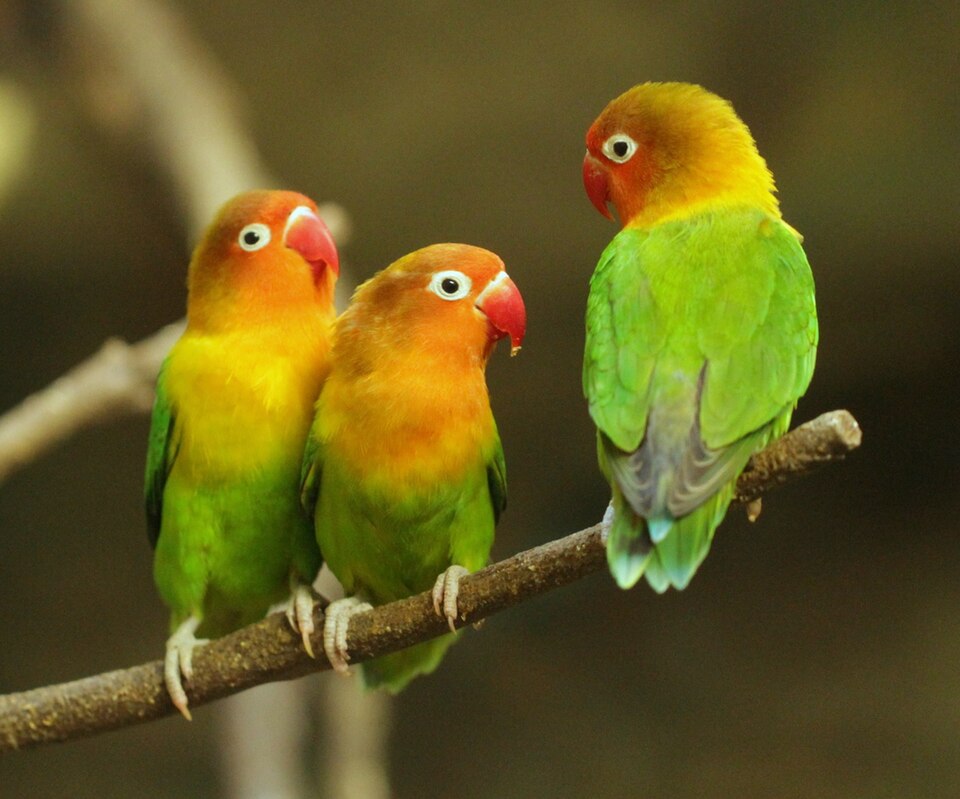
According to MSPCA-Angell, different lovebird species will fight each other; don't put them in the same cage. According to the RSPCA, birds kept together must be compatible and able to get along without fighting. Before putting a lovebird in the same cage as another bird, such as a budgie or cockatiel, talk to a vet experienced with birds.
According to the RSPCA, hand-reared birds may prefer human company and may not get along well with other birds. If you have a single lovebird, you'll need to give it plenty of time every day. Don't rush when introducing a new bird: the RSPCA suggests placing the cages half a meter (about 1.5 ft) apart at first, moving them closer over several sessions, and keeping the first meeting outside the cage to 5–10 minutes. Step by step: cockatiel care.
The cage and its surroundings
According to MSPCA-Angell, a cage for a pair of lovebirds should be at least 81 × 50 × 50 cm (32 × 20 × 20 in), with about four perches, food and water dishes and a place to bathe. The World Parrot Trust recommends a cage or aviary at least 1.2 m (4 ft) long. Under the RSPCA's general rule, if a bird spends most of its time in the cage, the cage's height, width and depth should be at least twice its wingspan.
- A secure spot: The RSPCA recommends placing the back of the cage against a solid wall and covering the top with a cloth, so the bird feels safe from threats from behind and above.
- Temperature: According to the RSPCA, the right temperature for birds from tropical and subtropical habitats is 12–26 °C (54–79 °F). Keep the cage away from radiators, stoves and drafts.
- Flight: According to the RSPCA, birds should spend at least six hours a day outside their cage, in an indoor space where they can fly safely.
- Supervision: According to MSPCA-Angell, there should be no open doors or windows in the room while your bird is out of its cage, and you should always keep an eye on it.
On where to put the cage: where should a bird cage go? On dangers to watch for at home: hidden dangers for birds at home.
They love to chew and play
According to MSPCA-Angell, lovebirds love all kinds of toys: swings, ladders and wooden chew toys. They're natural paper shredders, so MSPCA-Angell recommends giving them dye-free paper to play with. The World Parrot Trust also recommends climbing spaces, bird-safe chewable leather and wood toys, and puzzle toys.
According to MSPCA-Angell, lovebirds usually wear down their own nails and beaks by climbing and chewing. Talk to your vet about whether nail trimming is needed. What to look for when choosing toys: toys and enrichment for birds.
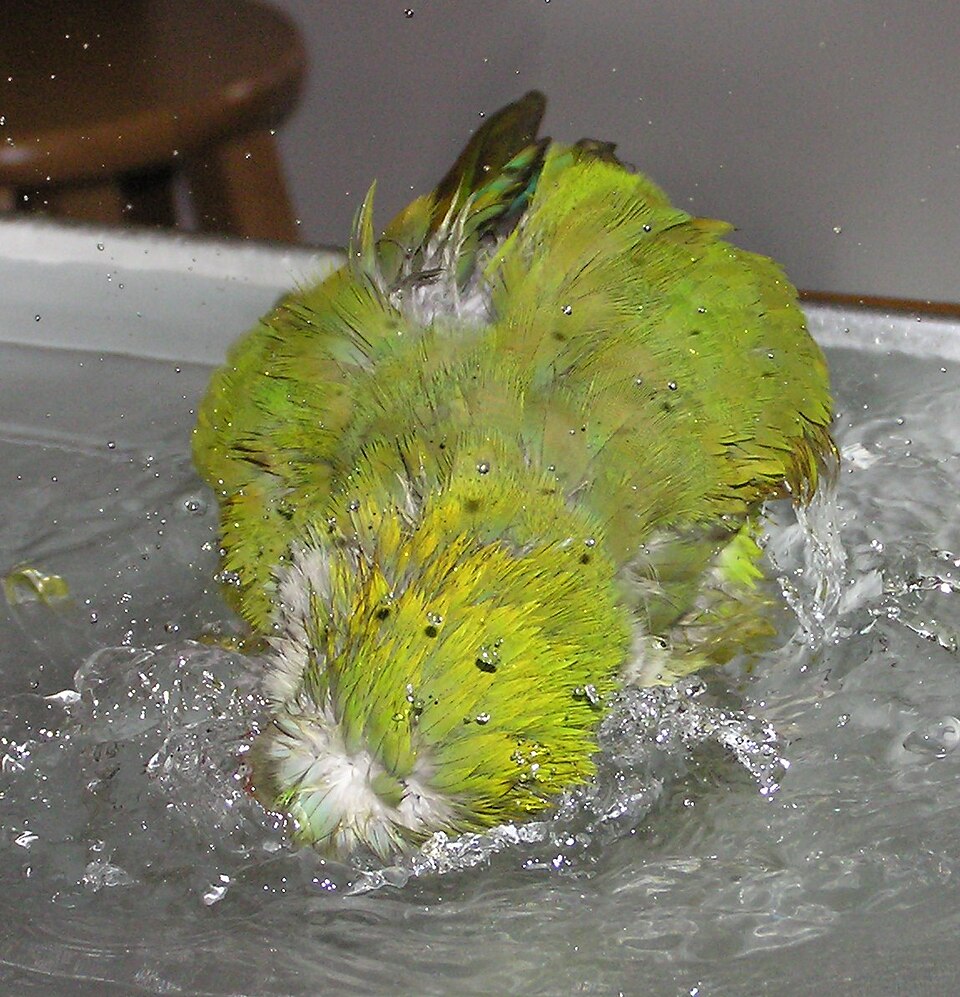
They love baths too. According to MSPCA-Angell, most lovebirds enjoy bathing in a flat earthenware dish or being sprayed with a light mist of lukewarm water; the World Parrot Trust also recommends shallow bowls or overhead misters. For details: bird baths.
Diet
According to MSPCA-Angell, wild lovebirds eat seeds, berries, fruit and grains. According to the World Parrot Trust, the rosy-faced lovebird's main wild food is the seeds of grasses and acacia; it also eats plant buds and leaves.
At home, though, seeds alone aren't enough. According to the RSPCA, a seed-only diet can lead to obesity, fatty liver disease, and vitamin A and calcium deficiency.
- Go light on seeds: According to the RSPCA, small parrots such as budgies, cockatiels and lovebirds can have some seeds every day, but seeds should make up no more than a tenth of the diet.
- Pellets, vegetables and fruit: According to the RSPCA, small parrots should always have access to pellets, fresh vegetables and fruit. Examples: carrots, broccoli, peas, de-seeded apples and blueberries, all thoroughly washed.
- Extras: Along with fresh vegetables and greens, MSPCA-Angell suggests tree branches for chewing the bark, some fruit, and millet spray.
- Switch slowly: According to the RSPCA, switching from seeds to pellets can take weeks or even months; have your bird checked by a vet experienced with birds before you start.
According to the RSPCA, avocado is highly poisonous to parrots. Other foods your bird should never have: foods that are harmful to birds.
On Tüylüm's Today tab, food, water and cage cleaning are on your list every day; you can also add the Fruit / vegetables and Bath water tasks. You can follow your bird's weight in Weight tracking and share its care with your family through My home.
Take your lovebird to a vet experienced with birds soon after you bring it home. If its behavior, appetite or appearance changes, talk to your vet without delay.
Frequently asked questions
Can a lovebird be kept on its own?
MSPCA-Angell recommends keeping lovebirds in pairs, since they need so much attention and affection. According to the RSPCA, hand-reared birds may prefer people. If you have a single bird, you'll need to spend plenty of time with it every day.
Can a lovebird and a budgie share a cage?
According to MSPCA-Angell, lovebirds can be extremely aggressive toward other birds, and the RSPCA says birds kept together must be compatible. So talk to a vet experienced with birds before putting different species in the same cage.
Are lovebirds noisy?
According to the Merck Veterinary Manual, their voices are sweet and usually not loud. The World Parrot Trust, on the other hand, describes the calls of wild rosy-faced lovebirds as shrill and metallic, with the calls speeding up when the bird is alarmed. So they don't count as very noisy birds, but they aren't quiet either.

Keep track of your pet's care in TüylümLog vet visits, vaccine and medication dates, and we'll remind you when it's time. Share it all with your family in Home.
Sources
- Merck Veterinary Manual · Choosing a Pet Bird (pet owner version)
- World Parrot Trust · Rosy-faced Lovebird (Agapornis roseicollis)
- MSPCA-Angell · Bird care guide (lovebirds)
- RSPCA · Keeping pet birds together
- RSPCA · Housing and environments for pet birds
- RSPCA · Diet: the right food for your bird
By Tüylüm · Published and last checked: October 26, 2026. Spotted a mistake? Write to [email protected] and we'll fix it right away. Photos are from Wikimedia Commons, used under the license shown below each photo.