Toys and enrichment for birds: rescue the cage from boredom
Picture a bird sitting on the same perch all day, staring at the same food dish. Its relatives in the wild, meanwhile, spend the day flying, foraging, chewing on branches and communicating with their flock. That's why boredom is a very real problem for a caged bird. The good news: you don't need expensive toys to enrich your bird's day; even a cardboard tube, a pine cone and a little creativity will do the trick.
- Foraging games: Wrap food in paper and stuff it into cardboard tubes, hide it between the scales of pine cones, put food in different places.
- Chewing: Natural fiber ropes, untreated wood, paper and cardboard.
- Climbing: Ladders, ropes, nets; untreated, pesticide-free branches.
- Bathing: According to the RSPCA, a fine mist of room-temperature water in the morning every few days encourages your bird to preen.
- Safety: Toys should be made from non-toxic materials and paints; avoid galvanized metals and metals that contain zinc.
Foraging: a bird's most natural job
According to the RSPCA, giving birds foraging toys encourages them to work for their food; birds enjoy figuring out how to get to food hidden inside. Ideas you can easily make at home:
- Cardboard tube: Wrap food in newspaper, stuff it into cardboard tubes and fix the tubes between the cage bars.
- Pine cone: Tuck food between the scales of a pine cone.
- Small, frequent meals: Put food in different places throughout the day in small portions; it's similar to how birds eat in the wild.
- Scattering: Instead of putting food in a dish, scatter it over an area; use pellets of different sizes and a variety of vegetables.
- Ice cube trays: For parrots, the RSPCA suggests freezing food in ice cube trays; your bird gets to the food by chewing through the ice.
The RSPCA reminds owners that birds should never be given avocado, because it is toxic to them. Make sure everything you use in food games is safe for your bird: foods that are harmful to birds.
Chew toys and foot toys
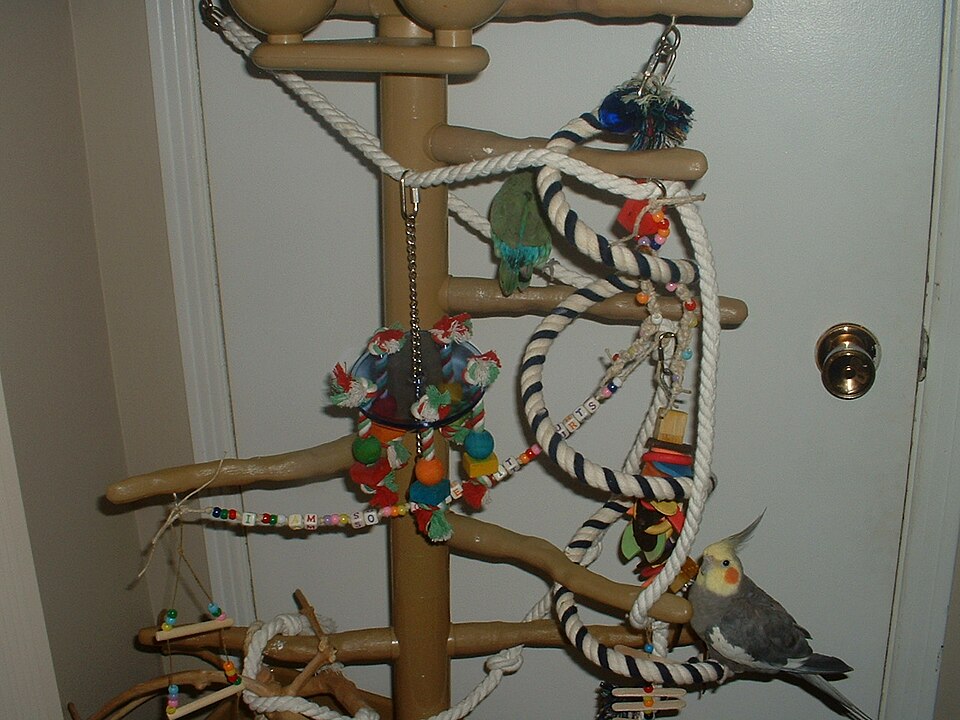
The RSPCA recommends:
- Toys your bird can hold with its feet, and toys that hang in the cage or aviary
- Homemade toys: untreated wood, paper, cardboard, pine cones, old books, natural fiber rope and cardboard boxes
- For chewing: Short pieces of natural fiber rope hung in the cage encourage your bird to chew.
- Branches: Branches from safe fruit trees or nut trees such as walnut and hazel, with the bark and leaves left on, work as both toys and perches.
Climbing and flying
According to the RSPCA, ladders, ropes and nets in large cages or aviaries encourage birds to climb. Horizontal bars on the cage make climbing easier, and branches that are safe for birds and pesticide-free, such as pine, elder and willow, can also be used.
But no toy can replace flying: according to the RSPCA, birds need to be able to fly freely every day. For preparing the room before flying: household dangers for birds.
Bathing
The RSPCA recommends misting your bird in the morning every few days with a plant mister, using a fine spray of plain, room-temperature water; this encourages your bird to clean its feathers. The water shouldn't be cold, and your bird should dry off somewhere free of drafts after getting wet.
Toy safety
According to the RSPCA, toys should be made from safe, non-toxic materials and paints. Pay particular attention to metal parts:
- According to the ASPCA's list, galvanized wire, chains, toys and dishes can contain zinc.
- According to the University of Illinois, some metal toys and rubber items can also contain zinc, and birds are much more sensitive to zinc than people are.
- Make sure your bird isn't tearing off and swallowing small pieces of a toy; replace toys as they wear out.
Leaving the same toys in the cage for weeks makes them dull. Putting some of the toys away and swapping them every few days keeps your bird interested. The RSPCA also recommends changing foraging toys from time to time.
Social enrichment
The best enrichment is a companion of your bird's own species. According to the RSPCA, birds are social animals and do better in the company of their own kind. The training and play time your bird spends with you is also very valuable: bonding with your bird.
Frequently asked questions
Is it a good idea to put a mirror in the cage?
Our sources don't make a recommendation about mirrors; the best social setting the RSPCA highlights is for your bird to live with a companion of its own species. If you're thinking of using a mirror, ask a vet experienced with birds.
Can I cut branches from the trees at home and give them to my bird?
The RSPCA recommends pesticide-free branches from safe fruit and nut trees. If you're not sure what kind of tree it is, or that it hasn't been sprayed, don't use it; some plants can be toxic to birds.
My bird never plays with its toys. What should I do?
New toys can frighten some birds at first. Put the toy outside the cage first, somewhere your bird can see it; then place it in a corner of the cage. A toy with food hidden in it usually gets their attention.

Keep track of your pet's care in TüylümLog vet visits, vaccine and medication dates, and we'll remind you when it's time. Share it all with your family in Home.
Sources
- RSPCA · Enrichment for pet birds
- RSPCA · Housing and environments for pet birds
- University of Illinois College of Veterinary Medicine · These items are toxic to birds
- ASPCA Animal Poison Control Center · Managing pet bird toxicoses (Exotic DVM, 2001, PDF)
By Tüylüm · Published and last checked: October 24, 2026. Spotted a mistake? Write to [email protected] and we'll fix it right away. Photos are from Wikimedia Commons, used under the license shown below each photo.