Cat body language: what the tail, ears, eyes and fur are telling you
Has your cat ever suddenly bitten your hand while you were petting it? Or greeted you at the door with its tail in the air? Cats are actually talking all the time, not just with their voices but with their whole bodies. According to Cats Protection, cats haven't evolved as many facial muscles as dogs, so their facial expressions are more limited; that's why small signals say a lot. In this article, we decode the language of the tail, ears, eyes, whiskers and fur using guides from PDSA, Cats Protection, Blue Cross, the RSPCA and International Cat Care.
- Don't rely on one signal: Look at the tail, ears, eyes, body and the situation together.
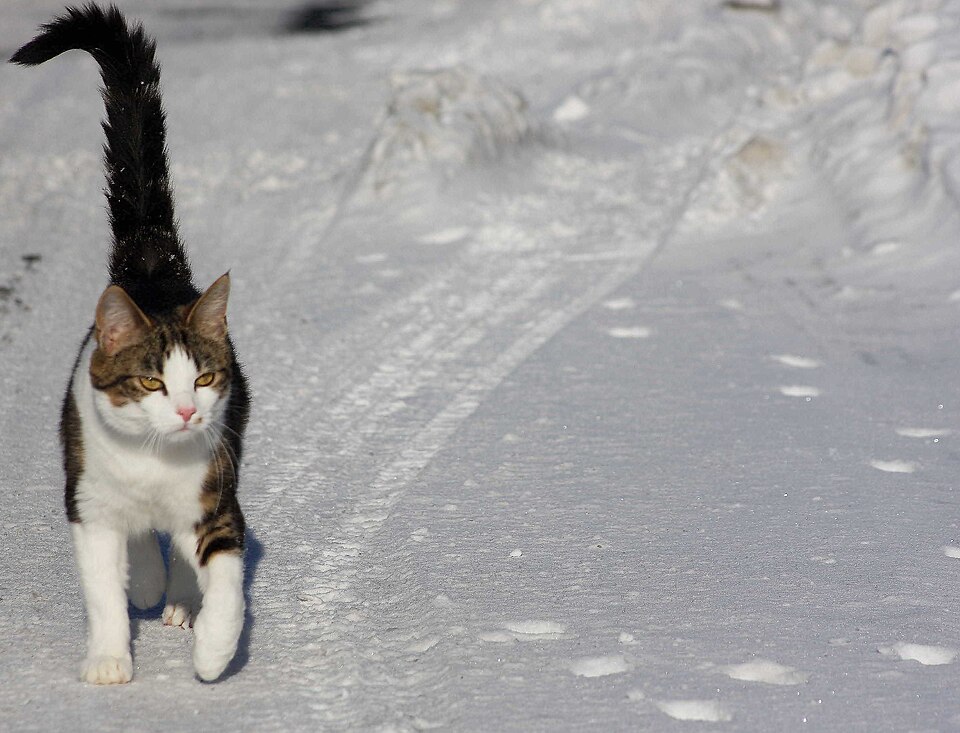
- Tail up: Usually a happy, confident cat; if it's walking toward you, it's a greeting.
- Ears to the side or back, large pupils: The cat may be worried or scared.
- Fur puffed up, back arched: A frightened cat trying to make itself look bigger. Give it space.
- Slow blink: A friendly signal. You can slowly blink back and turn your head slightly to the side.
First, look at the whole picture
PDSA recommends that when you read your cat's body language, you first think about what's going on around it and read as many signals together as you can. That's because the same movement can mean different things: crouching down can be a sign of anxiety, but it can also be a cat getting ready to play. The RSPCA also says that a cat's body language is subtle and that you need to look at its eyes, tail, mouth and posture together.
Purring isn't enough on its own either. According to PDSA and Cats Protection, cats usually purr when they're happy; but they can also purr when they're anxious, stressed or in pain. A cat purring at the vet clinic isn't exactly happy at that moment. So always read purring together with body language. You'll find the details in our article on why cats purr.
The tail: your cat's mood meter
According to Blue Cross, the tail is one of the best ways to understand a cat's current mood and what it might do next. But the charity reminds you to read the tail together with the rest of the body and the situation.
| Tail | What it may be saying |
|---|---|
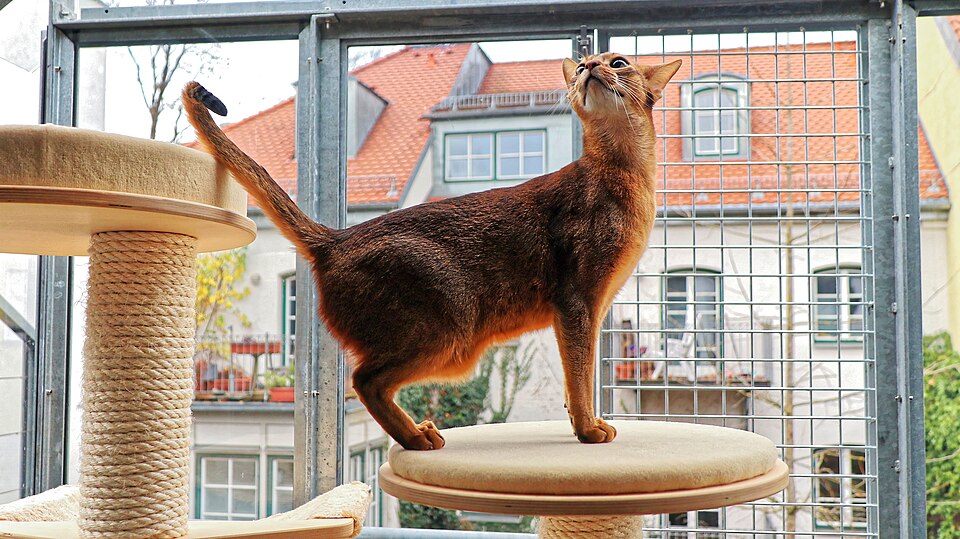
| Straight up | Confident and happy; friendly intentions. If it's quivering a little, the cat may be very excited to see you. |
| Question mark with a curled tip | A greeting when it sees someone it knows and likes; usually while approaching you. |
| Puffed up (with the base of the tail and the fur along the back fluffed up too) | Fear. The cat is trying to look bigger; keep your distance. |
| Low | Unease or fear. Some breeds naturally carry their tails lower. |
| Tucked under the body | Fear or anxiety. |
| Twitching | Inner conflict or agitation. If it starts while you're petting, stop: it may be an early sign the cat isn't enjoying it. |
| Whipping rapidly from side to side | Highly aroused; may become aggressive. Steer clear for a while. |
| Swaying slowly from side to side | Hunting mode; often just before pouncing on a toy. |
| Wrapped around another cat's tail | A kind of "cat hug" between two close cats. |
The meanings in the table come from Blue Cross's tail guide. PDSA paints a similar picture: a happy cat's tail is upright with a slight curl at the tip and isn't stiff or puffy; if a cat walks toward you with its tail up, it's often its way of greeting you.
Ears
The ears say a lot too. Here's a summary of how Cats Protection and PDSA describe them:
- Curious: Ears pointing forward and pricked up.
- Relaxed: Ears look loose, forward-facing and rounded.
- Anxious: Ears up but turned outward; or one ear turned to the side. According to PDSA, a cat on high alert is trying to hear every sound around it.
- Stressed or angry: Ears lower than normal, turned to the side or back, or even flat against the head.
Eyes and pupils
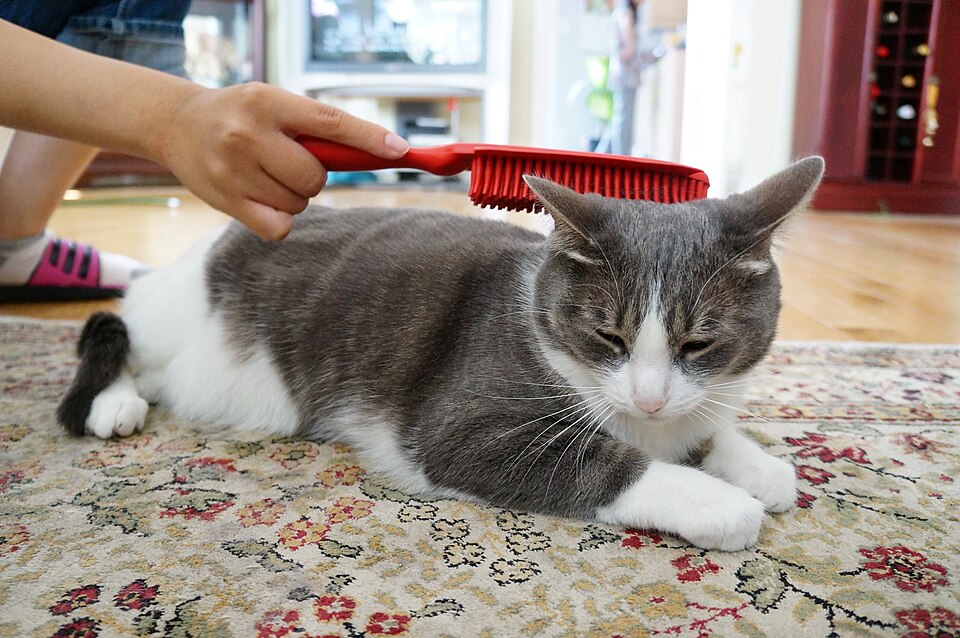
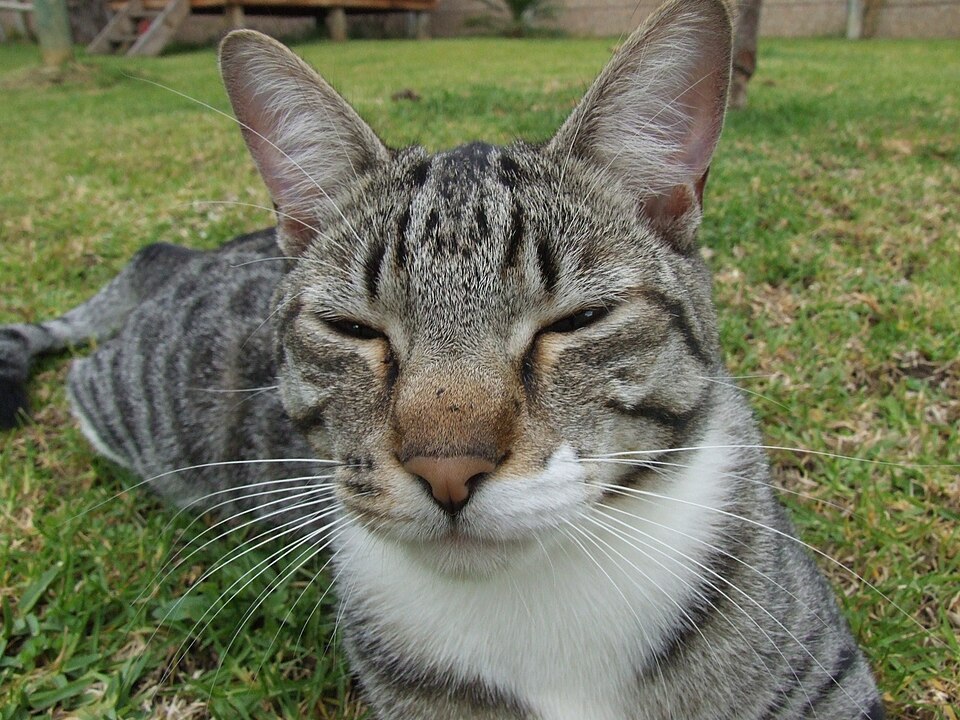
According to PDSA, a happy cat's eyes look more almond-shaped than round; if it's lying down, its eyes may be half closed. Cats Protection also says a relaxed cat's eyes are closed or half closed, with small pupils.
A worried or frightened cat's eyes look wider open, with large pupils. But PDSA adds a caveat: pupils also get bigger in low light or when the cat is very excited. Again, you need to look at the whole picture.
The slow blink: "hello" in cat language
Scientists have also looked into something cat lovers have been talking about for years. According to a study published in Scientific Reports in 2020 by researchers from the universities of Sussex and Portsmouth, a "slow blink" is a sequence of movements that starts with a series of half-blinks and ends with the eyes narrowed for a long time or closed.
The first experiment involved 21 cats from 14 households. When owners slowly blinked at their cats, the cats made more half-blinks and eye narrowings than when there was no interaction at all. In the second experiment, cats approached an unfamiliar researcher more after the researcher slowly blinked at them than when the researcher kept a neutral face. The researchers say slow blinking may be a form of positive communication between cats and humans; they also add that more research is needed before drawing firm conclusions.
It's easy to try at home. Cats Protection's advice: if your cat is relaxed around you, slowly blink at it and turn your head slightly to the side. If you're lucky, it will do the same back.
- Don't stare: According to Cats Protection, cats can see a long stare as a threat.
- Don't say "puss puss": According to Cats Protection, "puss puss" or a strong "ss" sound sounds like hissing to a cat.
- Let the cat come to you: International Cat Care recommends avoiding direct eye contact and getting too close, and letting the cat decide whether to come to you.
Whiskers and fur
According to PDSA, a frightened cat's whiskers are pressed flat against its face or bunched together. An angry cat, or one focused on something, holds its whiskers outward and forward, often pointing at whatever it's looking at. According to Cats Protection, a relaxed cat's whiskers are loose and sit closer to its face.
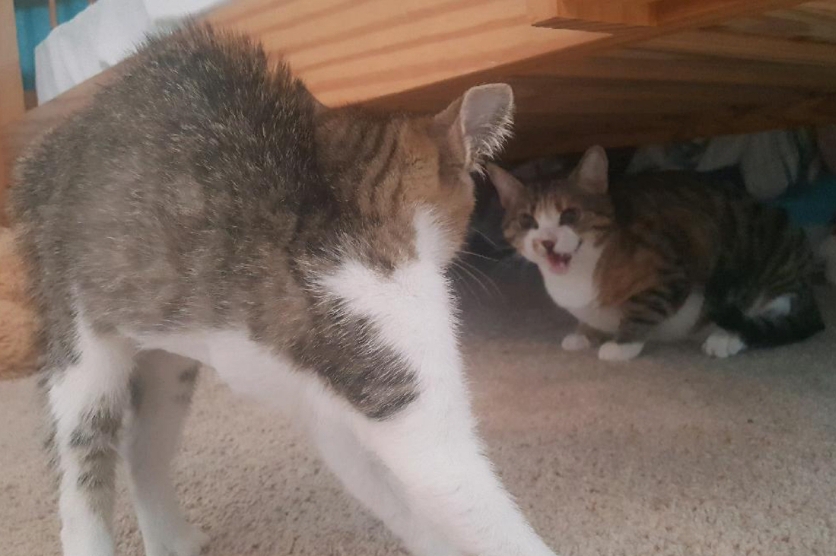
Puffed-up fur is one of the easiest signals to recognize. According to PDSA, a very unhappy or angry cat may flatten itself to the ground or arch its back to make itself look bigger, with all its fur standing on end. According to Blue Cross, fluffed-up fur at the base of the tail and along the ridge of the back is a sign of fear; the cat is trying to look bigger than it is and may become aggressive if pushed.
The body: relaxed, worried, angry
| Mood | Body | What to do |
|---|---|---|
| Relaxed and happy | Loose body; may roll onto its back and show its belly. | Stay calm; if the cat comes to you, pet it gently. |
| Worried | Crouched, tense, trying to make itself small; moves close to the ground or hides. | Give it space; don't try to pull it out of its hiding place. |
| Angry or frightened | Very tense; either flattened to the ground or with an arched back and puffed-up fur. Front paw slightly raised. | Keep your distance. It may hiss or swipe. |
The table is compiled from descriptions by PDSA, the RSPCA and International Cat Care. According to the RSPCA, a front paw lifted slightly off the ground shows the cat is getting ready to swipe if needed. Rolling onto its back to show its belly can be a sign of a relaxed cat; but as PDSA warns, it usually doesn't mean "rub my belly."
Careful when petting: the "that's enough" signals
A cat that suddenly bites or runs off while being petted is often trying to say "that's enough" with small signals. According to International Cat Care, signs that a cat is uncomfortable include: moving away, freezing, tensing up, sharply turning its head toward your hand, rotating or flattening its ears, briefly shaking its head, licking its nose, swishing its tail, rippling skin along its back, and a quick, brief burst of grooming.
International Cat Care's advice is simple. Most cats enjoy being stroked on the cheeks, chin and head; they're less comfortable on the body and tail; and it's best not to touch the legs, belly or base of the tail at all. Try the "3-second rule": stroke for three seconds, then stop and wait. If the cat leans in and asks for more, keep going; if not, stop.
According to the RSPCA, changes in a cat's behavior can be a sign that it's upset, bored, sick, injured, stressed or frightened. If your cat is hiding unusually, avoiding people or has suddenly become aggressive, talk to your vet without delay.
Frequently asked questions
My cat rolls onto its back and shows me its belly. Does it want me to pet it?
Usually not. According to PDSA, rolling onto its back can be a sign of a relaxed, happy cat, but it often doesn't mean "rub my belly." International Cat Care also advises against touching the belly.
My cat is wagging its tail. Is it happy, like a dog?
Not really. According to Blue Cross, a tail whipping rapidly from side to side shows a highly aroused cat that may become aggressive; a twitching tail is usually a sign of agitation. A tail swaying slowly usually means hunting mode.
When my cat slow-blinks at me, should I blink back?
You can try. Cats Protection recommends slowly blinking at your cat and turning your head slightly to the side. In the 2020 study, cats also approached a person who slow-blinked at them more.

Keep track of your pet's care in TüylümLog vet visits, vaccine and medication dates, and we'll remind you when it's time. Share it all with your family in Home.
Sources
- PDSA · Cat body language
- Cats Protection · Cat body language
- Blue Cross · What is your cat's tail telling you?
- RSPCA · Understanding your cat's behaviour
- International Cat Care · Cat friendly interaction
- Humphrey et al. · The role of cat eye narrowing movements in cat–human communication, Scientific Reports (2020)
By Tüylüm · Published and last checked: October 26, 2026. Spotted a mistake? Write to [email protected] and we'll fix it right away. Photos are from Wikimedia Commons, used under the license shown below each photo.