A cat-safe garden: fences, catios and the right plants
If your cat sits at the window watching the yard for hours, the outdoors must be very interesting to it. But the yard is also a doorway to traffic, getting lost and poisonous plants. According to International Cat Care, it's possible to keep an active cat in a safe outdoor space; for most cats, the best setup is access to both the house and a safe outdoor area. In this article, we explain how to open up your yard, patio or terrace to your cat safely, based on advice from three organizations. We covered enclosing a balcony with wire mesh in our article on cat-proofing your home.
- There are two ways: Enclose your yard with a cat-proof fence, or build a wire-enclosed space just for your cat (a catio).
- Fence height: According to International Cat Care, at least 1.8 m (6 ft) high, with an overhang of at least 0.5 m (18 in–2 ft) at the top, pointing into the yard.
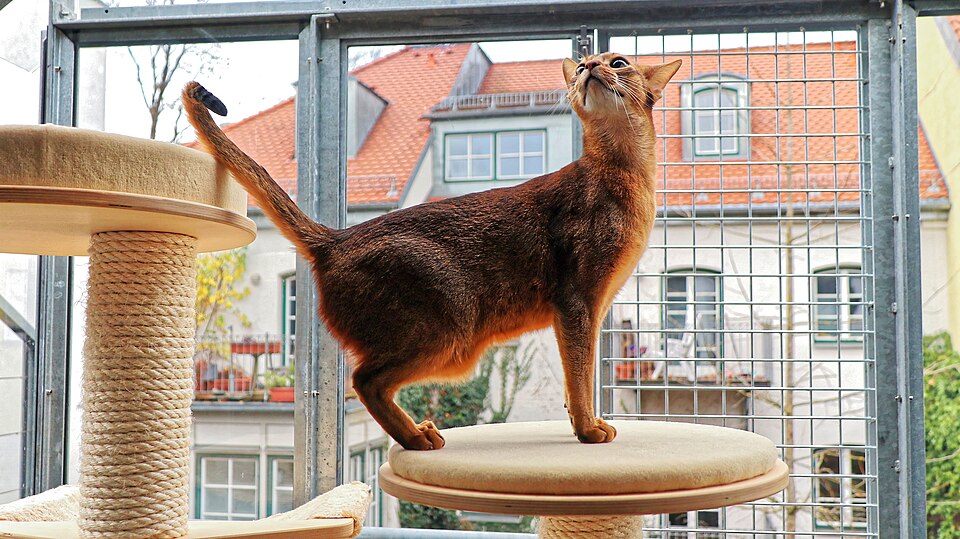
- Inside a catio: A place to shelter from rain and heat, water, places to climb and scratch, and a litter box if needed.
- Hiding places: Cats feel vulnerable in wide open spaces; break up your yard with shrubs and pots.
- Poisonous plants: Never bring lilies into your yard; keep garden chemicals locked away.
- First trips outside: Stay with your cat, and always leave the way back inside open.
A fence or a catio?
According to International Cat Care, the choice depends on how much outdoor space you have and what kind; there are options for a small courtyard, a patio or a large yard. RSPCA Australia also highly recommends giving your cat an escape-proof outdoor space if your home has a balcony, courtyard or yard: it gives your cat more choice and activity, and protects it from the dangers of roaming.
| Option | How it works | Watch out for |
|---|---|---|
| Fencing in the yard | All or part of the yard is open to your cat | Tree branches hanging over the fence can become an escape route |
| A catio attached to the house | Your cat comes and goes freely between the house and the outdoor space through a cat flap or window; no separate cat house needed | Doors into the enclosure should close with a lockable catch |
| A freestanding catio in the yard | A fully enclosed space built in a corner of the yard | It needs a cat house inside; you may have to carry your cat there every day |
A cat-proof fence: the measurements
According to Cats Protection, cats can climb most fences; but a 2 m (about 6.5 ft) high close-boarded fence, with a hedge running parallel to it, will encourage a cat to stay in the yard. International Cat Care gives more detailed measurements:
- Height: The fence should be at least 1.8 m (6 ft) high. That means posts at least 2.3 m (7 ft 6 in) long, so they can be fixed securely into the ground.
- Overhang at the top: A horizontal section is added to the top of the fence, jutting into the yard at a right angle for at least 0.5 m (18 in–2 ft); or this section is built angled upward at 45 degrees. Wood, wire or ready-made parts can be used.
- Trees: Branches hanging over the fence become a ladder for your cat. You may need to prune them, or fence the tree itself so your cat can't climb it.
- Neighbors and rules: Talk to your neighbors about a new fence first, and check the rules where you live.
According to Cats Protection, a determined cat may still find a way out. If your cat is microchipped, keep its registration details up to date. We covered registration and microchipping in Türkiye in our article on PetVet registration and microchips.
Building a catio
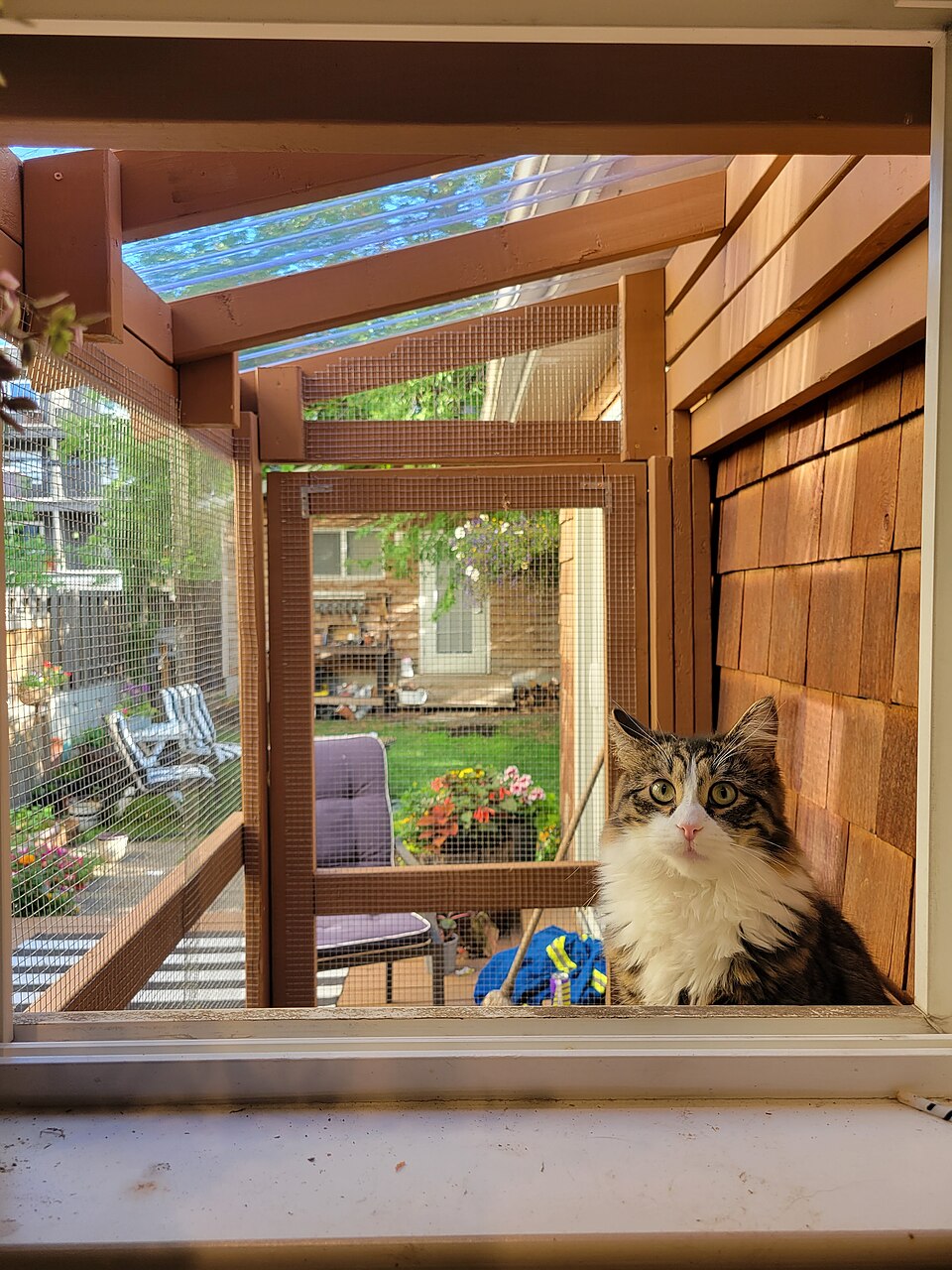
International Cat Care's advice for a catio:
- Protection from the weather: Your cat should be able to shelter from rain and bad weather in every season. It should either be able to get into the house through a cat flap or window, or there should be a cat house inside the enclosure.
- The top: It can be fully roofed, or left open and protected with an overhang like the one used on fences.
- If it's freestanding: The cat house inside should be big enough for food and water bowls, a bed, a scratching post, toys and (if there's nowhere to go to the toilet in the run) a litter box. You also need to be able to get in easily to clean it; a small, insulated garden shed works well.
- Play areas: Add scratching posts, shelves and climbing frames made from tree branches.
- Upkeep: If you use a wood preservative, check that it doesn't contain anything harmful to cats, and only let your cat in once the product has dried completely. Check any wire regularly for wear and damage.
- Locks: Doors into the enclosure should have a catch that can be locked with a padlock; especially if the enclosure is attached to the house and your cat gets in through an open window.
Set up the yard for your cat
The fence or the wire keeps your cat in; what makes it happy in the yard is what's inside. According to RSPCA Australia, once you decide to keep your cat in a contained space, making that space interesting and enriching becomes your responsibility.
- Break up open spaces: According to International Cat Care, cats feel vulnerable on wide lawns and avoid them. Divide your yard into smaller areas with shrubs; put pots around the cat flap.
- Add height: Tables, chairs, trellises, pergolas, wall tops and shelves attached to the fence open up new routes for your cat. According to Cats Protection, the best ones are close to the house and face the yard; they also offer a quick way back inside.
- Shade, sun and shelter: Provide sunny spots for basking, shade in hot weather, and a sheltered corner in the rain. A cat house with a roof makes a dry shelter.
- Scratching: Wooden posts and thick tree trunks make vertical scratching spots; large, sturdy logs make horizontal ones.
- Water: Put out a water bowl or a clean container in a spot where your cat feels safe. According to Cats Protection, a pond should have gently sloping sides and rocks an animal can use to climb out if it falls in; water barrels should have secure lids.
- Toilet area: International Cat Care recommends a toilet area of well-draining sand or soil, screened off with trellis or plants; it also needs scooping every day. Cats Protection reminds you to keep a litter box in the house too, so your cat can use it in bad weather.
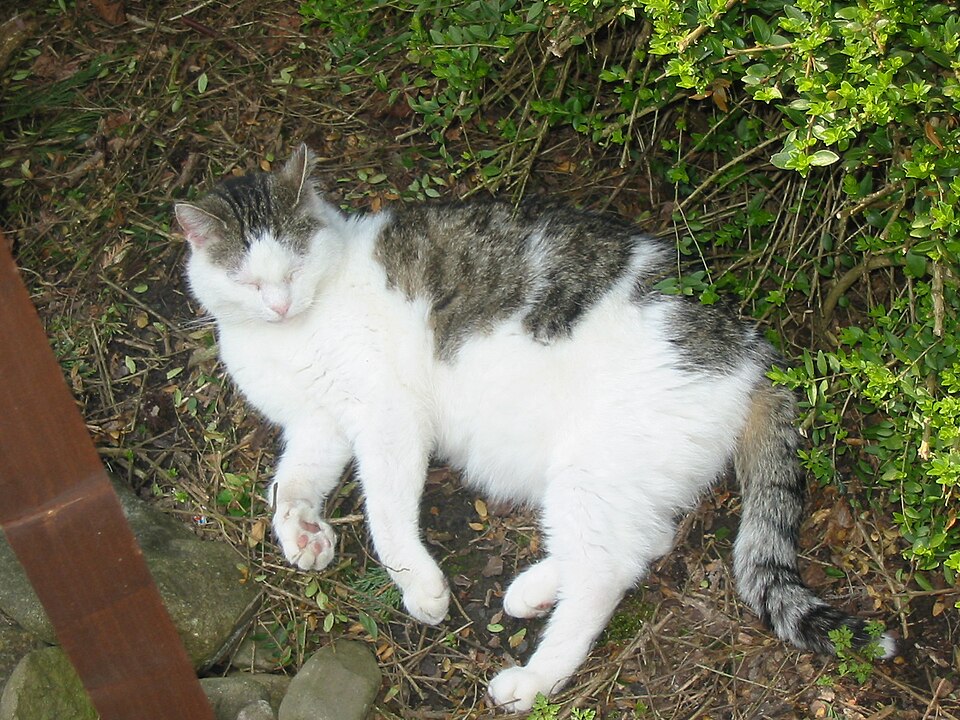
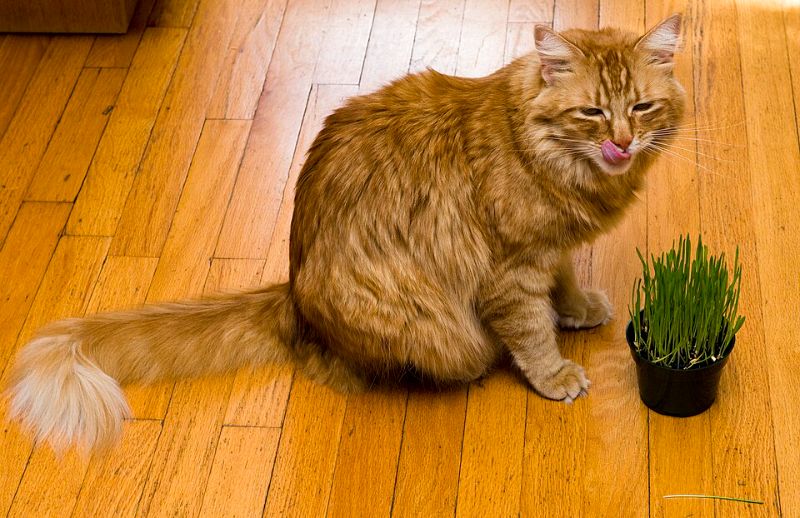
According to International Cat Care, catnip (Nepeta cataria) is a plant many (but not all) cats love; cat grass (oats) is also easy to grow from seed. Cats Protection advises not letting grasses go to seed: the sharp, arrow-like seeds of some grasses can catch in fur and burrow into the skin.
Poisonous plants and chemicals
According to International Cat Care, if your cat lives only indoors or in a closed catio, it's vital to make sure there are no hazardous plants in that space.
- Lilies: According to International Cat Care, every part of a lily is extremely dangerous; eating less than one leaf, a little pollen or even drinking the water from a vase can be fatal. "Pollen-free" lilies aren't safe either. According to Cats Protection, pollen can get onto the fur of a cat that brushes past a lily, and the cat swallows it when it licks itself clean.
- Others: Cats Protection also advises avoiding oleander and lily of the valley. According to International Cat Care, daffodils are among the dangerous plants as well; for some plants, the bulbs and roots are the most hazardous parts.
- After gardening: Don't leave hedge clippings or uprooted plants near your cat; because they're new, they may tempt it to chew.
- Pesticides and chemicals: According to Cats Protection, any pesticides or slug pellets you use in the yard should be pet-safe; better still, don't use them at all. Keep chemicals in the shed locked away; don't put chemicals or antifreeze in a pond or water feature.
We covered which plants in the home are dangerous in our article on houseplants that are toxic to cats.
If your cat has eaten or touched a plant that may be poisonous, talk to your vet without delay. International Cat Care advises not trying to make your cat vomit yourself, taking the plant label with you if you can, and noting when your cat ate the plant.
First trips outside and settling in
Cats Protection recommends staying with your cat on its first trips into the yard (and later trips too, if your cat is nervous), and always keeping the way back inside open. According to International Cat Care, there should also be a spot in the yard where you can sit; cats that enjoy people will keep you company there.
If your cat used to roam freely and you now want to keep it at home and in an enclosed space, RSPCA Australia recommends making the change slowly. Start by keeping your cat in overnight. Once it has adjusted, add dawn and dusk to the hours it stays home, then gradually extend the time. According to RSPCA Australia, this takes a couple of months or more for most cats; only move on to the next step once your cat has fully adjusted to the previous one. Treats, play and comfortable spots make home appealing in your cat's eyes.
You can track cleaning the outdoor toilet area and refreshing the water bowl as daily care tasks on Tüylüm's Today tab. If your cat still gets out one day, you can quickly put together a poster with a photo using Lost pet poster.
Frequently asked questions
My cat has been going out in the yard for years. Do I still need a fence?
According to International Cat Care, one of the biggest benefits of an enclosed outdoor space is your cat's safety. Cats Protection reminds you that a determined cat may still escape a fence; keep its microchip details up to date.
I don't have a yard, just a balcony. Can I build a catio?
According to International Cat Care, there are options for small spaces like patios and balconies too. We explained step by step how to enclose a balcony from ceiling to floor with wire mesh in our article on cat-proofing your home.
Which plants can I add to my yard?
International Cat Care recommends catnip and cat grass (oats). Cats Protection also considers plants such as cat thyme, nasturtiums and calendula safe for cats. Before you add a new plant, check whether it's harmful to cats.

Keep track of your pet's care in TüylümLog vet visits, vaccine and medication dates, and we'll remind you when it's time. Share it all with your family in Home.
Sources
- International Cat Care · Fencing in your garden to keep your cat safe
- International Cat Care · Making your garden cat friendly
- International Cat Care · Poisonous plants
- Cats Protection · 11 tips for creating a cat-friendly garden
- Cats Protection · Garden and outdoors
- RSPCA Australia · How to create a cat-friendly contained environment for your cat
By Tüylüm · Published and last checked: October 28, 2026. Spotted a mistake? Write to [email protected] and we'll fix it right away. Photos are from Wikimedia Commons, used under the license shown below each photo.