A shrimp aquarium: mature water, patience and a copper-free home for cherry shrimp
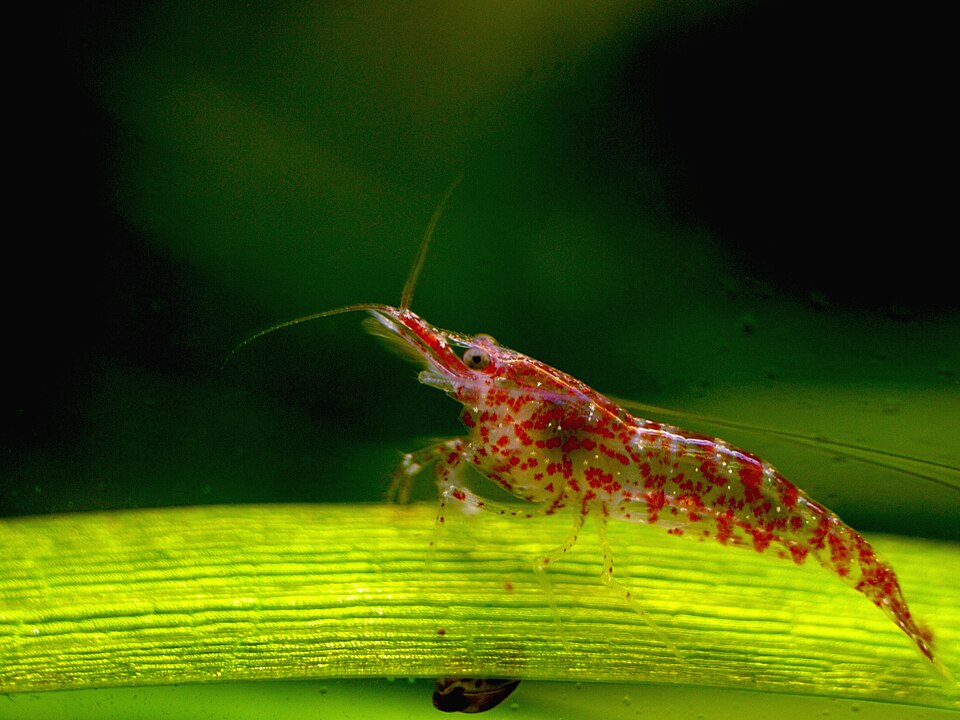
As you look at the mossy corner of the aquarium, you notice a tiny red dot moving. Lean closer, and a shrimp appears, cleaning the surface of a leaf nonstop with its tiny legs. According to the University of Florida's (UF/IFAS) guide to insects and other invertebrates, the cherry shrimp (Neocaridina davidi) actually comes from freshwater streams in Taiwan, and in the wild it is transparent or greenish brown. The red, orange, yellow, green and blue colors we see in aquariums are the result of selective breeding over many generations. These little pets look easy to care for, but they are very sensitive to sudden changes in the water and to certain chemicals.
- A mature aquarium: According to OATA, shrimp should only go into a cycled (mature) aquarium; ammonia and nitrite should be zero.
- No copper: According to UF/IFAS, most invertebrates are very sensitive to copper and won't survive a copper treatment.
- Slow acclimation: OATA recommends getting new shrimp used to the aquarium water gradually, over at least 30 minutes.
- Regular partial water changes: RSPCA Australia recommends changing 10–25% of the water every week in a mature aquarium.
- Never release them into the wild: According to UF/IFAS, this shrimp has become established in the wild in Europe, Japan, Israel and Hawaii.
Get to know the cherry shrimp
According to UF/IFAS, adult cherry shrimp grow to 3–4 cm at most, and females are usually larger than males. The female carries her eggs under her abdomen, and they hatch in 16–19 days. A female carries between 43 and 60 eggs. Here's the interesting part: unlike most crustaceans, these shrimp have no larval stage. The young hatch as tiny adults, 1–2 mm long, and are able to breed at about 30 days old.
According to UF/IFAS, cherry shrimp feed on algae, the film of microorganisms known as biofilm, and dead plant or animal matter; they spend most of their time grazing on the biofilm that covers leaf litter. According to OATA, they can live for several years in a well-matured aquarium with good water quality.
Setting up the aquarium: don't rush
What makes an aquarium "mature" is the beneficial bacteria living in the filter and on surfaces. According to RSPCA Australia, the biological filter is the most important part of an aquarium: bacteria first convert toxic ammonia into nitrite, and then nitrite into much less harmful nitrate. When ammonia and nitrite drop to zero and nitrate starts to appear, the aquarium has completed its cycle; according to RSPCA Australia, this usually takes 4–6 weeks.
OATA wants shrimp to go only into an aquarium that has completed this cycle, and wants animals to be added gradually. Adding too many animals at once can cause "new tank syndrome," where ammonia and nitrite build up.
- Size: OATA recommends at least 10 liters for a group of small shrimp; if there are fish too, you'll need more space.
- Filter: According to OATA, every aquarium needs a filter, whatever its size.
- Lid: Shrimp can jump out of the water, so use a lid.
- Plants and hiding places: Use live plants if you can. Sand or fine gravel makes it easier for shrimp to forage.
- Location: Keep the aquarium away from drafts, heat sources, direct sunlight, noise and vibration.
- Testing: OATA recommends testing the water with a test kit every week. RSPCA Australia wants ammonia and nitrite tested every two to three days for the first six weeks in a new aquarium.
The general values OATA gives for freshwater shrimp:
| Measure | OATA's general recommendation |
|---|---|
| Temperature | 17–27 °C (63–81 °F) |
| pH | 6.5–8.0 |
| Ammonia and nitrite | 0 mg/L |
| Nitrate | No more than 20 mg/L above your tap water level |
| General hardness (GH) | 4–18 °dH |
| Carbonate hardness (KH) | 3–15 °dKH |
These values are a general framework; ask an experienced specialist about the specific needs of your shrimp species.
Little pets that love to hide
According to a study carried out in Brazil, cherry shrimp are animals that really "like to hide": they were inside a shelter in about 82% of observations and were more active at night. Of the shelters tested, they preferred Java moss the most, and the researchers recommend using Java moss in aquariums and providing hiding places. If your shrimp are hiding, don't worry; it's their natural behavior.
Copper: an invisible danger
According to the UF/IFAS guide to copper, most invertebrates are very sensitive to copper and won't survive a copper treatment. The guide recommends taking invertebrates out of the aquarium before any copper treatment and not putting them back until the copper level has dropped very low, ideally to zero. OATA also says shrimp can die even at low copper levels.
- Make sure every product you add to the aquarium is safe for invertebrates (OATA).
- If your fish get sick, don't medicate them on your own; always tell your vet that there are shrimp in the aquarium.
- Don't use soap or detergent for cleaning (RSPCA Australia).
Acclimating new shrimp
According to OATA, invertebrates are prone to shock when things change suddenly, so acclimation should be done without rushing.
- Turn off the lights and keep the bag away from bright light.
- Float the bag: Float the sealed bag in the aquarium for about 10 minutes so the temperatures can even out.
- Add water slowly: Over at least 30 minutes, add aquarium water to the bag a little at a time.
- Release the shrimp: Let as little of the bag water as possible get into the aquarium; throw away the bag and its water.
- The first week: Keep a close eye on the shrimp and the water.
Water changes: small and regular
According to RSPCA Australia, 10–25% of the water in a mature aquarium should be changed every week and the gravel cleaned; OATA also recommends about 25% at least once a week. Make small, regular changes rather than large, sudden ones.
- Chlorine: Add tap water conditioner to the new water; it removes chlorine and chloramine.
- Temperature: RSPCA Australia recommends filling a labeled bucket that's used only for the aquarium with the new water a day ahead, so it can reach room temperature.
- Filter: Rinse the filter gently in water taken from the aquarium, not under the tap, to protect the beneficial bacteria.
- Siphon: RSPCA Australia reminds you not to start a siphon hose by sucking on it.
If you add your shrimp tank to Tüylüm as fish, the Today tab gives you ready-made tasks: Food, Water change (weekly), Water test (weekly) and Filter cleaning (monthly). Everyone in your Home sees the same list, so water changes don't get forgotten.
Molting and babies
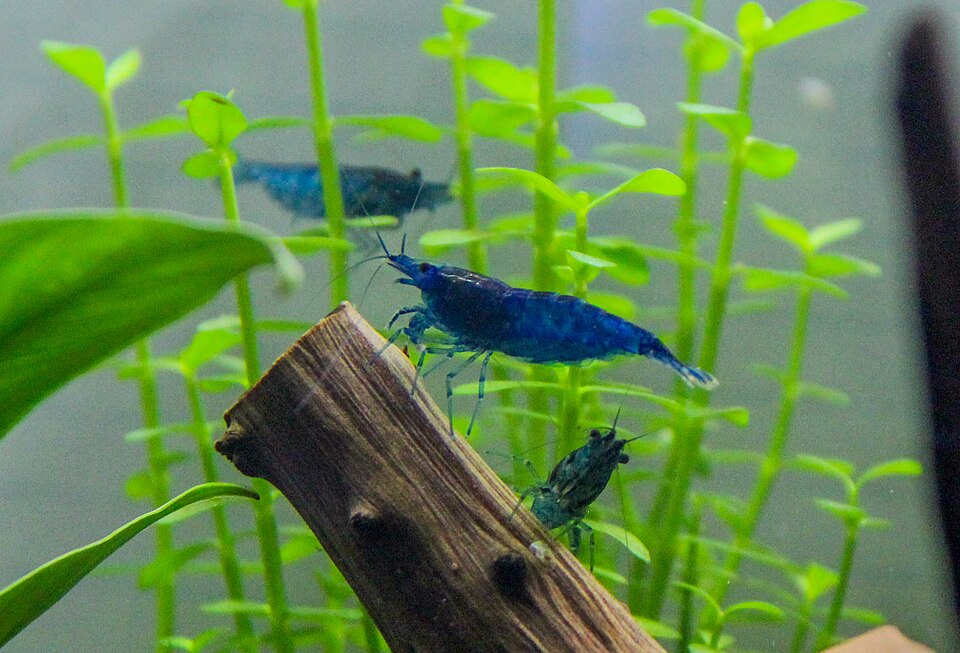
According to UF/IFAS, like all arthropods, cherry shrimp grow by shedding their exoskeletons, and they eat their old shells to recover the nutrients in them. According to OATA, shrimp molt often, and the empty shell left behind can look like a dead shrimp. So if you see a transparent shrimp shell in the aquarium, don't panic right away; count your shrimp first.
According to OATA, cherry shrimp breed on their own in an aquarium with enough hiding places and food.
Food and tank mates
According to OATA, shrimp are mostly herbivores that feed on algae. You can supplement their diet with algae wafers and, if needed, shrimp food. OATA recommends feeding two or three times a week and leaving the food in for at least 30 minutes; any uneaten food should be removed, because it rots and creates toxic waste.
Which fish?
According to OATA, shrimp get along with most species, but shouldn't be kept with fish whose mouths they can fit into or with predatory species. Remember: according to UF/IFAS, the babies are only 1–2 mm long. Before adding fish to your aquarium, check the species with an experienced specialist.
According to UF/IFAS, cherry shrimp have become established in the wild in canals and streams fed by warm water in Poland and Germany, as well as in Japan, Israel and Hawaii; in Hawaii, they are thought to have arrived through the aquarium trade and may compete with native shrimp. OATA reminds you never to release aquarium animals or plants into the wild, and to dispose of dirty substrate and aquarium water in a way that keeps it out of streams and lakes.
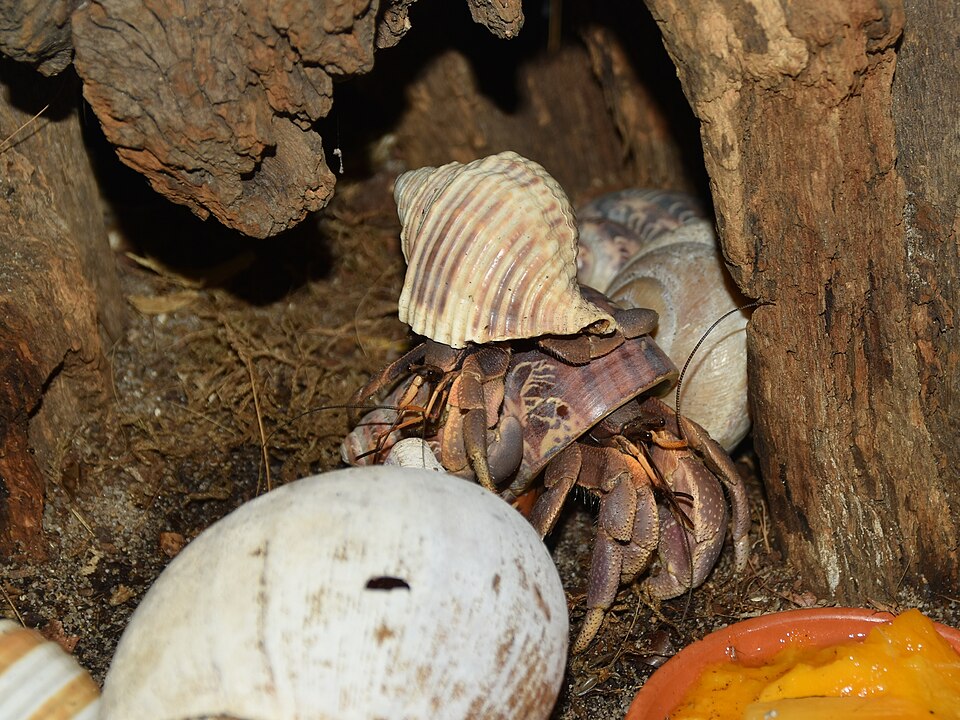
Our other invertebrate guides: Invertebrates. Another crustacean that lives on land and also molts: the land hermit crab.
Frequently asked questions
Why are my shrimp always hiding?
According to a study carried out in Brazil, cherry shrimp spend most of their time in a shelter and are more active at night. This is natural behavior. Make sure the aquarium has plenty of hiding places, such as Java moss.
I saw a dead shrimp in the aquarium, but they all seem to be there. How is that possible?
What you saw was most likely an empty shell. According to OATA, shrimp molt often, and the shell left behind looks like a dead shrimp. According to UF/IFAS, shrimp eat their old shells to recover the nutrients.
How many shrimp should I start with?
According to OATA, shrimp are social and should be kept in groups of at least five; those kept alone or in very small groups can become stressed. A small group needs a mature aquarium of at least 10 liters.

Keep track of your pet's care in TüylümLog vet visits, vaccine and medication dates, and we'll remind you when it's time. Share it all with your family in Home.
Sources
- UF/IFAS EDIS (Featured Creatures) · Cherry Shrimp Neocaridina davidi
- UF/IFAS EDIS · Use of Copper in Marine Aquaculture and Aquarium Systems (FA165)
- RSPCA Australia Knowledgebase · Why is water quality important when setting up a fish aquarium?
- Ornamental Aquatic Trade Association (OATA) · How to look after freshwater shrimp and snails
- Nauplius (Carvalho-Batista et al., 2023) · Shelter preference and variation in the daily activity pattern of the ornamental shrimp Neocaridina davidi
By Tüylüm · Published and last checked: October 24, 2026. Spotted a mistake? Write to [email protected] and we'll fix it right away. Photos are from Wikimedia Commons, used under the license shown below each photo.