Land hermit crabs: called hermits, but these little nomads love company
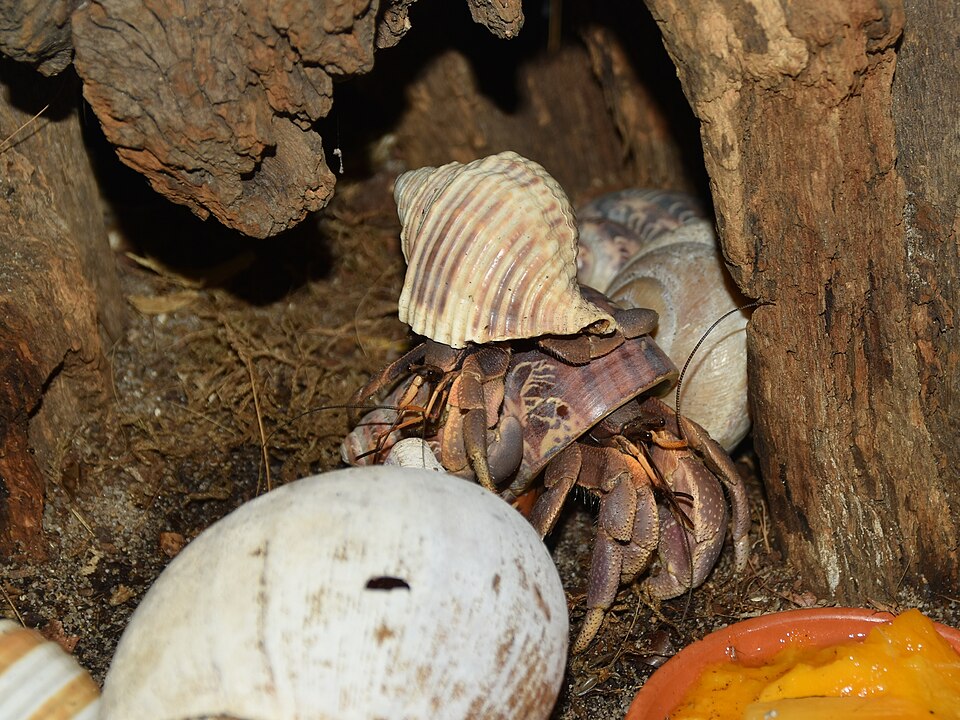
It may be called a "hermit," but the land hermit crab doesn't like being alone. According to the Royal Veterinary College (RVC), these crabs are social animals and can live in groups of more than 100 in the wild. They use the empty shells left behind by dead sea snails to protect their soft bodies, and move into a bigger shell as they grow. According to the care guide from The Unusual Pet Vets, an exotic animal clinic in Australia, land hermit crabs breathe through special gills, and these gills need very humid air to work. In other words, this little nomad shouldn't live in an ordinary aquarium, but in a small, humid world set up just for it.
- Loves company: The animal ethics committee for South Australian schools recommends that, despite their name, they never be kept alone.
- A very humid environment: According to the sources, humidity should be roughly in the 70–90% range.
- Two water dishes: One with fresh water for drinking, one with salt water for bathing. Don't use table salt.
- Spare shells: Always have empty shells of different sizes and types ready; don't give painted shells.
- Molting: The crab buries itself in the substrate; don't dig it up or disturb it.
Know this first: most come from the wild
According to the care sheet from the animal ethics committee for non-government schools in South Australia, hermit crabs are very hard to breed: their eggs need to hatch in the sea, and they can only very rarely be bred at home. That's why most of the crabs on sale are animals collected from their natural habitat. The Unusual Pet Vets points out a sad truth: most hermit crabs that enter the pet trade can't thrive the way they would in the wild, or even survive, and many of the products and enclosures sold for them aren't suitable either.
According to the same committee, these crabs can live up to 15 years in captivity and up to 30 years in the wild. So getting a hermit crab means making a long commitment. Learn about their needs well before you decide.
The crab house: tank, substrate and climbing
- A tank with a lid: According to The Unusual Pet Vets, you need a glass or plastic tank with a secure lid to hold in humidity and prevent escapes. The animal ethics committee also points out that the crabs are escape artists.
- Size: The Unusual Pet Vets recommends at least 38 liters per crab, and the animal ethics committee at least 45 × 30 × 30 cm, depending on how many crabs you have.
- Ventilation: According to The Unusual Pet Vets, ventilation should be kept to a minimum so the humidity doesn't drop.
- Climbing: Hermit crabs love to climb; driftwood and roots are good options. Make sure they can't climb out of the tank.
- Hiding places: The committee wants hiding places where they can get away from light, noise and other crabs.
- The lid also protects: According to the committee, the lid also stops substances used in the room, such as air freshener and insect spray, from getting into the tank, and especially into the water dishes.
Substrate: deep enough to bury in
The Unusual Pet Vets recommends a substrate mix of 8 parts children's play sand to 1 part coconut fiber, at least 15 cm deep, and preferably deeper. The substrate should be damp, but water shouldn't pool in it. According to the committee, the substrate should be deep enough for the crabs to bury themselves completely; crabs dig both to regulate their temperature and to molt. According to The Unusual Pet Vets, digging is essential for molting.
Temperature and humidity
| Measure | The Unusual Pet Vets | Animal ethics committee |
|---|---|---|
| Temperature | A temperature gradient across 26–32 °C (79–90 °F) | 20–30 °C (68–86 °F) |
| Humidity | 70–85% | 75–90% |
The sources want the heater connected to a thermostat. The Unusual Pet Vets recommends placing a heat mat on the outside of the tank's back wall, above the level of the substrate; the committee also wants the mat on the side or back, not underneath. If you use a heat lamp, according to the committee it should be surrounded by wire mesh so the crabs can't touch it and get burned. Leave one corner of the tank at room temperature so the crabs can choose where to go. Keep the tank away from direct sunlight and drafts from air conditioning. Track humidity with a hygrometer; The Unusual Pet Vets says a dish of damp sphagnum moss can help raise it.
Two water dishes: fresh and salt
The animal ethics committee is clear: there should always be water, and you should provide two separate dishes.
- Fresh water: For drinking. The committee recommends letting tap water stand for 12 hours and using a water conditioner to remove chlorine and other substances.
- Salt water: For bathing. According to the committee, table salt shouldn't be used, because the iodine in it harms crabs. Ask a vet or specialist with crab experience how to prepare the salt water.
- Easy in and out: The crabs need to be able to get in and out of the dishes easily. If a dish is deep, put stones in it to help them climb out.
- Clean every day: According to the committee, water and food dishes should be cleaned every day.
Shells: the crab's portable home
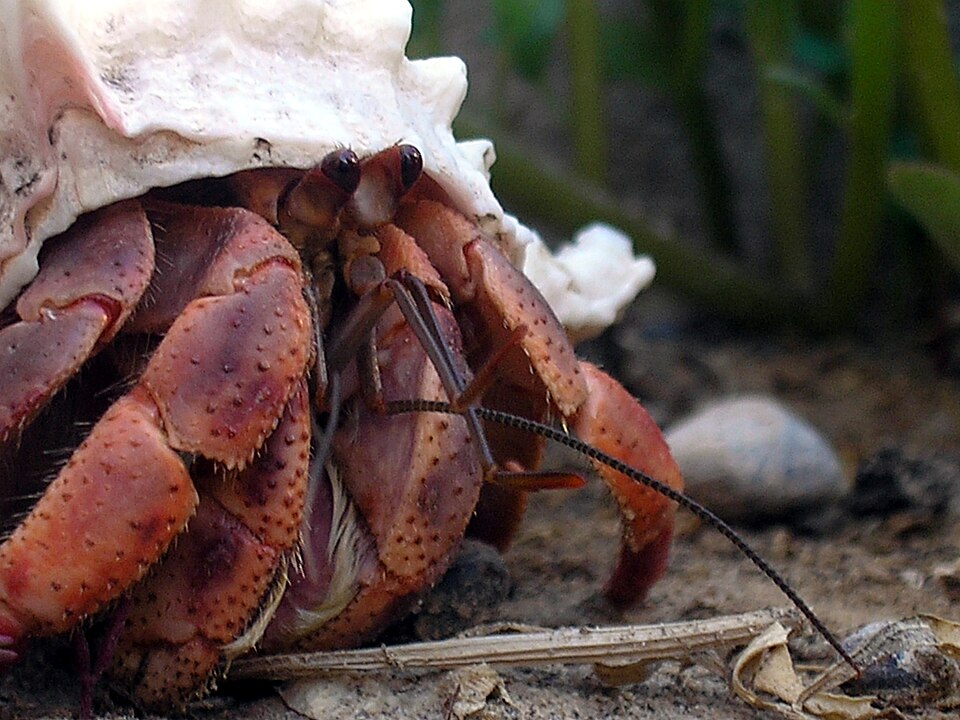
According to The Unusual Pet Vets, offering a variety of spare shells is very important for a crab's wellbeing: it needs to move into bigger shells as it grows, so there should always be shells of different sizes and types in the tank. The animal ethics committee gives the details:
- The right shell: One that fits the crab's whole body and leaves room to grow. In the right shell, the crab can pull itself all the way in and close off the opening with its big claw, like a door.
- The opening matters: According to the committee, the opening is what a crab looks at most when choosing a shell.
- Offer choices: Put in a few shells the same size as its current one and a few bigger ones. Some crabs like roomy shells, others snug ones.
- Fighting: If there are no suitable shells, a crab won't change shells and may get into shell fights with other crabs.
- Keep the old shells: Crabs sometimes go back to their old shells; the committee recommends leaving old shells in the tank unless they're badly damaged.
- According to The Unusual Pet Vets, painted shells shouldn't be given; the paint can be toxic and harmful to crabs.
- If your crab came in a painted shell, don't try to take it out; put in other shells as options, and it will move when it's ready.
- The animal ethics committee also reminds you: never try to force a crab out of its shell.
Molting: time to bury
According to the animal ethics committee, hermit crabs molt every 2 to 18 months, depending on their age, size and environment. During this time they're very vulnerable and bury themselves completely in the substrate. It can take up to 10 days for the new exoskeleton to harden. Crabs often eat their old exoskeleton as a source of calcium.
- Don't dig it up: A crab you haven't seen for days may be molting. According to the committee, crabs that are molting or changing shells shouldn't be handled.
- Keep humidity and temperature steady: Keep the substrate damp and the temperature stable.
- Don't remove the old exoskeleton right away: The crab may eat it.
The signs of illness the committee lists include loss of appetite, failure to grow, lethargy, loss of legs (claws included), parasites and molting problems such as going without a shell for a long time (for example, more than 14 days). The Unusual Pet Vets also lists molting problems, dehydration, shell fights, too few shell choices and stress among common problems. If you notice any of these, ask a vet with experience of crabs.
Food
According to the animal ethics committee, hermit crabs eat both plant and animal foods; in the wild they feed on plant debris and dead animals. The committee recommends hermit crab food as the main diet, given every day in a flat, open dish the crabs can climb in and out of. Fruit, vegetables and dead insects can be given two or three times a week as treats, but not every food is suitable, so ask someone with crab experience before offering anything new. The committee also recommends keeping pieces of cuttlebone in the tank. Crabs eat at night, slowly and only a little; remove leftovers every day.
Handling and cleaning
According to The Unusual Pet Vets, hermit crabs don't enjoy interacting with people and should be handled as little as possible: being held stresses them, and being taken out of their humid tank makes it harder for them to breathe. If you need to pick one up, hold it by its shell and wash your hands both before and after. The committee recommends washing your hands for at least 15 seconds, with water and no soap before handling a crab and with soap and water afterward; children shouldn't handle the crabs, only watch them.
According to the committee, food leftovers should be cleared away every day and the tank spot-cleaned once a week; the substrate should be changed once a month, and no chemicals should be used for cleaning.
The ready-made invertebrate tasks in Tüylüm's Today tab (Water dish / humidity, Terrarium cleaning) fit a hermit crab routine, and you can add daily cleaning of the water and food dishes as a task of your own. With Food & litter supplies you can track when your food and substrate will run out.
According to the animal ethics committee, hermit crabs you can't look after should be rehomed; they should never be released into the wild or into waterways.
Our other invertebrate guides: Invertebrates. If you're curious about shells from a snail's point of view: snail shells and calcium.
Frequently asked questions
My crab has been missing for days. What should I do?
It has most likely buried itself in the substrate to molt. According to the animal ethics committee, hermit crabs bury themselves completely in the substrate while molting, and the new exoskeleton can take up to 10 days to harden. Don't dig it up; keep the humidity and temperature steady.
Can I get just one crab?
It's not recommended. According to the RVC, hermit crabs are social animals, and the animal ethics committee also recommends that, despite their name, they not be kept alone. But don't overcrowd the tank either: according to the committee, they may fight if there isn't enough space and enough shells.
My crab's shell is painted. What should I do?
According to The Unusual Pet Vets, don't try to take it out of its shell. Put unpainted shells of different sizes and types in the tank; your crab will move when it's ready.

Keep track of your pet's care in TüylümLog vet visits, vaccine and medication dates, and we'll remind you when it's time. Share it all with your family in Home.
Sources
- The Unusual Pet Vets (veterinary clinic) · Australian Land Hermit Crab Care Sheet (PDF)
- South Australian Non-Government Schools Animal Ethics Committee · Animal Care Information Sheet: Hermit Crabs (PDF, October 2024)
- Royal Veterinary College (RVC) · Invertebrate vet services
By Tüylüm · Published and last checked: October 24, 2026. Spotted a mistake? Write to [email protected] and we'll fix it right away. Photos are from Wikimedia Commons, used under the license shown below each photo.