Snail shells and calcium: what a pet that carries its home on its back needs most
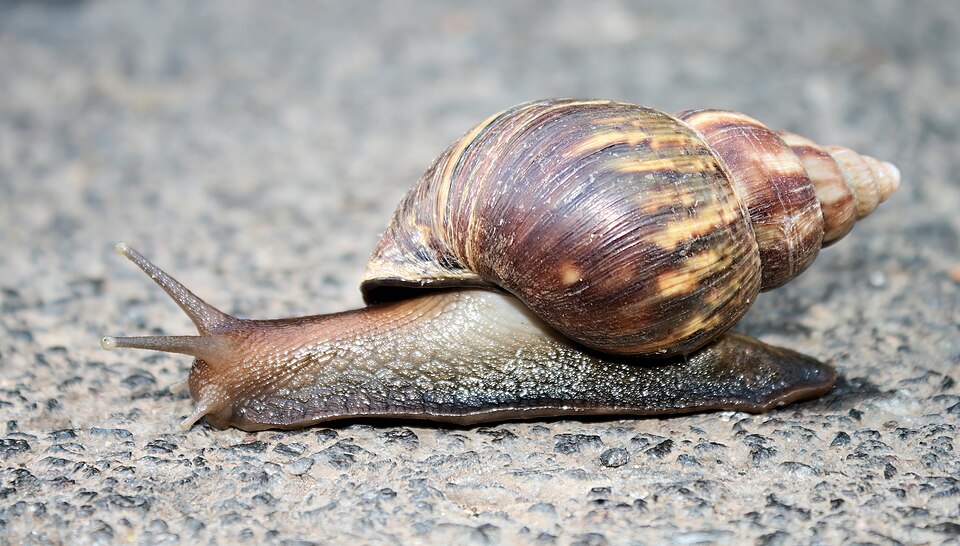
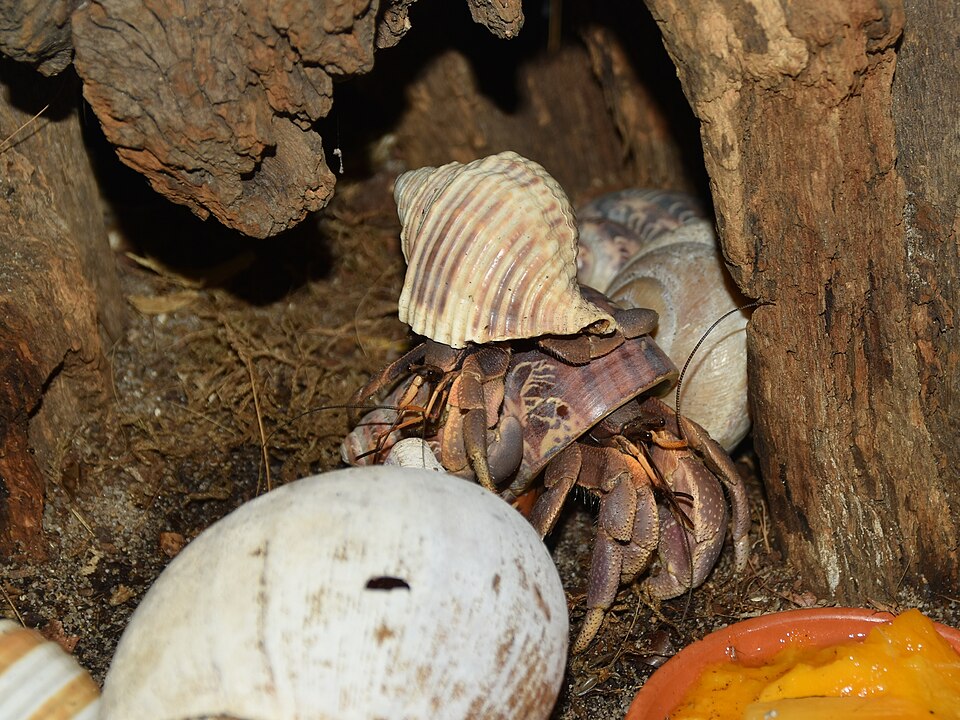
Most people who watch a snail up close for the first time wonder the same thing: can it leave its shell and move into a new home? The answer is no. A snail's shell is nothing like the borrowed shells a land hermit crab carries around; it's a structure made by the snail's own body, one that grows along with it and is attached to its body by a muscle. That's why taking good care of the shell means taking good care of the snail itself. And the most important part of that care is calcium.
- What is it made of? The shell is mostly calcium carbonate with a small amount of protein; it is made by a tissue in the snail called the mantle.
- How does it grow? The shell grows as new material is added to its edges, especially around the opening.
- It's attached: The body is attached to the shell by the columellar muscle. Never pull a snail out of its shell.
- Calcium at all times: Cuttlebone, natural chalk or crushed eggshell (RSPCA, RVC).
- A broken shell: Don't try to repair it at home; ask a vet who works with exotic animals.
What is the shell made of?
Francis Horne, a biologist at Texas State University who has studied how shells form, explained in Scientific American that mollusk shells are mostly calcium carbonate, with protein making up no more than 2 percent. The shell isn't made of cells: the mantle tissue underneath it, which touches the shell, builds it by secreting proteins and minerals outside its cells.
An article on land snails written by veterinarians at the University of Life Sciences in Lublin, Poland, fills in the details:
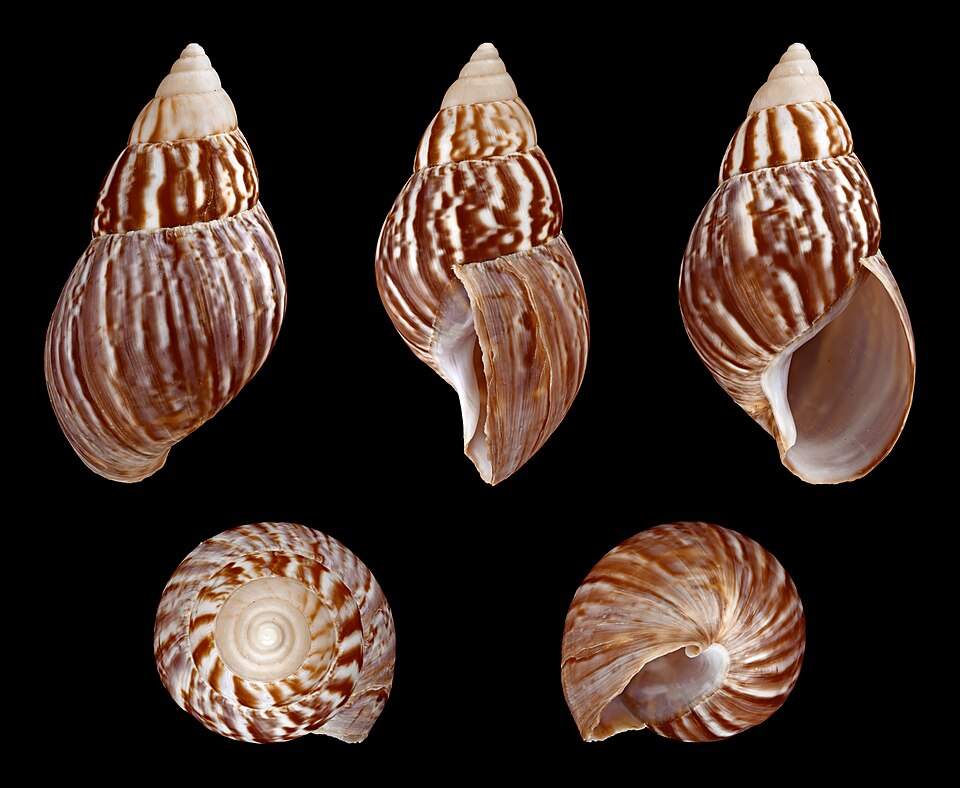
- Mineral: The shell is made of calcium carbonate in two crystal forms called calcite and aragonite.
- Binder: A protein found only in mollusks holds the minerals together.
- Outer layer: The outside of the shell is covered by a thin, horny layer containing the pigments that give it color.
- Axis: The shell coils in a spiral around a thin central axis called the columella.
How does the shell grow?
According to Horne, the shell grows as new material is added to its edges, especially at the opening where the animal reaches out. Because the shell is never replaced, it has to grow as the animal grows. The RVC also stresses that giant African land snails need calcium to support their growth. According to the article by the Lublin veterinarians, in some land snails the opening of the shell curls outward to form a lip once the snail is mature, and the shell's shape, color and size can give clues about the snail's health, nutrition and living conditions.
Can a snail leave its shell?
No. According to the article by the Lublin veterinarians, a snail's soft body is attached to its shell by the columellar muscle. This muscle anchors to the shell's central axis, and its other end reaches into the snail's foot; it's also the muscle that pulls the snail's body back into the shell. Trying to pull a snail out of its shell means straining this attachment.
The RSPCA also explains how to pick up a snail:
- Hold it by the shell: Lift the snail very gently by its shell.
- Wait for the right moment: Pick it up while it's resting on the soil, not while it's stuck firmly to the glass of the tank.
- Be careful with young snails: According to the RSPCA, young snails' shells are very fragile, so be extra careful when moving them.
- Best of all, use a leaf: Wait for the snail to climb onto a leaf and move it along with the leaf.
Calcium: where from, and how?
According to the RSPCA, calcium is an important part of a snail's diet so that its shell can form and grow normally. The calcium sources listed by the RSPCA and the RVC:
| Calcium source | Which source recommends it? |
|---|---|
| Cuttlebone | RSPCA, RVC, AES |
| Natural chalk | RSPCA, RVC |
| Crushed eggshell | RSPCA, RVC |
| Powdered calcium supplement | RSPCA, RVC |
If you're thinking of using a powdered supplement, ask your vet which product is suitable and how to give it. Put the calcium source somewhere your snail can always reach it. The AES also says that inexperienced keepers can crush surplus snail eggs they have frozen for 48 hours and give them back to their snails as a source of calcium and protein.
Why does this matter so much? In a study of giant African land snails in Brazil, snails that were starved for one to four weeks had up to 38.5 percent less calcium in their shells than snails that were fed, while the calcium in their blood barely changed. The researchers link this to a balancing mechanism that keeps the calcium level in the snail's blood steady. In other words, when food and calcium run short, the shell is often what pays the price.
Other ways to protect the shell
Calcium alone isn't enough; a healthy shell also depends on the environment.
- Chemicals: According to the RSPCA, chemicals, insecticides and detergents used in or around the place where a snail lives can kill it.
- Sun and overheating: According to the RSPCA, snails can become dehydrated from overheating and too much sunlight.
- The right temperature and humidity: If it's too hot, too cold or too dry, a snail withdraws into its shell; according to the RSPCA, a thin, chalky membrane may form over the opening.
The membrane over the opening
This semi-transparent membrane that seals the opening of the shell is called an epiphragm. According to the article by the Lublin veterinarians, snails produce it during hibernation or estivation (summer dormancy). According to the RSPCA, in a giant African land snail it can be a sign that conditions are too hot, too cold or too dry; the snail can stay dormant for months, and if the temperature is very low, it can die. According to the AES, what you need to do is review the conditions and correct them; once they improve, the snail becomes active again. For the right temperature and humidity values: giant African land snail care.
What to watch for in the shell
According to the RSPCA, a healthy snail's shell is clean and unbroken. The health problems the RSPCA wants you to learn about include calcium deficiency and a broken shell. The Lublin veterinarians also write that in farmed snails, a thin, brittle shell that is often missing its colored outer layer points to poor nutrition or a long period without food.
If you notice a break, crack, hole or thinning in the shell, don't try to repair it, glue it or scrape it yourself. Ask a vet who works with exotic animals, and go over your snail's diet, calcium source and tank conditions together.
You can log any change you notice in the shell in Tüylüm under Health › Complaint history; how long it has been going on appears at the top of the vet summary. To see how the shell grows over time, you can keep the photos you take every now and then in Memories.
Our other invertebrate guides: Invertebrates.
Frequently asked questions
There's a thin, whitish membrane over the shell opening. Is my snail dead?
Most likely not. This membrane may be an epiphragm, which snails produce when they're dormant. According to the RSPCA, in a giant African land snail it can be a sign that conditions are too hot, too cold or too dry. Check the temperature and humidity and correct them; if your snail doesn't wake up, ask your vet.
Is it safe to give eggshell?
The RSPCA and the RVC list crushed eggshell among calcium sources. Cuttlebone and natural chalk are also options.
Is cuttlebone enough, or does my snail need a supplement too?
The RSPCA and the RVC also list a powdered calcium supplement as an option, but decide together with your vet whether your snail needs one and which one is suitable.

Keep track of your pet's care in TüylümLog vet visits, vaccine and medication dates, and we'll remind you when it's time. Share it all with your family in Home.
Sources
- RSPCA · Handle with care: Giant African land snails (PDF)
- Royal Veterinary College (RVC) · Giant African land snail care sheet (PDF, December 2024)
- Amateur Entomologists' Society · Giant African Land Snails
- Medycyna Weterynaryjna (Faculty of Veterinary Medicine, University of Life Sciences in Lublin, 2019) · Method of dissecting edible snails of the genus Cornu (PDF)
- Scientific American (Francis Horne, Texas State University) · How are seashells created?
- Revista Brasileira de Zoociências (Tunholi et al.) · The influence of starvation on the calcium content in the shell and hemolymph of Achatina fulica
By Tüylüm · Published and last checked: October 24, 2026. Spotted a mistake? Write to [email protected] and we'll fix it right away. Photos are from Wikimedia Commons, used under the license shown below each photo.