Chinchilla care: dust baths instead of water, no love for heat, and up to 20 years of life
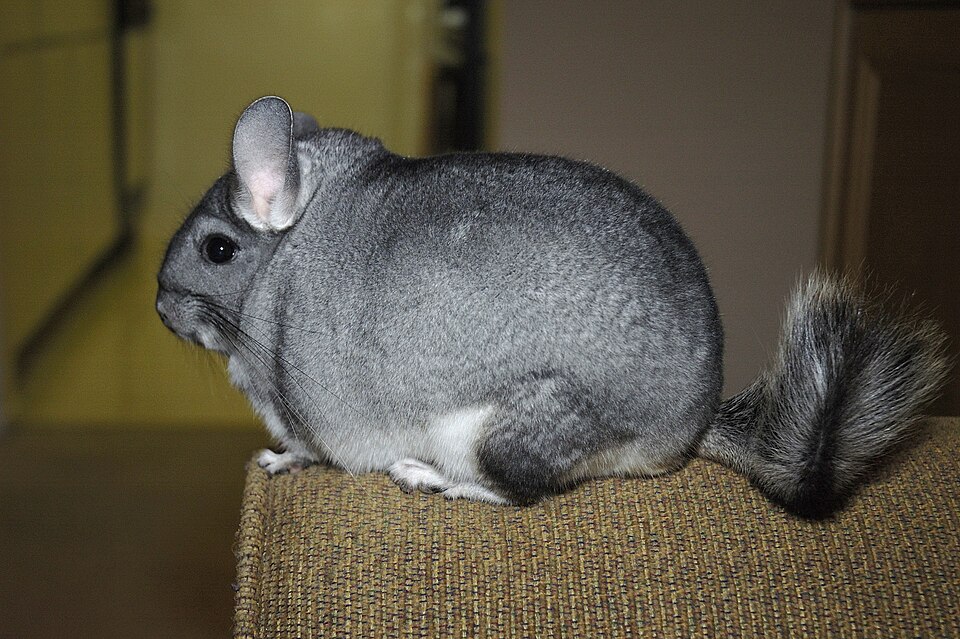
Everyone who touches a chinchilla's fur says the same thing: it's incredibly soft. According to the RSPCA, 60 to 90 hairs grow from each hair follicle in chinchillas, while in humans it's usually just one. This dense coat exists to survive on the cold, dry slopes of the Andes. That same coat also brings two important rules for a pet chinchilla: it is never bathed in water, and it can't handle heat.
- No water baths: According to Blue Cross, its dense fur takes a very long time to dry and can lead to hypothermia. Instead, a dust bath every day.
- A cool room: According to the RSPCA and Blue Cross, the ideal temperature is 10–18 °C (50–64 °F). According to the Merck Veterinary Manual, heatstroke can occur above 27 °C (81 °F).
- Hay at all times: Most of the diet is hay; their teeth grow throughout their lives.
- A roomy, tall space: They are excellent jumpers, but according to the RSPCA and the PDSA, the height they could fall from shouldn't be more than 60 cm.
- Long life, companionship: According to the RSPCA, they can live 10–20 years and shouldn't be kept alone.
A long promise: up to 20 years
According to the RSPCA, chinchillas can live 10–20 years, which makes them a long-term responsibility for any owner. The RSPCA describes them as shy, timid animals that don't much like being stroked or picked up, so they're better suited to adults than to children, and to people who enjoy watching animals more than holding them. Blue Cross also says chinchillas aren't ideal for children looking for a pet to cuddle.
Chinchillas are very social. According to the RSPCA, in the wild they live in colonies of more than a hundred, and at home they shouldn't be kept on their own. Blue Cross always recommends at least two chinchillas. Siblings that have grown up together usually get along well; if they're of different sexes, the male needs to be neutered so they can't breed.
Blue Cross recommends introducing a new chinchilla gradually: first let them get used to each other's scent in two cages side by side, then let them meet in a space that's new to both of them. If the fighting looks serious, separate them again and talk to a behavior specialist.
The dust bath: a chinchilla's shower
According to Blue Cross, bathing and brushing in the usual sense aren't necessary for chinchillas. In the wild they keep their fur clean with fine sand, and at home you provide this with a dust bath. According to the RSPCA, offering a shallow dish of clean, fine sand or chinchilla bath dust every day keeps their fur in good condition.
- The right material: Special chinchilla bath dust sold in pet stores. According to Blue Cross, ordinary play sand or builder's sand is too coarse and damages the fur and skin.
- A big enough container: According to Blue Cross, the chinchilla should be able to roll around inside it without getting hurt; the dust should be about 10 cm deep.
- Every day: The RSPCA and Blue Cross recommend a dust bath once a day.
- Short time, then remove it: Blue Cross recommends leaving the bath in for about 20 minutes; if it stays longer, it can get dirty and the chinchilla may not want to use it.
- Clean and replace: The RSPCA recommends removing the dish after use or sieving it clean; Blue Cross recommends replacing the dust at least once a week.
- Check its eyes: According to Blue Cross, built-up dust can cause eye problems.
According to Blue Cross, a chinchilla should never be bathed in water: its fur is so dense that it takes a very long time to dry, and this can lead to hypothermia (a dangerous drop in body temperature). According to Blue Cross, a chinchilla that has regular dust baths and healthy teeth can take care of its own fur.
Temperature: cool, dry and draft-free
According to the RSPCA, chinchillas come from the mountainous regions of South America and are used to a cool, cold and dry climate. At home they should live somewhere well ventilated, dry and draft-free, ideally at 10–18 °C (50–64 °F); they can get sick in hot, wet, humid, drafty or dirty conditions. The PDSA recommends an even cooler range of 10–15 °C (50–59 °F) and reminds owners that their thick fur makes them overheat quickly.
According to the Merck Veterinary Manual, chinchillas can get heatstroke at temperatures above 27 °C (81 °F); their preferred range is 10–16 °C (50–61 °F). Merck also recommends that their living space be dry, draft-free, cool and out of direct sunlight. According to the PDSA, temperatures above 30 °C (86 °F) can be fatal.
- Away from sunny windows: According to Blue Cross, the cage should never be placed in front of a window that gets sun.
- No drafts: According to Blue Cross, chinchillas can tolerate quite cold temperatures, but drafts are very dangerous for them.
- No humidity: Keep them away from humid places; according to the RSPCA, they can get sick in damp conditions, and according to Blue Cross, humidity does them no good at all.
- Put up a thermometer: In summer, put a thermometer in the room to keep an eye on whether the temperature goes beyond these limits.
- A quiet room: According to the RSPCA, chinchillas have very sensitive hearing and are easily startled by sudden noises; the PDSA recommends a spot away from televisions and stereos.
According to Blue Cross, chinchillas are prone to heatstroke in hot weather. If your chinchilla has been in a hot room and seems lethargic, call your vet without waiting.
Living space: roomy, tall and safe
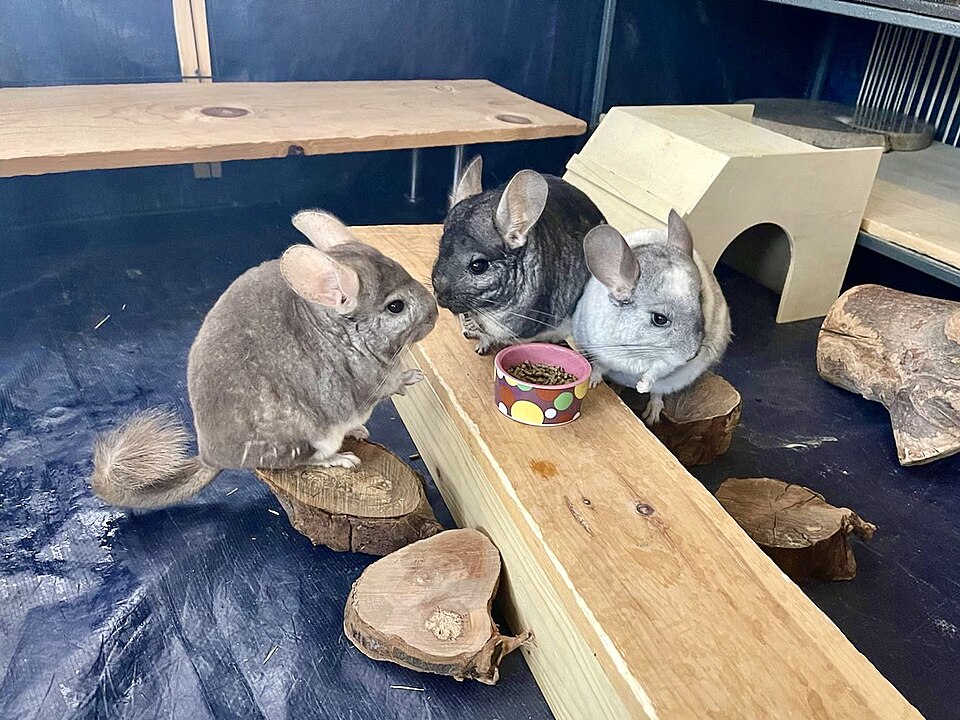
According to the RSPCA, chinchillas are very active and agile; they need both horizontal and vertical space to run and jump. According to the RSPCA, their back legs are built for jumping, and they can leap higher than 1.8 meters. The PDSA finds most cages inadequate for chinchillas and recommends, if possible, a large indoor enclosure or a safe room set aside for them, plus a safe exercise area outside the cage. According to Blue Cross, the minimum cage size for a pair or a trio is 90 × 60 × 120 cm (length × depth × height), not counting the stand.
| Need | Why? |
|---|---|
| Shelves and branches at different heights | For jumping and resting (RSPCA, Blue Cross) |
| An unbroken drop of no more than 60 cm | So it doesn't get hurt if it falls (RSPCA, PDSA) |
| Solid flooring alongside any wire floor | Standing on wire for long periods hurts their feet (RSPCA, PDSA) |
| Nest boxes with hay | For resting and hiding; one per chinchilla, plus a large one they can all fit in together (RSPCA) |
| Wood, rope, cardboard and pumice toys | For chewing; not plastic toys (RSPCA) |
The PDSA recommends that nest boxes be quiet, secluded and about 25 × 25 × 25 cm. Bedding should be dust-free; the PDSA considers hay, paper, recycled wood pulp or cardboard bedding suitable, but doesn't recommend newspaper because the ink may be toxic. The RSPCA also recommends avoiding nesting materials that separate into fine strands, such as cotton.
According to the RSPCA, chinchillas are curious and explore their surroundings with their mouths. If they roam freely around the house, keep them under supervision at all times so they don't chew electrical cables. According to Blue Cross, the evening, when they're most active, is a good time for a run outside the cage.
Diet: plenty of hay, few pellets and very few treats
According to the RSPCA, chinchillas need a high-fiber diet based on grass and hay. Their teeth grow continuously, and eating plenty of abrasive hay helps wear them down. According to the Merck Veterinary Manual, a chinchilla that doesn't get enough hay to chew can develop overgrown teeth that grow into the jaw and cause pain. According to Merck, drooling, wet fur under the chin, unevenly worn teeth or difficulty closing the mouth can be signs of a dental problem; if you see these, take your chinchilla to the vet.
- Hay: According to Blue Cross, good-quality hay should be available at all times. A hay rack hung low keeps the hay off the floor and clean.
- Pellets: Blue Cross recommends pellets rather than a mixed food; with a mix, a chinchilla can pick out the bits it likes and end up with an unbalanced diet. The amount of pellets should be small.
- Avoid: According to Blue Cross, peanuts and sunflower seeds are too fatty; raisins are very sugary, so they can only be given very rarely.
- Treats: According to Blue Cross, most ready-made treats are sugary and aren't necessary. Ask your vet which treats are suitable.
- Its own droppings: According to the RSPCA, chinchillas eat a special soft dropping again to get the most out of their food; this is normal.
We've explained why their teeth never stop growing and which chewing materials are safe in our article on why rodents chew.
Night routine and handling
According to the RSPCA, chinchillas are most active in the evening and at night; Blue Cross describes them as crepuscular, meaning they're most active at dusk and dawn. According to the RSPCA, they need to be able to sleep undisturbed for long stretches during the day, and they need 12 hours of darkness a day. Because they live in rock crevices in the wild, they like to squeeze into tight spaces to sleep.
According to the RSPCA, chinchillas can learn to enjoy spending time with familiar people and being stroked, but most don't like being picked up and will struggle. According to Blue Cross, chinchillas quickly learn the sound of their favorite treat: if you make the same sound every time you give a treat, your chinchilla will start coming to the front of the cage. After about a week, you can briefly stroke it on the chest or shoulder, where it can see you. If you need to hold it, do it close to the ground and away from shelves and furniture; it may try to jump onto them and get hurt.
According to the RSPCA, chinchillas can release large tufts of fur to escape predators; this is called "fur slip," and it can happen at home too if they're handled roughly. According to Blue Cross, a frightened chinchilla that's held tightly can shed handfuls of fur; Blue Cross recommends not picking it up unless necessary, and instead getting your chinchilla used to walking into a carrier on its own.
According to the RSPCA, barking or whistle-like sounds, hiding, fur chewing, changes in eating or toilet habits, drinking too much water and repetitive movements such as running back and forth along the bottom of the cage can be signs of stress or fear. If these signs continue, talk to your vet or an animal behaviorist.
You can add the dust bath as your own task in Tüylüm's Today tab; everyone in your Home sees the same list, and nobody forgets to take the bath out. You can track when the hay and bath dust will run out with Food & litter supplies.
More of our rodent articles: rodents.
Frequently asked questions
My chinchilla smells bad. Can I bathe it in water?
No. According to Blue Cross, a chinchilla should never be bathed in water; its dense fur dries slowly and can lead to hypothermia. The RSPCA describes chinchillas as clean rodents that don't smell; if you notice an unusual smell, talk to your vet about cage cleaning and your chinchilla's health.
Can I leave the dust bath in the cage all the time?
According to Blue Cross, if the bath stays in too long it gets dirty and the chinchilla won't want to use it; remove it after about 20 minutes. The RSPCA also recommends removing the dish after use or sieving it clean.
Is a chinchilla a good pet for children?
According to the RSPCA, chinchillas are shy, timid animals that don't like being held, so they're better suited to adults than to children. Blue Cross also recommends them for families who enjoy watching them. Children should always spend time with chinchillas under an adult's supervision.

Keep track of your pet's care in TüylümLog vet visits, vaccine and medication dates, and we'll remind you when it's time. Share it all with your family in Home.
Sources
- RSPCA · Creating a good home for chinchillas
- RSPCA · Chinchillas
- RSPCA · Chinchilla behaviour
- PDSA · The ideal home for chinchillas
- Blue Cross · Chinchilla care
- Merck Veterinary Manual · Routine health care for chinchillas
By Tüylüm · Published and last checked: October 24, 2026. Spotted a mistake? Write to [email protected] and we'll fix it right away. Photos are from Wikimedia Commons, used under the license shown below each photo.