Dog toys and chewing: why dogs chew and how to choose safe toys
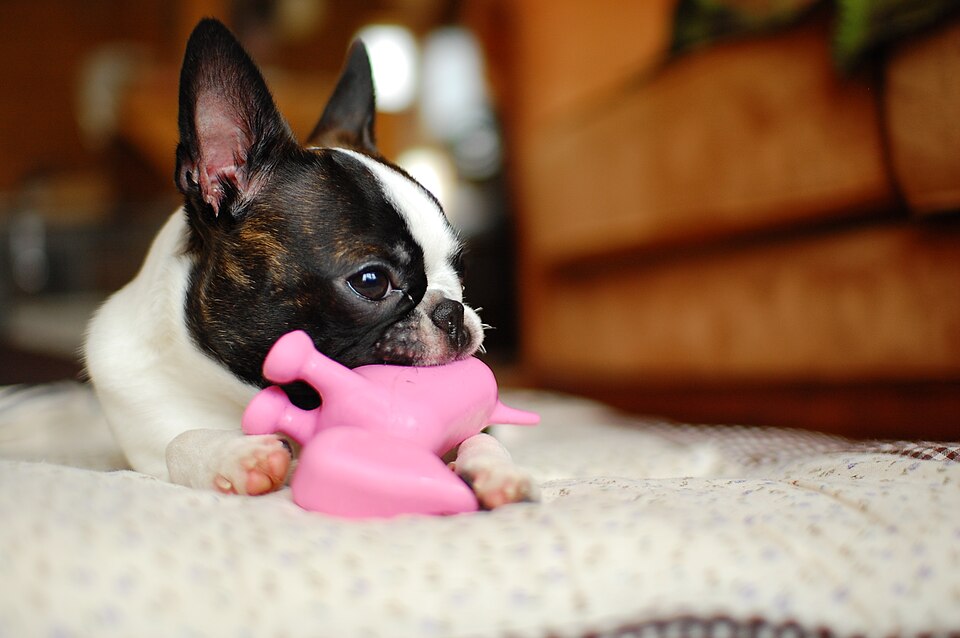
Chewing is natural behavior for dogs; the problem is when what gets chewed is your shoes, your couch or a toy that can be swallowed. Based on advice from Dogs Trust, the AKC, Humane World for Animals, PDSA and the US Food and Drug Administration (FDA), we cover why dogs chew, how to pick a safe toy and what to watch for around the house. For sniffing-based mental games, we have a separate article: sniffing games.
- Why they chew: Puppies while teething and exploring; adults mostly when bored or when they can't burn off energy (Dogs Trust, AKC).
- Size: A toy should be too big to swallow or lodge in the throat (Humane World for Animals, PDSA).
- Toughness: Very hard or brittle plastic can break teeth; throw out toys that break apart (PDSA, Humane World).
- Supervision: Watch your dog chew, especially new, squeaky or soft toys.
- Rotate: Dogs Trust and Humane World suggest rotating toys weekly.
- Home safety: Put away string, ribbon, rubber bands, children's toys and other things that can be swallowed.
Why do dogs chew?
According to Dogs Trust, puppies chew when teething and exploring, which usually lasts until about seven months old. The AKC says puppies generally have their adult teeth by about six months, and chewing often drops off around then. In adult dogs, chewing often comes from boredom or from too little exercise and mental stimulation (AKC). Dogs Trust adds causes such as stress, separation anxiety, and pain or illness, noting that chewing or scratching can be self-soothing when a dog feels unwell.
The AKC reminds us that excessive chewing can also be a sign of mouth, tooth or gum pain. So if your dog's chewing changes suddenly, talk to your veterinarian (Dogs Trust also recommends seeing a vet when behavior changes suddenly).
How to choose a safe toy
Size
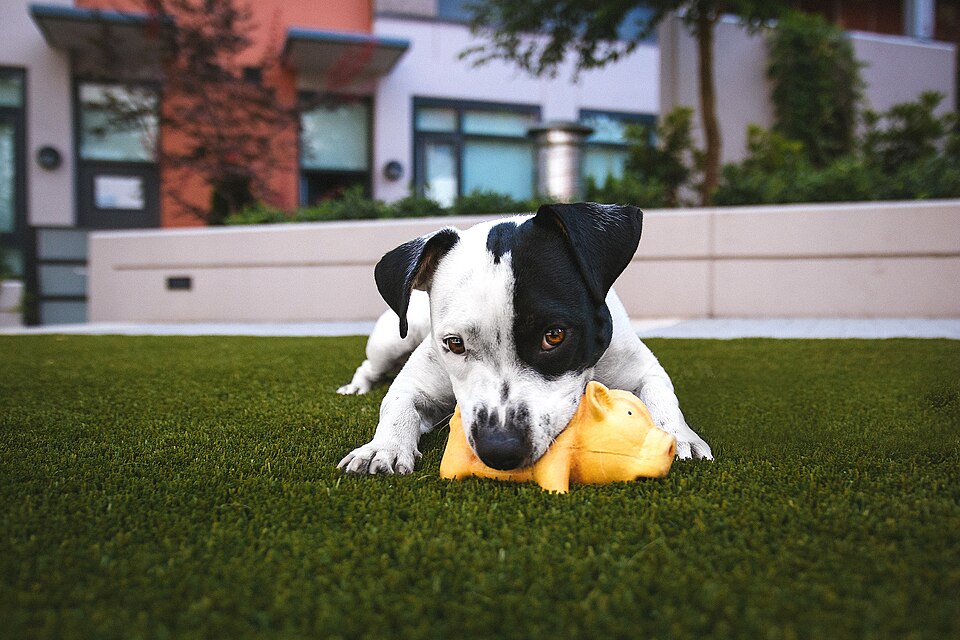
According to Humane World for Animals, a toy should be too large to be swallowed or to lodge in the throat. PDSA suggests a ball that's too big to fit entirely in your dog's mouth but light enough to carry comfortably; lightweight, easy-to-grip toys for small dogs and wider-diameter ones for larger breeds.
Material and toughness
According to PDSA, very hard or brittle plastic can break teeth, especially in heavy chewers; soft rubber, nylon and natural rubber are good options. PDSA says standard tennis balls are less suitable: the outer coating can wear down tooth enamel, and they can become slippery or damaged, raising choking risk. Humane World also says a tennis ball can become a choking hazard once chewed through.
Design
PDSA suggests a ball with at least one open hole, which can help a dog keep breathing if the ball lodges in its mouth or throat. With squeaky toys, a dog can tear out the squeaker and swallow it; both PDSA and Humane World recommend watching closely or avoiding them. Humane World suggests staying away from toys with pieces that can be chewed off, such as ribbons, strings or eyes, and checking the filling of stuffed toys.
| Toy | What to watch for |
|---|---|
| Hard rubber toy | Humane World presents very hard rubber as a safer, longer-lasting alternative to rawhide; PDSA says overly hard material can break teeth, so use judgment |
| Tennis ball | Choking risk once chewed through (Humane World); the coating can wear down tooth enamel (PDSA) |
| Squeaky toy | A dog may remove and swallow the squeaker; supervise or avoid (PDSA, Humane World) |
| Plush / stuffed toy | The filling isn't digestible; Humane World suggests checking the label and supervising |
| String, ribbon, rubber bands | Humane World says they can be swallowed; remove them from the home |
| Rawhide | Choking risk according to Humane World; ask your veterinarian which type is appropriate and give it only under supervision |
Supervision and upkeep
Humane World and PDSA agree on one point: check toys regularly, and throw out any that are cracked, torn or breaking apart. Dogs Trust recommends enrichment that's non-toxic and appropriately sized, and supervising dogs with soft toys since they may tear them up and swallow small pieces. The AKC calls keeping tempting items out of reach "the only 100% effective way" to protect belongings, such as confining a puppy to a dog-proofed room or crate when you can't supervise.
- Watch a new toy the first day: See how your dog chews and whether pieces come off.
- Take care when tired: PDSA notes that some dogs keep fetching even when tired or overheated; take breaks between throws.
- Toss the damaged: Remove any toy that's cracked, torn or small enough to swallow.
- Stuffing: Humane World says that if you use peanut butter to fill a toy, get your veterinarian's okay and make sure it doesn't contain xylitol. See foods dogs should never eat.
- Teach "trade": Dogs Trust suggests that if you need to take a piece from a toy, swap it for a treat or two.
Rotate the toys
Dogs Trust and Humane World both suggest rotating toys weekly; Humane World says to keep only a few out at a time. The AKC suggests leaving two or three out at once and bringing out favorites only for play with you, noting that toys left out all the time become less interesting. Humane World suggests a mix of types: one to carry, one to shake, one to roll and one to cuddle.
Stuffing a hollow rubber toy with treats or moistened kibble can keep your dog busy when you're away (AKC). Dogs Trust also says food-filled enrichment toys can keep dogs occupied so they don't chew household items. If your dog struggles to be alone, take a look at our article on separation anxiety.
Things around the house that can be dangerous
Humane World recommends dog-proofing the home: remove string, ribbon, rubber bands, children's toys, pantyhose and other things that can be swallowed. According to the FDA, corn cobs, bones and avocado pits can cause a blockage in the esophagus, stomach or intestines if swallowed; fruit pits from cherries, nectarines, peaches and plums carry the same blockage risk. The agency also notes that food bags, such as potato chip bags, can suffocate a dog if they wrap around the nose and mouth, and that dogs will often eat non-edible items like fabric softener sheets or salt dough.
- Trash and bags: Keep trash in a closed bin and throw empty food bags where your dog can't reach.
- Bones and pits: Don't leave leftovers where your dog can get them.
- Small items: Put away socks, string, ribbon, rubber bands and children's toys.
- Don't leave unsupervised: Dogs Trust suggests putting valuables away, using baby gates or closed doors, and supervising your dog where you can.
If your dog swallowed a piece of a toy or something that isn't food, the FDA says to call your veterinarian or a pet poison control center right away; PDSA likewise advises contacting a vet immediately if your dog is choking, struggling to breathe or has swallowed pieces of a damaged toy, and asking for advice if there's vomiting, lethargy or loss of appetite. Don't wait. For excessive chewing or behavior changes, also talk to your veterinarian.
You can write down things like something your dog swallowed or a sudden increase in chewing in the Complaint log with a date and a note; the Show the vet summary makes it easy to share with your veterinarian.
Frequently asked questions
Why does my dog chew everything?
According to Dogs Trust, puppies chew while teething and exploring, and adults may chew from boredom, stress or unmet needs. If it changes suddenly or is excessive, talk to your veterinarian.
When should I throw out a toy?
Humane World and PDSA suggest throwing out toys that are cracked, torn or breaking apart.
How many toys should I give?
The AKC suggests leaving two or three out at a time, and Humane World suggests rotating a few toys weekly.

Keep track of your pet's care in TüylümLog vet visits, vaccine and medication dates, and we'll remind you when it's time. Share it all with your family in Home.
Sources
- Dogs Trust · Why dogs destroy things and how to help
- AKC · How to Stop Your Dog From Chewing Everything You Own
- Humane World for Animals · How to pick the best and safest dog toys
- PDSA · How to choose a safe ball for your dog
- U.S. FDA · Potentially Dangerous Items for Your Pet
- Dogs Trust · Enrichment activities to keep your dog entertained
This article is for general information only; it is not a diagnosis or treatment advice and does not replace a visit to a veterinarian. Talk to your vet about decisions on your pet's health. By Tüylüm · Published and last checked: November 9, 2026. Spotted a mistake? Write to [email protected] and we'll fix it right away. Photos are from Wikimedia Commons, used under the license shown below each photo.