Ferret smell and cleaning: why frequent baths don't help
"They're cute, but don't they smell?" That's the question ferret owners hear most often. The answer: yes, ferrets have a distinctive smell of their own. But most of the time, what's known as "ferret smell" doesn't come from the ferret itself; it comes from a hammock that hasn't been washed in weeks or a litter box that's overflowing. And bathing a ferret often to get rid of the smell can actually make things worse. In this article, we explain where the smell comes from, how to keep things clean, and how to teach your ferret to use a litter box.
- Natural scent: According to the PDSA, ferrets have a distinctive musky smell; it's stronger in unneutered males.
- Frequent baths can increase the smell: Bathing strips the oils from the skin, and the skin then produces more oil (AFA, RSPCA Australia).
- The real source is the bedding: According to the PDSA, "ferret smell" usually comes from beds and hammocks; wash them every week.
- Litter box every day: A litter box placed in the corner your ferret chooses, and cleaned every day.
- Ears and nails: Check them regularly; learn nail trimming from your vet the first time.
Where does the smell come from?
According to RSPCA Australia, a ferret's smell mostly comes from the natural oils in its skin. According to the AFA, ferrets also have scent glands that release an odor when they're defending themselves; but surgically removing these glands isn't recommended unless there's a medical reason, and it doesn't reduce a ferret's natural smell.
According to the PDSA, the smell is particularly strong in unneutered males, and neutering can reduce it. However, the method and timing of neutering in ferrets is a subject with its own pros and cons; talk to your vet about the best option for your ferret.
According to the AFA, the best ways to keep the smell to a minimum are clean bedding and a healthy diet. For details on a healthy diet: ferret nutrition.
Why don't frequent baths help?
According to the AFA, frequent bathing strips away the oils that protect a ferret's coat; the skin then produces more oil to make up for it, and the ferret's natural smell can get stronger. RSPCA Australia says the same: a bath may reduce the smell for a while, but for a few days afterward the smell can be stronger.
That's why sources recommend keeping baths rare. According to RSPCA Australia, bathe your ferret only when it has gotten into something or made a mess of itself while eating; otherwise, a bath every two to three months is more than enough. The AFA also recommends bathing no more than once a month and using a very mild shampoo. Ask your vet which shampoo is suitable.
- Keep the water shallow and lukewarm: According to RSPCA Australia, the water should be just deep enough for your ferret to stand comfortably on all four feet.
- Don't rush: Get your ferret used to baths step by step; use a calm voice and give a treat at every step.
- Towel dry: Ferrets dry quickly; but make sure they don't get cold while they're wet.
- Don't use a hair dryer: According to RSPCA Australia, it can frighten your ferret, or even burn it.
- Clean towels: Put clean towels in the tub and let your ferret dry itself off by burrowing through them. If its cage isn't clean, don't put a wet ferret back in it; a dirty cage undoes all the work of the bath.
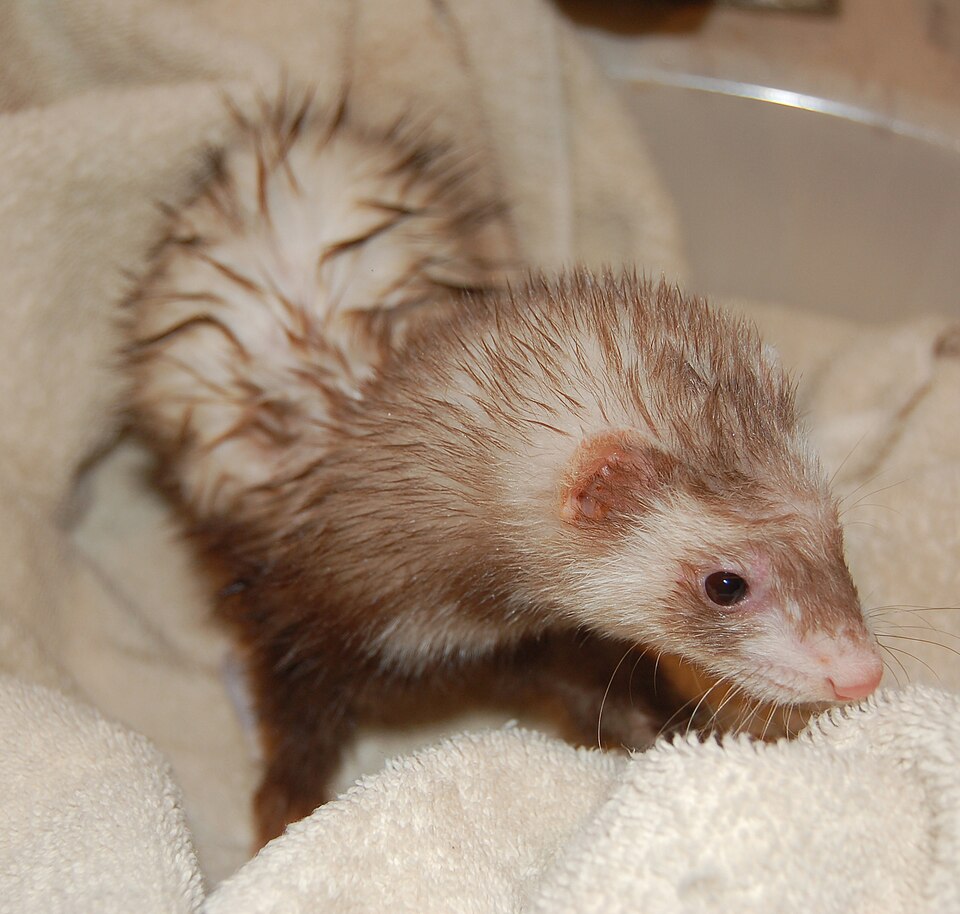
Beds and hammocks: the real source of the smell
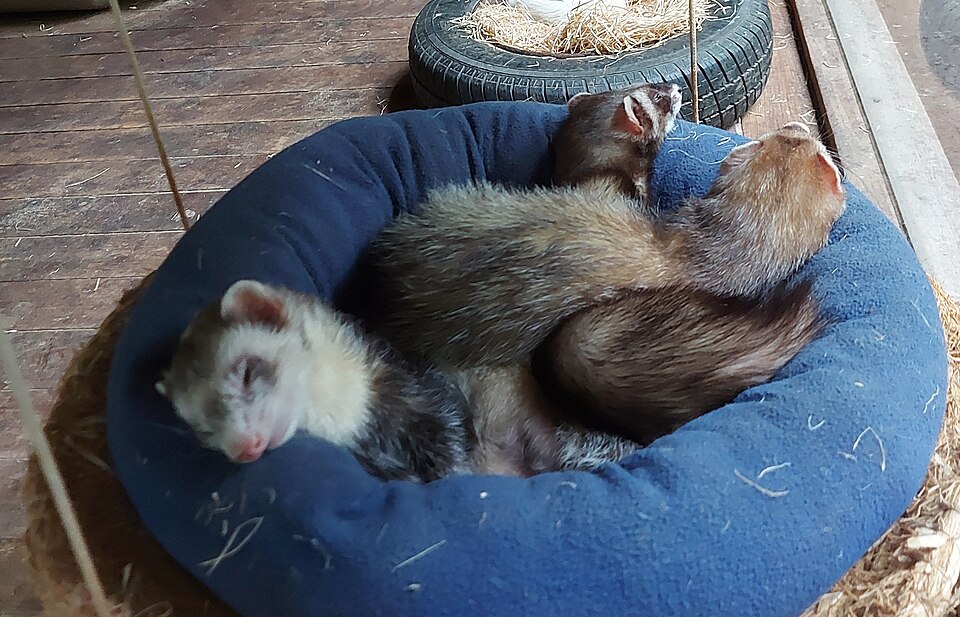
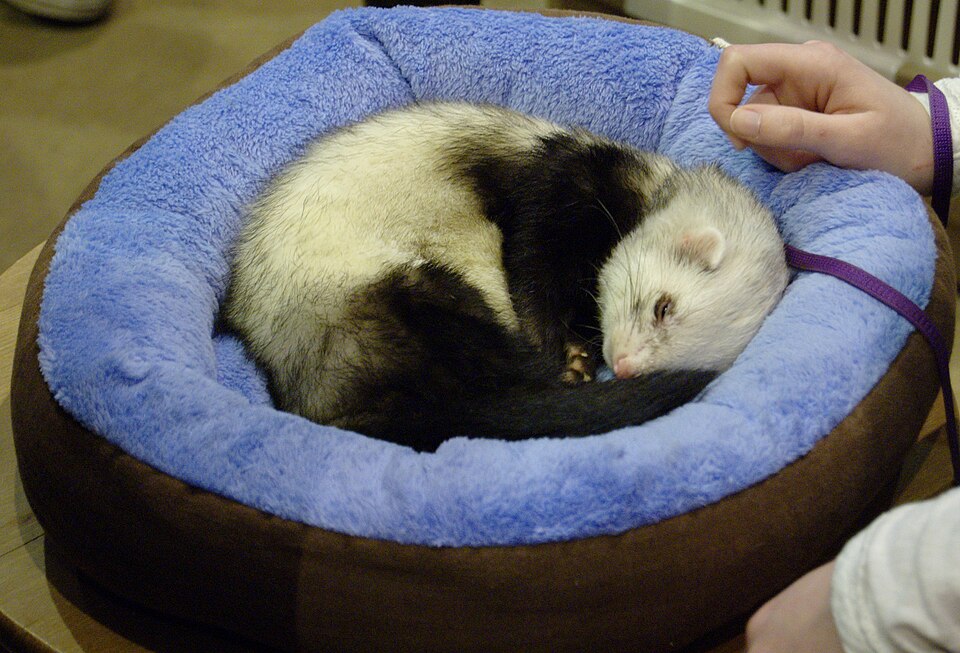
According to the PDSA, the infamous "ferret smell" usually comes from beds and hammocks. According to the PDSA, neutered ferrets whose bedding is kept clean have only a very faint smell. The cleaning routine the PDSA recommends:
| When? | What to do |
|---|---|
| Every day | Clean the litter boxes |
| Every day | Change and wash any wet or soiled towels and blankets |
| Every day | Clean the food and water bowls or bottles |
| Every day | Remove uneaten fresh food; ferrets love to hide food, so check their secret stashes too |
| Every week | Wash all beds and hammocks |
| Every week | Empty the cage and scrub it with a pet-safe cleaner; put your ferret back only once everything is completely dry |
Be careful when choosing cleaning products: some cleaners, scented sprays and essential oils can be dangerous for ferrets. Details: ferret-proofing your home.
Litter training and the litter box
Ferrets can learn to use a litter box; but it takes patience. According to the AFA, ferrets are a bit like children in a new place: they want to try out every new corner as a toilet. According to RSPCA Australia, because ferrets have a short digestive system, they need to go often during the day: usually within 15 minutes of waking up or eating, and roughly every 3–4 hours.
According to RSPCA Australia, when ferrets go to the toilet, they back into a corner, lift their tail and deposit their droppings up high. Dragging their bottom along the floor afterward is also a normal behavior they use to leave their scent. That's why corner litter boxes are a good choice (PDSA, RSPCA Australia); make sure your ferret can get in and out of the box easily.
- Let your ferret choose the corner: According to the AFA, once a ferret picks a corner for its toilet, that's where the box should go.
- A box in every room: Ferrets rarely go back to their cage to use the toilet; put a litter box in every room your ferret roams (AFA, RSPCA Australia).
- Away from food and bed: RSPCA Australia recommends putting the litter box in one corner of the cage and the food and bed in the other corners; ferrets don't want to go to the toilet where they eat and sleep.
- Let the scent guide it: Put a few of its droppings in the box; your ferret will remember that this is the toilet (AFA, RSPCA Australia).
- Toilet first, then play: When your ferret wakes up or eats, take it to the box first, then let it out to play.
- Praise and reward: When it uses the box, give it affection and a treat. According to the AFA and RSPCA Australia, some ferrets can pretend to go just to get the treat; make sure it really went.
- Never punish: Clean up accidents right away and thoroughly; according to the AFA, a ferret won't connect the punishment with what it did.
- If it resists, shorten the time: For ferrets that resist training, the AFA and RSPCA Australia recommend limiting time out of the cage to 1–2 hours at a time.
According to RSPCA Australia, with reward-based support, training can take about a week. According to the AFA, the three most important things are patience, consistency and supervision.
Keep the litter box clean
According to the AFA, the litter box should be cleaned every day; but leaving a small amount of droppings in it reminds your ferret that the box is a toilet, not a play area. According to the AFA, many ferrets stop using a box that isn't cleaned often enough, and most don't like walking on dirty litter. For ferrets that love digging in the box, the AFA suggests a separate dig box filled with rice or soil.
- Use: Pellet litter made from recycled paper or wood (AFA, RSPCA Australia, PDSA). RSPCA Australia recommends a dust-free, unscented one.
- Don't use: Clumping cat litter or clay litter. According to RSPCA Australia, they're very dusty and can damage the airways; according to the PDSA, a ferret may eat clumping litter.
- Don't use: Cedar or pine shavings. According to the AFA and RSPCA Australia, they can irritate the airways.
Ear, nail and coat care
According to the AFA, an experienced vet can show you the right grooming techniques; doing the first few sessions with them is safest.
- Nails: The AFA recommends trimming every two weeks. According to RSPCA Australia, take off just the sharp tip of the nail; the pink part inside the nail is the blood vessel, so stay clear of it. Before you trim for the first time, ask your vet to show you how it's done.
- Small steps: RSPCA Australia suggests turning nail trimming into a rewarding routine of just a few nails a day; your ferret will get used to it over time.
- Ears: The AFA recommends checking the ears while you trim the nails. According to RSPCA Australia, ferrets have dirty ears, and normal earwax is light brown or reddish. Ask your vet which product to use for cleaning the ears.
- No cotton swabs: According to RSPCA Australia, cotton swabs can push wax deeper into the ear canal.
- Coat: According to the AFA, ferrets shed twice a year; brush them during these periods. RSPCA Australia says regular brushing with a soft brush reduces the amount of hair a ferret swallows.
According to RSPCA Australia, these signs mean a trip to the vet: a lot of earwax or discharge, dark brown or black wax, a bad smell, head shaking, scratching at the ears, or tilting the head to one side.
Tüylüm's Today tab has a ready-made Toilet cleaning task for ferrets. Everyone in your Home sees the same list, so it's clear who cleaned the litter box today. Food & litter supplies also calculates when your litter will run out and reminds you before it does.
Frequently asked questions
My ferret's smell suddenly got stronger. What should I do?
First check the bedding and the litter box; according to the PDSA, the bedding is usually the real source of the smell. If you've bathed your ferret recently, according to RSPCA Australia the smell can get stronger for a few days. If the smell is coming from the ears, or you've noticed any other change in your ferret, talk to your vet.
Will removing the scent glands get rid of the smell?
No. According to the AFA, this surgery isn't recommended unless there's a medical reason, and it doesn't reduce a ferret's natural smell. According to RSPCA Australia, too, the smell mostly comes from the oils in the skin.
Can I use cat litter?
Clumping cat litter and clay litter aren't recommended. The PDSA, the AFA and RSPCA Australia recommend paper or wood pellet litter. Make sure the litter is dust-free and unscented.

Keep track of your pet's care in TüylümLog vet visits, vaccine and medication dates, and we'll remind you when it's time. Share it all with your family in Home.
Sources
- PDSA · Ferrets as pets
- American Ferret Association · Frequently Asked Questions
- RSPCA Australia · How do I groom my ferret?
- RSPCA Australia · How do I litter train my ferret?
- American Ferret Association · Just the Right Spot: Litter Training Your Ferret (PDF)
- American Ferret Association · Choosing Litter for Your Ferret (PDF)
By Tüylüm · Published and last checked: October 24, 2026. Spotted a mistake? Write to [email protected] and we'll fix it right away. Photos are from Wikimedia Commons, used under the license shown below each photo.