Guinea pig diet: hay, fresh greens, pellets and a water routine
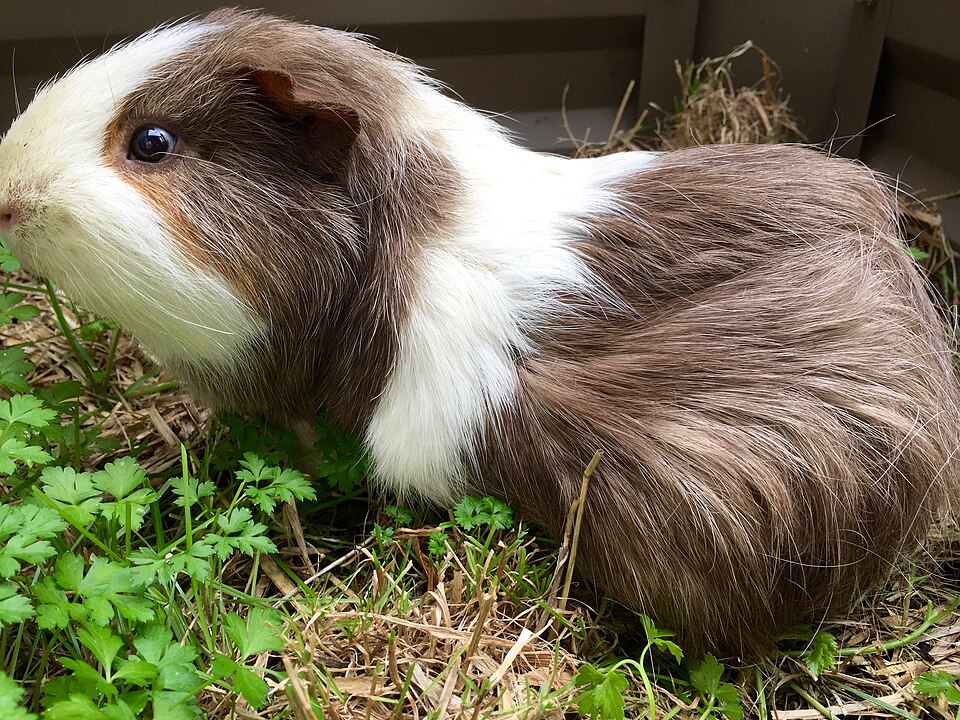
In the wild, guinea pigs graze day and night. According to PDSA, they feed continuously on coarse vegetation such as rough grass, leaves and herbs, and the menu at home should resemble that. Our guinea pig care guide covers feeding briefly; here we focus on the daily routine: hay, fresh food, pellets, water, and what to watch for when making changes. Our sources are PDSA and the RSPCA. Amounts depend on age, weight and health, so we don't give doses or grams here; check the package and ask your vet.
- Hay always: According to the RSPCA, good-quality hay should make up the majority of the diet and be available at all times. PDSA puts hay and grass at roughly 80-90% of the menu.
- Fresh greens: PDSA recommends several kinds of vegetables and greens daily, some of them high in vitamin C.
- Pellets: Grass-based guinea pig pellets, fresh each day. No muesli-style mixes (PDSA).
- Vitamin C: Guinea pigs can't make it themselves (PDSA); it comes from pellets and fresh food.
- Water: Fresh water at all times; the RSPCA says to check it twice a day.
- Change slowly: PDSA suggests spreading changes to the main diet over two to four weeks.
Hay and grass: the foundation
According to PDSA, guinea pigs need a very high-fiber diet: fiber wears down their continuously growing teeth and keeps the gut moving. PDSA says a lack of fiber can lead to "gut stasis," a life-threatening condition where the digestive system slows or stops. The RSPCA also says the wrong diet can cause serious dental disease.
| Topic | What the sources say |
|---|---|
| Share of hay | PDSA: roughly 80-90% of the diet (hay and grass); its diet page says 85-90% |
| Availability | RSPCA: at all times; PDSA: unlimited hay and grass |
| Fresh grass | RSPCA: as often as possible, ideally daily; pots of growing grass work indoors |
| Hay type | PDSA: Timothy hay is a great option |
| Lawn clippings | RSPCA and PDSA: don't feed; they upset digestion, and PDSA says they ferment quickly |
| Serving | PDSA: scattering large piles of hay and grass around the living space encourages natural foraging |
Fresh vegetables and greens
According to PDSA, guinea pigs should get a variety of fresh vegetables and greens every day; it recommends at least five to six different types and asks that some be high in vitamin C. Don't overdo any one type: PDSA says things like cabbage and broccoli can cause gas in large quantities.
| Group | The RSPCA's examples |
|---|---|
| Often (rotated) | Parsley, celery, bell peppers, cucumber, gem and romaine lettuce |
| A few times a week, small amounts | Broccoli, spinach, kale, small pieces of carrot, a quarter of an apple (because of sugar or calcium) |
| Avoid | Iceberg lettuce, potato, garlic, avocado, coconut, citrus fruits |
PDSA also lists tomato vines and leaves (the fruit is fine) as unsafe, and apple pips are poisonous. If you forage, PDSA says only pick what you can identify, and avoid areas treated with weed killers or pesticides and busy places with lots of people and dogs. If you suspect your guinea pig ate something poisonous, ask your vet.
PDSA advises avoiding the colorful, sugary treats sold in pet shops; instead it suggests very small amounts of fresh fruit once every week or two. On treat days, reduce the rest of the food accordingly.
Pellets: why fresh and uniform
The RSPCA recommends a fresh portion of grass-based guinea pig pellets daily, following the manufacturer's instructions. PDSA also recommends grass-based pellets made for guinea pigs and says to avoid muesli-style mixes, since mixed shapes and colors let a guinea pig eat only the bits it likes.
- A fresh portion daily: According to the RSPCA, the vitamin C in pellets breaks down over time and faster with air exposure; don't just top up the old pellets (RSPCA).
- Storage: PDSA suggests storing pellets somewhere cool, dry and dark and using them within three months of purchase. The RSPCA says to use them before the best-before date.
- Scatter them: PDSA suggests scattering pellets around the enclosure instead of using a bowl so guinea pigs forage and stay active.
- Special cases: The RSPCA says growing, pregnant, nursing or underweight guinea pigs may need more; ask your vet about portions.
Vitamin C: how to think about it
According to PDSA, guinea pigs can't produce vitamin C, so without enough of it they risk scurvy. The RSPCA stresses that it comes from fresh pellets and fresh vegetables. PDSA says a guinea pig on a balanced diet with daily vitamin C-rich greens may not need supplements, but since it can be hard to know if they're getting enough, a supplement may be considered if you're concerned. Whether yours needs one, and how to give it, depends on the animal; ask your vet.
The RSPCA says to contact your vet immediately if eating, drinking or toilet habits change, for example if droppings stop, become less frequent or are softer than usual. PDSA says a guinea pig that stops eating risks gut stasis.
Water and weighing
The RSPCA says clean water should always be available, checked twice daily, and not allowed to freeze in winter; without water guinea pigs become seriously ill. PDSA says the best way to check that guinea pigs are eating properly is to weigh them regularly: weight loss can be a sign of illness, and gain may mean too much fresh food or pellets. The RSPCA also suggests adjusting portions to age, lifestyle and health, since too much food can leave a guinea pig overweight.
Two kinds of droppings are normal
According to PDSA, guinea pigs make two kinds of droppings: soft, sticky "caecotrophs" that they eat straight from their bottom, and hard, dry pellets. Eating the first kind is an essential part of digestion; they don't eat the second. The RSPCA also describes two dropping types and says the softer ones are essential to the diet.
Switch foods slowly
PDSA suggests spreading any change to the main diet over two to four weeks: mix a little of the new food with the old, increase it daily, and slow down if you notice a tummy upset. Changing too fast can cause an upset and make a guinea pig stop eating, which PDSA calls very serious. Introduce new fresh foods the same way. The RSPCA also recommends introducing new foods gradually.
You can log your guinea pig's weight in Weight tracking and follow the chart, and set a weekly weigh-in reminder. Add daily jobs like fresh veggies and hay to the Today tab as your own tasks; Food & litter supplies estimates when pellets will run out and reminds you before they do.
Frequently asked questions
How much veggie should my guinea pig eat each day?
We don't give doses or grams. PDSA recommends several different types daily and gives amounts on its own page, but amounts depend on age, weight and health. Check the pellet package and ask your vet.
If pellets run out, will my guinea pig go hungry?
According to PDSA, most of the diet is hay and grass, and those should be unlimited; pellets are a small daily part. If your guinea pig stops eating, contact your vet right away.
My guinea pig eats its own droppings. Is that a problem?
According to PDSA and the RSPCA, no: guinea pigs eat the soft droppings straight from their bottom and it's an essential part of their diet. If droppings stop or are softer than usual, ask your vet.

Keep track of your pet's care in TüylümLog vet visits, vaccine and medication dates, and we'll remind you when it's time. Share it all with your family in Home.
Sources
- PDSA · Your guinea pig's diet
- PDSA · Guinea pigs as pets
- RSPCA · A healthy diet for guinea pigs
- RSPCA · Guinea pig health and welfare
This article is for general information only; it is not a diagnosis or treatment advice and does not replace a visit to a veterinarian. Talk to your vet about decisions on your pet's health. By Tüylüm · Published and last checked: November 9, 2026. Spotted a mistake? Write to [email protected] and we'll fix it right away. Photos are from Wikimedia Commons, used under the license shown below each photo.