Games and training for pet rats: a clever friend who learns through rewards
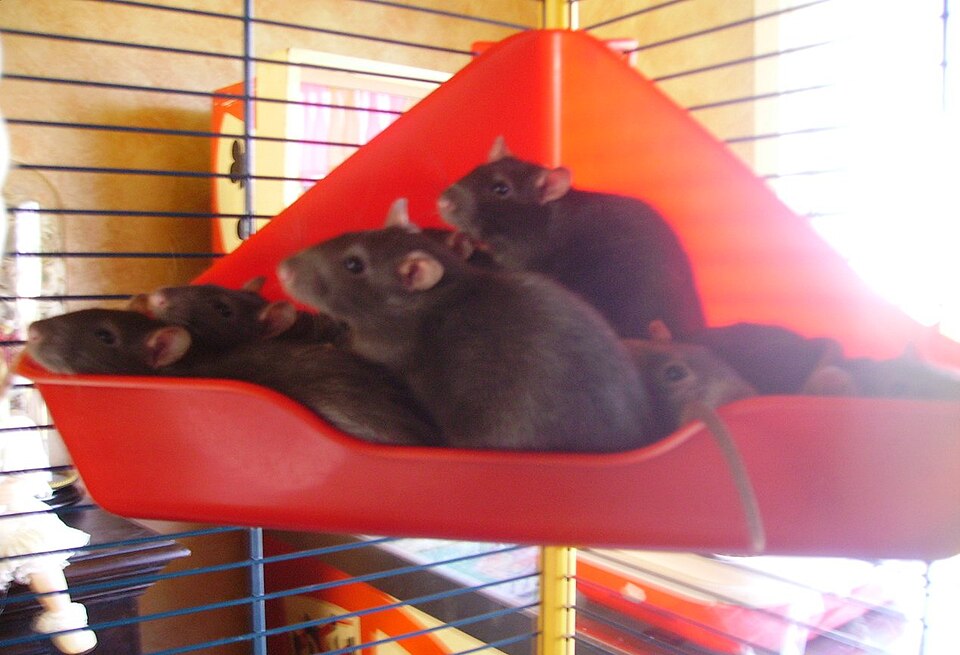
According to the RSPCA, rats are quick learners, very clever and curious, with excellent memories; they can learn new information and tasks and remember them over time. The same organization says rats can even count to 10. So a rat isn't just an animal you feed; it's a companion that needs something to do. Our pet rat care guide covers general care and touches on training; here we focus on play and training. For foraging ideas see foraging games for rodents, and for getting a room ready for out-of-cage time see a safe play area for rodents. Our sources are the RSPCA and PDSA.
- Rewards only: The RSPCA says training should use positive reinforcement only; never punish your rat.
- What can they learn? According to the RSPCA: coming to their name, high-fives, fetching a ball, rolling over, and climbing onto scales.
- Trust first: Get your rat used to your voice and presence and let it investigate your hands at its own pace (RSPCA).
- No forcing: The RSPCA says rats are naturally cautious; let them explore new places at their own pace.
- Active hours: Rats are most active at night, dawn and dusk (RSPCA); match your interaction to those times.
Why are rats so trainable?
According to the RSPCA, rats are active, highly intelligent and like to play, especially when young. They need mental stimulation to avoid boredom, and the RSPCA suggests training for this: it helps you bond and keeps the rat physically and mentally active. Rats are social; the RSPCA and PDSA say they shouldn't live alone and need a rat companion. PDSA says playing rats take turns chasing and pinning each other, and their "bites" do no harm and are aimed at the back of the neck. The RSPCA says rats can learn to play with humans as well.
Trust: the first step of training
According to the RSPCA, rats can build close relationships with you and you can train them successfully. Start by getting your rat used to your voice and presence; when it's comfortable, build the bond slowly with regular, gentle, calm contact. Let it investigate your hands in its own time and reward it with treats to help it enjoy your company.
- Don't force: The RSPCA says rats need choice, so never force them to do anything.
- New places: The RSPCA suggests letting a rat check out new surroundings at its own pace, since rats are naturally cautious.
- Fear sign: According to the RSPCA, urinating or defecating in a new place means the rat is frightened or distressed; return it to its familiar cage.
- Same hours: The RSPCA says rats are most active at night, dawn and dusk; keep feeding, cleaning and interaction to these times where possible.
Reward-based training: what can they learn?
The RSPCA's examples: responding to their own names, "high-fives," fetching a ball and rolling over. Another example is teaching a rat to climb onto scales for a food reward, which the RSPCA says can make regular weighing much easier. There's one rule in training: the RSPCA says always use positive reinforcement and never punish.
- Pick a calm moment: Start when your rat is awake and active, in a calm setting (the RSPCA describes their active hours).
- Prepare a small reward: A small food your rat likes. Ask your vet what to give and how much, given your rat's health.
- Start with one behavior: For example, coming to its name. Reward it when it does it.
- Don't force: The RSPCA says to give rats choice; if it doesn't want to, don't push.
- Never punish: The RSPCA says this explicitly.
The sources we read don't describe a step-by-step training program, session lengths or clicker use, so we don't invent details; the steps above summarize the RSPCA's general principles.
Foraging games
According to PDSA, in the wild rats spend a lot of time searching for food. You can mimic this at home: scatter rat nuggets around the cage instead of feeding from a bowl. Hiding treats or fresh fruit and veg in paper bags, cardboard tubes and boxes is another PDSA suggestion; rats enjoy working out how to get to the food. For more ideas see foraging games for rodents.
Play outside the cage
According to the RSPCA, once rats are well-handled and relaxed, they can have supervised "free-ranging" outside the cage in a room where they can't hurt themselves or escape. Choose a room you're happy to have explored: the RSPCA reminds us rats chew, gnaw and scent mark. Alternatively, the RSPCA suggests a large exercise pen with lots of objects to explore, space to run, climb and hop, plus a digging area, water bath and foraging tray.
- Always supervise: According to the RSPCA, supervised free-ranging forms a close bond and prevents escapes and injuries.
- A dig box: The RSPCA suggests a supervised box of digging material such as clean sand or compost.
- Cables: PDSA says to make sure rats can't reach wires during play.
- New toys: PDSA suggests adding toys they don't usually have in the cage, and the RSPCA suggests rotating toys regularly.
- No exercise balls: The RSPCA says rats should never be put in exercise balls because they restrict their ability to explore and cause high stress.
According to the RSPCA, some rats enjoy swimming but not all; forced swimming is highly stressful. If your rat likes it, use a shallow, room-temperature container it can get in and out of whenever it wants, and only during supervised time outside the cage.
You can add play and training sessions to the Today tab as your own tasks; everyone in your Household sees the same list. You can log your rat's weight in Weight tracking and follow the chart.
Frequently asked questions
Can I teach my rat its name?
According to the RSPCA, rats can learn to respond to their own names using reward-based methods. Be patient and use only positive reinforcement.
My rat is scared of me. What should I do?
The RSPCA suggests getting the rat used to your voice and presence first, then building the bond slowly with regular, gentle, calm contact. Let it investigate your hands at its own pace, use rewards, and don't force it.
Will my rat be happy on its own?
No. The RSPCA and PDSA say rats need to live together. Play and training can't replace a companion.

Keep track of your pet's care in TüylümLog vet visits, vaccine and medication dates, and we'll remind you when it's time. Share it all with your family in Home.
Sources
- RSPCA · Pet rats behaviour and body language
- RSPCA · Keeping rats together
- RSPCA · Creating a good home for rats
- PDSA · Rats as pets
This article is for general information only; it is not a diagnosis or treatment advice and does not replace a visit to a veterinarian. Talk to your vet about decisions on your pet's health. By Tüylüm · Published and last checked: November 9, 2026. Spotted a mistake? Write to [email protected] and we'll fix it right away. Photos are from Wikimedia Commons, used under the license shown below each photo.