Guinea pig care: companions, space, hay and vitamin C
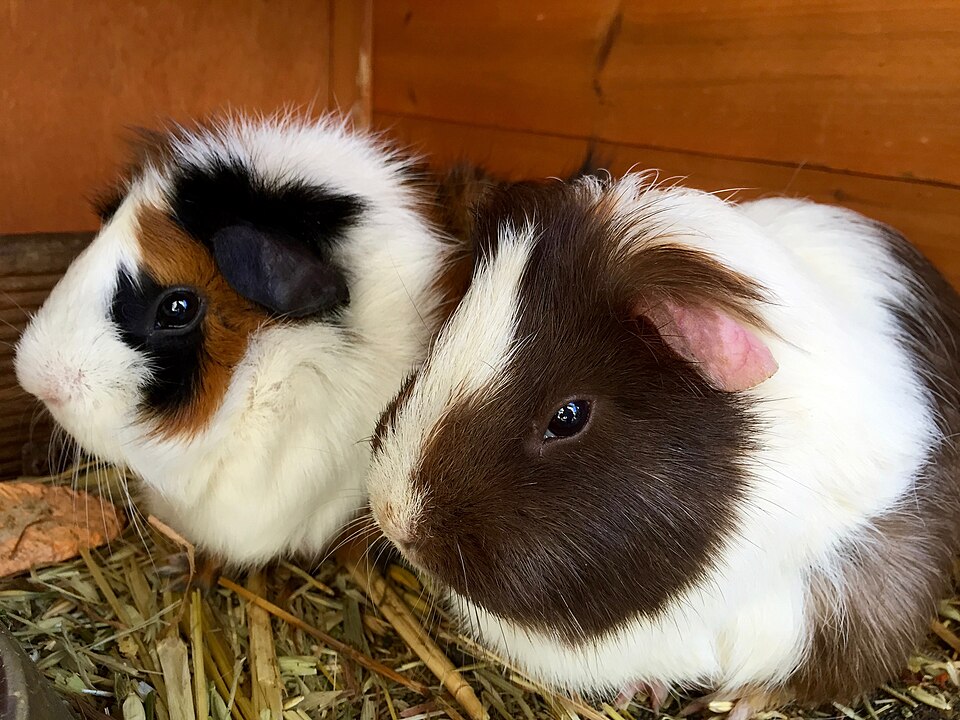
The moment the fridge door opens, a high-pitched whistle rises from a corner of the house. Anyone who keeps guinea pigs knows that sound. According to the RSPCA, guinea pigs make a whistle-like sound when they're excited, for example while waiting for food. These little rodents, which come from the grasslands of the Andes in South America, are sociable, curious and chatty. Two things come before everything else in their care: they can't live alone, and their bodies can't make vitamin C.
- A companion is essential: According to the RSPCA, guinea pigs are social animals and shouldn't live on their own.
- Hay at all times: Most of the diet is hay and grass; according to the PDSA, 80–90% of it.
- Vitamin C: Guinea pigs can't make vitamin C themselves and can't store it for long; they need to get it from their food every day.
- Plenty of space: According to Blue Cross, if there's a separate run, the living space should be at least about 150 × 60 cm.
- Cool but mild: According to the RSPCA, the ideal indoor temperature is 17–20 °C (63–68 °F); above 26 °C (79 °F) can lead to heatstroke.
A guinea pig on its own can't be happy
According to the RSPCA, in the wild guinea pigs live in close family groups of 5–10 and form strong bonds with the members of their group; these bonds are important for reducing stress. The PDSA also says guinea pigs need to live with other guinea pigs to stay happy and healthy, and it recommends groups of three or more. According to Blue Cross, every guinea pig should have at least one companion of its own kind.
Some pairings Blue Cross recommends:
- Females usually get along well in pairs or groups.
- Two males, especially brothers, can get along well, but a group of three males usually doesn't live happily together.
- In a mixed pair, the male must be neutered. According to Blue Cross, it takes about six weeks for a neutered male to become infertile.
- A neutered male can live in harmony with a group of females.
According to the PDSA, females can get pregnant as early as three weeks of age, so it's important to sex them correctly.
According to Blue Cross, keeping rabbits and guinea pigs together is a common mistake: a rabbit can bully a guinea pig and injure it seriously. According to the PDSA, the two species communicate very differently, eat differently, and rabbits can carry the bacterium Bordetella bronchiseptica, which can make guinea pigs seriously ill. More details: why rabbits shouldn't live alone.
According to the PDSA and Blue Cross, guinea pigs live 4–8 years on average, which makes them a long-term responsibility.
Space: for running, hiding and jumping for joy
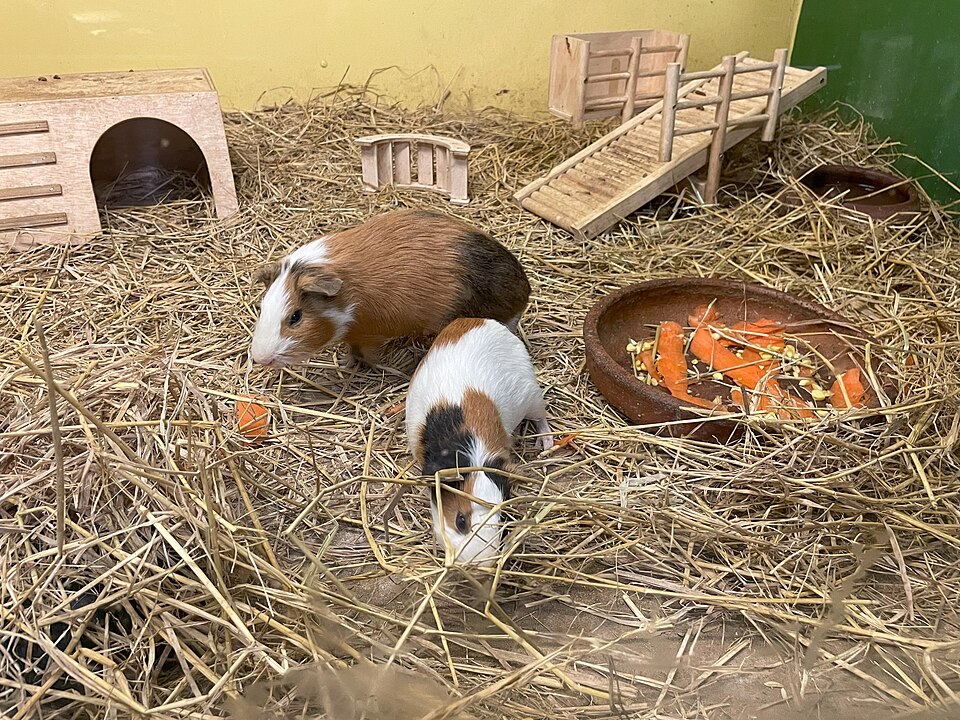
According to the RSPCA, a guinea pig's living space should be big enough for exercise and tall enough for it to stand up fully on its back legs. Young ones in particular are very playful; according to the RSPCA, they need about 30 cm of height for their joyful jumps, known as "popcorning." The RSPCA also notes that guinea pigs can be active for up to 20 hours a day and sleep only in short bursts.
| Situation | Minimum space, according to Blue Cross |
|---|---|
| Living space, if there's a separate run | About 150 × 60 cm (5 × 2 feet) |
| Living space, if there's no run | About 180 × 120 cm (6 × 4 feet) |
| Run | About 180 × 120 cm (6 × 4 feet) |
- One level: According to Blue Cross, guinea pigs have short legs and most aren't good climbers; they can struggle in multi-level hutches. If you use a ramp, make sure it has sides so they don't slip and fall.
- Hiding places: According to the RSPCA, guinea pigs feel vulnerable in open spaces and like to stay close to solid surfaces. There should be one more hiding place than there are guinea pigs.
- Covered corners: According to the PDSA, because they hide under dense vegetation in the wild, they need covered areas, tunnels and 10–15 cm of soft, dust-free hay.
- Solid floor: According to the RSPCA, wire mesh floors can hurt their feet; the PDSA recommends a soft floor.
- Bedding: The RSPCA recommends dust-free hay; softwood products such as pine can cause illness, and hard straw can cause eye injuries. Blue Cross also recommends avoiding cedar shavings.
Hay, grass and the right diet
According to the RSPCA, good-quality hay should make up most of a guinea pig's diet and be within reach at all times. Fresh grass should also be given as often as possible, ideally every day; for guinea pigs living indoors, fresh grass grown in a pot is a good option. Never give them lawnmower clippings; according to the RSPCA, they upset their digestion and make them ill.
Hay isn't just for the stomach; it's needed for the teeth, too. According to the RSPCA, guinea pigs' teeth grow continuously, and eating hay helps keep the teeth at the right length and shape; the wrong diet can lead to serious dental disease. We've covered this in detail in our article on why rodents chew.
- Pellets: The RSPCA recommends giving grass-based guinea pig pellets fresh every day, in the amount the manufacturer recommends. Blue Cross recommends avoiding muesli-style mixes; a guinea pig can pick out the bits it likes and miss important nutrients.
- Water: According to the RSPCA, clean water should be available at all times and checked twice a day; in winter, make sure it hasn't frozen.
- Change slowly: Introduce new foods gradually and avoid sudden changes (RSPCA).
- Two kinds of droppings: According to the RSPCA, alongside hard, dry droppings, guinea pigs also produce a softer dropping that they eat directly; this is an important part of their diet.
Vitamin C: why does it matter so much?
According to the RSPCA, guinea pigs lack the enzyme needed to make vitamin C, and they can only store this vitamin for a short time. According to the PDSA, a diet without the right amount of vitamin C puts guinea pigs at risk of a disease called scurvy.
The RSPCA points out an important detail: the vitamin C in pellets breaks down over time, and faster when it's exposed to air. So give a fresh portion every day, don't just top up the bowl, and finish the pellets before their expiration date.
| When? | Examples from the RSPCA |
|---|---|
| Every day, rotating | Parsley, celery, bell peppers, cucumber, little gem and romaine lettuce |
| A few times a week, in small amounts | Broccoli, spinach, kale, small pieces of carrot, a quarter of an apple |
| Don't feed | Iceberg lettuce, potatoes, garlic, avocado, coconut, citrus fruits |
According to the RSPCA, the vegetables and fruit in the second group are high in sugar or calcium, so giving them often can lead to health problems. Blue Cross also lists peppers, cucumber and celery among good sources of vitamin C.
If you're thinking about a vitamin C supplement or any other added product, talk to your vet about whether your guinea pig needs it. The RSPCA also notes that growing, pregnant, nursing or underweight guinea pigs may need more pellets, and recommends asking a vet about portions.
What are guinea pig sounds saying?
Guinea pigs are quite chatty. According to the PDSA, they may squeal with joy when they see their owners. And according to the RSPCA, each of the sounds they make means something different:
| Sound | When you'll hear it, according to the RSPCA |
|---|---|
| Short "chutt" or "putt" sounds | While exploring |
| Whistle (wheek) | When excited, for example while waiting for food, or when separated from their companions |
| Purr | When seeking or during physical contact |
According to the RSPCA, guinea pigs may also squeal when they're picked up. When they sense a threat, their first reaction is to freeze; this can last from a few seconds to 30 minutes, after which they may run to a safe place.
According to the RSPCA, guinea pigs feel pain but don't show it much. If yours isn't eating, is quieter than usual or is hiding more, it may be ill. If its eating, drinking or toilet habits have changed, or its droppings have decreased, stopped, or become soft and stuck to its rear, call your vet right away.
Temperature and where to keep them
According to the RSPCA, the spot for guinea pigs in your home should be well ventilated, dry, and away from drafts and direct heat sources such as radiators or sunny windows. The ideal indoor temperature is 17–20 °C (63–68 °F). Guinea pigs don't cope well with big temperature changes: according to the RSPCA, above 26 °C (79 °F) can lead to heatstroke, and below 15 °C (59 °F) can make them too cold. Blue Cross also reminds owners that guinea pigs are very sensitive to hot weather.
Guinea pigs should live somewhere quiet, away from animals they see as a threat, such as dogs, cats and ferrets (RSPCA). Blue Cross has an important warning too: don't keep guinea pigs or any other animal in a garage where a car is parked; exhaust fumes can be fatal.
Handling and daily checks
According to the RSPCA, most of guinea pigs' natural predators are birds, so they're easily frightened when approached from above. Approach them from the front and from low down. When lifting one, support its rear with one hand and, with the other hand, hold its shoulders if it's young or its chest if it's an adult. The PDSA recommends holding a guinea pig close to your body and close to the ground, and never turning it onto its back because its spine is delicate. Rather than picking guinea pigs up, children should stroke and feed them on the floor.
- Every day: Check that it's eating and producing plenty of dry droppings (RSPCA).
- Every week: Check its front teeth and nails; they grow quickly. According to the RSPCA, only a vet should correct overgrown or misaligned teeth.
- In hot weather: According to the RSPCA, check the fur and skin around the rear end twice a day; urine stains and stuck-on droppings attract flies.
- Long-haired guinea pigs: Groom them every day (RSPCA, Blue Cross).
- At least once a year: A vet checkup (RSPCA).
You can add the yearly vet checkup to My vet visits in Tüylüm and set a reminder. You can also add daily jobs like hay and fresh vegetables as your own tasks in the Today tab; everyone in your Home sees the same list.
More of our rodent articles: rodents.
Frequently asked questions
Is it enough if I get one guinea pig and spend lots of time with it?
According to our sources, no. The RSPCA says guinea pigs shouldn't live on their own, and the PDSA says they need to live with other guinea pigs to stay happy and healthy. The time it spends with you is very valuable, but it doesn't replace a companion of its own kind.
Why does my guinea pig whistle?
According to the RSPCA, guinea pigs make a whistle-like sound when they're excited, for example while waiting for food, or when they're separated from their companions. The PDSA also says guinea pigs may squeal with joy when they see their owners.
How much vitamin C should I give my guinea pig?
We don't recommend a dose. According to the RSPCA, the main sources are guinea pig pellets given fresh every day and vegetables rich in vitamin C. Talk to your vet about whether a supplement is needed and how to give it.

Keep track of your pet's care in TüylümLog vet visits, vaccine and medication dates, and we'll remind you when it's time. Share it all with your family in Home.
Sources
- RSPCA · Making the right home for your guinea pigs
- RSPCA · A healthy diet for guinea pigs
- RSPCA · Guinea pig health and welfare
- RSPCA · Guinea pig factfile (PDF)
- PDSA · Guinea pigs as pets
- Blue Cross · Guinea pig care
By Tüylüm · Published and last checked: October 24, 2026. Spotted a mistake? Write to [email protected] and we'll fix it right away. Photos are from Wikimedia Commons, used under the license shown below each photo.