Keep your hedgehog busy: safe toys, a digging corner and room to explore for pygmy hedgehogs
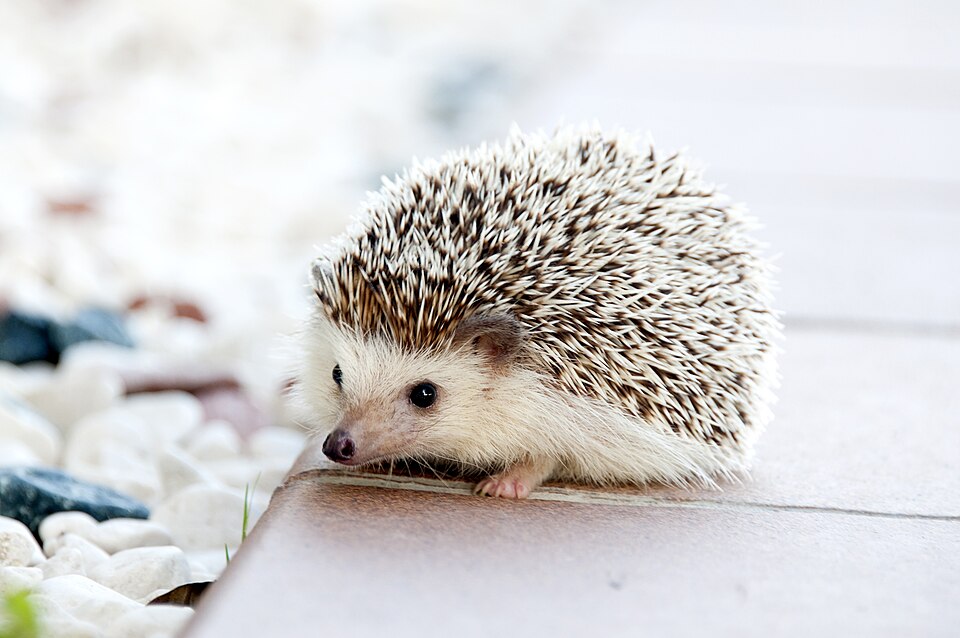
No matter how big the cage is, the same corners every night eventually start to feel cramped for your hedgehog. According to Dr. Krista Keller, a veterinarian at the University of Illinois, hedgehogs in the wild often run several miles a night, and they're adept climbers and swimmers. The Merck Veterinary Manual also says healthy hedgehogs are very active. The RSPCA, for its part, points out that these hedgehogs are often fed a diet too high in fat and don't get enough exercise, which can cause obesity and other health problems. Enrichment means giving your hedgehog safe chances to do what comes naturally: foraging, digging, hiding and exploring.
- Hide the food: According to Merck, hiding insects and dry food in the bedding encourages a hedgehog to forage.
- Digging corner: Merck wants the bedding to be 8–10 cm (3–4 in) deep in at least some areas so the hedgehog can burrow.
- Tunnels: Paper or plastic tubes (Merck) and PVC pipes at least 10 cm (4 in) in diameter (Dumb Friends League).
- Safe toys: No small gaps that could catch feet, nails or noses (University of Florida). Avoid rubber that can be chewed off and swallowed (Merck).
- Supervised roaming: Keller recommends a few hours a week of supervised time to explore outside the enclosure.
Why enrichment?
According to the RSPCA, African pygmy hedgehogs travel large distances in the wild and need space to roam. The RSPCA points out that under the UK's Animal Welfare Act, owners must give these hedgehogs every opportunity to show normal behavior such as foraging and roaming.
A wheel is part of this, but not all of it. According to Keller, a hedgehog's enclosure should be big enough for both an exercise wheel and natural foraging behavior. For cage sizes and how to choose a wheel: hedgehog cage and wheel.
Foraging: take the food out of the bowl
In nature, a hedgehog doesn't find its food in a bowl; it sniffs it out. According to Merck, hiding invertebrate prey such as insects and dry food in the bedding encourages a hedgehog to forage.
- Split the food: Put part of the daily food in the bowl and hide the rest in different spots in the bedding.
- Keep the total the same: According to Merck, food should be rationed to prevent obesity. The food you hide counts toward that amount.
- Check in the morning: Collect any food left in the hiding spots in the morning. We covered when to put food out and when to take it away in our article on hedgehog diet.
A digging corner
According to Merck, bedding should be soft and absorbent and at least 8–10 cm (3–4 in) deep in some areas so the hedgehog can burrow. By keeping the bedding deeper in one corner of the cage, you can give your hedgehog a small digging area.
- Which material: Merck considers recycled newspaper bedding a good choice; aspen shavings, alfalfa pellets and hay are also acceptable.
- What to avoid: Merck says to avoid rough, dusty or scented bedding. String and loose cloth fibers can wrap around toes and legs.
- Soil or sand? Our sources don't recommend soil or sand for a hedgehog's digging area. Stick to the bedding materials Merck lists.
Hiding places and tunnels
According to Merck, a hiding place is essential for a hedgehog. Tunnels offer a chance both to hide and to explore.
- Merck: Plastic or paper tubes, hay and safe climbing structures.
- Dumb Friends League: PVC pipes at least 10 cm (4 in) in diameter, small pet tunnels, a plastic igloo and small blankets to cuddle under. This care sheet was prepared by two US animal welfare organizations, the Denver Dumb Friends League and the Humane Society of the United States.
- No narrow gaps: The University of Florida's rule for toys applies to tunnels too: no narrow gaps where a hedgehog could catch its feet, nails or nose.
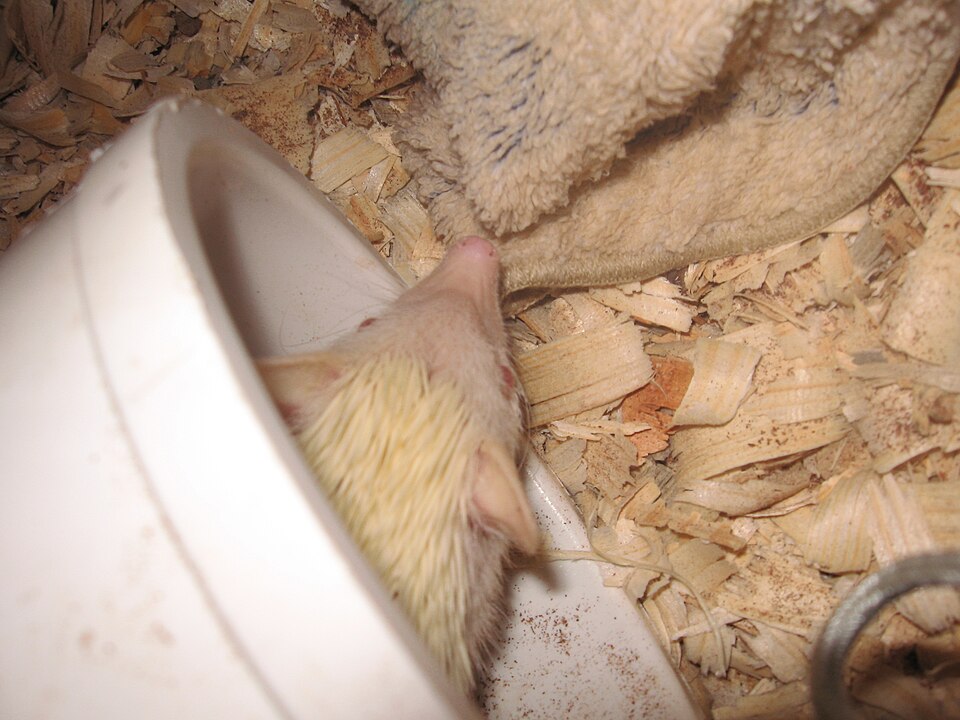
If you use a blanket or fleece, check the threads. According to Merck, fibrous material can constrict a foot or toe, and this is one of the causes of limping in hedgehogs. Replace fabric that's coming apart or getting fuzzy.
Toys: no small gaps, no rubber
The University of Florida says cat or small dog toys can be used for hedgehogs, as long as they don't have small spaces that could catch feet, nails or noses. The Dumb Friends League also lists cat balls.
According to Merck, intestinal blockages in hedgehogs are often caused by swallowing rubber, hair or carpet fibers. Don't put rubber toys that can be chewed to pieces in the cage, and check toys regularly for wear.
As we explained in our article on self-anointing in hedgehogs, a new object or smell can set off self-anointing: the hedgehog licks and chews the object and spreads frothy saliva on its spines. Make sure every new item you put in the cage is harmless.
Climbing: low and safe
Merck recommends safe climbing structures for enrichment. But watch the height: according to the Dumb Friends League, multi-level cages add space, but hedgehogs have poor vision; they're good at climbing up but not always good at climbing down. Falls are a risk. Keep climbing structures low, and don't set up high shelves a hedgehog could fall from.
The wheel: important but not enough on its own
Merck highly recommends a wheel. The running surface should be solid metal or plastic; legs can get caught in wire wheels. According to the Dumb Friends League, the wheel should be large, at least 28 cm (11 in) across, with a solid surface. Details: hedgehog cage and wheel.
Exploring outside the cage
Keller says many pet hedgehogs are overweight, so exercise opportunities are very important; she recommends a few hours a week of supervised time to explore outside the enclosure. Merck also allows supervised exercise outside the enclosure.
- Pick the evening: Hedgehogs are nocturnal. According to Keller, they're getting up for their "day" when you're having dinner.
- A small, closed-off area: Block off part of a room, or use one small room.
- Keep it on the floor: Let your hedgehog roam on the floor, not on a table or couch. Height is a risk for an animal with poor vision.
- Sweep the floor: Make sure the rubber, hair and carpet fibers Merck mentions aren't lying around, and put away small items your hedgehog could chew.
- Stay with it: Roaming time should be supervised; don't leave your hedgehog alone in the room.
- Wash your hands: According to Merck, anyone handling a hedgehog should assume it carries Salmonella. Wash your hands right after roaming time.
We covered how to hold your hedgehog when taking it out of and putting it back in the cage in our article on getting your hedgehog used to handling.
Enrichment helps your hedgehog move more. Merck recommends weighing hedgehogs once a week. If you log the weigh-ins in Tüylüm's Weight tracking, you can see how its weight changes. You can keep track of evening meals with the Food (evening) task on the Today tab.
Frequently asked questions
Can I give my hedgehog cat toys?
According to the University of Florida, cat or small dog toys can be used, as long as they don't have small spaces that could catch feet, nails or noses. According to Merck, intestinal blockages in hedgehogs are often caused by swallowing rubber; avoid rubber toys that can be chewed to pieces.
There's a wheel in the cage. Does my hedgehog need anything else?
Yes. According to Keller, the enclosure should be big enough for both a wheel and natural foraging behavior. Merck also recommends enriching the environment with tubes, hay and safe climbing structures, and hiding food in the bedding.
How long should my hedgehog spend outside the cage?
Keller recommends a few hours a week of supervised time exploring outside the enclosure. Do it in the evening when your hedgehog is awake, in a closed-off area you've checked beforehand.

Keep track of your pet's care in TüylümLog vet visits, vaccine and medication dates, and we'll remind you when it's time. Share it all with your family in Home.
Sources
- Merck Veterinary Manual · Management of Four-Toed (African Pygmy) Hedgehogs
- Merck Veterinary Manual · Diseases of Four-Toed (African Pygmy) Hedgehogs
- University of Illinois College of Veterinary Medicine · Hedgehogs Make Cute but Challenging Pets
- University of Florida College of Veterinary Medicine · How to care for your pet hedgehog
- Potter League for Animals (Denver Dumb Friends League and HSUS) · Hedgehog Care (PDF)
- RSPCA · Keeping African pygmy hedgehogs as pets
By Tüylüm · Published and last checked: October 26, 2026. Spotted a mistake? Write to [email protected] and we'll fix it right away. Photos are from Wikimedia Commons, used under the license shown below each photo.