Leopard gecko care: a warm side, a cool side and a tail you should never grab
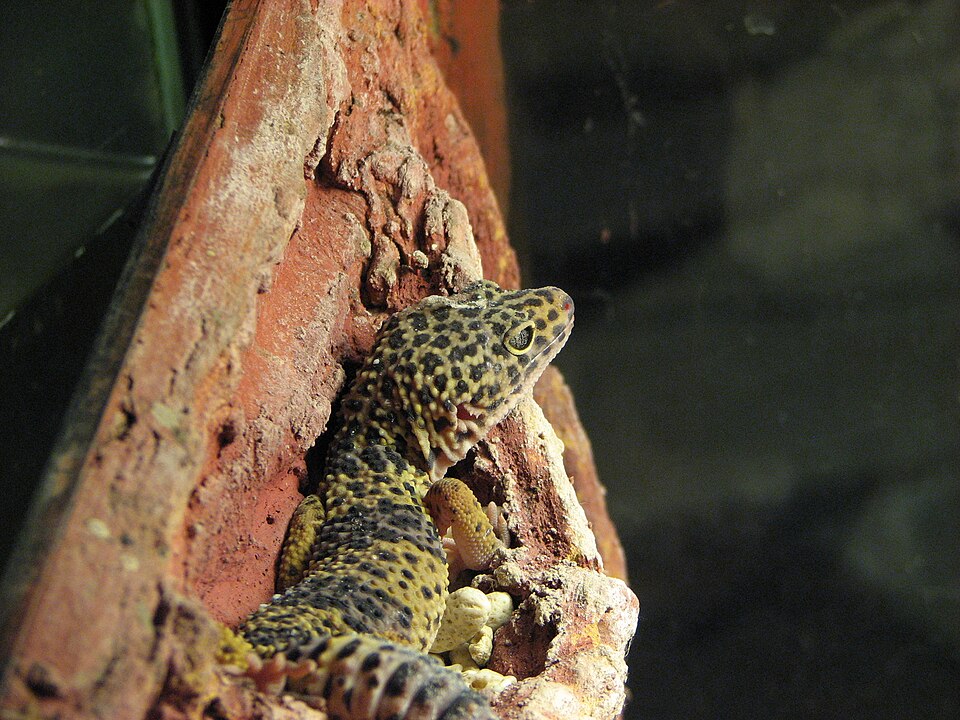
A spotted lizard that spends most of the day hiding, then comes out in the late afternoon as the light fades to explore its terrarium: the leopard gecko. It looks small and cute, but according to the RSPCA it can live up to 20 years and needs an environment where everything, from temperature to humidity, is set just right. It also comes with one very important rule: never put pressure on its tail.
- A twilight animal: According to the RSPCA, leopard geckos become active at dawn and in the late afternoon, and hide during the heat of the day.
- Terrarium: For one adult, at least 60 cm long, 40 cm high and 30 cm deep; bigger is better.
- Two different temperatures: 28–30 °C (82–86 °F) on the warm side and 24–26 °C (75–79 °F) on the cool side.
- A humid hide: A hide with damp moss helps with shedding.
- Tail: Never put pressure on the tail; the gecko can drop it.
Meet the leopard gecko
According to the RSPCA, the leopard gecko (Eublepharis macularius) comes from the dry scrublands of Pakistan and Afghanistan. It hides under rocks during the heat of the day and becomes active at dawn and in the evening. Adults usually grow to about 25 cm. It's also long-lived: according to the RSPCA, it can live up to 20 years.
There are many color and pattern varieties (morphs). The RSPCA notes that some red-eyed morphs can be harmed by bright light, and recommends asking a vet experienced with reptiles about them.
On the list of wild animals published in Turkey's Official Gazette (Resmî Gazete), a relative that lives in Turkey, Eublepharis angramainyu, appears under the Turkish name "leopar keleri", and like most species on the list it is protected by Turkey's Ministry of Agriculture and Forestry. The leopard gecko kept in homes is a different species. Never bring home a lizard you see in the wild.
The terrarium
The RSPCA's recommendations:
- Safe and well ventilated: Made of a material that is safe, well ventilated, sturdy and easy to clean.
- Size: At least 60 x 40 x 30 cm (length, height, depth) for one adult.
- Location: Away from radiators and direct sunlight.
- Hides: More than one hide on both the warm and the cool side, so the gecko feels safe and can choose its own temperature.
- Climbing: Low, sturdy branches or rocks.
- Set it up in advance: Set up and run the terrarium at least a week before the gecko arrives, and get the heat and light right.
Substrate
For healthy adults, the RSPCA recommends a mix of roughly half organic soil and half sand. The sand should be clean play sand or reptile sand; building sand can be sharp. Loose substrates such as calcium sand (calcisand) or beech chips aren't suitable, because they can be swallowed and cause a blockage in the gut. Young geckos should be kept on substrates that aren't loose (such as slate tiles or reptile carpet) until they are well grown.
Heat: a warm side and a cool side
Reptiles can't produce their own body heat. According to the RSPCA, this is why one end of the terrarium should be warm and the other cool; the gecko warms up or cools down by moving between the two. Because leopard geckos absorb heat through their bellies, placing a natural slate tile on the warm side helps.
| Area | Temperature, according to the RSPCA |
|---|---|
| Basking spot (warm side) | 28–30 °C (82–86 °F) |
| Cool side | 24–26 °C (75–79 °F) |
| Night | Heat switched off; if the room drops below 18 °C (64 °F), extra heat that gives off no light |
- Guarded lamp: A heat lamp should be covered with a protective guard, so the gecko doesn't get burned and isn't hurt if the bulb shatters.
- Thermostat: Every heater should be connected to a thermostat.
- Measure every day: Thermostats can fail; check both ends every day with a digital or infrared thermometer.
Light and UVB
According to the RSPCA, UVB lets reptiles make the vitamin D3 they need to store and use calcium. For leopard geckos it recommends a 2–5% UVB tube, fitted to the ceiling on the warm side so that it covers between a half and a third of the terrarium's length. Wire mesh blocks some of the UVB; a tall terrarium may need a stronger lamp. The UV lamp should also be guarded and replaced at the interval the manufacturer gives. The lights should run on a timer, 12 hours on and 12 hours off. More details: UVB and heat for reptiles.
Humidity and shedding
According to the RSPCA, leopard geckos need a dry environment; humidity on the cool side should be around 30–40% and checked with a humidity gauge (hygrometer). If humidity is too high, increase ventilation.
For shedding, though, they need a small humid corner: a hide with a waterproof base and damp moss inside. The RSPCA recommends moistening this moss with clean water every few days.
According to the RSPCA, geckos shed their skin in large pieces, and more often when they're young. The gecko softens its skin in the humid hide, then pulls it off and usually eats it.
According to the RSPCA, don't pull off skin that seems to be stuck; the new skin underneath can tear. Old skin left on the toes can cut off blood flow and lead to loss of toes. If dry skin stays on its toes or around its eyes, see a vet experienced with reptiles.
Feeding
According to the RSPCA, the leopard gecko's main food is a variety of live insects, such as crickets, locusts and calcium worms. Prey should be no bigger than the gecko's head. Waxworms are fatty, so they should only be given now and then.
- How often? Young geckos every day, adults every other day.
- Remove leftover insects: Uneaten insects can bite the gecko.
- Feed the insects first: The RSPCA recommends feeding the food insects a nutritious diet before offering them (gut loading).
- Supplements: The RSPCA recommends lightly dusting the insects with a vitamin and calcium supplement; ask your vet which product to use and how often, because too much is harmful too.
- Water: Always fresh water in a shallow dish on the cool side; change it at least once a day.
- Weigh it: Weigh your gecko regularly.
The tail and handling
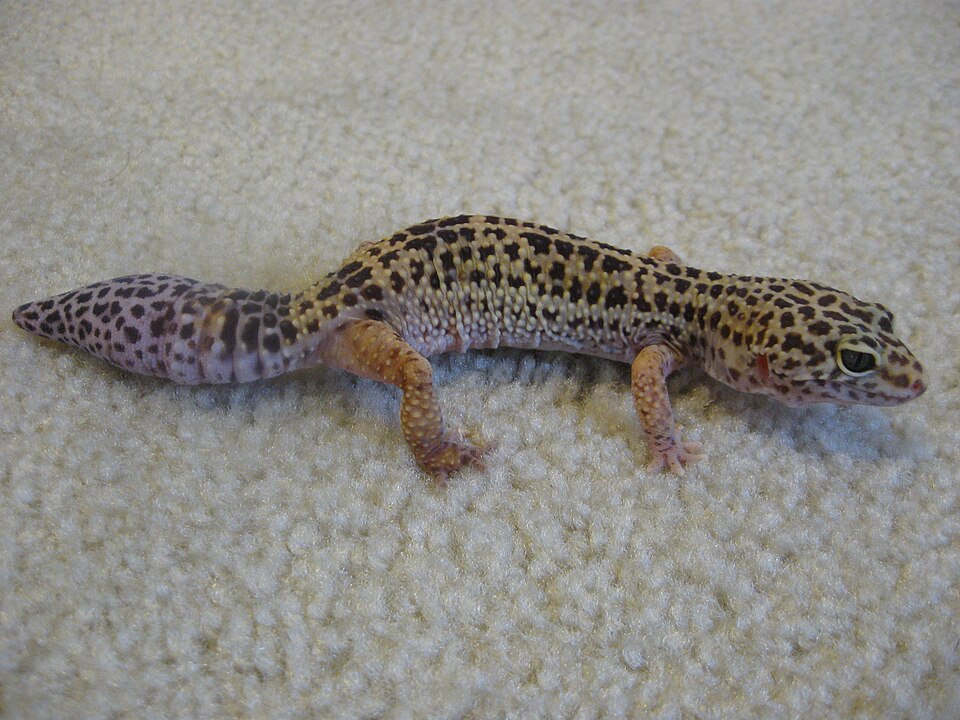
A leopard gecko's thick tail isn't just for show. According to the RSPCA, a well-fed gecko has a thick tail, because that's where it stores fat. If pressure is put on its tail, the gecko can drop it. The tail grows back, but this is dangerous for the gecko's health, because it has to build up its fat stores from scratch.
- Never grab: Don't snatch the gecko from above; gently scoop it up from underneath with both hands, supporting all four legs.
- Don't touch the tail: Never put any pressure on the tail, and never hold the gecko by its tail.
- If it pulls back, leave it: If the gecko backs away or tries to bite, leave it alone and try again later.
- Keep it short: According to the RSPCA, 10–15 minutes at a time is safe, depending on the room temperature; longer can lower its body temperature.
- Don't handle it in the first week: Don't touch a new gecko unnecessarily during its first week; let it settle in.
According to the RSPCA, leopard geckos should be kept alone: they don't need company and can attack each other. Keep other pets away from the terrarium.
Health signs
According to the RSPCA, a healthy leopard gecko has clear, bright eyes and is active; when it isn't resting, its belly doesn't touch the ground, and its tail is thick. Its droppings are fairly dry, with a white part (urates) next to the dark feces.
In cooler months a gecko may eat less and sleep more; the RSPCA calls this a natural slowdown similar to hibernation (brumation). But it shouldn't lose weight during this time. Signs such as muscle twitching or swollen legs can point to bone disease; if you see anything like this, call your vet right away. Females can lay infertile eggs even without a male; the RSPCA recommends a laying box filled with damp soil or sand for this.
Reptiles can carry Salmonella; wash your hands before and after touching your gecko and its things. More details: reptiles and Salmonella.
You can note your gecko's sheds with Tüylüm's Shedding record ("Complete / Stuck shed") and follow its weight with Weight tracking. If stuck sheds keep happening, these records come in handy when you show them to your vet.
Our other reptile articles: Reptiles.
Frequently asked questions
Is the leopard gecko nocturnal?
According to the RSPCA, it isn't strictly nocturnal but a twilight animal: it becomes active at dawn and in the late afternoon and hides during the heat of the day. So it's normal for it to stay in its hide during the day.
Can I keep two leopard geckos together?
The RSPCA doesn't recommend it: leopard geckos don't need company and can attack each other. A separate terrarium for each gecko is the safest choice.
My gecko's tail came off. What should I do?
The tail grows back, but according to the RSPCA this is a risk to the gecko's health, because it has to build up its fat stores from scratch. Ask a vet experienced with reptiles for advice.

Keep track of your pet's care in TüylümLog vet visits, vaccine and medication dates, and we'll remind you when it's time. Share it all with your family in Home.
Sources
- RSPCA · How to care for a leopard gecko
- RSPCA · Taking your reptile home
- Resmî Gazete · Decision on the list of wild animals determined by the Ministry of Agriculture and Forestry (Tarım ve Orman Bakanlığınca Belirlenen Yaban Hayvanları Listesi Kararı), 10 Aug 2022, issue 31919
By Tüylüm · Published and last checked: October 24, 2026. Spotted a mistake? Write to [email protected] and we'll fix it right away. Photos are from Wikimedia Commons, used under the license shown below each photo.