Corn snake care: an escape-proof terrarium, hides and shedding
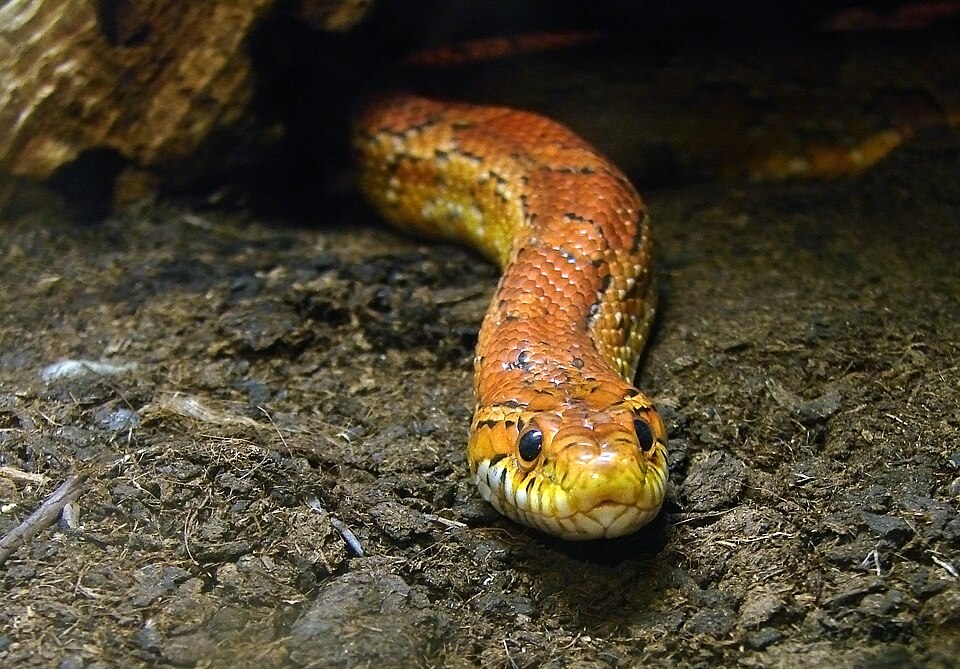
Imagine leaving in the morning without closing the terrarium lid all the way, and coming back in the evening to find it empty. It's a scene no snake owner wants to live through. Corn snakes, with their eye-catching orange and red patterns, love to climb, which is why a secure terrarium is the first and most important rule of their care. In this article we've gathered what you need to know, from the terrarium to feeding and from handling to shedding, based on the recommendations of the RSPCA and the Merck Veterinary Manual.
- Escape-proof: According to the RSPCA, the terrarium should be secure enough to prevent escapes; make sure you close the lid fully every single time.
- A long-term companion: According to the RSPCA, corn snakes grow up to about 150 cm and live 10–15 years.
- Hides: At least two hides (at the warm end and the cool end) and a humid hide.
- Food: Not live, but dead or frozen-thawed mice; offer them with tongs.
- Shedding: The skin comes off in one piece; if it gets stuck, don't pull it off.
A terrarium it can't escape from
According to the RSPCA, a snake's terrarium should be secure enough to prevent escapes, free of hazards that could cause injury, well ventilated and made of a sturdy, easy-to-clean material. The Merck Veterinary Manual also recommends having the enclosure completely ready and safe before the animal comes home.
For size, the RSPCA has a practical rule: the snake should be able to stretch out fully in the terrarium, and the width and height should each be at least a third of the snake's length. Following the RSPCA's example, for a 150 cm corn snake the terrarium should be at least 150 cm long, 50 cm wide and 50 cm deep.
Hatchlings are a different story: according to the RSPCA, they can become stressed in a very large space. The advice is to keep them in a small terrarium first and move them to a bigger one as they grow, or to create small, enclosed areas inside the large terrarium.
Hides, substrate and climbing
- Two hides: According to the RSPCA, there should be at least two hides, one at the warm end and one at the cool end, so the snake feels safe and can choose its own temperature.
- A snug fit: A hide should fit the snake snugly; when the snake coils up, its body should touch the sides.
- Humid hide: Put moistened moss in a third hide; it helps with shedding.
- Up high, too: Corn snakes climb. Add hides at ground level and up high, along with branches or climbing boards. According to the RSPCA, clean any branches you collect outdoors with boiling water first.
- Substrate: The RSPCA recommends organic soil or a soil and sand mix made for reptiles; sand on its own can irritate the skin. Paper towels are only a temporary solution. The Merck Veterinary Manual advises against cedar and pine shavings, because they contain aromatic oils.
Temperature, humidity and light
Snakes can't produce their own body heat; according to the RSPCA, one end of the terrarium should be warm and the other cool.
| Setting | According to the RSPCA |
|---|---|
| Basking spot | 28–30 °C (82–86 °F) |
| Cool end | 20–24 °C (68–75 °F) |
| Night | Heat switched off; can drop to 16–20 °C (61–68 °F) |
| Humidity | 40–50% |
| UVB | Low-output 2–7% tube, UV index of 1.0 at the basking spot |
| Light | On a timer, 12 hours on and 12 hours off |
- Thermostat and guards: Every heater should be connected to a thermostat, and heat lamps should be protected with a guard. According to the Merck Veterinary Manual, heat sources should be guarded so the reptile can't touch them directly; "hot rocks" heated from the inside heat unevenly, can cause burns and aren't recommended.
- Measure every day: The RSPCA recommends recording the temperature at both ends every day with digital thermometers.
- Location: The terrarium should be away from drafts, radiators and direct sunlight.
- Water dish: At the cool end, a water dish big enough for the snake to get into; change it at least once a day.
More about lamps and heat setups: UVB and heat for reptiles.
Feeding: frozen-thawed mice
The RSPCA recommends feeding corn snakes dead mice. According to the Merck Veterinary Manual, feeding live rodents isn't recommended either (it's also illegal in many countries): the prey can injure a sluggish reptile. According to Merck, rodents should be offered either freshly killed, or thawed and warmed after a short time in the freezer.
The RSPCA's feeding recommendations:
- Hatchling: A newborn mouse ("pinky") every 5–6 days.
- As it grows: Prey size increases gradually; an adult snake eats an adult mouse every 7–14 days.
- Size: The prey should be slightly wider than the widest part of the snake's body.
- With tongs: Offer food inside the terrarium, using tongs.
- Weigh it: Weigh your snake regularly, so it doesn't become too thin or overweight.
- Supplements: According to the RSPCA, if the prey is good quality, no supplements are needed.
According to the CDC, freezing doesn't kill the germs in feeder mice. Use a separate container to thaw mice; never thaw them in the microwave or in the kitchen sink, or anywhere food is prepared. Keep feeder mice away from human food, and wash your hands after touching them. According to the CDC, children under 5, adults over 65, pregnant people and people with weakened immune systems shouldn't touch feeder mice.
Getting it used to handling
According to the RSPCA, snakes can get used to being handled regularly, as long as it's done properly.
- Wait during the first week: When the snake comes home, put it in the terrarium, turn off the lights and leave it alone until the next morning. The RSPCA recommends not handling it at all during the first week.
- Let it see you: The CDC recommends making sure the animal has seen you before you pick it up.
- Don't grab; lift from underneath: Pick it up with one hand near the head end and the other near the tail, supporting its whole body.
- Keep it short: 10–15 minutes at a time, depending on the room temperature; longer can lower the snake's body temperature.
- 48 hours after a meal: Don't handle it for 48 hours after feeding, so it doesn't bring its food back up.
- The smell of prey: Don't hold the snake after touching prey; wash your hands first.
- The "S" posture: If the snake pulls its neck back into an "S" shape (as seen from above), it feels threatened; leave it alone.
According to the RSPCA, corn snakes live alone in the wild, and keeping them on their own is recommended. Keep other pets away from the terrarium too.
Shedding
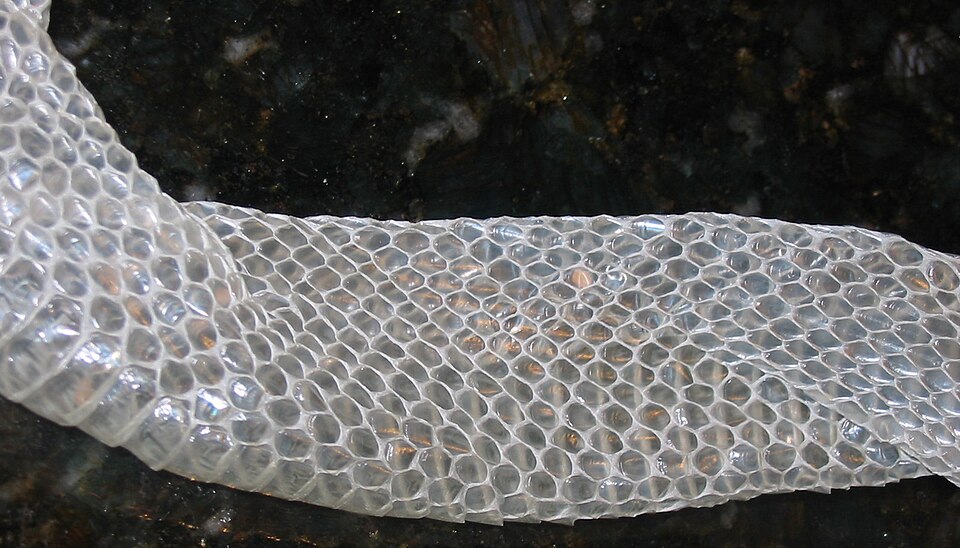
According to the RSPCA, snakes shed their skin in one single piece, and they do it more often when they're young. During this time the snake may hide, use its humid hide more and rub against objects to get the old skin off.
According to the RSPCA, the snake may become defensive during this time, so avoid handling it while it's shedding.
- Don't pull the skin: If the skin hasn't come off completely, the RSPCA says you can try bathing the snake in lukewarm water; but never pull the skin off.
- Over the eyes: If old skin is left over the eyes ("eye caps"), it needs to be removed by a vet who specializes in reptiles.
- If it keeps happening: According to the RSPCA, repeated shedding problems can often be solved by correcting conditions in the terrarium, such as humidity. If you're not sure, ask your vet.
You can note each of your snake's sheds with Tüylüm's Shedding record ("Complete / Stuck shed"). If stuck sheds keep happening, these records come in handy when you show them to your vet. You can also follow your stock of mice with Food & litter supplies and get a reminder before you run out.
Signs of a healthy snake
According to the RSPCA, a healthy snake flicks its tongue often, has clear, bright eyes and smooth skin with no blisters; blisters on the skin can mean the terrarium is too humid. Sitting in the water dish for long periods, and tiny black dots on the snake or around its water dish, can point to mites. In cooler months a snake may eat less, but it shouldn't lose weight. If anything worries you, ask a vet experienced with reptiles right away.
Reptiles can carry Salmonella; wash your hands before and after touching your snake and its things. More details: reptiles and Salmonella. Our other articles: Reptiles.
Frequently asked questions
Can I feed my corn snake live mice?
The Merck Veterinary Manual doesn't recommend it: live rodents can injure the reptile, and feeding live rodents is illegal in many countries. The RSPCA also recommends dead mice. When you thaw frozen mice, remember to follow the hygiene rules.
After shedding, old skin was left over its eyes. What should I do?
According to the RSPCA, old skin left over the eyes needs to be removed by a vet who specializes in reptiles. Don't try to pull it off yourself.
Can I keep two corn snakes in the same terrarium?
The RSPCA doesn't recommend it: corn snakes live alone in the wild. Keeping one on its own also makes health checks easier.

Keep track of your pet's care in TüylümLog vet visits, vaccine and medication dates, and we'll remind you when it's time. Share it all with your family in Home.
Sources
- RSPCA · How to care for a corn snake
- Merck Veterinary Manual · Providing a home for a reptile
- Merck Veterinary Manual · Management and husbandry of reptiles
- CDC · Reptiles and amphibians
- RSPCA · Taking your reptile home
By Tüylüm · Published and last checked: October 24, 2026. Spotted a mistake? Write to [email protected] and we'll fix it right away. Photos are from Wikimedia Commons, used under the license shown below each photo.