Nest boxes for wild birds: hole size, direction, height and when to clean
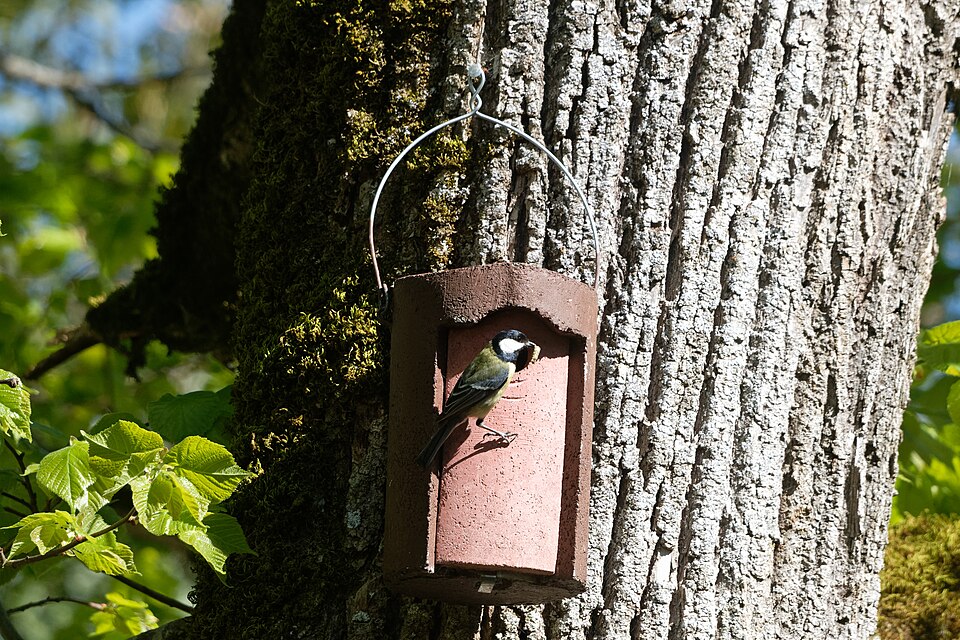
A blue tit needs a tree hole to build its nest; a house sparrow needs a gap under a roof. According to the BTO (British Trust for Ornithology), a UK bird research charity, the loss of hedgerow trees, changes in woodland management and growing cities have reduced natural nest sites for cavity-nesting birds such as blue tits and starlings. Birds that live alongside people, such as house sparrows and swifts, have also lost the holes under roof tiles and in barge boards because of changing building regulations. According to the BTO, a well-designed nest box can make up for this loss and increase the number of nesting birds. In this article, we've gathered advice from the BTO and the RSPB, the UK's bird conservation charity. The advice is written for the UK, so keep your own region's climate in mind too.
- The hole decides who moves in: According to the BTO, 25 mm for blue tits, 28 mm for great tits, 32 mm for house sparrows.
- Material: Wood or woodcrete at least 15 mm thick; boxes made of thin wood, plastic, metal or solid ceramic can overheat (BTO).
- Direction: The entrance hole should face north-east; avoid sun traps such as south-facing walls (BTO).
- Height: Tit and sparrow boxes 2–3 m off the ground (BTO); for robins, an open-fronted box, usually under 2 m, among plants.
- No perch, feeders far away: A perch makes life easier for predators; a box next to a feeder is less likely to be used.
- Cleaning: Once a year, between September 1 and January 31; first make sure there's no active nest in the box (BTO).
What makes a good box?
According to the BTO's nest box guide, all good boxes share a few features:
- Insulating material: A waterproof, insulating material such as wood or "woodcrete." Boxes made of thin wood, plastic, metal or solid ceramic may overheat, which is dangerous for birds.
- Thick walls: Walls should be at least 15 mm thick for adequate insulation.
- Hole position: The hole should be at least 12 cm above the floor of the box so predators can't reach in.
- Enough floor space: The inside cavity should be at least 15 cm across, and the floor should have small drainage holes in case water gets in.
- Opening roof: A roof that lifts makes cleaning and checking easier; a roof that overhangs the front makes it harder for cats to reach in. Water shouldn't be able to get in where the roof is attached.
- No perch: According to the BTO, nesting birds don't need a perch; a perch can give predators such as squirrels and weasels a foothold. The RSPB also says not to fix a perch to the front of a box.
- Separate from bird tables: According to the BTO, boxes built into the roof of a bird table or placed right next to one are unlikely to be used.
If you're building your own, the BTO recommends wood at least 15 mm thick; softwoods such as pine are easy to cut. You can use a water-based preservative on the outside of the box, but leave the inside bare. According to the BTO, there's no need to add any lining.
Hole size: who are you inviting?
The diameter of the hole decides who will move in. The BTO's recommended sizes:
| Bird | Box type | Entrance (BTO) |
|---|---|---|
| Blue tit, coal tit, marsh tit | Small hole-fronted | 25 mm |
| Great tit, tree sparrow | Small hole-fronted | 28 mm |
| House sparrow, nuthatch | Small hole-fronted | 32 mm |
| Robin, spotted flycatcher | Open-fronted | No hole; the upper part of the front is open |
According to the BTO, a blue tit may use a box with a larger hole, but then there's a risk it will be kicked out by a larger, more dominant species such as a great tit. According to the RSPB, a 25 mm hole keeps larger species such as house sparrows and starlings out of tit boxes. If you're not aiming for a particular bird, the BTO recommends 32 mm for all small hole-nesting birds. Larger species such as starlings, according to the BTO, need a larger hole and a larger box.
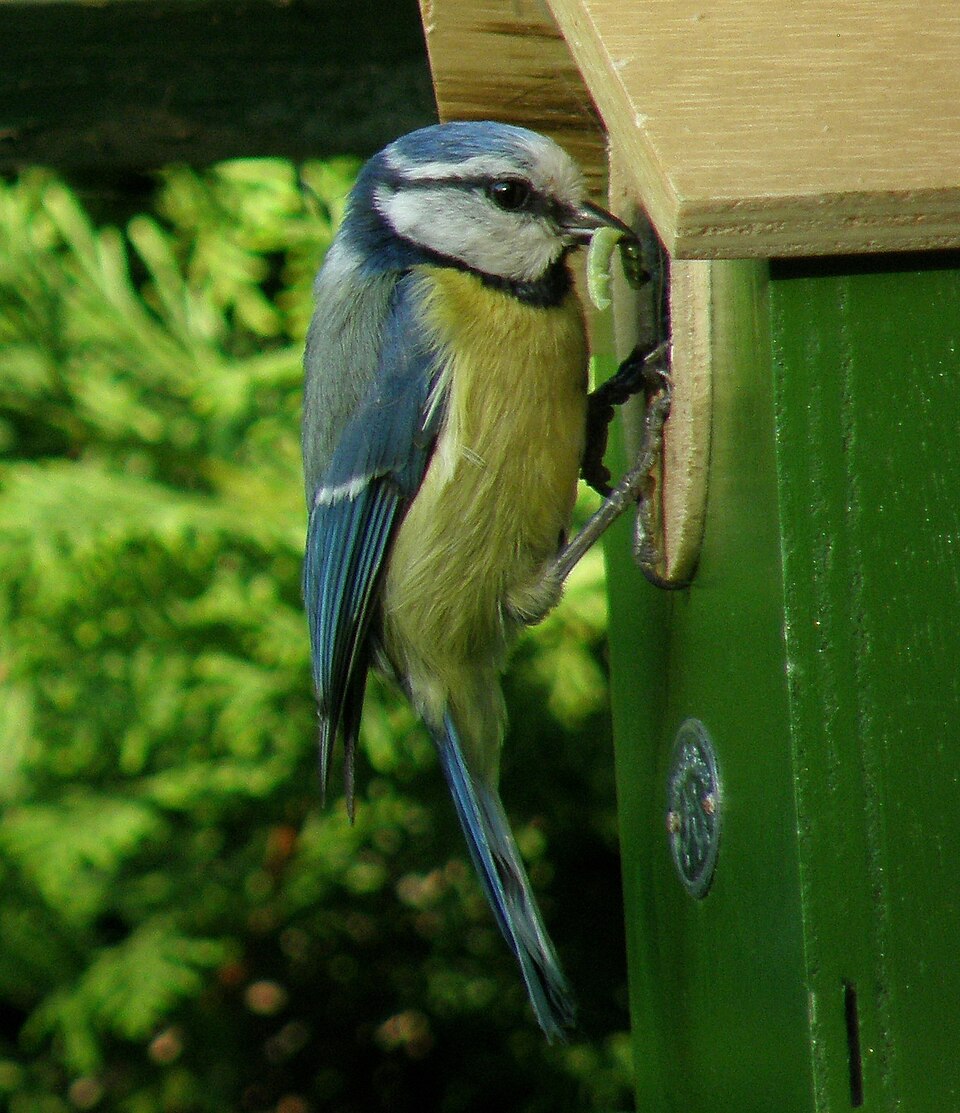
Where and which way?
- Direction: The BTO recommends that the entrance hole face north-east and that the box be sheltered from the prevailing wind and rain. Avoid sun traps such as south-facing walls.
- Slightly tilted forward: According to the BTO, the front of the box should be vertical or angled slightly downward to keep rain out.
- Height: For blue tit and house sparrow boxes, the BTO recommends 2–3 m off the ground; go higher if there's a risk of disturbance.
- Clear flight path: According to the BTO, foliage shouldn't block the entrance hole.
- Away from feeders: According to the BTO, birds coming and going at a feeder can disturb the nesting pair. We covered where to hang a feeder in helping wild birds in winter.
- Space between boxes of the same type: According to the BTO, boxes of the same type placed too close together can cause aggression between neighbors. House sparrows are the exception (see below).
- Fix it securely: The BTO recommends galvanized or stainless steel screws or nails that won't rust; on a tree, galvanized wire can tie the box to the trunk or hang it from a branch. Check the fittings regularly.
Some species have their own preferences:
- Blue tit: According to the BTO, the box doesn't need to be hidden in cover; blue tits like to scan for predators before leaving the box.
- House sparrow: According to the BTO, house sparrows nest in colonies, so consider putting up several boxes close together. The RSPB recommends placing sparrow boxes at least 3 m off the ground, under the eaves or high on a wall, and not over a doorway or a well-used path.
- Robin: According to the BTO, an open-fronted box should go among a climber or overhanging plants, usually under 2 m off the ground. Robins avoid entering the nest if they suspect they're being watched.
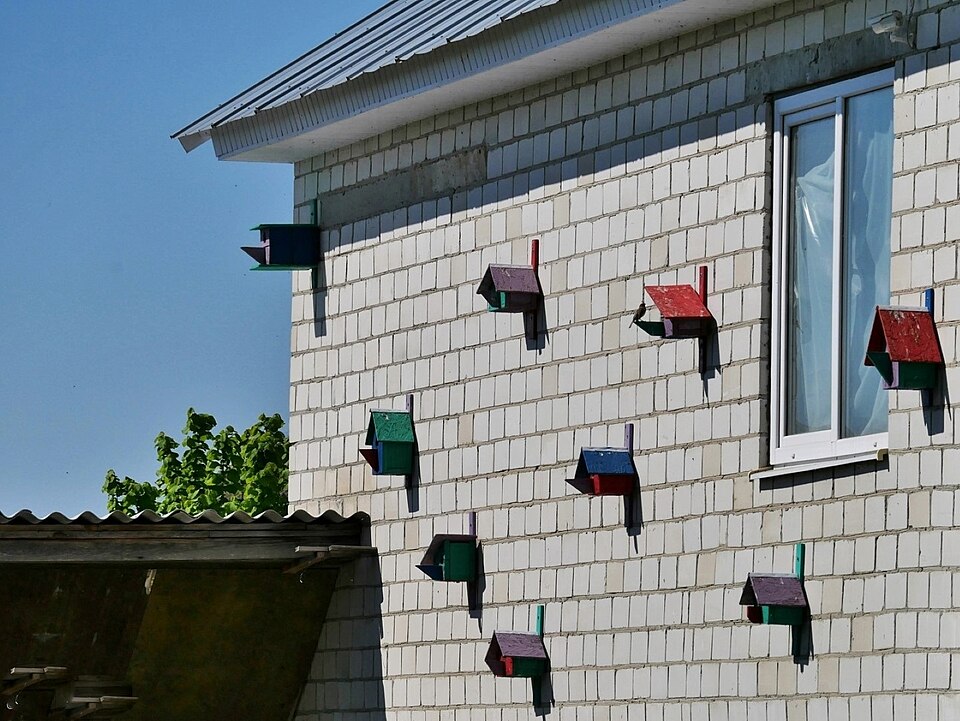
If there are no trees in your garden, the BTO says a shed or a wall is the next best option; here too, watch whether predators can reach the box. If you're putting a box on a building's wall, the RSPB reminds you to get the owner's permission first; in an apartment building, that means building management.
The RSPB lists cats, squirrels, rats, mice, stoats, weasels, woodpeckers and (for open-fronted boxes) crows among nest box predators. According to the RSPB, a metal plate fitted around the entrance hole may deter woodpeckers and squirrels; spiky clippings such as gorse or rose placed above and below the box may protect against most mammals, including cats.
When to put it up?
According to the BTO, boxes are traditionally put up in spring; pairs start looking for nest sites in the second half of February. But the BTO says it's never too early or too late to put up a box, because some birds use boxes to roost in winter. According to the RSPB, the record is 61 wrens roosting in a single box. A box you put up in autumn can be both a winter-night shelter and a ready nest site in spring.
Once the box is occupied: watch from a distance
As spring approaches, the RSPB recommends leaving boxes alone so the birds aren't disturbed. According to the BTO's nest record data, here's the nesting calendar for three common birds:
| Bird | Eggs | Incubation | Chicks fledge at | Broods per year (BTO) |
|---|---|---|---|---|
| Blue tit | 8–10 | About 12 days | 16–22 days | 1 |
| House sparrow | 4–5 | About 12 days | 14–15 days | 2–3 |
| Robin | 4–5 | 13–14 days | 13–14 days | 2 (sometimes 3) |
According to the BTO, blue tits lay most of their eggs in April and May. According to the RSPB, finding unhatched eggs or dead chicks in a box is a normal occurrence, and insects often move in once nesting is over. In the UK, the BTO asks nest box owners to report which birds breed in their boxes; these records help explain why bird numbers change.
Cleaning: once a year, in autumn
According to the BTO, boxes should be cleaned out every year between September 1 and January 31. Removing old nests can reduce the number of nest parasites, such as fleas, in the following breeding season. But be careful: according to the BTO, some birds may breed particularly early or late in the year, so check what's inside first. The RSPB also notes that some species can nest right through September.
- Wear gloves, take the box down and empty out the old nest material (RSPB).
- Boiling water: The RSPB recommends pouring boiling water inside the box to kill parasites, then leaving it to dry thoroughly.
- No chemicals: According to the RSPB, insecticides and flea treatments could harm chicks; don't use them.
- If you like: According to the RSPB, once the box is dry you can add a small handful of clean hay or wood shavings (not straw); small mammals may hibernate in it, or birds may roost there.
- Protect the outside: According to the BTO, a water-based preservative on the outside every few years extends the life of the box; leave the inside bare.
If you missed the autumn clean, the RSPB says not to open the box as spring approaches; wait until the nesting season is over and leave the clean for the following autumn. According to the RSPB, in England it's only legal to remove unhatched eggs from a box between September and January. Natural tree holes are never cleaned.
Frequently asked questions
Can I put the box up now, in autumn?
Yes. According to the BTO, it's never too early to put up a box; some birds roost in boxes on winter nights. When pairs start looking for nest sites in the second half of February, your box will be ready.
Should I put something soft inside the box for the birds?
According to the BTO, there's no need to add any lining; the inside should stay bare. The RSPB, on the other hand, says you can optionally add a small handful of clean hay or wood shavings after cleaning; not straw.
Wouldn't a small perch on the front help birds get in?
No. According to the BTO, nesting birds don't need a perch; a perch can give predators such as squirrels and weasels a foothold. The RSPB also says not to fix a perch to the front of a box.

Keep track of your pet's care in TüylümLog vet visits, vaccine and medication dates, and we'll remind you when it's time. Share it all with your family in Home.
Sources
- BTO · Nest boxes: your essential guide (PDF)
- BTO · Putting up a nest box
- BTO · Make a nest box
- BTO · Buying a nest box
- RSPB · Our ultimate guide to nestboxes
- RSPB · Create a sparrow street
By Tüylüm · Published and last checked: October 28, 2026. Spotted a mistake? Write to [email protected] and we'll fix it right away. Photos are from Wikimedia Commons, used under the license shown below each photo.