Why do parrots and budgies talk? And why a quiet bird is normal too
The first thing almost everyone wonders when they bring home a parrot or budgie is: will it talk? The answer varies from bird to bird. In this article we draw on a scientist's essay in Scientific American for why parrots imitate sounds, The Maryland Zoo for which species are famous for it, and the RSPCA and RSPCA Victoria for teaching speech and talking with your bird. In short: talking isn't a right or a duty, and a bird that doesn't talk isn't sick or unhappy.
- Imitation is learned. Pet parrots learn their calls from the people they live with.
- In the wild, parrots imitate the sounds and local "dialects" of their own species, not words.
- African grey parrots: The Maryland Zoo describes their ability to mimic human speech and other sounds as unparalleled.
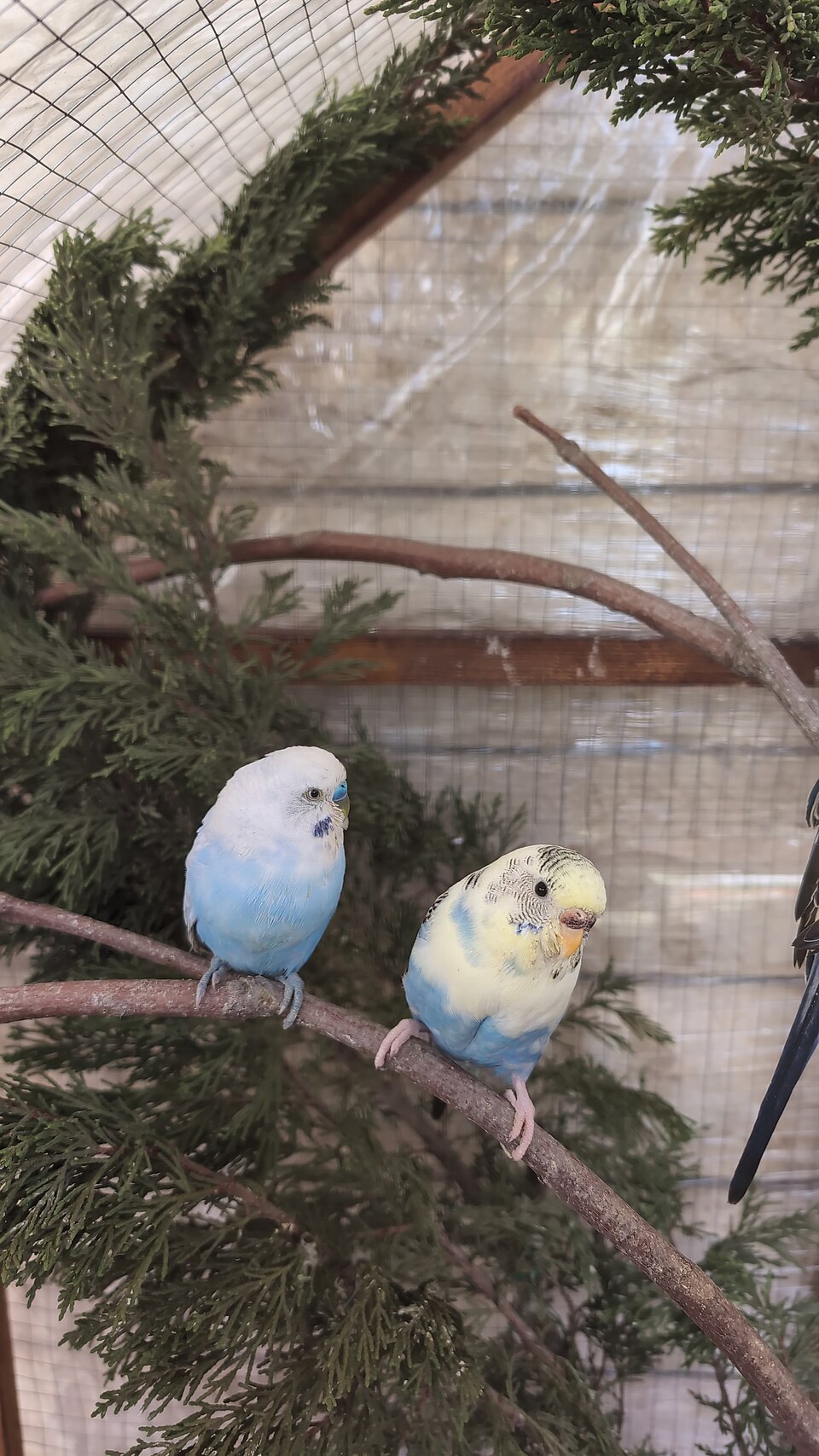
- Budgies: According to RSPCA Victoria, a budgie in close contact with its owner will very often learn to talk, but not every bird does.
- Reward and patience: The RSPCA recommends rewarding the bird right after the behavior you want and not punishing it.
Why do parrots imitate?
Michael Schindlinger, a biologist at Lesley University, explains in Scientific American that there isn't a single answer. Learning calls rather than having them fixed from birth lets a bird use calls that fit the situation. Imitation can also be a display of abilities like hearing, memory and muscle control that a potential mate or ally may weigh up. And if a bird imitates sounds its listener already recognizes, its calls may be easier to pick out in noisy surroundings.
One interesting detail: in Schindlinger's observations of wild Amazon parrots in Mexico, Guyana and Peru, the birds imitated only their own species and local dialects. Human words are mainly a pet-bird thing: pet parrots learn their calls from the people around them. The author says parrots' ability to produce lower notes than smaller birds helps them match human voices.
Which birds are the chatty ones?
Let's be honest here: reliable sources don't give a ranking of "this species speaks this many words". What we could confirm:
| Bird | What the source says |
|---|---|
| African grey parrot | The Maryland Zoo describes their ability to mimic human speech and other sounds as unparalleled, and adds that the few greys studied closely could tell colors, numbers and shapes apart. They live about 50 years |
| Budgie | According to RSPCA Victoria, a budgie in close contact with its owner will very often learn to talk |
| Parrots in general | According to Scientific American, parrots are strong imitators; other birds such as Indian mynahs and northern mockingbirds imitate too |
So bringing home a famous species isn't a guarantee, and individual birds of the same species can differ a lot. Focusing on the bond you build, rather than on waiting for words, is the healthier approach. For building that bond, see bonding with your bird.
According to The Maryland Zoo, grey parrots live around 50 years; the RSPCA also notes that some parrots can live for over 50 years. Think about that long commitment rather than choosing a bird just because it talks.
If you'd like to teach speech
According to RSPCA Victoria, a budgie in close contact with its owner will very often learn to talk. The page describes starting around six weeks of age and repeating the same word directly to the bird; once it learns one word, new ones may follow. The same page says that if a bird hasn't learned by six months, it probably never will.
One important note: according to the RSPCA's page on company, budgies are colony birds and can live in groups with compatible birds in a large cage or aviary. You don't have to keep a single bird so that it will talk, and it's better to decide that with your vet and according to your bird's needs.
- Trust first: Don't try to teach a bird that isn't comfortable with you. Let it get used to you being close and to eating near you.
- Short and relaxed: The RSPCA describes training as needing time, care and patience, going at your bird's pace.
- Reward right away: According to the RSPCA, reward your bird straight after it does, or tries, the behavior you want, with a favorite food, a gentle head scratch or a favorite toy, plus soft praise.
- Same word: According to RSPCA Victoria, repeating the same word directly to the bird helps.
- No punishment: The RSPCA advises against scolding or putting the bird back in its cage as a punishment.
Not talking, just chirping or screaming
According to the RSPCA's behavior page, birds are naturally noisy and some species are louder than others. Without enough enrichment, noise can increase. Loud or unwanted sounds, including swearing, can also be a sign of distress. Once your bird has had enough attention and enrichment, the charity suggests leaving the bird's sight each time the unwanted noise occurs; if you do this often enough, the problem should eventually stop. Ignoring the bird, keeping it in its cage for long periods or providing too little to do can contribute to problem behavior.
So a bird that doesn't talk isn't "broken." Chirping, whistling and calling are also its way of communicating. Playing, whistling and chatting with your bird builds a bond just as teaching words does. For toy ideas, see toys and enrichment for birds.
If a usually noisy bird suddenly goes quiet or its voice changes, don't guess the cause; talk to your veterinarian. This article doesn't diagnose; it only gives general information about talking and sound.
In the Memory book you can record your bird's first word or whistle with the date. You can also set a daily care task like "spend time with your bird" on the Today tab, so short chats turn into a habit.
Frequently asked questions
Is something wrong if my bird never talks?
Our sources don't describe not talking as a problem; according to Scientific American, imitation is learning that depends on a bird's social surroundings. If your bird's voice or behavior changes, talk to your vet.
Which species talks best?
We couldn't find a reliable ranking. The Maryland Zoo describes the African grey's mimicry as unparalleled, and RSPCA Victoria says budgies can learn to talk, but neither is a guarantee.
Should I keep my bird alone so it talks?
No. The RSPCA notes that budgies are colony birds and can live in groups with compatible birds. Set up your bird's living arrangements around its needs, not around the hope that it will talk.

Keep track of your pet's care in TüylümLog vet visits, vaccine and medication dates, and we'll remind you when it's time. Share it all with your family in Home.
Sources
- Scientific American · Why do parrots have the ability to mimic? (Michael Schindlinger, 2007)
- The Maryland Zoo · African Grey Parrot
- RSPCA Victoria · Birds
- RSPCA · Behaviour (pet birds)
- RSPCA · Training (pet birds)
- RSPCA · Company (pet birds)
This article is for general information only; it is not a diagnosis or treatment advice and does not replace a visit to a veterinarian. Talk to your vet about decisions on your pet's health. By Tüylüm · Published and last checked: November 9, 2026. Spotted a mistake? Write to [email protected] and we'll fix it right away. Photos are from Wikimedia Commons, used under the license shown below each photo.