Axolotl care: cool water, a gentle current and the right substrate
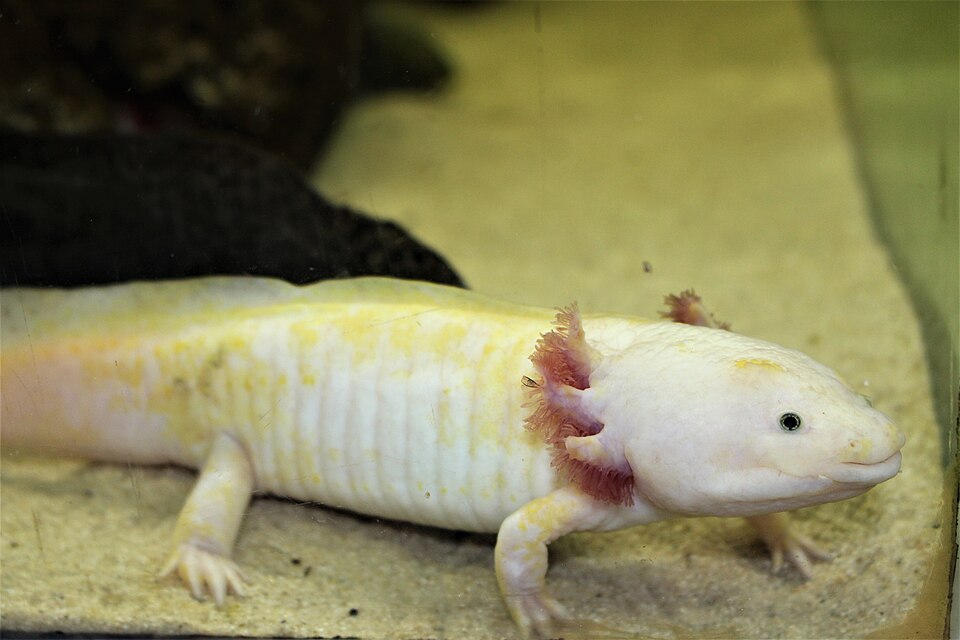
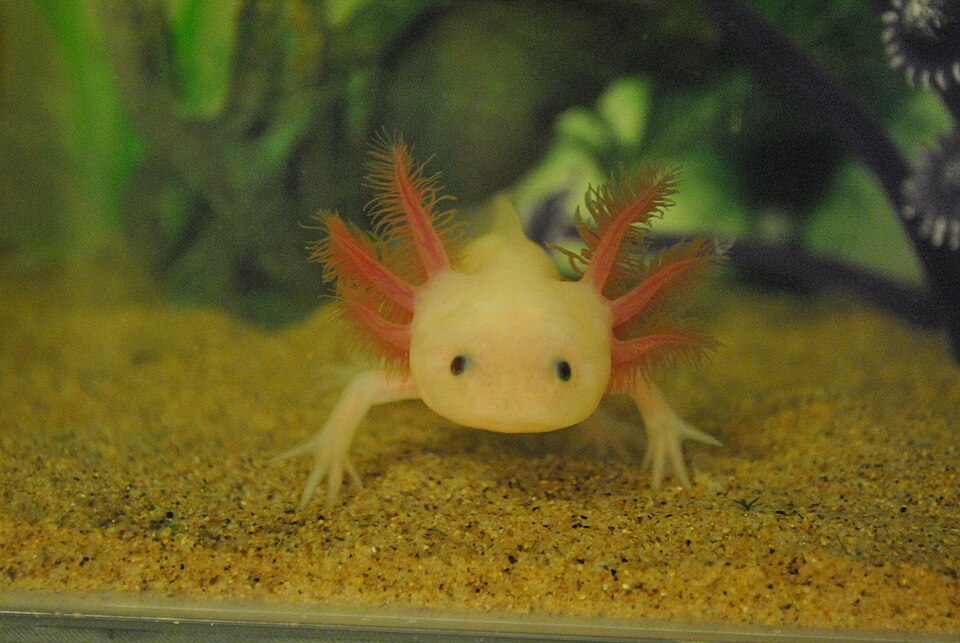
A face that always seems to be smiling, gills that fan out like pink feathers on either side of the head, and a body that drifts slowly along the bottom of the tank. At first glance an axolotl looks like a toy, but it's actually an amphibian with very particular needs. As SPCA New Zealand points out, the axolotl isn't a fish, and because its gills sit on the outside of its body, it needs to stay in the water at all times. According to the Royal Veterinary College (RVC), axolotls usually live 10–12 years, and some have lived beyond 20. So this is a long companionship. The good news is that most of what an axolotl wants is simple: cool, clean, calm water.
- Cool water: The range the sources recommend is about 15–18 °C (59–64 °F). The NSW Department of Education says the water should never go above 22 °C (72 °F); the RVC's upper limit is 24 °C (75 °F).
- A gentle current: A filter is recommended, but a strong current is a serious source of stress for an axolotl.
- Substrate: Fine aquarium sand, or stones bigger than the axolotl's head. Gravel can be swallowed and can cause a fatal blockage.
- Companionship: According to the RVC, the safest option is to keep them alone; axolotls of different sizes should never be kept together.
- No handling: Its skin and gills are very delicate; don't touch it unless you have to, and don't take it out of the water.
First, get to know it: what kind of animal is an axolotl?
According to the RVC, the axolotl is a salamander from high-altitude freshwater lakes in Mexico. Its most fascinating trait is that it stays in its larval form throughout its life: it never loses its gills or its tail fin, yet it still grows up and breeds. We cover this intriguing biology separately in our article on fascinating axolotl facts.
It can also grow bigger than you might think. According to the RVC, axolotls reach adult size at 18–24 months; the average length is 25–30 cm, but when choosing a tank you need to allow for the fact that they can grow up to 35 cm. According to the NSW Department of Education, axolotls are fairly inactive animals that are mostly active at night and avoid bright light.
The tank: size and location
According to the NSW Department of Education's guide for schools, the minimum space for a pair of adult axolotls is 60 x 30 x 30 cm, with a water depth of 20–25 cm. SPCA New Zealand's rule is even simpler: the bigger the tank, the better.
- A quiet corner: The RVC recommends keeping the tank in a quiet, vibration-free spot.
- No sun: According to the SPCA, the tank shouldn't be in direct sunlight and should be kept away from places where the temperature changes a lot.
- Air: According to the NSW guide, because the axolotl takes oxygen from the water through its gills, the water needs to be aerated.
- Let the tank cycle first: The RVC recommends leaving the tank empty for a few weeks after setting it up, before putting an animal in. We explain why in our article on water quality for amphibians.
Temperature: warm water is the real danger
Axolotls like cool water and are very sensitive to temperature. The values the sources give are close to each other:
| Source | Recommended temperature | Upper limit |
|---|---|---|
| RVC | 16–18 °C (61–64 °F) | Should never go above 24 °C (75 °F) |
| NSW Department of Education | 15–18 °C (59–64 °F) | Should never be kept above 22 °C (72 °F) |
| SPCA New Zealand | 17–18 °C (63–64 °F) | Overheating can lead to serious problems |
The SPCA recommends keeping a close eye on the water temperature with an aquarium thermometer. In summer, as the room warms up, so does the tank water; make checking the thermometer every day a habit.
According to the NSW Department of Education, an axolotl should never be kept in direct sunlight. During heat waves, draping a damp towel over the tank and blowing air across the towel with a fan can help keep the water from warming up. If your axolotl stops eating or loses its balance, call your vet.
Filter and water
According to the RVC, a filter isn't essential if you change the water often, but a filter is strongly recommended to keep toxic ammonia low. What really needs attention is the current: according to the RVC, it's very important that the filter doesn't create a strong current, because this causes serious stress in axolotls. Overly powerful filtration is also a source of stress. The NSW guide also asks for the current to be as slow as possible.
- Tap water: According to the RVC, the chlorine in tap water is harmful to axolotls. You should either use a water conditioner (dechlorinator) or let the water stand for 24 hours. If the water contains chloramine, a water conditioner is a must.
- No pure water: According to NSW, an axolotl should never be kept in overly soft or pure (distilled) water.
- Partial water changes: The RVC recommends changing 10–20% of the water each week; this can vary depending on the filter and the results of your water tests. NSW recommends changing about a quarter of the water each week, with the new water at the same temperature.
- Cleaning: According to NSW, droppings should be removed regularly.
Substrate, hiding places and lighting
When an axolotl swallows its food, it can swallow small stones from the bottom too. According to the RVC, the best substrate is fine aquarium sand, because axolotls sometimes eat gravel, and this can cause a fatal blockage. The SPCA's rule is easy to remember: have only sand, or large stones and ornaments, on the bottom; an axolotl may try to eat anything smaller than its head.
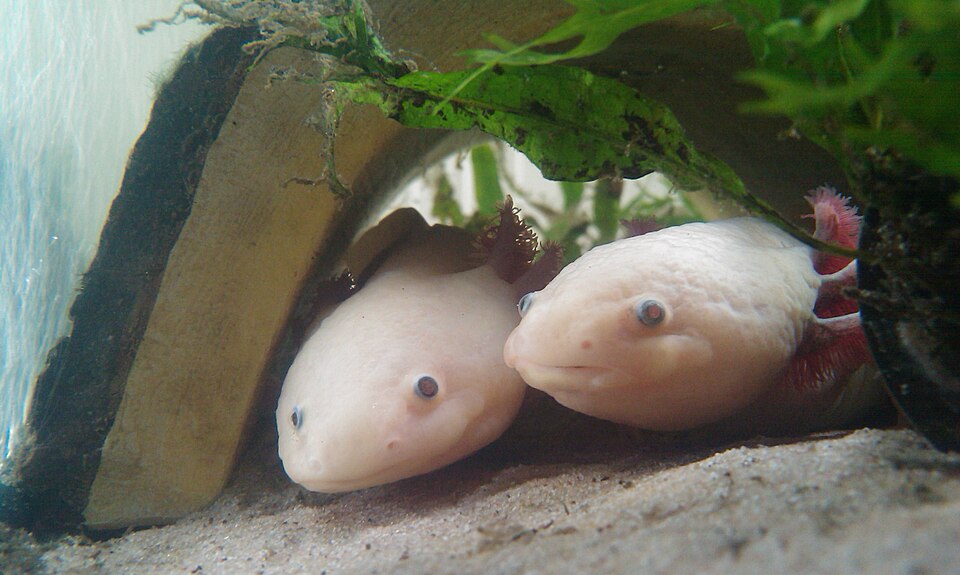
- Hiding places: The RVC recommends caves and pipes; according to the SPCA, axolotls love to hide.
- Dim light: According to the RVC, axolotls are very sensitive to sudden changes in light and to UVB, which is why tanks are often left without a light. According to NSW, normal room light is enough, but there needs to be a regular day and night cycle.
Feeding
According to the SPCA, axolotls are carnivores; they eat insects, small fish and crustaceans. Because they can't chew their food, it should be given in small pieces they can swallow whole. The SPCA also shares a handy tip: axolotls are used to eating moving prey, so gently wiggling the food in the water can help them notice it.
The foods the RVC lists include earthworms, bloodworms, blackworms, salmon pellets and brine shrimp. According to the RVC, live foods that come from water should be collected from waters with no fish in them, because they can carry disease.
| Source | How often? |
|---|---|
| RVC | Juveniles every day; adults 2–3 times a week, as much as they can finish in 2–3 minutes |
| NSW Department of Education | Adults 3 times a week; juveniles more often |
| SPCA New Zealand | Adults every other day |
According to NSW, uneaten food and droppings should be removed right away; because a monotonous diet can lead to deficiencies, the food should be varied. The RVC and the SPCA recommend calcium supplements; talk to your vet about which product and how much is right.
Companionship and handling
Alone or with company?
According to the RVC, axolotls live best alone, and sharing a tank is always somewhat risky. Juveniles can be kept together when there's plenty of space; although adults are much less likely to eat each other, axolotls of different sizes should never be left together. The SPCA also says axolotls can be aggressive toward their own kind. According to the NSW guide, axolotls shouldn't be kept in the same tank as other species, which includes fish.
Handling
According to the SPCA, an axolotl shouldn't be handled at all unless it's truly necessary: it's very delicate, gets injured easily, and can suffocate if its gills dry out when it's taken out of the water. The RVC also stresses that its skin is sensitive to toxic substances and injury. According to NSW, an axolotl shouldn't be taken out of the water even for a moment; if you need to catch it, use an aquarium net. The rules that apply to other amphibians too: handling amphibians.
Health: what to watch for
According to the NSW Department of Education, it's normal for a healthy axolotl to be fairly inactive; it rests under plants or ledges and is more active at night.
The signs of illness listed in the NSW guide:
- Loss of appetite
- Damaged or deteriorating gills
- Sores on the skin
- A deformed back
- Poor balance while swimming
- Injuries to the legs, gills or tail
- Failure to grow or develop
If you can't find and fix the cause, go to a vet experienced with axolotls. SPCA New Zealand also recommends a health check every 6–12 months.
In Tüylüm's Today tab there are ready-made tasks for amphibians: Food (every other day), Water / humidity check and Terrarium cleaning. You can also add your own task for the weekly partial water change; everyone in your Home sees the same list.
For our other amphibian articles: Amphibians.
Frequently asked questions
Does my axolotl need a heater?
The range our sources recommend is cool, about 15–18 °C (59–64 °F); the real risk is the water getting too warm. Before adding anything, monitor the actual water temperature with an aquarium thermometer for a few days. If you're unsure, ask a vet experienced with axolotls.
Can I keep an axolotl in the same tank as fish?
No. According to the NSW Department of Education, axolotls shouldn't be kept with other species. The RVC also recommends collecting live foods from waters with no fish in them, because they can be a source of disease.
My axolotl just sits still on the bottom. Is it sick?
Most likely not. According to the SPCA, axolotls are slow, calm animals that spend most of their time on the bottom of the tank; according to NSW, they're more active at night. But if it has stopped eating, lost its balance or there's a change in its gills, call your vet.

Keep track of your pet's care in TüylümLog vet visits, vaccine and medication dates, and we'll remind you when it's time. Share it all with your family in Home.
Sources
- Royal Veterinary College (RVC) · Axolotl care (care sheet, PDF, December 2024)
- SPCA New Zealand · Caring for axolotls
- NSW Department of Education · Axolotls – environment
- NSW Department of Education · Axolotls – food and water
- NSW Department of Education · Axolotls – handling
- NSW Department of Education · Axolotls – health
By Tüylüm · Published and last checked: October 24, 2026. Spotted a mistake? Write to [email protected] and we'll fix it right away. Photos are from Wikimedia Commons, used under the license shown below each photo.