Pacman frog care: a huge mouth and a quiet life
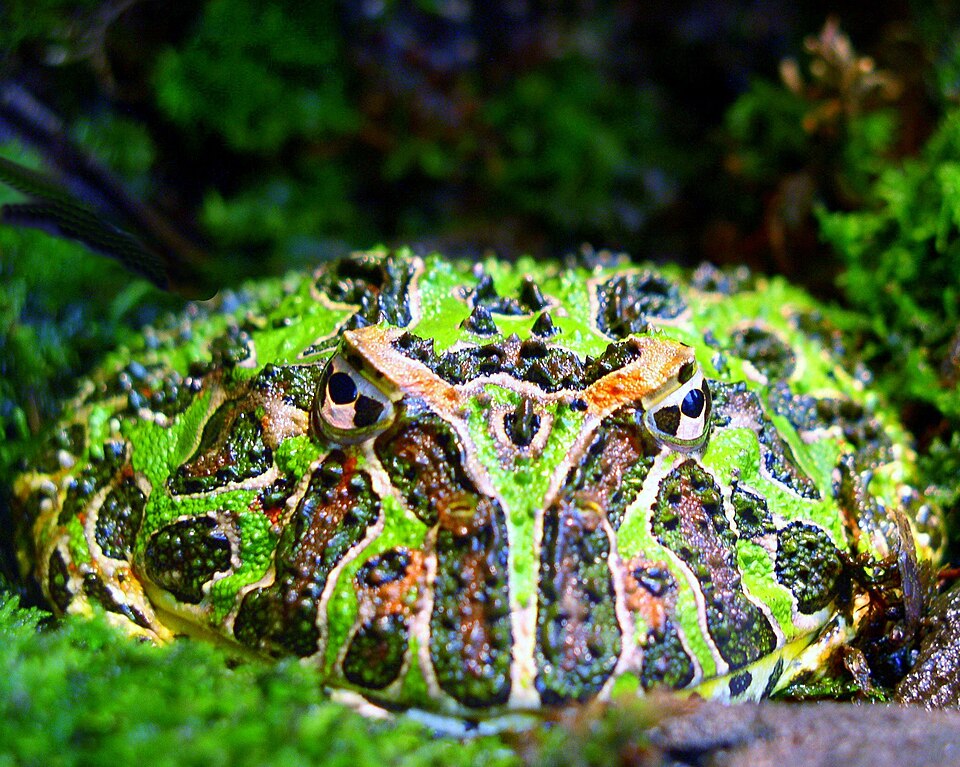
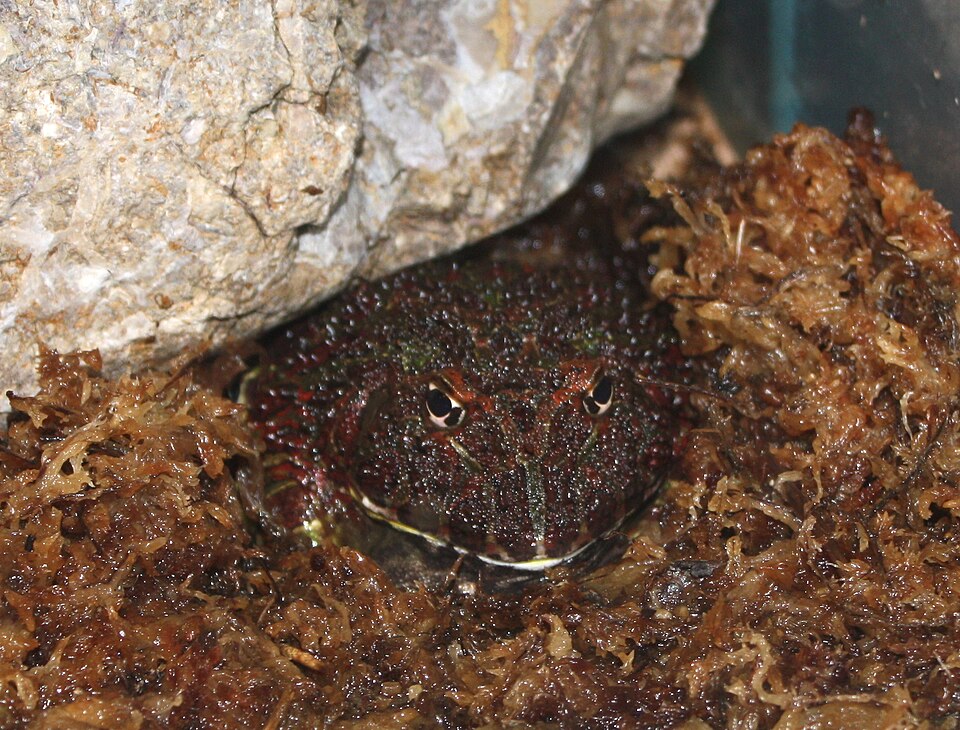
A round frog, half buried in moss with only its two big eyes showing, sitting perfectly still for hours. Then an insect walks past, and in an instant it's gone. The most striking feature of the horned frog, known as the Pacman frog, is its mouth. According to Chadwell Animal Hospital's care sheet, when this frog opens its mouth, it's almost as big as its whole body, and it swallows its food in a single gulp. It doesn't chase its prey; it waits for the prey to come to it. Living with this calm, hungry animal looks easy, but it takes care when it comes to temperature, humidity and measured feeding.
- It buries itself: According to Chadwell, this frog likes to burrow, and because it can't jump high, it doesn't need a tall enclosure.
- Warm and humid: Chadwell recommends an air temperature of about 27 °C (80 °F); the substrate should be damp but not wet.
- Water dish: A dish it can get into and sit in; the water should be dechlorinated and refreshed often.
- Feed in moderation: According to Merck, the main cause of obesity in amphibians is overfeeding; most amphibians keep eating as long as there's food in front of them.
- On its own: According to Chadwell, these frogs can eat each other; the bigger one eats the smaller one.
Getting to know the Pacman frog
The veterinary clinic care sheet we relied on most for this article was written for the Argentine horned frog (Ceratophrys ornata), also known as the "Pacman frog". According to Chadwell Animal Hospital's care sheet:
- Where does it come from? South America, from Brazil to Argentina.
- Why "horned"? Because its eyes stick up above its body.
- Size: Females are much bigger than males; an adult female measures about 20 cm across.
- Color: Black-edged green spots on a yellow or light green background; there are normally colored and albino ones.
- In the wild: It stays buried underground for long periods during the cool fall and winter months.
- Personality: Interesting and easy to care for, but not very active. It's a "sit and wait" hunter; it waits for food to come to it.
The enclosure: a wide floor is enough
Chadwell recommends a 10–20 gallon (about 38–76 liter) aquarium or a large plastic tub for a Pacman frog, adding that a tall enclosure isn't needed because the frog can't jump high.
- No escapes: According to Agriculture Victoria, all amphibian habitats should be escape-proof.
- Fresh air: According to Merck, the habitat should be well ventilated, and aquariums need a secure, ventilated lid.
- A hiding place: Chadwell recommends a hide box and real or artificial plants; plants reduce stress and provide more hiding space.
- Measure: According to Merck, every amphibian habitat should have at least one thermometer and one hygrometer.
Substrate: a damp floor it can burrow into
The Pacman frog likes to sit half buried. Chadwell recommends moss deep enough for the frog to burrow into, and stresses that the moss should be damp but not wet. According to Merck, substrates such as soil, sphagnum moss or wood chips can be used, depending on the species' needs.
- According to Merck, soils shouldn't contain additives.
- According to Merck, cedar and pine shavings shouldn't be used because of the toxic oils they contain.
- According to Merck, if gravel is used, it should be either too big for the animal to swallow or small enough to pass through the digestive tract.
- According to Chadwell, these frogs urinate in the moss or water they sit in and can reabsorb the urine through their skin. That's why keeping the substrate clean is very important.
According to Merck, the substrate should be spot-cleaned daily or weekly and replaced completely every few weeks or every few months, depending on the material used.
Temperature and humidity
The Pacman frog is a tropical species and needs a warm environment. The sources' recommendations are close to each other:
| Source | Recommended temperature |
|---|---|
| Chadwell Animal Hospital | Air temperature about 27 °C (80 °F) |
| Merck (general, for tropical amphibians) | 24–27 °C (75–80 °F) |
According to Merck, if amphibians are kept outside their suitable temperature range, their immune systems can weaken, secondary infections can develop and they may not absorb nutrients well. For humidity, Chadwell says the substrate should be kept damp and the enclosure can be misted every day.
According to Chadwell, if the environment is too hot or too cold, the frog can go into a kind of dormant state, during which it stops eating and drinking. If your frog hasn't eaten for a long time and stays buried, check the temperature first, then talk to your vet.
According to Merck, amphibians need UVB light to prevent metabolic bone disease, and not every "full spectrum" bulb gives off enough UVB. Ask a vet who knows amphibians which lamp is suitable.
Water dish
According to Merck, land-dwelling species also need a shallow water dish. Chadwell recommends a dish big enough for the frog to get into and soak.
- Dechlorinated water: According to Agriculture Victoria, all water in an amphibian's habitat should be free of chlorine; water conditioner products or bottled water can be used for this.
- No pure water: According to Merck, distilled water shouldn't be used in an amphibian's habitat.
- Refresh it often: According to Merck, the water should be refreshed every day. Chadwell wants the dish changed and disinfected right away whenever you see droppings in it.
We explain how to prepare tap water in our article on water quality for amphibians.
Feeding: a huge appetite, a measured plate
According to Agriculture Victoria, most amphibians eat only live invertebrates such as insects, crickets, waxworms and cockroaches, and how often they're fed depends on how active the animal is: small, active species are fed once a day, while large, less active species are fed once a week. According to Chadwell, juveniles are fed more often, every other day; adults every 5–7 days.
According to Merck, obesity in amphibians is considered a disease, and its main cause is overfeeding. According to Merck, many amphibians keep eating as long as there's food in front of them; extra weight strains the body and changes how the internal organs work. Reducing portions helps. Work out the right amount and frequency for your frog with an experienced vet.
- No insects exposed to pesticides: According to Agriculture Victoria, insects that have been exposed to insecticides or other chemicals should never be used as food.
- Calcium: According to Merck, metabolic bone disease is common in amphibians fed only unsupplemented invertebrates; most invertebrates are low in calcium. Talk to your vet about whether a supplement is needed.
- Mind your fingers: According to Chadwell, these frogs have teeth and can bite. Keep your fingers away from its mouth when feeding.
Why should it live alone?
According to Chadwell, keeping horned frogs together is risky: they can eat each other, and the bigger one eats the smaller one. The safest setup for a Pacman frog is to live alone in its own enclosure.
Handling and hygiene
According to Merck, amphibians should be handled as little as possible because their skin is sensitive; some also release irritating substances from their skin. If you need to, use powder-free, disposable gloves moistened with the animal's own water, and remember that the frog can bite. According to Agriculture Victoria, amphibians should never be squeezed. According to the CDC, amphibians can carry Salmonella even when they look healthy; wash your hands with soap and running water after touching or feeding your frog or cleaning its enclosure. More detail: handling amphibians.
According to Chadwell, skin that looks cloudy can be a sign of illness, but it can also mean the frog is getting ready to shed. Whenever you notice a change you're not sure about, talk to a vet who knows amphibians.
In Tüylüm's Today tab there are ready-made Water / humidity check and Terrarium cleaning tasks for amphibians. Since your Pacman frog eats only now and then, you can add its feeding days as your own task. Everyone in your Home sees the same list, so your frog doesn't accidentally get fed twice.
Our other amphibian articles: Amphibians.
Frequently asked questions
Why does my Pacman frog never move?
According to Chadwell, the Pacman frog is a hunter that isn't very active and waits for food to come to it. It's normal for it to sit still for hours. But if it hasn't eaten for a long time, its skin has changed or its breathing is different, talk to your vet.
Can I keep two Pacman frogs together?
No. According to Chadwell, these frogs can eat each other, and the bigger one eats the smaller one. Each frog should have its own enclosure.
How often should I feed my Pacman frog?
According to Agriculture Victoria, large, less active amphibians are fed once a week; Chadwell recommends feeding juveniles every other day and adults every 5–7 days. According to Merck, overfeeding is the main cause of obesity; work out the right routine for your frog with a vet.

Keep track of your pet's care in TüylümLog vet visits, vaccine and medication dates, and we'll remind you when it's time. Share it all with your family in Home.
Sources
- Chadwell Animal Hospital · Argentine Horned Frog Care Sheet (PDF)
- Merck Veterinary Manual · Introduction to Amphibians (pet owner version)
- Merck Veterinary Manual · Housing for Amphibians (pet owner version)
- Merck Veterinary Manual · Nutritional Diseases of Amphibians (pet owner version)
- Agriculture Victoria · Caring for your pet amphibian
- CDC · Reptiles and Amphibians (Healthy Pets, Healthy People)
By Tüylüm · Published and last checked: October 24, 2026. Spotted a mistake? Write to [email protected] and we'll fix it right away. Photos are from Wikimedia Commons, used under the license shown below each photo.