Bearded dragon care: the basking spot, UVB and the balance of insects and greens
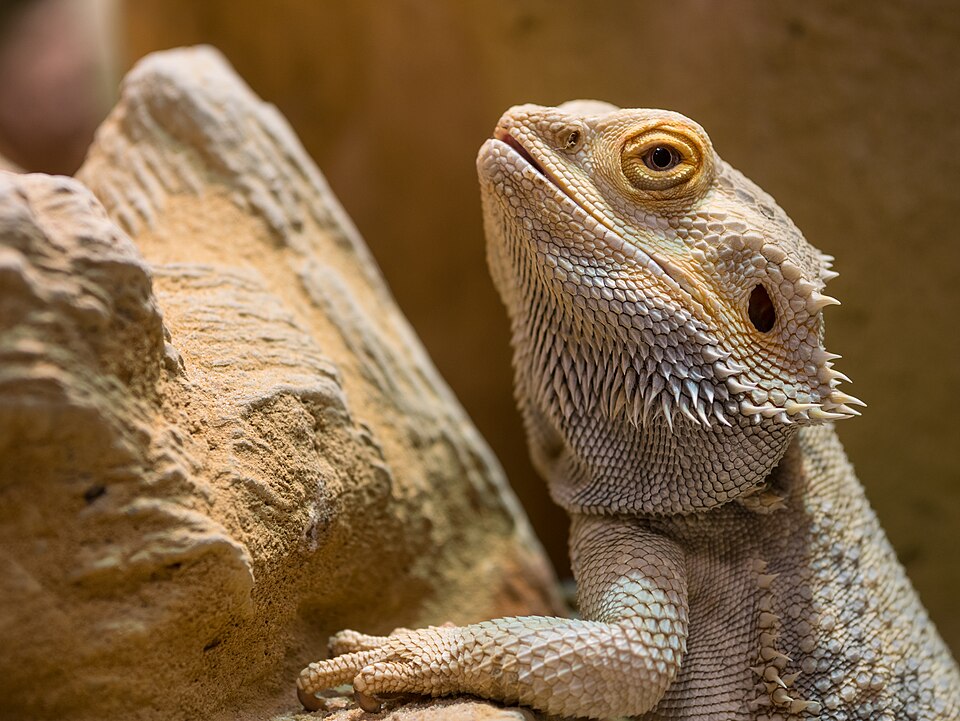
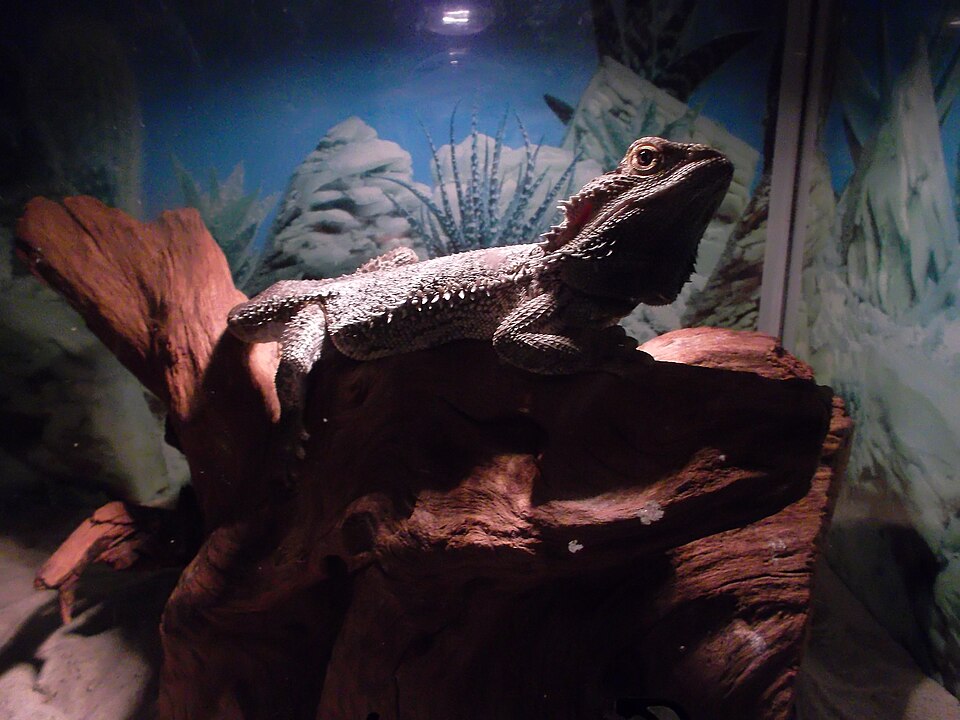
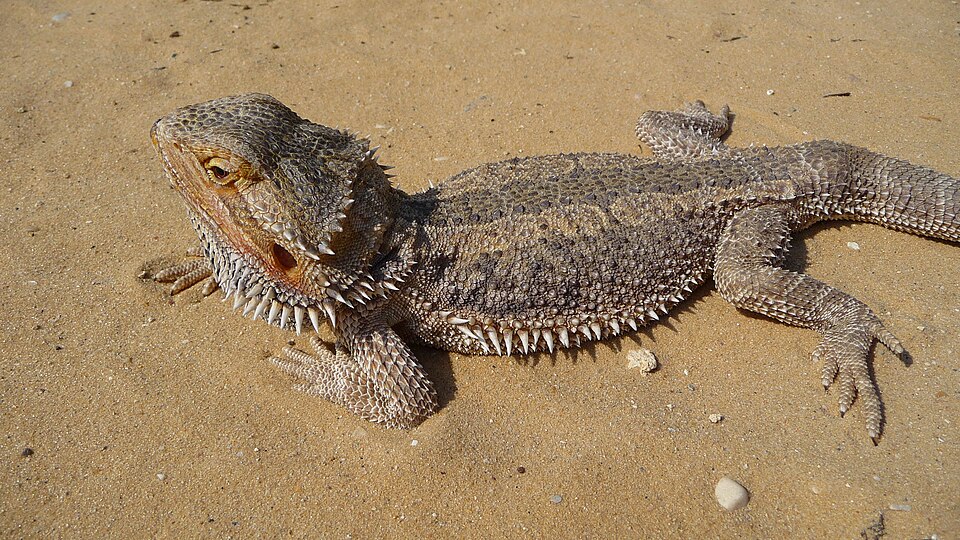
While watching your bearded dragon, you may see it lift one front leg and wave it, as if it were waving hello to you. This is called "arm waving". According to the Australian Museum, in the wild it's a sign of submission: a dragon waving its arm is showing the other animal that it doesn't want a fight, and the tension usually dies down. Bearded dragons say a lot with their movements, their colors and the spiky "beard" under their chin. But a happy dragon first needs the right environment: a spacious terrarium, a very hot basking spot and strong UVB light.
- Spacious terrarium: According to the RSPCA, at least 120 cm long, 60 cm high and 60 cm wide for one adult.
- Hot spot: Basking spot 38–42 °C (100–108 °F), cool side 22–26 °C (72–79 °F).
- UVB is a must: A high-output UVB lamp should be inside the terrarium; UVB doesn't pass through glass.
- Insects and greens: Young dragons eat more insects; as they grow, the share of greens goes up.
- On its own: They're territorial animals; according to the RSPCA, it's best to house them separately.
A lizard from Australia
According to the Australian Museum, the central bearded dragon (Pogona vitticeps) lives in the semi-arid interior of eastern Australia. In the wild it eats both plants and animals: fruit and leaves, as well as invertebrates such as ants and insects. According to the museum, males usually have bigger heads and brighter colors than females. According to the RSPCA, it's active during the day and can reach 45 cm including its long tail.
It's also long-lived: according to the RSPCA, it usually lives 10–15 years or longer. In other words, getting a bearded dragon is a decade-long decision.
The terrarium and the basking spot
According to the RSPCA, the terrarium should be well ventilated, made of a sturdy, easy-to-clean material that holds heat, escape-proof and free of hazards. Place it away from radiators and sunny windows.
| Setting | According to the RSPCA |
|---|---|
| Smallest terrarium | 120 x 60 x 60 cm |
| Basking spot | 38–42 °C (100–108 °F), with a 60–100 watt lamp |
| Distance between lamp and the dragon's back | 25–30 cm |
| Cool side | 22–26 °C (72–79 °F) |
| Night | Shouldn't drop below 20–22 °C (68–72 °F) |
| Humidity (on the cool side) | 30–40% |
- Thermostat and thermometer: Control the heat with a thermostat, and measure both ends every day with an infrared thermometer.
- Heat at night: If the room gets very cold, the RSPCA recommends a ceramic heater that gives off no light.
- Enrichment: Rocks and branches for climbing, a hide at each end, and a digging box filled with sand or soil at the cool end.
- Substrate: For healthy adults, the RSPCA recommends a reptile-safe sand such as clean play sand, or a sand and soil mix. Calcium sand, bark, wood shavings, crushed walnut shells and corn cob aren't suitable, because they can be swallowed and cause a blockage.
- Set it up in advance: Set up and run the terrarium at least a week before the dragon arrives, and don't handle it during the first week.
UVB: inside the terrarium, strong and on a schedule
According to the RSPCA, UVB doesn't pass through window glass, so the UVB lamp has to be inside the terrarium. According to the Merck Veterinary Manual, too, light filtered through glass or plastic has almost no ultraviolet left in it.
- A strong tube: The RSPCA recommends a 10–12% high-output UVB tube on the ceiling of the terrarium, running up to half its length and as close to the warm end as possible.
- A light gradient: The UV index should be 3.0–5.0 at the basking spot and zero in the shade. For some color varieties, such as albinos, no more than 3.0.
- Replace it: UVB output drops over time; replace the lamp when the manufacturer recommends.
- Guard and timer: The UV lamp should be protected with a guard, and the lights should run on a timer, 12 hours on and 12 hours off.
According to the RSPCA, healthy dragons get brighter in color after basking. A lack of UVB, on the other hand, is the most common cause of the bone disease that leads to muscle weakness and soft bones. More details: UVB and heat for reptiles.
Feeding: insects and greens
Bearded dragons eat both insects and plants. According to the RSPCA, the share of greens in a dragon's diet increases as it grows:
| Age | Live insects | Greens |
|---|---|---|
| Young dragon | about 65% | about 35% |
| Longer than 30 cm | about 40% | about 60% |
Talk to a vet experienced with reptiles about the right ratio for your own dragon.
- How often? According to the RSPCA, hatchlings are fed twice a day, and juveniles and adults once a day, preferably in the morning.
- Greens: The RSPCA recommends watercress, arugula, chicory, cress, grated butternut squash, and wild plants such as dandelion, clover and plantain leaves; vary the greens.
- Insects: Such as crickets, locusts and calcium worms; they should be no bigger than the dragon's mouth.
- Feed the insects: Feed the food insects a nutritious diet before offering them (gut loading).
- Supplements: Ask your vet which vitamin or calcium supplement to use and how often; according to the RSPCA, too much supplement is a risk too.
- Water: According to the RSPCA, always fresh water in a wide, shallow dish at the cool end; change it at least once a day.
- Leftovers: Remove uneaten greens every day and leftover insects right away.
- Spinach: According to the RSPCA, it blocks calcium absorption.
- Too much cabbage and kale: According to the RSPCA, they can affect hormone production.
- Fireflies: According to research announced by Cornell University in 1999, even a single firefly can kill a lizard because of the toxic substances it carries, and bearded dragons are among the species affected. Never let your dragon eat a firefly.
Behavior: arm waving, head bobbing and a darkening beard
| Behavior | According to the sources |
|---|---|
| Arm waving | According to the Australian Museum, a sign of submission; it usually calms the tension |
| Head bobbing | According to the Australian Museum, seen in different dragons for different social reasons |
| Beard puffing up and darkening | According to the RSPCA, when it's excited or feels threatened; according to the Australian Museum, adult males often turn their beards black |
| Basking | According to the Australian Museum, to keep the body temperature it wants |
| Color getting brighter | According to the RSPCA, in a healthy dragon after basking |
According to the RSPCA, in cooler seasons dragons may slow down, sleep more and eat less; this is called brumation. But during this time they shouldn't lose weight or stop eating completely; if you notice weight loss, call your vet.
According to the RSPCA, young dragons shed their skin more often. Don't pull off stuck skin; according to the RSPCA, if needed, letting the dragon sit in lukewarm water for about five minutes can help.
Handling and company
- Often, but gently: According to the RSPCA, handling your dragon often makes health checks easier; but never startle or grab it. Pick it up from underneath with both hands, supporting all four legs.
- If it pulls back, leave it: If it backs away or gets ready to bite, leave it alone.
- Keep it short: According to the RSPCA, 10–15 minutes at a time, depending on the air temperature, so its body temperature doesn't drop.
- On its own: According to the RSPCA, bearded dragons are territorial; males live alone in the wild, and females in a group can fight and bite off each other's toes and tails. That's why it's best to house them separately.
- A vet: The RSPCA recommends finding and registering with the nearest exotic animal vet before you bring a reptile home, so you can get specialist care quickly when you need it.
Females can lay eggs even without a male; the RSPCA says a digging box helps prevent egg-laying problems. Reptiles can carry Salmonella; wash your hands before and after touching your dragon and its things. More details: reptiles and Salmonella.
Tüylüm's Today tab has ready-made tasks for bearded dragons: Insect feeding, Vegetables / greens, a weekly Warm soak and Terrarium cleaning; if you've added a heat lamp, Heat & UV lamp check appears too. Everyone in your Home sees the same list. You can follow your stock of insects and greens with Food & litter supplies, and your dragon's weight with Weight tracking.
Our other reptile articles: Reptiles.
Frequently asked questions
My bearded dragon waves its arm at me. What does it mean?
This is called arm waving. According to the Australian Museum, in the wild it's a sign of submission: the dragon is showing the other animal that it doesn't want a fight, and this usually calms the tension. Head bobbing, on the other hand, can have different social meanings in different dragons.
Isn't spinach healthy? Can I give it to my dragon?
The RSPCA doesn't recommend spinach, because it blocks calcium absorption. Instead, rotate greens such as arugula, watercress, chicory and dandelion.
Can I keep two bearded dragons together?
The RSPCA doesn't recommend it. Bearded dragons are territorial; when kept together they can fight and bite off each other's toes or tails, and smaller ones can be seriously hurt. A separate terrarium for each dragon is the safest choice.

Keep track of your pet's care in TüylümLog vet visits, vaccine and medication dates, and we'll remind you when it's time. Share it all with your family in Home.
Sources
- RSPCA · How to care for your bearded dragon
- Australian Museum · Central Bearded Dragon
- Merck Veterinary Manual · Providing a home for a reptile
- Cornell Chronicle (Cornell University, 1999) · Poisonous North American fireflies are killing exotic zoo and pet lizards
- RSPCA · Taking your reptile home
By Tüylüm · Published and last checked: October 24, 2026. Spotted a mistake? Write to [email protected] and we'll fix it right away. Photos are from Wikimedia Commons, used under the license shown below each photo.