Pet mouse care: living in a group, an escape-proof cage and plenty of nesting material
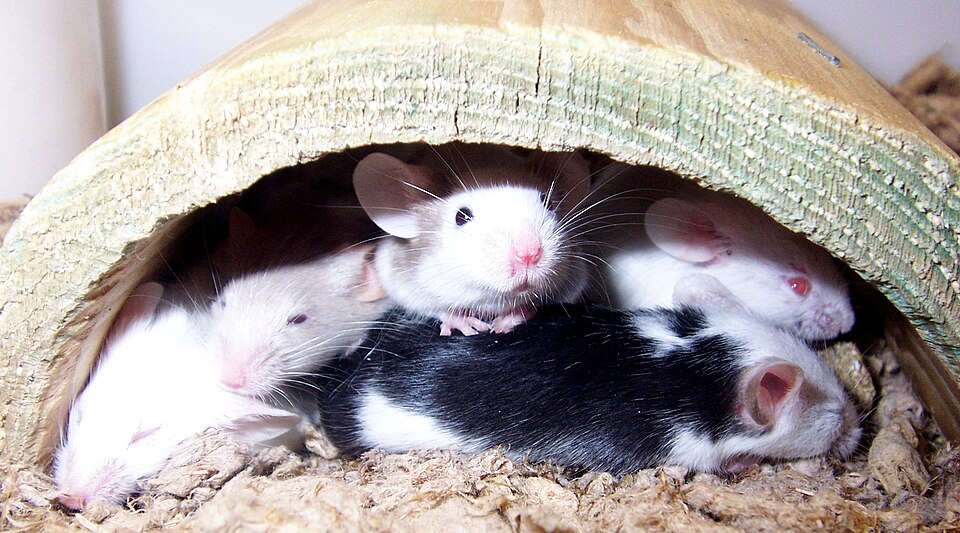
Mice are tiny but very busy animals. According to the PDSA, they're lively, intelligent creatures that love to explore, and they're fascinating to watch. According to Blue Cross, though, they're very small, quick and easily frightened, and most don't enjoy being handled. So a mouse is less a pet to carry around and more a friend you watch as they build their own little world. Their lives are short, too: on average one and a half to two and a half years according to Blue Cross, and one to three years according to the PDSA. To make the most of that short life, they need three things: their friends, a safe cage and plenty of material to build nests with.
- Never alone: According to the RSPCA, mice need to live with other mice; according to Blue Cross, a mouse kept alone can become very lonely and stressed.
- Females are the easiest group: Males only get along if they've been together since birth (PDSA, Blue Cross).
- The cage: According to Blue Cross, at least 80 × 50 cm (31 × 20 in) of floor space and 50 cm (20 in) of height for two mice; bar gaps no larger than 6 mm (1/4 in) (Blue Cross, PDSA).
- Bedding and nests: The RSPCA recommends at least 2 cm (3/4 in) of bedding and plenty of nesting material; no stringy materials like cotton wool.
- Never by the tip of the tail: The RSPCA recommends picking them up with cupped hands or a tunnel.
- Cool and quiet: According to the PDSA, the ideal temperature is 18–22 °C (64–72 °F).
Why at least two mice?
According to Blue Cross, mice love to groom and play with each other. Mice kept on their own can become very lonely and stressed, and in extreme cases they may even start to bite themselves. The RSPCA also advises never housing a mouse alone unless your vet specifically recommends it.
According to the RSPCA, mouse groups have a complex social organization that's easily upset; it's important to form the group correctly from the start.
| Group | What the sources recommend |
|---|---|
| Females | Usually get on very well in pairs or groups (PDSA, Blue Cross) |
| Brothers | May get on well if they've been together since birth; males from other family groups shouldn't be introduced (PDSA, Blue Cross) |
| A neutered male with females | A good option (PDSA, Blue Cross) |
| Mice with rats or other rodents | Never; there's a risk of attacks and disease (Blue Cross, RSPCA) |
- A ready-made group: The RSPCA recommends asking the breeder to group the mice before weaning, ideally siblings.
- Keep the group the same: According to the RSPCA, adding or removing even one mouse can cause intense, stressful conflict.
- Males shouldn't smell females: According to the RSPCA, this can increase aggression between male cage mates.
For a mouse left alone after their companion dies, the PDSA recommends adding a new friend: introduce them in a neutral space, at first without toys or food. Squeaking, sniffing and chasing are normal; but if blood is drawn, separate the mice immediately (PDSA).
The cage: escape-proof, airy and big
According to the RSPCA, mice can squeeze through very small spaces, so the cage must be escape-proof. According to the PDSA, most mouse cages sold in pet shops aren't nearly big enough.
| Feature | What the sources recommend |
|---|---|
| Size | At least 80 × 50 cm (31 × 20 in) of floor space and 50 cm (20 in) of height for two mice (Blue Cross) |
| Bar spacing | No more than 6 mm (1/4 in) (Blue Cross, PDSA) |
| Floor | Solid; wire floors can hurt their feet (PDSA) |
| Type | A wire cage with a plastic tray floor (Blue Cross); avoid glass or plastic cages (PDSA) |
| Levels | Different levels to climb and explore (PDSA) |
According to the RSPCA, mice are very sensitive to heat and can hear a very broad range of sounds. When choosing where to put the cage:
- Out of the sun: They need natural daylight, but not direct sunlight or bright lamps (RSPCA).
- Away from ultrasound: Alarms, doorbells, vacuum cleaners, speakers, TVs, computer screens and water running into metal containers such as the kitchen sink (RSPCA).
- No extremes: Not a conservatory, garage, bathroom or air-conditioned room; if summer gets very hot, move the cage to a cool spot (RSPCA).
- Airy but not drafty; away from other animals: According to the RSPCA, the presence and smell of other animals can stress mice.
Bedding and nesting material
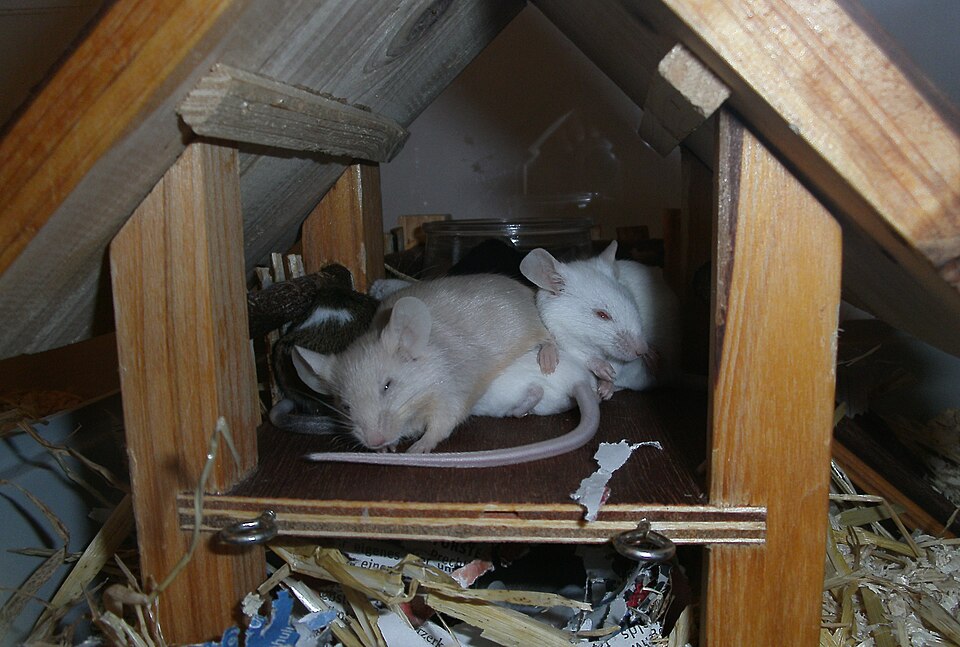
According to the RSPCA, mice are big nest builders and use nesting material to regulate their body temperature. That's why they need two different things: bedding on the floor to dig in and absorb urine, and nesting material to sleep in.
- Bedding: The RSPCA recommends at least 2 cm (3/4 in) so they can dig: non-aspen wood chips, cellulose-based chips or shredded filter paper. The PDSA and Blue Cross recommend paper-based, dust-free bedding.
- Nesting material: Hay, shredded paper and paper tissues (RSPCA, PDSA). The RSPCA recommends providing several different materials so they can choose.
- Hiding places: According to the RSPCA, shelters with more than one exit that are big enough for them to turn around in; cardboard tubes work as both a hiding place and a chew toy.
- Sawdust, wood shavings and aspen bedding: According to the RSPCA, they can cause health problems. According to Blue Cross, wood-based bedding may affect a mouse's delicate respiratory system.
- Scented or colored bedding (RSPCA, Blue Cross).
- Cotton wool and similar "fluffy" materials: According to the RSPCA, they separate into thin strands that can wrap around legs and cut off circulation, and they can cause harm if eaten.
A comparison for all rodents: how to choose rodent bedding
Enrichment: climbing, digging, scent-marking
- Climbing: Hanging ropes, fruit tree branches and ladders (RSPCA, PDSA, Blue Cross).
- Wheel: Solid and axle-free (RSPCA), big enough to run without bending their back, with no gaps where a tail could get caught (PDSA). But it shouldn't be the only enrichment (RSPCA).
- Digging: Blue Cross suggests supervised tunneling sessions in a cardboard box half filled with compost.
- Foraging: Scatter their daily food around the cage and hide some in a paper bag (Blue Cross, PDSA).
- Chewing: Untreated wood and cardboard (PDSA). According to the PDSA, wash branches from the garden well and bake them on a low heat for an hour first.
- Things to scent-mark: According to the RSPCA, mice use their urine to mark their territory and communicate. Give them objects they can use as toilet areas or to mark; they're also easy for you to clean.
Food and water
According to the PDSA, ready-made mouse food can be muesli-style or pellets; if your mouse leaves certain parts of the muesli, switch to pellets. Blue Cross considers a small amount of commercial mouse mix a good basis and recommends being careful not to let them become overweight. Keep treats tiny (PDSA) and avoid fatty and sugary treats (Blue Cross).
According to the RSPCA, grapes and rhubarb are poisonous to mice. If you're concerned that your mice have touched or eaten something harmful, the RSPCA recommends contacting your vet immediately.
Water should be fresh every day (PDSA). The RSPCA recommends checking morning and evening that the bottle nozzle hasn't gotten blocked or wedged open and flooded the cage; mice can push bedding into the nozzle. And it's normal for them to eat their own droppings: according to the PDSA and Blue Cross, it keeps their gut healthy.
Handling: with cupped hands or a tunnel, not by the tail
According to the RSPCA, mice find handling stressful; but regular handling is important for health checks. Let them get used to you gradually and investigate your hands in their own time.
- Let them sniff first: Put your hand in the cage so they can sniff and get used to you, then gently stroke them (Blue Cross).
- Open hands: According to the RSPCA, scoop your mouse up with one or both open hands and let them sit or walk on your hands without holding them down.
- If they try to jump: According to the RSPCA, close your hands loosely around them until their attempts to escape decrease (for a maximum of 30 seconds), then open them again. This usually isn't needed after the first session.
- Tunnel: Gently guide your mouse into a tunnel that's always in their cage and carries their scent, then let them crawl out onto your cupped hands (RSPCA).
- Keep it low: According to the RSPCA, never lift a mouse high above a surface; if they fall or jump, they can get hurt or break a leg. Blue Cross recommends holding them close to a table, your lap or their cage.
According to the RSPCA, scruffing a mouse or picking them up by the tip of the tail is very distressing for them and can injure them. According to the NC3Rs, the UK center working on the welfare of animals used in research, lifting mice by the tail increases anxiety and aversion to handling; mice picked up with a tunnel or cupped hands are less anxious and more willing to interact with people.
According to the PDSA, children should always be supervised when handling mice; Blue Cross says mice may not be ideal for young children who enjoy handling pets. See my child wants a hamster.
Cleaning
According to the RSPCA, mice need a clean, dry cage; but cleaning also stresses them, so strike a balance.
- Every day: Remove droppings and urine-soaked bedding (RSPCA, Blue Cross).
- Every one to two weeks: Give the cage a full clean (RSPCA, Blue Cross). The PDSA recommends a full clean at least once a week.
- Early evening: Because mice are active at night, the RSPCA recommends cleaning in the early evening to avoid disturbing their rest.
- Familiar smells: Put clean, dry, unsoiled nesting material back into the clean cage (RSPCA); Blue Cross recommends putting back about a third of the old bedding.
- If there's fighting: According to the RSPCA, if aggression is high in the group, change everything and wash the cage completely to remove scent marks.
According to the RSPCA, mice can go downhill very quickly when they're unwell and may only show subtle signs of pain until it's very severe. If you notice any change in your mouse's appearance or behavior, talk to your vet without delay.
According to the RSPCA, losing 20 percent of their body weight is life-threatening for a mouse; in a 30 g mouse, that's just 6 g. If you weigh your mice regularly and log it in Tüylüm's Weight tracking, you'll notice even small drops. For rodents, the Today tab comes with ready-made Food, Water and weekly Cage cleaning tasks.
More of our rodent articles: rodents. For a bigger relative: pet rat care.
Frequently asked questions
If I get one mouse and give them lots of attention, is that enough?
No. According to the RSPCA, mice find living on their own incredibly stressful; they shouldn't be kept alone unless your vet advises it.
Do mice like cheese? Should I give them some?
There's no need. According to Blue Cross, contrary to popular belief, mice don't need cheese or dairy. A small amount of commercial mouse food is enough as the basis of their diet.
Can I keep two male mice together?
Only if they're brothers who have been together since birth. According to the PDSA, males rarely accept new males into the group; according to the RSPCA, they can be aggressive toward mice they don't know. A group of females is easier (PDSA, Blue Cross).

Keep track of your pet's care in TüylümLog vet visits, vaccine and medication dates, and we'll remind you when it's time. Share it all with your family in Home.
Sources
- RSPCA · Creating a good home for mice
- RSPCA · Keeping mice together
- RSPCA · Mice health and welfare
- PDSA · Mice as pets
- Blue Cross · Pet mice care
- NC3Rs · Mouse handling: FAQs
By Tüylüm · Published and last checked: October 26, 2026. Spotted a mistake? Write to [email protected] and we'll fix it right away. Photos are from Wikimedia Commons, used under the license shown below each photo.