How to choose rodent bedding: safe materials, what to avoid, and a cleaning routine
The material you spread on the floor of the cage plays a much bigger role in a rodent's life than you might think. They use it as a toilet, dig tunnels in it, build their nest with it and spend most of the day in it. The wrong material, on the other hand, can irritate their airways, wrap around their legs or block their gut if swallowed. As the PDSA warns, not every product labeled "suitable for hamsters" is actually safe. In this article, we compare the RSPCA's and PDSA's advice material by material and species by species.
- Two separate jobs: Rodents need absorbent bedding on the floor that they can dig in, and nesting material to sleep in (RSPCA).
- The safest common choice: Dust-free, unscented, paper-based bedding (PDSA, RSPCA).
- Never: Cotton wool and other materials that separate into thin fibers (RSPCA, PDSA).
- Avoid: Sawdust and dusty wood shavings, scented or colored bedding, newspaper, cedar and pine (PDSA, RSPCA).
- Depth depends on the species: At least 25 cm (10 in) for hamsters (PDSA), 20–30 cm (8–12 in) for gerbils (RSPCA), at least 2 cm (3/4 in) for mice (RSPCA).
- When cleaning: Put back a little of the unsoiled old bedding; a familiar smell reduces stress (RSPCA, PDSA).
Bedding and nesting material: two different jobs
The RSPCA separates the two. Bedding covers the floor of the cage; it absorbs moisture from urine and droppings and lets the rodent dig. Nesting material is the soft material the rodent builds their bed with. According to the RSPCA, all rodents need nesting material to regulate their body temperature, and many are highly motivated to build nests even when kept in warm conditions.
The RSPCA recommends providing several different nesting materials so mice have a choice. The PDSA also suggests leaving nesting material outside the nest box rather than putting it inside, so your hamster can fill the box themselves. According to the RSPCA, highly absorbent materials shouldn't be used as nesting material for newborn or young animals.
Safe materials
| Material | What it's for | What the sources recommend |
|---|---|---|
| Paper-based bedding | Floor and digging | Can be used on its own or mixed for hamsters, and is also suitable for rats (PDSA). For mice, the RSPCA recommends cellulose-based chips and shredded filter paper |
| Soft, good-quality hay | Nesting; adds stability to tunnels | PDSA, RSPCA. For guinea pigs, dust-free hay that's safe to eat (RSPCA) |
| Unscented, thin toilet paper and paper tissues | Nesting | Choose cheap, thin paper; thick paper can cause gut blockages if eaten (PDSA). Paper tissues are suitable for mice (RSPCA) |
| Ink-free cardboard, egg cartons, toilet paper tubes | Nesting and chewing | Gerbils are highly motivated to shred them (RSPCA) |
| Washable fleece liner | The floor of a rat cage | An alternative to paper-based bedding (PDSA) |
| Organic soil | A natural digging area | Fertilizer- and chemical-free soil marked as safe for pets (PDSA, hamsters) |
According to the PDSA, hamster bedding needs to hold its structure, because hamsters use their burrows to sleep, hide and store food. That's why mixing soft hay into paper bedding, rather than using a single material, adds stability to their tunnels.
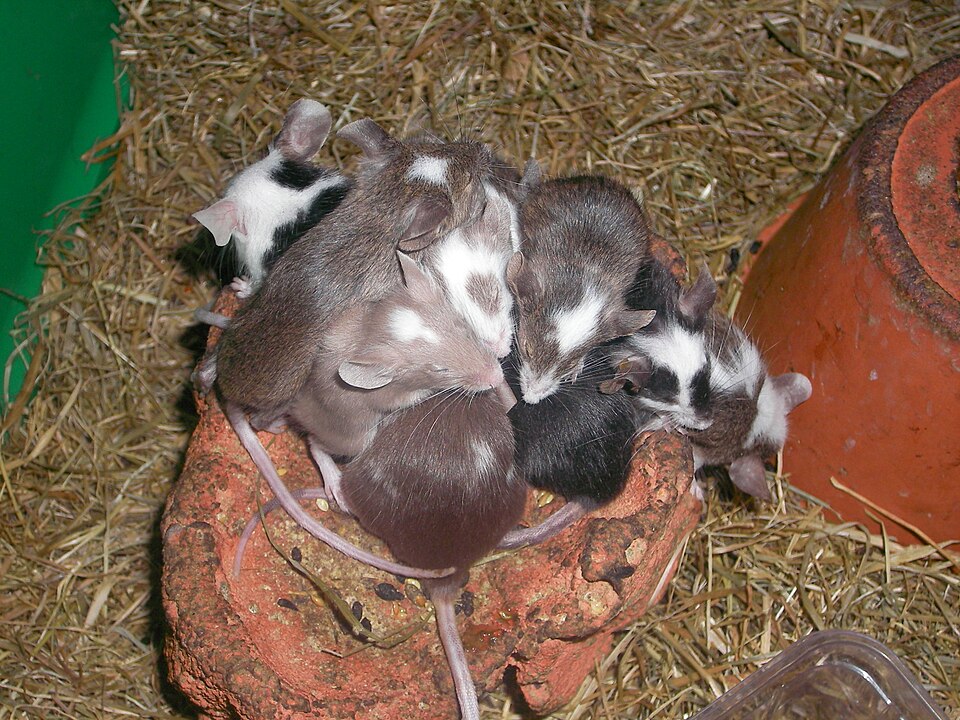
What to avoid
- Cotton wool, kapok, bamboo fluff and other "fluffy" nesting materials: According to the PDSA, even though they're often marketed as safe for hamsters, they can get wrapped around legs and cause life-threatening gut blockages if eaten. According to the RSPCA, these materials separate into thin strands that can wrap around limbs and cut off circulation.
- Sawdust and dusty wood shavings: They're very dusty and can cause breathing problems (PDSA, RSPCA).
- Scented or colored bedding: According to the PDSA, scented bedding can irritate the airways; the RSPCA advises against fragrant and colored bedding for mice.
- Newspaper: According to the PDSA, the ink can be toxic.
- Cedar and pine shavings: According to the PDSA, they can be toxic to rats; the RSPCA says softwood products such as pine can cause illness in guinea pigs.
- Garden soil: According to the RSPCA, it isn't recommended for gerbils, as it may contain harmful bacteria or parasites.
- Coarse straw, for guinea pigs: According to the RSPCA, coarse materials like straw can cause eye injuries in guinea pigs.
Wood shavings and aspen: the sources disagree
The sources disagree about wood-based bedding:
- Hamsters: The PDSA considers aspen, spruce and hemp bedding suitable because they're dust-free, but because they don't support burrows well, it recommends mixing in paper bedding. The RSPCA sees dust-free wood shavings or granulated corncob, free of preservatives or other chemicals, as "a good compromise."
- Guinea pigs: According to the RSPCA, the best floor material is dry, dust-free, absorbent wood shavings, with hay added so they can tunnel and hide.
- Mice: The RSPCA recommends using neither wood shavings nor aspen bedding; it recommends non-aspen wood chips, cellulose-based chips or shredded filter paper.
- Gerbils: The RSPCA recommends a mix of rough-grained wood chips and hay; it gives their burrows structure and gives them something to gnaw.
If you're unsure, choose dust-free, unscented paper-based bedding, which all of these sources consider safe. If you use a wood-based product, check the advice for your species.
How deep should it be?
| Species | Bedding | Source |
|---|---|---|
| Hamster | At least 25 cm (10 in); deep enough to dig and build tunnels | PDSA |
| Gerbil | 20–30 cm (8–12 in); the enclosure should be about 50 cm (20 in) high so the gerbil can still stand fully upright after digging | RSPCA |
| Mouse | At least 2 cm (3/4 in) so they can dig | RSPCA |
| Rat | Paper-based bedding or a washable fleece liner; the floor should be solid, not wire or bars | PDSA |
| Guinea pig | A good depth of litter on a solid floor, plus hay to tunnel and hide in; no grid floors | RSPCA |
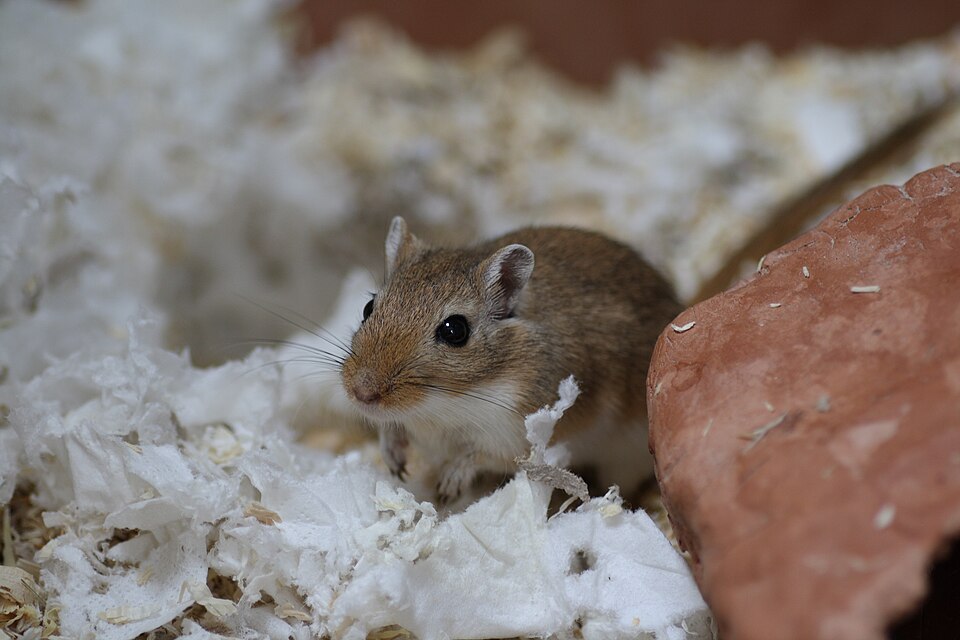
For full care details by species: hamster cage, gerbil care, pet mouse care, pet rat care, guinea pig care and degu care.
A cleaning routine
| Species | Regularly | Full clean |
|---|---|---|
| Hamster | Soiled bedding, uneaten food and droppings every few days (RSPCA) | Once or twice a month in most cases (RSPCA); once a week for small cages, every few weeks for large setups (PDSA) |
| Gerbil | Droppings and uneaten food every few days (RSPCA) | Every two to three weeks (RSPCA) |
| Mouse | Droppings and urine-soaked bedding every day (RSPCA) | Every one to two weeks on average (RSPCA) |
| Rat | Dirty bedding every day (PDSA) | Once a week (PDSA) |
| Guinea pig | Every day (RSPCA) | At least once a week (RSPCA) |
How often you need to clean also depends on the size of the cage and how many animals you have (RSPCA). When you clean:
- While they're awake: According to the RSPCA, clean a hamster's cage when they're awake, not in the middle of the day when they're sleeping. For mice, the RSPCA recommends the early evening.
- Take the animals out: The RSPCA recommends removing gerbils from their enclosure for the duration of cleaning.
- Don't let damp and smells build up: According to the RSPCA, the bedding shouldn't be allowed to become damp or smelly.
- A safe cleaner: The PDSA recommends using a pet-safe cleaner, then rinsing and drying everything thoroughly.
- Familiar smells: Put back some of the dry, unsoiled old bedding and nesting material (RSPCA, PDSA). According to the RSPCA, removing all odors may trigger fighting between gerbils.
- Everything back in its place: According to the PDSA, hamsters are creatures of habit; put nests, toys and bowls back in their original positions.
- One exception: According to the RSPCA, if aggression is high in a group of mice, change everything, including the nesting material, and wash the cage thoroughly to remove scent marks. Don't move smells or objects between different cages.
You can track when the bedding and hay will run out with Tüylüm's Food & litter supplies; it reminds you before they run out. For rodents, the Today tab comes with a ready-made weekly Cage cleaning task, and you can also add the Refresh hay / bedding task from the suggestions. Everyone in your Home sees the same list.
More of our rodent articles: rodents.
Frequently asked questions
Can I use a soft, cotton-like nesting material if the package says "suitable for hamsters"?
No. According to the PDSA, these materials are often marketed as safe, but they can wrap around legs and cause life-threatening gut blockages if eaten. Use unscented paper tissues, shredded paper or soft hay instead.
Can I use wood shavings?
Not sawdust or dusty shavings (PDSA, RSPCA). The sources disagree about dust-free wood products: the RSPCA advises against wood shavings and aspen for mice but considers dust-free shavings suitable for guinea pigs. If you're unsure, choose paper-based bedding.
How often should I fully clean the cage?
It depends on the species and the size of the cage. According to the RSPCA, every one to two weeks on average for mice, every two to three weeks for gerbils, and once or twice a month is enough in most cases for hamsters. In between, remove soiled bedding regularly.

Keep track of your pet's care in TüylümLog vet visits, vaccine and medication dates, and we'll remind you when it's time. Share it all with your family in Home.
Sources
- RSPCA · Creating a good home for mice
- RSPCA · Creating the right home for your hamster
- RSPCA · Creating a good home for gerbils
- RSPCA · Making the right home for your guinea pigs
- PDSA · Hamsters as pets
- PDSA · Rats as pets
By Tüylüm · Published and last checked: October 26, 2026. Spotted a mistake? Write to [email protected] and we'll fix it right away. Photos are from Wikimedia Commons, used under the license shown below each photo.