Dog body language: does a wagging tail always mean a happy dog?
When we see a dog wagging its tail at the door, most of us immediately think "how happy it is." But according to Dogs Trust, a wagging tail doesn't always mean happiness. Dogs don't talk with words; they talk with their whole body: ears, eyes, mouth, posture and tail form a sentence together. In this article, based on guidance from Dogs Trust, PDSA, the RSPCA and the ASPCA, we explain how to read your dog's small signals and what to do the moment your dog says "enough."
- Don't look at the tail alone: According to Dogs Trust, a tail wagging quickly at its normal height probably means happiness; a tail wagging quickly and low may signal conflicted feelings or anxiety.
- Read the whole body: Ears, eyes, mouth, posture and the situation are read together. Looking at just one part is misleading.
- Small signals: Yawning when not tired, licking the lips when there's no food around, turning the head away and showing the whites of the eyes can be early signs of unease.
- Freezing is serious: On PDSA's "ladder of communication," going stiff and staring is the step right before growling.
- Don't punish growling: According to PDSA, a dog that's punished may learn to skip the warning and go straight to biting.
- What to do: Give your dog space, move it away from what's bothering it, and don't block a dog that wants to walk away.
What is the tail saying?
According to Dogs Trust, the tail communicates different feelings, and not all of them are positive:
- A tail wagging quickly at the dog's own normal height probably means happiness.
- A tail wagging low and fast can be a sign of conflicted feelings or anxiety.
- A raised, stiff tail that moves slowly can show that the dog is on high alert.
- A tail spinning in a circle like a helicopter rotor is a sign of a happy dog.
- A tail tucked between the legs shows anxiety.
PDSA gives the same warning: a tense dog can still wag its tail, but it usually does so together with a rigid stance, flattened ears or a hard stare. According to the ASPCA, a loose, wide wag from side to side, seen with a relaxed body, indicates a relaxed and happy dog. In short, the tail is just one word in the sentence.
Every dog's "normal" tail height is different, too. Dogs Trust points out that tightly curled tails make it harder to show feelings, and that tail docking or ear cropping can limit a dog's ability to communicate. Dark, long fur hides small movements, and ear movements are hard to see on floppy ears. That's why you should first get to know your dog well when it's relaxed; spotting changes becomes much easier after that.
Head to tail: look at the whole body
Dogs Trust's most important advice is this: look at your dog as a whole, from head to tail. The same behavior can mean different things in different situations, and a small shift in body language can completely change what's being said. The table below is based on descriptions from Dogs Trust and the RSPCA:
| Body | Relaxed dog | Uneasy or anxious dog |
|---|---|---|
| Ears | In their natural position | Pulled back, close to the head |
| Eyes | Soft and round; no whites showing | Whites of the eyes visible; pupils may be dilated |
| Face and mouth | Loose; mouth relaxed and open | Tense facial muscles, furrowed brow |
| Posture | Loose body; weight spread over all four paws | Low posture; head lowered or turned away |
| Tail | At its own natural height | Low or tucked between the legs |
The whites of the eyes
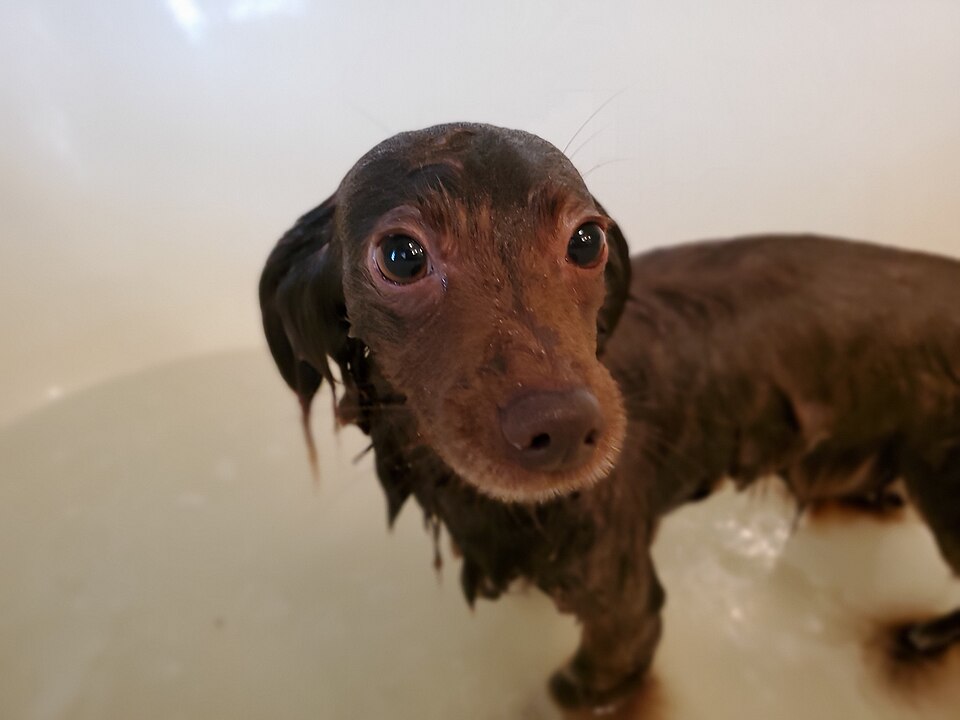
When a dog turns its head one way and looks another way with its eyes, the white edge of the eye shows up like a half-moon. According to the ASPCA, this is sometimes called "whale eye," and it's a sign of tension. Dogs Trust also counts visible whites of the eyes, sometimes with dilated pupils, as a sign of stress or anxiety. According to PDSA, it's a clear sign that the dog is uncomfortable.
Whispers: yawning, lip licking, shaking off
Dogs Trust has a nice way of putting it: dogs whisper their worries first. If those whispers go unnoticed, they may feel they have to "shout," meaning growl, snap or bite. Some of the small signals are:
- Yawning when not tired. According to PDSA, a yawn can mean tiredness, but it's more often a way to release tension in the jaw.
- Licking the lips when there's no food around, or flicking the tongue out for a moment. Dogs Trust usually sees this together with ears pulled back and a body leaning away.
- Turning the head away or avoiding eye contact. According to Dogs Trust, some dogs find direct eye contact intimidating and turn their head away from whatever is worrying them.
- Blinking or narrowing the eyes.
- Shaking off. A full-body shake when the dog isn't wet. According to Dogs Trust, this is how a dog shakes the tension out of its body after a challenging moment.
The ASPCA also says yawning and lip licking can be early signs of stress, especially when seen with a tight mouth and an averted gaze. Dogs Trust's list also includes drinking when not thirsty, suddenly sniffing the ground, sudden self-grooming, intense scratching and stretching for no reason.
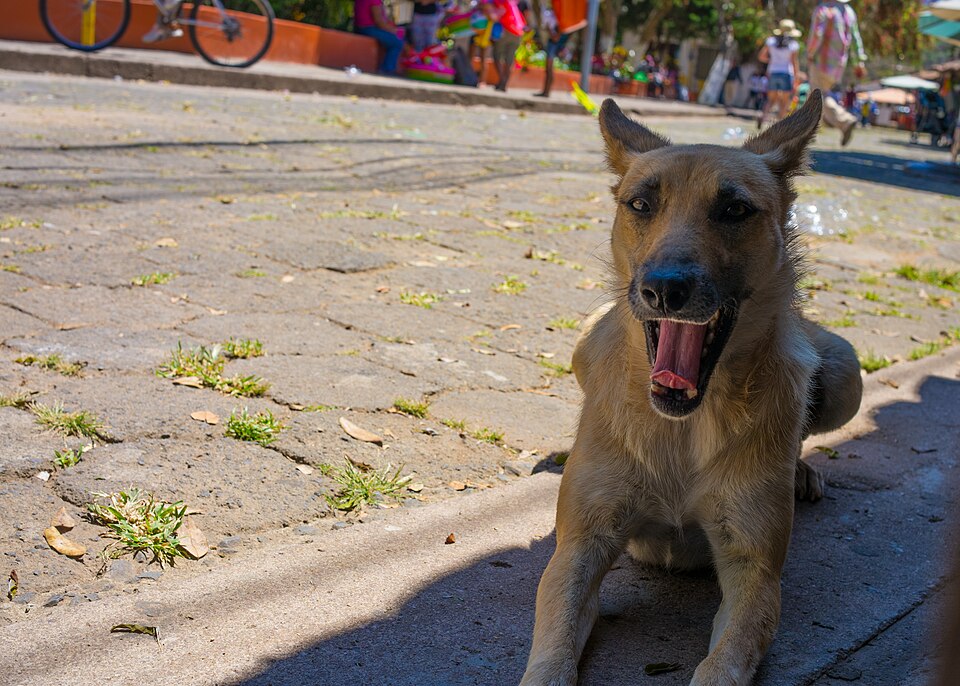
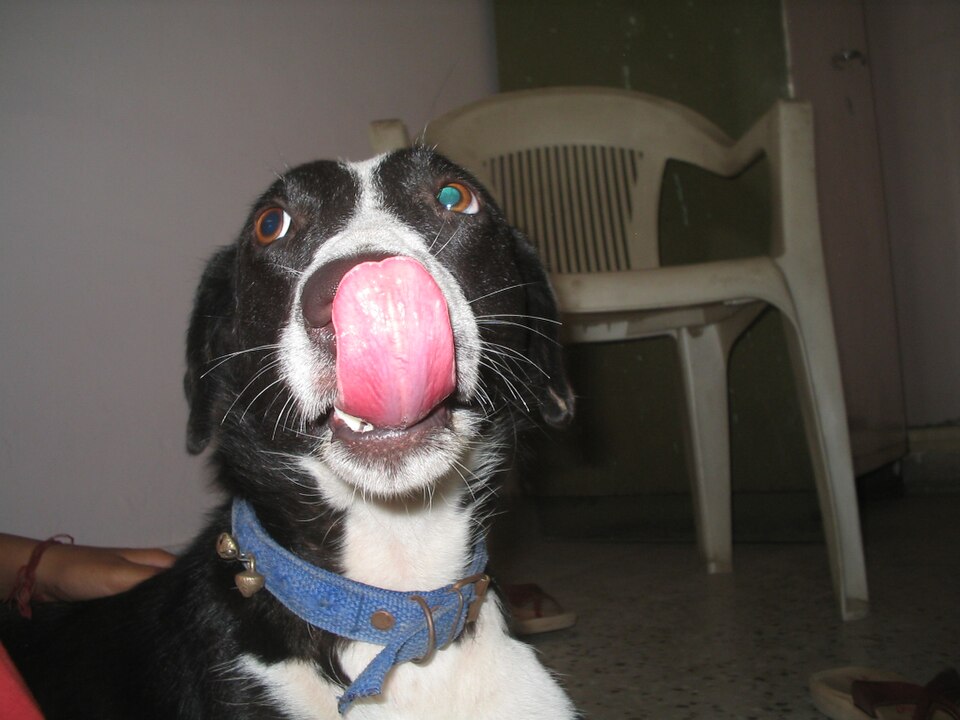
According to Dogs Trust, some of these behaviors can also be signs of pain or a health problem; pain can change a dog's posture and body language. If your dog's usual behavior suddenly changes, talk to your vet without delay.
From whisper to bite: the ladder of communication
PDSA uses a "ladder of communication" to explain how dogs express discomfort step by step. The bottom rungs are quiet and small; the signals get bigger as you go up:
- Yawning, blinking, licking the nose
- Turning the head or eyes away
- Turning the body away, sitting, lifting a paw
- Walking away
- Creeping low and slowly, ears back
- Standing crouched, tail tucked
- Lying down and showing the belly
- Stiffening up, staring
- Growling
- Snapping
- Biting
According to PDSA, dogs usually start from the bottom rungs. But Dogs Trust also points out that not every dog follows this order step by step. A dog that has learned defensive behavior works better may skip the small signals entirely and jump to the higher rungs. A dog like this needs expert support.
Pay attention to the "lying down and showing the belly" rung. According to Dogs Trust, a dog that lies tensely on its back with its tail tucked and ears pinned back isn't asking for a belly rub; it may be saying "don't touch me." A relaxed dog rolls over in a loose, floppy way.
According to PDSA, you should never punish a dog for growling. A growl is the dog's loud warning that says "I'm uncomfortable." A dog that's punished for it may learn to skip that warning and go straight to snapping or biting.
The relaxed dog and the play bow
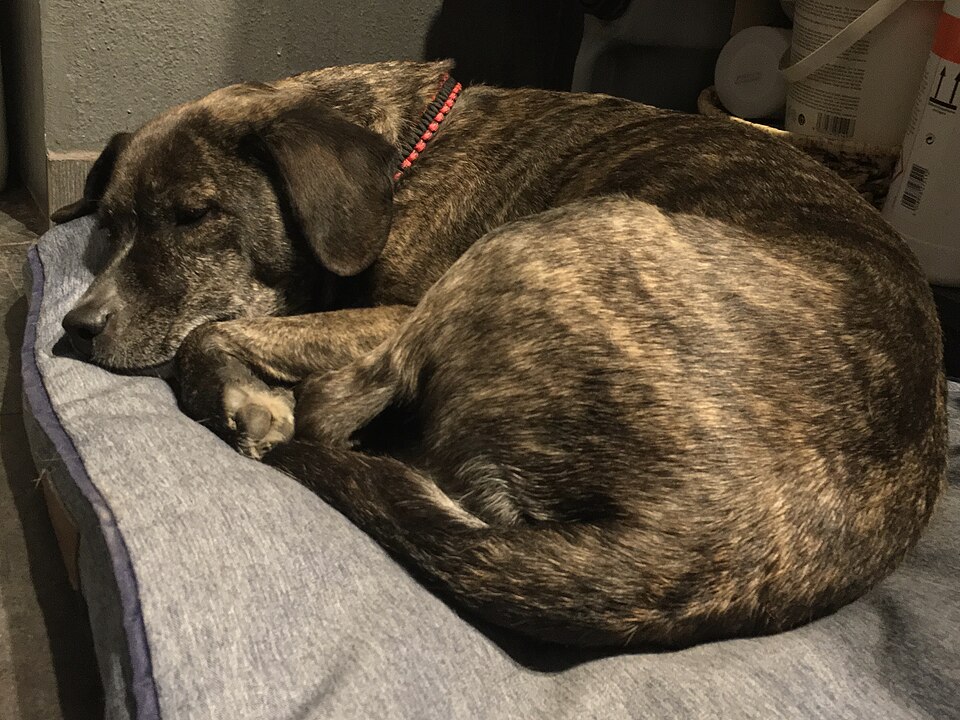
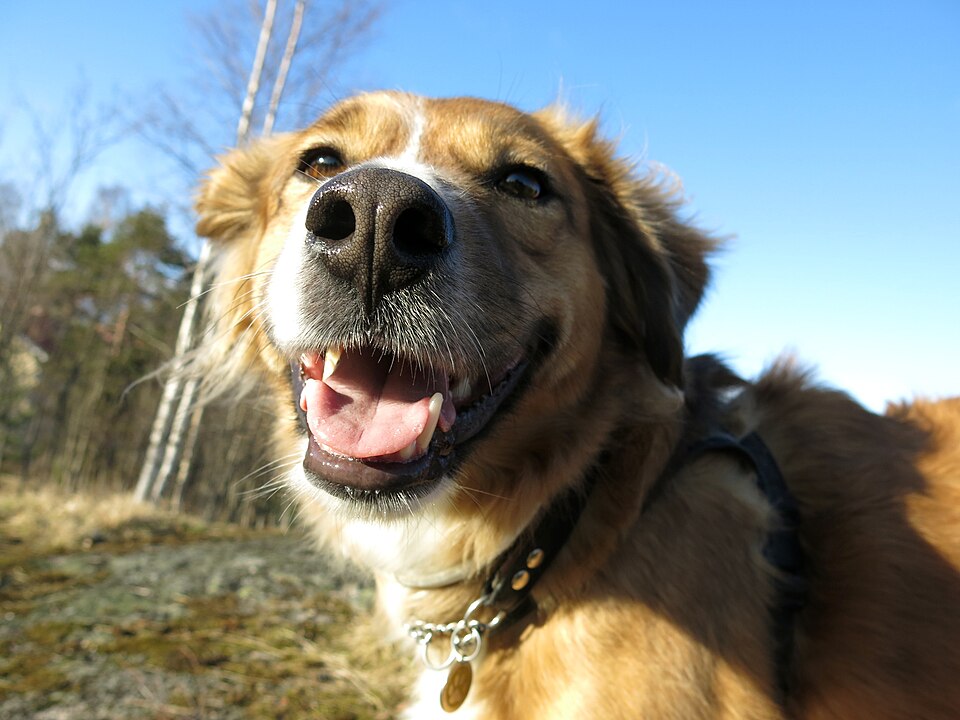
Of course, not every signal is a warning. According to Dogs Trust, a relaxed dog has a loose body and face, with its ears and tail in their natural position. It may lie down loosely or rest its head on its paws.
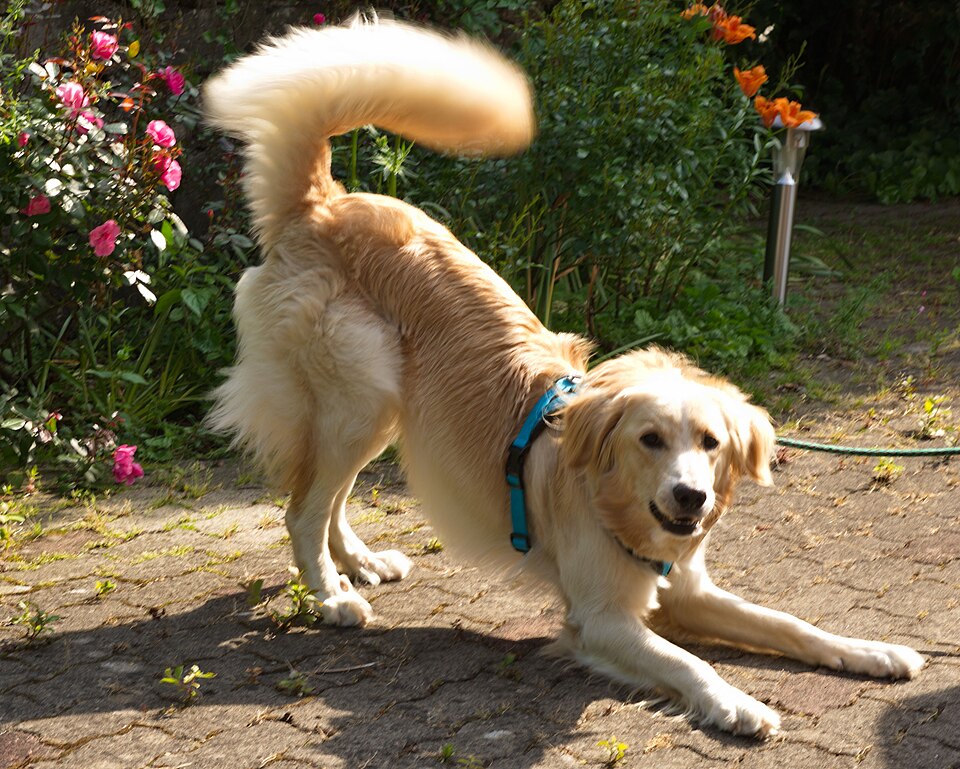
The best-known sign of a dog that wants to play is the play bow: it lowers its front legs to the ground and keeps its rear end up. According to Dogs Trust, this posture signals friendly intent, invites play and eases tension. In fair play between dogs, bodies are loose and wiggly, roles take turns, and there are frequent short breaks. If one dog is struggling to respond or the chase has become one-sided, call your dog back to you.
What to do when your dog says "enough"
Here's a short summary of advice from Dogs Trust and PDSA:
- Stop and find the cause: Stop what you're doing and look at what's bothering your dog.
- Calmly create distance: Move your dog away from what's bothering it. If needed, use a barrier such as a closed door.
- Don't block the escape route: According to PDSA, blocking a dog that wants to walk away can push it up to the next rung.
- Warn others: Ask people not to approach or pet your dog.
- Step in early: Act before the dog has to escalate its signals.
- Take a break: A chance to sniff, or something safe and long-lasting to chew, helps it calm down. If it's overwhelmed on a walk, head home.
- Watch and keep notes: Dogs Trust suggests filming your dog and keeping a diary to see which situations make it tense.
The RSPCA also advises that if you're worried about your dog's behavior, you should talk to your vet first; your vet can refer you to a clinical animal behaviorist if needed. For dogs that are afraid of loud noises, see our fireworks fear article; for dogs that get stressed when left alone, see our separation anxiety article.
If you're leaving your dog with someone for a while, you can write down what makes it tense and which signals mean it's time to give it space in Tüylüm's Pet sitter note. That way your sitter can recognize your dog's whispers, too.
Frequently asked questions
My dog is wagging its tail. Does that mean it's happy?
Not always. According to Dogs Trust, a tail wagging quickly at its normal height usually means happiness; but a tail wagging quickly and low can mean anxiety, and a raised tail wagging stiffly and slowly can mean the dog is on high alert. Look at the ears, eyes and posture, too.
My dog just yawned. Is it tired or tense?
It could be either. According to PDSA, a yawn can mean tiredness, but it's often a way to release tension. If it yawns when it isn't tired, together with other signals like turning its head away or licking its lips, give it a little space.
My dog is growling. What should I do?
Don't punish it. According to PDSA, growling is a warning, and a dog that's punished for it may learn to bite without warning. Calmly create distance, remove whatever is bothering your dog, and if this happens often, talk to your vet first.

Keep track of your pet's care in TüylümLog vet visits, vaccine and medication dates, and we'll remind you when it's time. Share it all with your family in Home.
Sources
- Dogs Trust · How to understand your dog's body language
- PDSA · Canine ladder of communication
- PDSA · Tail meaning: what your pet's tail is trying to tell you
- RSPCA · Understanding your dog's body language
- ASPCApro · Canine body language tips
By Tüylüm · Published and last checked: October 26, 2026. Spotted a mistake? Write to [email protected] and we'll fix it right away. Photos are from Wikimedia Commons, used under the license shown below each photo.