Dog grooming at home: how often to brush, when to bathe, and how to make nail and paw care a habit
Some dogs come running when they see the brush; others hide under the table. The difference is often not the dog itself but how grooming was taught to it. Regular grooming removes dead hair, prevents matting and gives you a chance to get to know your dog's body up close. In this article, based on advice from PDSA, Dogs Trust and the RSPCA, we explain how to turn brushing, bathing, nail care and paw care into an enjoyable habit.
- Brushing depends on the coat: According to PDSA, long-haired dogs are brushed daily, short-haired dogs once a week.
- No frequent baths: According to PDSA, shampoo strips the natural oils from the coat; after a muddy walk, a rinse with warm water is often enough.
- No human products: Use dog shampoo, dog nail clippers and dog toothpaste.
- Check the nails every two weeks: According to Dogs Trust, not every dog needs its nails clipped; but regular checks are a must.
- Paws after the walk: The RSPCA recommends wiping the paws and tummy after every walk in winter.
- Get your dog used to it first: Short but frequent sessions, a reward after every touch, and a break as soon as your dog seems uneasy.
Start with handling: teaching your dog to enjoy being touched
Brushing, nail clipping and paw checks all start with a dog that's comfortable being touched. Dogs Trust suggests a step-by-step approach:
- Practice somewhere quiet at home, when you and your dog are both relaxed. Keep sessions short but frequent.
- Start by stroking a spot your dog already enjoys; this is different for every dog.
- Then briefly touch other parts of its body. Use a cue like "let me see" so it knows what's coming.
- Give a reward right after each touch, take your hand away and repeat.
- Gradually increase how long you touch each area. Check the body in the same order every time so your dog knows what to expect.
- Introduce the brush the same way: touch it briefly to the body, take it away, give a reward.
According to Dogs Trust, a relaxed dog stays with you and shows no tension in its face or body. If you notice signs of unease, stop and go back to the last step where your dog was relaxed. PDSA also recommends going slowly, stopping if your dog seems worried, and using treats and praise during and after grooming. Starting young is best; but according to PDSA, adult dogs can learn to enjoy grooming too. A stuffed toy or a lick mat can help keep your dog calm.
According to Dogs Trust, if your dog has an established fear of being handled, is behaving aggressively or may be in pain somewhere, talk to your vet first.
Brushing: how often for each coat type?
Here's PDSA's advice by coat type:
| Coat type | Example breeds | Brushing | Trimming or undercoat stripping |
|---|---|---|---|
| Long-haired | Bearded collie, Lhasa apso, long-haired Yorkshire terrier | Daily | About 4–6 times a year (many owners leave this to a professional) |
| Medium-haired | Spitz breeds, some spaniels, German shepherd | A few times a week | A couple of times a year, depending on the breed |
| Short-haired | Staffie, Labrador, English bull terrier | Once a week | Regular haircuts usually aren't needed; some breeds need their undercoat stripped |
| Poodle crosses | Cockapoo, Labradoodle | A few times a week | Curly coats tangle easily, especially when wet; some owners have them clipped short |
According to PDSA, dogs shed more in spring and fall; you may need to brush more often at those times. Dogs Trust also recommends choosing a brush that suits your dog's coat and starting with a very soft one.
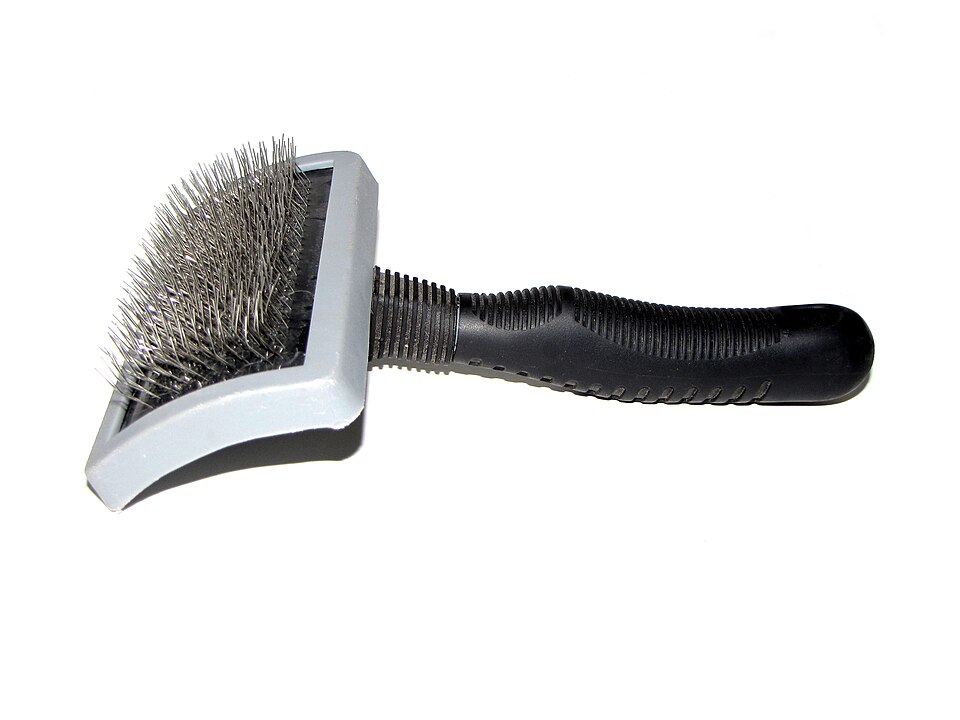
According to PDSA, you shouldn't try to tackle matted fur at home. Research your breed's grooming needs and go to a reputable, good dog groomer.
Bathing: less often than you might think
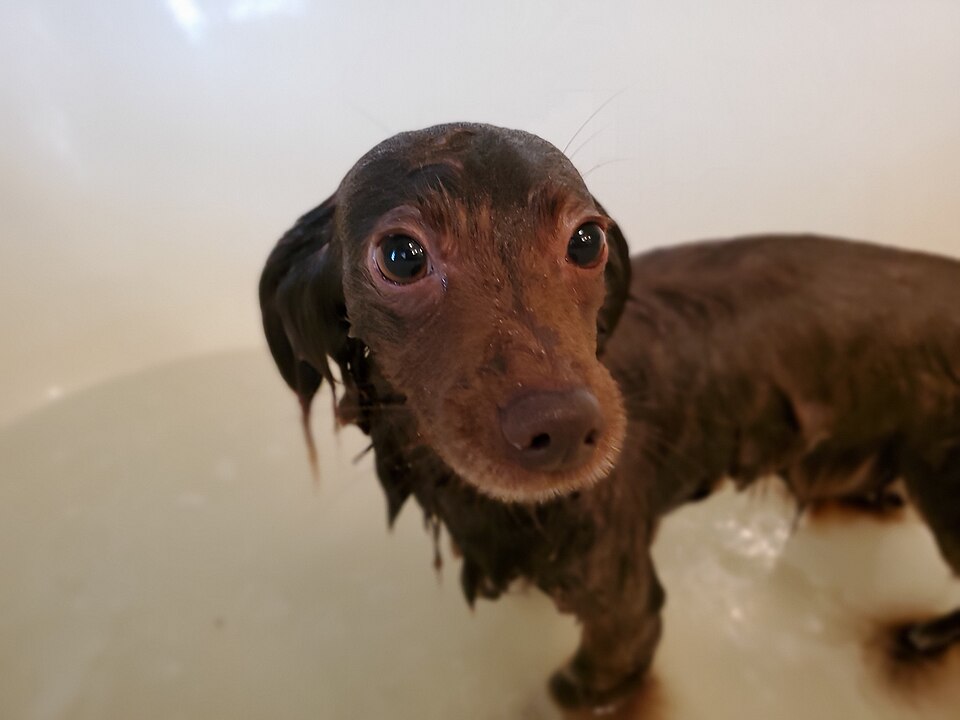
Washing your dog often may seem like good hygiene, but according to PDSA, dogs don't need bathing very often; shampoo can strip the natural oils from their coat. After a muddy walk, a rinse with warm water is often enough.
- Use dog shampoo. According to PDSA, human shampoos can irritate a dog's skin.
- Dry thoroughly. According to the RSPCA, damp fur can make a dog feel cold and lead to skin irritation, matting and infections; dry your dog fully with a towel or a hair dryer before it goes to sleep.
- Ask first if there's a skin problem. PDSA recommends talking to your vet before bathing if your dog has a skin condition.
Nails: not every dog needs clipping
According to Dogs Trust, not every dog needs its nails clipped. It depends on the dog's weight, breed, how much exercise it gets and the ground it walks on. Regular walks on pavement can keep nails short on their own. And hearing nails click on the floor doesn't always mean they're too long.
According to Dogs Trust, check the nails about every two weeks. If the tip of a nail has become a thin point and is curving slightly, or if nails snag on fabric, it may be time for a trim. Nails that are worn flat and touch the ground probably don't need trimming. Keep checking as your dog gets older and walks less.
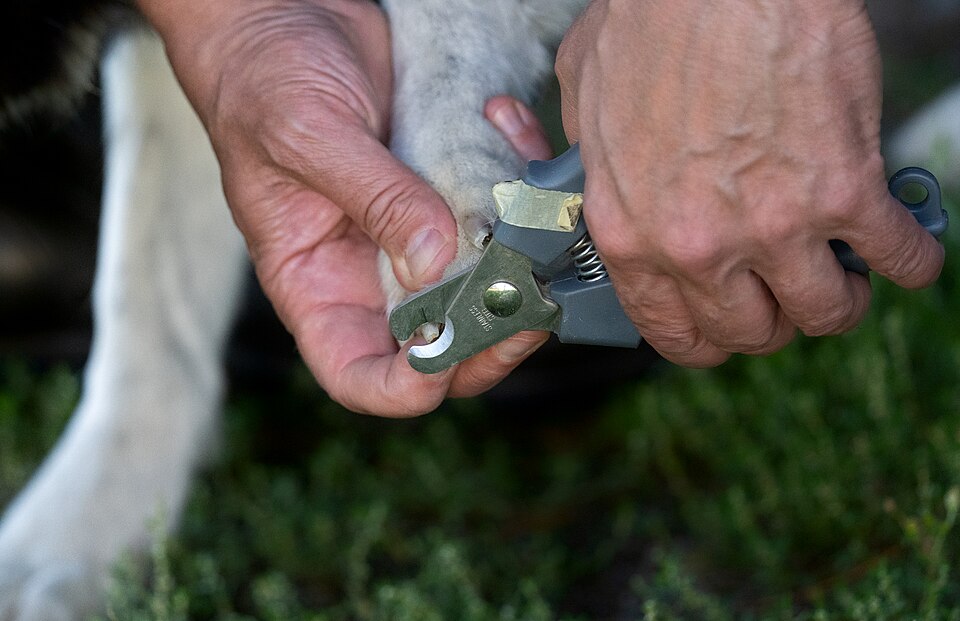
- The right tool: According to PDSA, use nail clippers made for pets, not human ones. Dogs Trust recommends clippers with a safety guard; a grinder is another option, but it's slower and louder.
- Introduce the clippers first: According to Dogs Trust, spread the steps over a couple of weeks or longer, practicing each one for a few days: let your dog sniff the clippers, then touch its nails, then introduce the sound of the clippers by cutting dry pasta. The first time, trim just the tip of a single nail.
- A non-slip surface: Put a towel or a non-slip mat underneath.
- Mind the quick: The pink part inside the nail contains blood vessels and nerves. According to Dogs Trust, never cut near it, and leave a gap.
- Dark nails: Since you can't see inside, trim only the sharp tip. Shining a light through the nail may help; if you're not sure, ask your vet.
- Hairy paws: If fur is hiding the nails, trim it first.
- Very long nails: Trim only a little each time, wait about a week and repeat over several weeks.
- Don't forget the dewclaw: This nail on the inside of the leg doesn't touch the ground, so it doesn't wear down; check it regularly.
According to Dogs Trust, if the nails splay out, push up the nail beds, distort the toes or have grown long enough to dig into the paw pad, talk to your vet without delay. Have it checked too if your dog keeps licking or nibbling at a nail.
Paws: a quick check after walks
Paws carry dirt, stones and sand every day, and snow and salt in winter. The RSPCA recommends wiping the paws and tummy after every walk in winter, because grit, rock salt and antifreeze on the roads are poisonous to dogs, and wiping removes them from the fur.
- Wipe and dry: When you get back from a walk, wipe the paws and tummy, then dry them thoroughly.
- Look for cracks: According to the RSPCA, keep an eye out for cracks on the paw pads; you can apply a non-toxic paw balm against dryness.
- Keep the fur short: The RSPCA recommends trimming the fur around the paws so that painful ice balls don't form between the hairs in winter.
- Check for ticks: PDSA recommends checking your dog's skin for ticks, especially after time outdoors.
Turn the check into a game: one treat for each paw. That way your dog learns to offer you its paw, and the day something gets stuck in it, looking at it will be much easier. To protect paws from hot pavement in warm weather, also see our hot weather article.
According to the RSPCA, if your dog keeps licking or chewing its paws, is limping, is holding up a paw or doesn't want to walk on rough ground, there may be a problem. In these cases, talk to your vet without delay.
Ears and teeth
PDSA recommends checking regularly that the ears look clean and healthy. If you notice wax or hair build-up, a smell or itchiness, call your vet before trying to clean them yourself. For teeth, PDSA's advice is ideally to brush daily with a dog toothbrush and dog toothpaste. Never use human toothpaste: according to PDSA, it can contain xylitol, which is toxic to dogs. You can find where else xylitol shows up in our foods that are dangerous for dogs article.
Among the suggested tasks for dogs on Tüylüm's Today tab are Brushing, Paw cleaning, Nail trim and Tooth brushing. You can add a task and choose how often it repeats to suit your dog; since everyone in your Home sees the same list, there's no confusion about who did this week's brushing.
Frequently asked questions
How often should I bathe my dog?
PDSA doesn't give a set frequency; but it says dogs don't need bathing very often, because shampoo can strip the natural oils from the coat. When your dog gets muddy, a rinse with warm water is often enough. If you do bathe it, use dog shampoo and dry it thoroughly.
I can hear my dog's nails on the floor. Should I clip them?
Not always. According to Dogs Trust, clicking doesn't always mean the nails are too long. If the tip of a nail has become pointed and curved, or nails snag on fabric, a trim may be needed; if you're not sure, ask your vet.
My dog hates being brushed. What can I do?
Start over, very slowly. According to Dogs Trust, touch the brush briefly to its body, take it away and give a reward right away; keep sessions short, and if your dog seems uneasy, go back to the last step where it was relaxed. If there's an established fear, talk to your vet first.

Keep track of your pet's care in TüylümLog vet visits, vaccine and medication dates, and we'll remind you when it's time. Share it all with your family in Home.
Sources
- PDSA · How often should you groom your pet?
- Dogs Trust · How to clip your dog's nails
- Dogs Trust · How to handle your dog
- RSPCA · Winter and cold weather care for dogs
By Tüylüm · Published and last checked: October 26, 2026. Spotted a mistake? Write to [email protected] and we'll fix it right away. Photos are from Wikimedia Commons, used under the license shown below each photo.