Ferret sleep and play: the weasel war dance, dooking and play biting
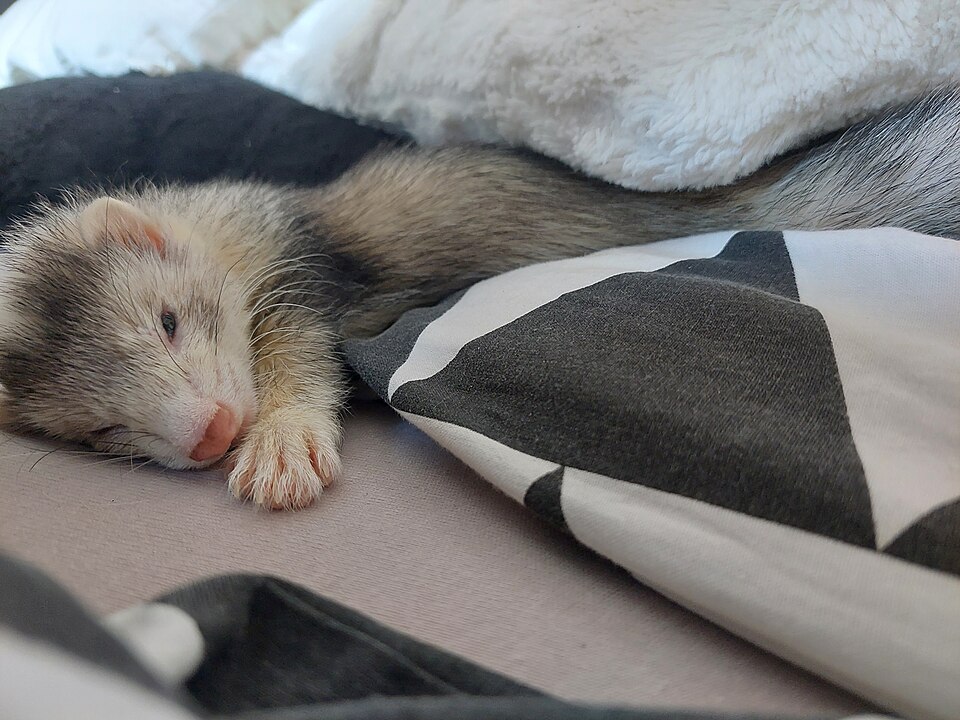
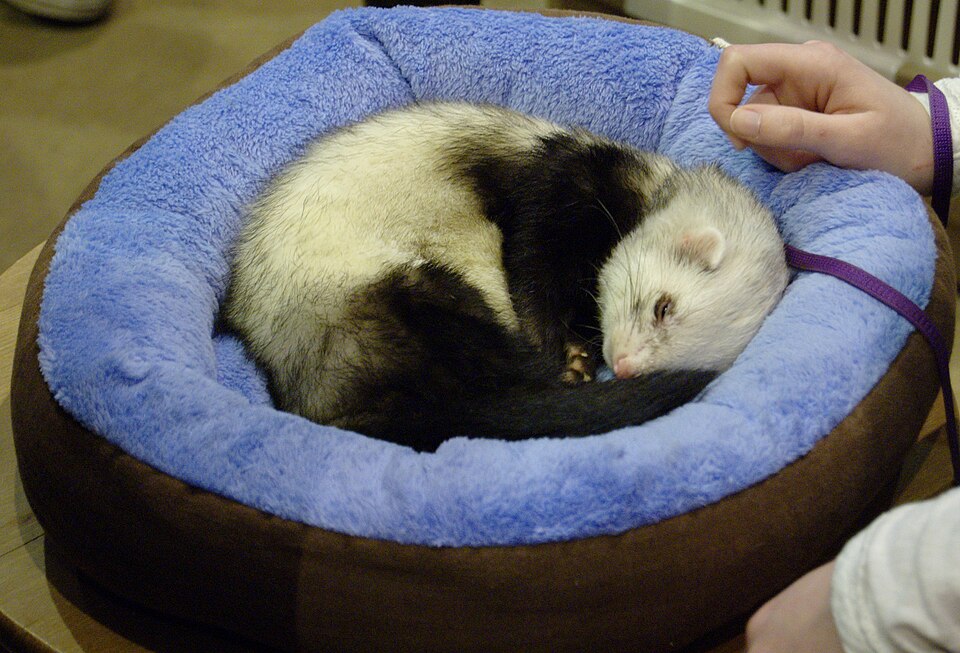
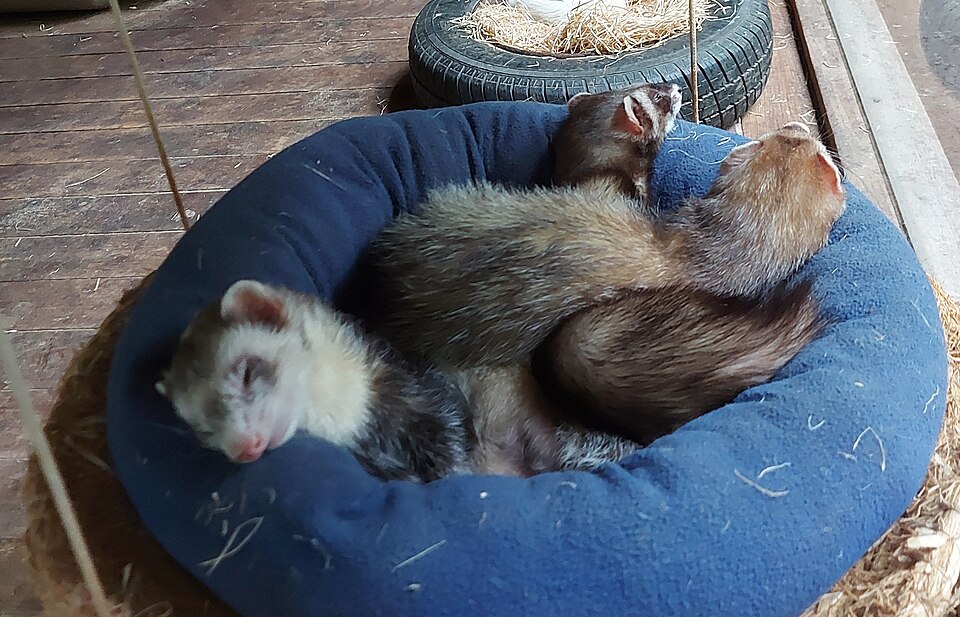
Most new ferret owners go through the same scare: the ferret is sleeping so deeply in its hammock that it doesn't wake up when you call it, or even when you touch it. According to the Merck Veterinary Manual, this is very common; young ferrets in particular sleep so deeply that their owners may think the animal has died or is in a coma. Then the ferret wakes up, shivers a little, and suddenly starts hopping sideways around the house, chuckling and pouncing on everything. In this article, we've gathered the language of ferret sleep and play.
- Lots of sleep is normal: According to the RSPCA, a healthy ferret can sleep 18–20 hours a day.
- Deep sleep: According to Merck, young ferrets are hard to wake; trembling as they wake up is also normal.
- War dance: An excited, playful ferret hops sideways like crazy; this is known as the "weasel war dance."
- "Dook dook": According to the RSPCA, the chuckle-like sound an excited ferret makes.
- Biting: A natural part of play; don't play rough with your hands, and stop the game for a short while when it bites.
Is this much sleep normal?
Yes. According to the RSPCA, a healthy ferret can sleep 18 to 20 hours a day. According to another RSPCA guide, ferrets are very active for short periods, then fall into a deep sleep for several hours. RSPCA Australia also considers 12–16 hours a day, and sometimes 20 hours, normal. Pet ferrets are more active during the day than their wild relatives.
According to Merck, young ferrets in particular sleep deeply and are hard to wake. A healthy ferret in deep sleep looks like this:
- The inside of its mouth is moist and pink,
- Its body is warm,
- Its breathing is slow but regular.
According to Merck, trembling and shaking as it wakes up is also normal and nothing to worry about.
According to RSPCA Australia, sleeping more than usual, lethargy, hiding and loss of appetite can be among the signs that a ferret isn't feeling well. If your ferret's sleep pattern suddenly changes, or it's still lethargic after waking up, talk to your vet.
A good place to sleep
According to Merck, most ferrets like to sleep in a small, enclosed space; hammocks and fabric hideouts are favorites. A clean towel or a small blanket works well as bedding; but make sure the fabric isn't coming apart and your ferret isn't eating it. Merck recommends against using newspaper or wood shavings; their dust can irritate the airways.
When it wakes up: the war dance
According to the RSPCA, an excited, playful ferret hops sideways like crazy, over and over; this is known as the "weasel war dance." According to Merck, when ferrets first come out of the cage, they run, jump, twist in midair and even bump hard into things. According to Merck, this is completely normal and healthy behavior; it can be a sign of joy or of good health.
Fear looks different. According to Merck, a young ferret can be startled by a sudden movement or a loud noise: it arches its back, fluffs up its fur and screams. At a moment like that, talk to it in a calm voice; don't try to pick it up unless that's necessary for its safety. It will calm down after a while.
| What do you see? | What could it mean? |
|---|---|
| Hopping sideways like crazy | Excitement and play: the war dance (RSPCA) |
| Running, twisting in midair, bumping into things | A normal burst of energy after coming out of the cage (Merck) |
| Chuckling "dook dook" | Excitement (RSPCA) |
| A sound like barking | Sometimes fear (RSPCA) |
| Constant screaming | High alarm in the face of danger (RSPCA) |
| Arched back, fluffed-up fur, hissing, open-mouthed screaming | Fear or defensiveness (Merck, RSPCA) |
How do ferrets play?
According to RSPCA Australia, play between two ferrets usually starts with a chase: an exaggerated approach or an ambush, a last-second change of direction and chasing each other back and forth, followed by rolling and wrestling. While wrestling, they bite each other's necks but control their bites. According to the RSPCA, rough play like this is seen even in groups that get along well, and it rarely leads to serious injury. To tell when play has turned into a fight: ferrets and other pets at home.
They want to play with you too. Games RSPCA Australia suggests:
- Peekaboo: Cover your ferret with a towel, then uncover it.
- Chase: Sneak up on each other and chase each other around the furniture.
- Carpet ride: While your ferret is sitting on a towel, slowly drag the towel along the floor.
- Toy on a string: According to RSPCA Australia, ferrets may seem nearsighted, but movement catches their attention right away; drag a ball on a string just above the floor.
- Gentle tug-of-war: With a strong, tightly woven rope, using the rope and not your hands.
Play biting and training
According to Merck, biting is part of a ferret's natural behavior: ferrets may bite to get attention or during play. They can play as roughly with people as they do with other ferrets. According to Merck, this is especially common in young males 3–4 months old that have spent most of their lives in a pet store with other ferrets but few people.
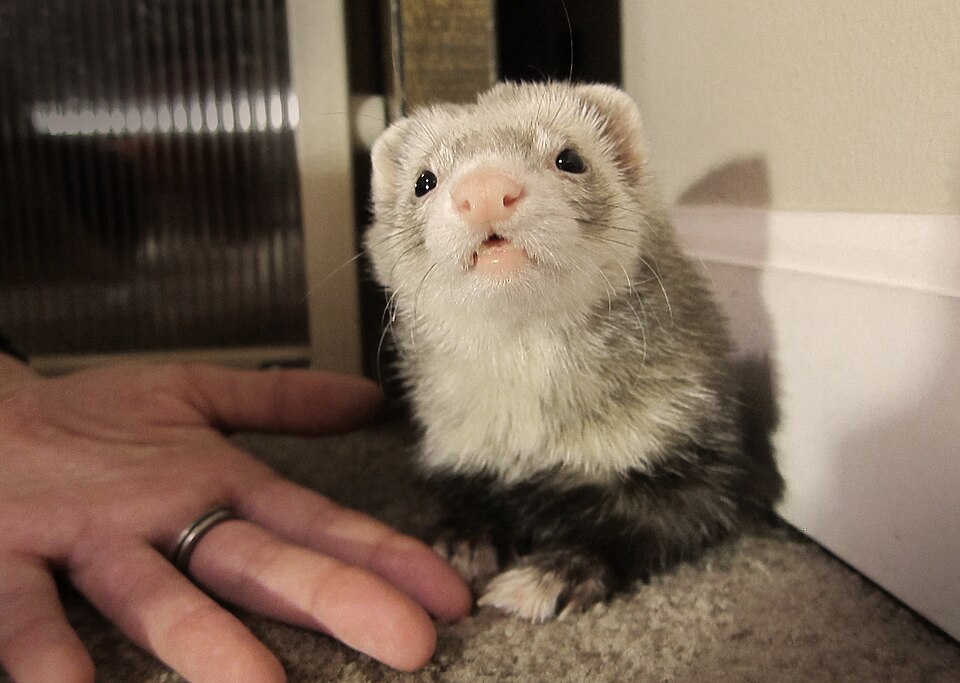
RSPCA Australia says ferrets may bite in these situations: when they're frightened or accidentally hurt, when they're young or teething, when they aren't used to being picked up, when your hand smells of food, while they're licking you, and when play gets rough.
- Don't turn your hands into toys: RSPCA Australia recommends not playing rough with your hands, and not letting your ferret lick you either; licking can turn into biting.
- End the game when it bites: Merck recommends putting your ferret in its cage for a short "time-out"; RSPCA Australia suggests walking away for 2–3 minutes. Whichever you choose, do the same thing every time; according to Merck, that's how a ferret learns that biting isn't OK.
- Never punish: According to RSPCA Australia, yelling at, hitting or throwing a ferret is never right.
- Let it burn off energy first: According to RSPCA Australia, ferrets are more willing to be picked up after they've burned off some energy.
- Teach with rewards: According to Merck, ferrets learn quickly and can even learn tricks; RSPCA Australia also recommends reward-based training.
If a bite breaks your skin, RSPCA Australia recommends washing the wound thoroughly with soap and water and seeing a doctor if needed.
Tunnels and toys
According to the RSPCA, ferrets are very keen to explore tunnels and burrows. Merck also points out that because of this "tunneling" instinct, ferrets crawl under rugs and get sat on in couches; it recommends giving them ready-made tunnels and hiding places.
- Tunnels: Cardboard tubes, paper bags and wide pipes (RSPCA). A pipe should be wide enough that your ferret can't get stuck inside it.
- Hiding places: Cardboard boxes with holes cut in them, flowerpots, blankets (RSPCA Australia, Merck).
- Dig box: A box filled with soil, shredded paper, rice or plastic balls (RSPCA Australia).
- Foraging: Hide part of its daily food in an egg carton, an almost-closed paper bag or a treat ball; it should come out of the daily portion, not be extra (RSPCA Australia).
- Scent trail: Rub a treat along the floor to make a trail, then hide it (RSPCA Australia).
- Shallow water bowl: Many ferrets love water, especially in hot weather (RSPCA Australia).
- Rotate the toys: Change toys often; if you have more than one ferret, put out more than one toy so fights don't break out (RSPCA Australia).
According to the RSPCA, ferrets should never be given rubber toys; pieces that are chewed off and swallowed can cause an intestinal blockage. RSPCA Australia also recommends avoiding cotton and natural-fiber items, since ferrets often eat them. Merck also says not to use items that can be pulled apart or broken into pieces. For other hazards in the home: ferret-proofing your home.
Tüylüm's Today tab has a ready-made Play / out of cage task for ferrets. Everyone in your Home sees the same list, so it's clear who played with the ferret today, and nobody ends up saying "I thought you did it."
Frequently asked questions
Are ferrets active at night?
According to RSPCA Australia, pet ferrets are more active during the day than their wild relatives. They sleep for most of the day; and when they're awake, they want to play with you. We've explained how much time they need in before getting a ferret.
My ferrets bite each other's necks while they play. Are they fighting?
Most of the time, no. According to the RSPCA and RSPCA Australia, neck biting and wrestling are part of ferret play; the bites are controlled and rarely cause serious injury. We've gathered the signs that show when play has turned into a fight in ferrets and other pets at home. If you see a wound, talk to your vet.
Can ferrets be trained?
Yes. According to Merck, ferrets learn quickly and can even learn tricks. To reduce biting, the most important things are being consistent, not playing rough with your hands and never punishing.

Keep track of your pet's care in TüylümLog vet visits, vaccine and medication dates, and we'll remind you when it's time. Share it all with your family in Home.
Sources
- RSPCA · Ferrets (ferret fact sheet)
- RSPCA Research Animals Department · Ferrets: Good practice for housing and care (2011, PDF)
- Merck Veterinary Manual · Providing a Home for a Ferret
- Merck Veterinary Manual · Special Considerations for Ferrets
- RSPCA Australia · How can I use environmental enrichment for my ferrets?
- RSPCA Australia · How should I handle my ferrets?
By Tüylüm · Published and last checked: October 24, 2026. Spotted a mistake? Write to [email protected] and we'll fix it right away. Photos are from Wikimedia Commons, used under the license shown below each photo.