Ferret language: what dooking, hissing, screaming, a bottlebrush tail and the war dance mean
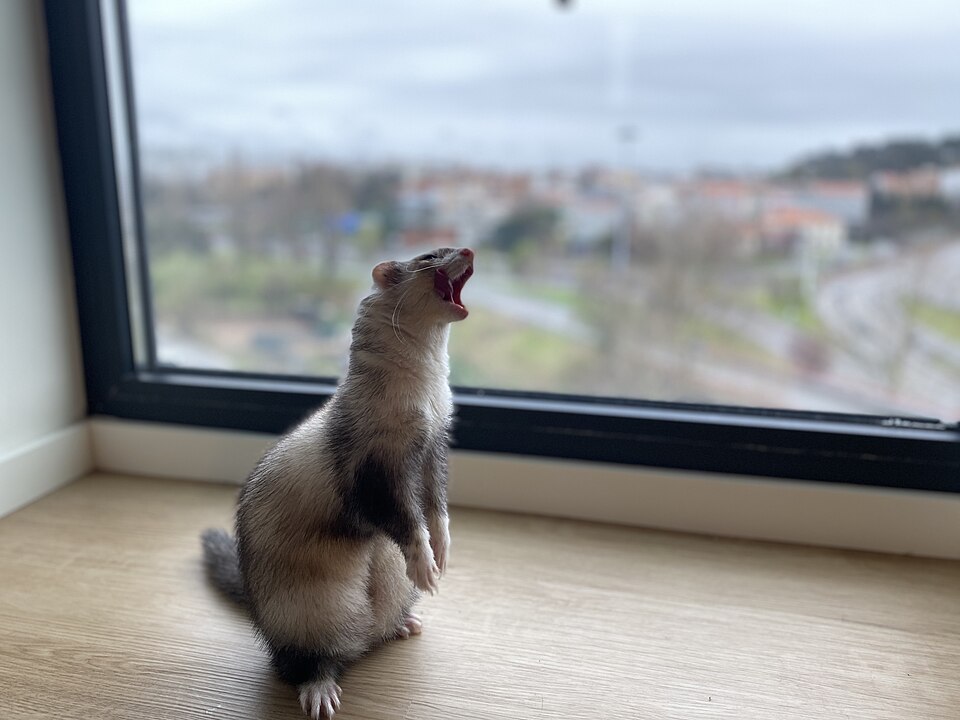
A ferret that chuckles and hops sideways is adorable; the same ferret puffing its tail and hissing can worry you. And according to the sources, some signals can point to more than one feeling. In this article we gather a ferret's sounds and postures from the RSPCA, RSPCA Australia, Woodgreen, the American Ferret Association (AFA) and a veterinarian's conference paper (Teresa Bradley Bays, DVM) into one dictionary. For sleep patterns, play and play-biting, see ferret sleep and play; here we focus on sounds and body language.
- Dook: According to the RSPCA, the chuckling-like sound an excited ferret makes.
- Barking: According to the RSPCA, sometimes out of fear; according to Bays, a loud chirp of fear or excitement.
- Hissing: According to Bays, fear, anger, frustration or a warning.
- Screaming: According to the RSPCA, continuous screaming means high alert in the presence of danger. Bays says fear or pain.
- Puffed tail: According to Bays, anger, fear or excitement; according to Woodgreen, happy, excited ferrets may also puff their tails and hop around your feet.
- Don't read one signal alone: Look at the sound, tail, back and ear posture together.
Sounds
| Sound | What the sources say |
|---|---|
| Dook (chuckling) | RSPCA: an excited ferret makes a "dook" sound, also called chuckling. Bays: a series of chortles signaling excitement or happiness. RSPCA Australia says some ferrets make a happy sound when greeting their owner at the door |
| Barking | RSPCA: may make a bark-like sound when afraid. Bays: a loud chirp signaling fear or excitement |
| Hissing | Bays: fear, anger, frustration or a warning. RSPCA: an unhappy or defensive ferret may arch its back, hiss or screech with an open mouth, and snap its jaws |
| Screaming | RSPCA: continuous screaming indicates being highly alert in the presence of danger. Bays: a high-pitched screech of fear or pain. Woodgreen: in a pair, if one ferret lets out a little scream or hiss when the other approaches, it may be afraid of it |
| Crying, whimpering, teeth grinding | The RSPCA lists these among signs of pain or discomfort, along with reluctance to move, loss of appetite, trembling and collapse |
RSPCA Australia also says ferrets respond best to high-pitched noises, so squeaky toys can engage their hearing.
Body language
| Signal | What the sources say |
|---|---|
| Sideways hopping (war dance) | RSPCA: an excited, playful ferret performs a frenzied series of sideways hops, often called the "weasel war dance." Bays lists the war dance and the "alligator roll" among normal play and locomotor behaviors |
| Puffed tail | Bays: anger, fear or excitement, often with an arched back and a hiss or screech. Woodgreen: happy, excited ferrets can puff their tails like bottle brushes and jump around your feet |
| Arched back, open-mouth hiss, snapping jaws | RSPCA: a sign the ferret is unhappy or defensive |
| Flattened ears, wide eyes, arched back, fluffed tail | RSPCA Australia lists these, along with hissing, growling and biting, as signs of distress and poor welfare |
| Greeting: sniffing | Bays: ferrets meeting for the first time sniff each other's anal, neck and shoulder areas |
War dance or fear?
The same tail can tell two different stories. Bays lists a puffed tail as anger, fear or excitement; Woodgreen describes happy ferrets puffing their tails and hopping as a "weasel dance." So the tail alone isn't enough. Here are the clues the sources give, to look at together:
| What do you see? | Leans toward play or excitement | Leans toward fear or defense |
|---|---|---|
| Sounds | Dook, chuckling (RSPCA, Bays) | Hissing, open-mouth screeching, continuous screaming (RSPCA, Bays) |
| Movement | Repeated sideways hops; jumping around your feet (RSPCA, Woodgreen) | Fleeing, hiding (RSPCA) |
| Back and tail | Bottlebrush tail while hopping (Woodgreen) | Arched back, puffed tail, snapping jaws (RSPCA, Bays) |
| Ears and eyes | The sources don't say for play | Flattened ears, wide eyes, arched back (RSPCA Australia) |
Read this table as a list of clues, not a definitive "translation": according to the RSPCA, behavior varies with age, personality and past experience. Watching your ferret every day is the best way to learn its normal.
What should you do?
- If it looks like play, don't interfere: A ferret hopping sideways and dooking is probably having fun. Just watch your step.
- If it looks like fear, back off: According to the RSPCA, an unhappy or defensive ferret hisses and snaps its jaws. Don't force it to be held; talk calmly and leave it alone.
- Don't shout or punish: According to the RSPCA, shouting at or punishing a ferret doesn't work; it can become more nervous and fearful.
- Offer hiding places: The RSPCA recommends tunnels and closed hammocks where a ferret can retreat when scared.
- Learn its normal: Watch your ferret daily so you can notice unusual sounds; the RSPCA also recommends checking ferrets closely every day.
Between two ferrets
The AFA says that when a new ferret is introduced, rough play, loud vocalizations and hissing may occur, along with territorial behavior such as peeing and pooping and stashing favorite toys. According to Woodgreen, if after a few days one ferret is still afraid of the other, keeps its distance, and lets out a scream or hiss when the other approaches, the pairing is unlikely to work. For more, see ferrets and other pets at home and should ferrets live in pairs?.
According to the RSPCA, hissing, biting, hiding, screaming and fleeing can show that a ferret is distressed, bored, ill or injured. The same page also lists crying, whimpering, teeth grinding, trembling, collapse, reluctance to move and loss of appetite as signs of pain or discomfort. If you see any of these, or if your ferret's behavior suddenly changes, ask your veterinarian. Don't try to guess the cause.
You can add your ferret's cute war-dance moments to the Memory book; it's nice to look back one day. If you notice a change in your ferret's sounds or posture, write it in the Complaint log with the date, and use Show the vet when you talk to your veterinarian.
Frequently asked questions
My ferret is dooking. Does that mean it's happy?
The RSPCA says an excited ferret makes a "dook" or chuckling sound, and Bays lists it as excitement or happiness. So it's usually a positive sign.
My ferret puffed its tail. Is it scared?
Not always. Bays lists a puffed tail as anger, fear or excitement; Woodgreen says happy ferrets can puff their tails and hop, too. Look at the back, the sounds and whether the ferret runs away or comes closer.
My ferret keeps screaming. What should I do?
The RSPCA describes continuous screaming as high alert in the presence of danger; Bays says fear or pain. Remove anything that may be scaring it; if the screaming continues, or if you're worried, ask your veterinarian.

Keep track of your pet's care in TüylümLog vet visits, vaccine and medication dates, and we'll remind you when it's time. Share it all with your family in Home.
Sources
- RSPCA · Ferrets (ferret information page)
- RSPCA · Keeping your pet ferret happy and healthy
- RSPCA · Ferrets: Good practice for housing and care (2011, PDF)
- dvm360 · Ferret behavior and enrichment (proceedings, Teresa Bradley Bays, DVM, 2010)
- RSPCA Australia · How can I use environmental enrichment for my ferrets?
- Woodgreen Pets Charity · Ferret companions: how many should you keep?
- American Ferret Association · Quarantine! Precautions to Take when Adding a New Ferret to Your Business (PDF)
This article is for general information only; it is not a diagnosis or treatment advice and does not replace a visit to a veterinarian. Talk to your vet about decisions on your pet's health. By Tüylüm · Published and last checked: November 9, 2026. Spotted a mistake? Write to [email protected] and we'll fix it right away. Photos are from Wikimedia Commons, used under the license shown below each photo.