Should ferrets live alone or in pairs? Steps for introducing a second ferret
If you decide to get a ferret, the question comes up within days: "One, or two?" The sources largely lean the same way: most ferrets enjoy living in pairs or small groups. In this article we gather what PDSA, the RSPCA, RSPCA Australia, Woodgreen, the American Ferret Association (AFA) and a veterinarian's conference paper (Teresa Bradley Bays, DVM) say, what to watch for if you want to live with a single ferret, and the steps for introducing a second ferret to the one you already have. For cats, dogs and other pets at home, see ferrets and other pets at home; for time and costs before you commit, see before you get a ferret.
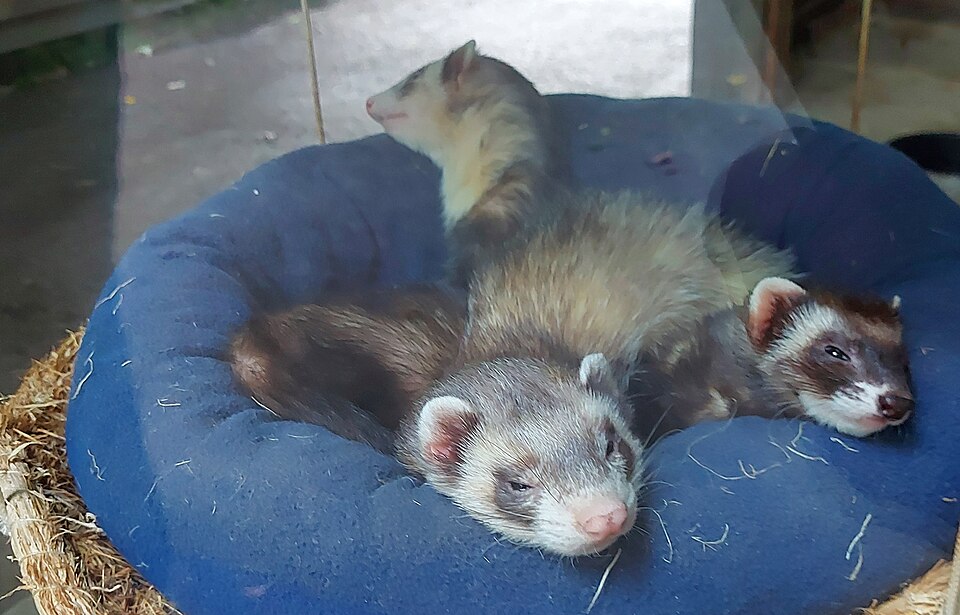
- Most sources: Pairs or small groups (PDSA, RSPCA, RSPCA Australia, Woodgreen).
- A single ferret: According to Bays, a ferret can live alone if given daily play time and human interaction; according to PDSA, human company doesn't replace ferret company.
- How many: RSPCA Australia recommends small groups of 2-4, preferably littermates.
- Space: According to PDSA, at least 10 m² (about 108 sq ft) of floor space per pair; more for more ferrets.
- A new ferret: The AFA recommends at least two weeks in a separate room plus a veterinary check; then introduce them on neutral ground, with two people, step by step.
What do the organizations say about living alone?
| Source | What it says |
|---|---|
| PDSA | Ferrets should live in pairs or groups. They are highly social and can become lonely and stressed alone; human company doesn't replace ferret company |
| RSPCA | Pet ferrets are sociable and usually enjoy living in groups, although this depends on the individual animals |
| RSPCA Australia | Ferrets are a social species and need companionship, ideally from other compatible ferrets. Domestic ferrets can be kept in pairs or groups without conflict |
| Woodgreen | Ferrets don't cope well alone; they should be kept in pairs or groups |
| RSPCA research animals guide | Females without litters, young animals and neutered males should not be singly housed without compelling veterinary, welfare or scientific reasons |
| Bays (dvm360) | Bonded pairs or trios recommended; but a ferret can live alone if given daily play time and human interaction |
So living alone isn't the path most of the sources prefer, though there is a view, like Bays', that considers it possible. If you will live with one ferret, RSPCA Australia says ferrets kept alone need plenty of daily interaction. The AFA recommends at least 4 hours a day out of the cage for ferrets, with at least 2 of them spent interacting with people.
How many ferrets, and how much space?
RSPCA Australia recommends small groups of 2-4 ferrets, preferably littermates. The same organization also suggests keeping at least three so that the remaining ferrets still have company if one dies unexpectedly. According to the RSPCA's research animals guide, young ferrets from the same litter usually get on well together and can easily be weaned into groups; it also says it matters to keep groups stable throughout their lives.
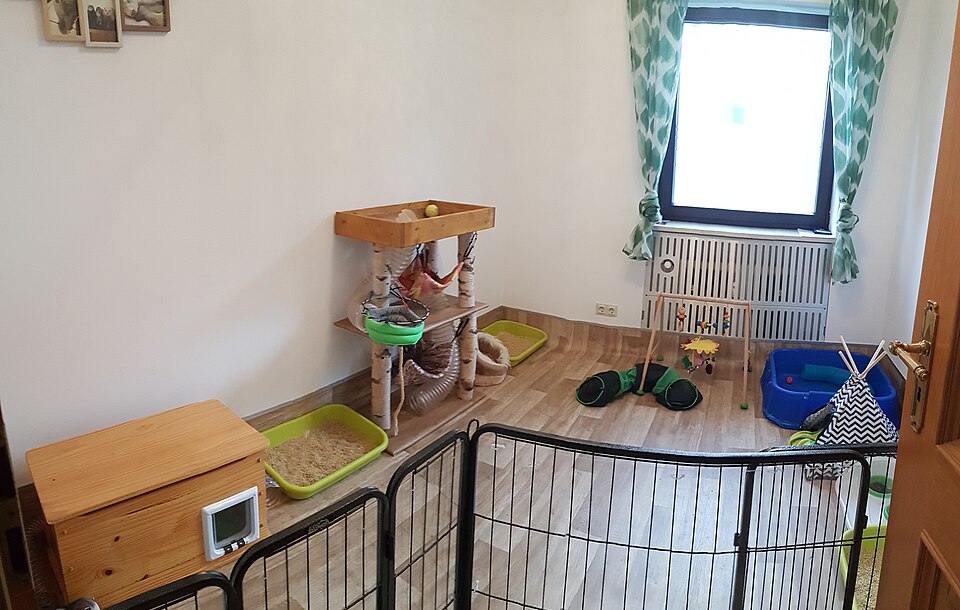
PDSA asks for at least 10 m² of floor space per pair (about the size of two parking spaces or a small bedroom). If you have more than two ferrets, the space should grow accordingly; this is a minimum, and bigger is better. The space should be enough for ferrets to run, play, sleep and spend time alone if they want to. For cage and bedding details, see ferret cage and sleeping area.
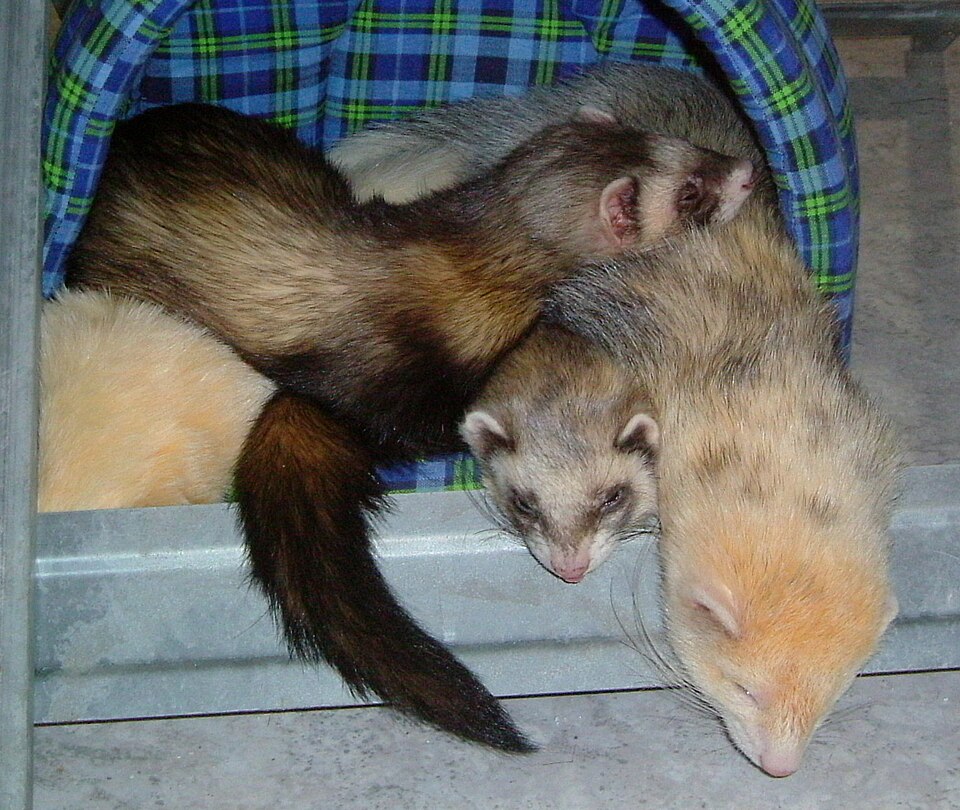
Sex and neutering
According to Woodgreen, a pair can be same-sex or a male and a female; in every case, all ferrets should be neutered. PDSA says to talk to your veterinarian about neutering if you keep males and females together. RSPCA Australia asks that a reproductive control plan be discussed with a veterinarian before ferrets reach sexual maturity or before an adult newcomer joins the group. The RSPCA's research guide says un-neutered males can fight vigorously with each other in the breeding season, so they may sometimes need to be housed separately. Your veterinarian decides which option suits your ferret.
Introducing a new ferret: step by step
1. A separate room and a veterinary check first
Whether it comes from a breeder, a shelter or a pet shop, the AFA recommends keeping a new ferret in its own cage in a separate room for at least two weeks. According to the AFA, this time reduces the chance of passing on bacterial and viral infections and parasites, and gives the new ferret time to adjust and bond with you. The same document recommends taking the new ferret to the veterinarian during this period. Your veterinarian will tell you which exams and tests are needed.
2. Swap scents
RSPCA Australia suggests spreading the introduction over a few weeks and swapping bedding so the ferrets become familiar with each other's scent. The newcomer can roam a room while the resident ferret stays in its own area; then switch.
3. The first meeting
- Neutral ground: Woodgreen recommends a space neither ferret considers "theirs," where they can stay undisturbed for a week or two. RSPCA Australia also says a neutral place.
- Morning, two people: Woodgreen suggests starting in the morning, having two people present, and staying with them for a day or two.
- Be ready: Keep a towel and a carrier close, in case you need to separate them. Wear sturdy shoes and clothing (Woodgreen).
- If you reuse an old space: Woodgreen suggests cleaning it thoroughly with a pet-safe disinfectant and making it look different with new toys.
- Allow breaks: The AFA suggests letting the newcomer go back to its quarantine cage for breaks during the introduction.
- Don't leave them alone at first: The AFA says not to leave the newcomer alone with the existing ferrets at first, even if they appear to get along; gradually lengthen the time together while you're home.
4. Read the signs
Woodgreen suggests judging by the first few hours and monitoring them for up to two weeks. Don't forget to check for wounds in the first days.
| What do you see? | What it may mean (Woodgreen) |
|---|---|
| Walking past each other without reacting, sniffing each other's rear ends | A positive start |
| Showing more interest in their surroundings than in each other | Positive |
| Backs arched, leaping around each other | Rough play |
| Gently taking each other by the scruff and dragging each other to bed | May be a sign of acceptance |
| Snuggling or eating close together fairly soon | Positive |
| Constant, aggressive scruffing of one ferret, with shaking and screaming | Separate them, get advice |
| Puncture wounds around the scruff | Separate them, show them to your veterinarian |
| One ferret still fearful after a few days, keeping its distance, screaming or hissing | This pair is unlikely to get along |
According to Woodgreen, ferret introductions can look rough but are often a normal way of establishing a hierarchy and rarely cause serious injury. The AFA also says rough play, loud vocalizations and hissing may occur, along with territorial behavior such as peeing, pooping and stashing toys. For sounds and postures, see ferret language. According to RSPCA Australia, warning signs include one ferret always running away and hiding, or clamping down hard on a companion's neck.
RSPCA Australia says to check ferrets for blood and wounds after a fight, especially around the neck, and to seek veterinary care for bites. Separate the ferrets and show them to your veterinarian; don't try to guess the cause or treatment of a wound.
Back together after time apart
According to RSPCA Australia, if a ferret is separated from its group for a few days or longer, for example in hospital, the others may treat it as a stranger when it returns. So watch them after it comes back, and if needed, reintroduce them carefully from the beginning.
Enough resources for everyone
RSPCA Australia suggests several food and water dishes, plenty of sleeping spots and separate toys when you have several ferrets, which reduces competition and guarding.
Everyone in My home sees the food, water, play and toilet tasks together in the Today tab. Add the veterinary check for a new ferret to My vet visits, and keep its papers in Documents. When you visit the veterinarian, Show the vet gives you a health summary.
Frequently asked questions
Is one ferret enough?
Most sources recommend pairs or small groups. Bays considers living with a single ferret possible, but on the condition of daily play and human interaction. According to PDSA, human company doesn't replace ferret company.
What should I do before getting a second ferret?
Discuss reproductive control with your veterinarian (RSPCA Australia), and keep the new ferret in a separate room for at least two weeks and show it to the veterinarian (AFA). Then introduce them in a neutral place, in the morning, with two people (Woodgreen).
My ferrets look like they're fighting. Should I separate them?
According to Woodgreen, introductions that look rough are often normal. But if the same ferret is constantly scruffed and screaming, or there are wounds around the neck, separate them and show them to your veterinarian.

Keep track of your pet's care in TüylümLog vet visits, vaccine and medication dates, and we'll remind you when it's time. Share it all with your family in Home.
Sources
- PDSA · Ferrets as pets
- PDSA · The ideal home for your ferret
- RSPCA · Ferrets (ferret information page)
- RSPCA Australia · How do I socialise my ferrets with people and other ferrets?
- Woodgreen Pets Charity · Ferret companions: how many should you keep?
- American Ferret Association · Quarantine! Precautions to Take when Adding a New Ferret to Your Business (PDF)
- dvm360 · Ferret behavior and enrichment (proceedings, Teresa Bradley Bays, DVM, 2010)
- RSPCA · Ferrets: Good practice for housing and care (2011, PDF)
This article is for general information only; it is not a diagnosis or treatment advice and does not replace a visit to a veterinarian. Talk to your vet about decisions on your pet's health. By Tüylüm · Published and last checked: November 9, 2026. Spotted a mistake? Write to [email protected] and we'll fix it right away. Photos are from Wikimedia Commons, used under the license shown below each photo.