Why can't a goldfish live in a bowl? Size, lifespan and real needs
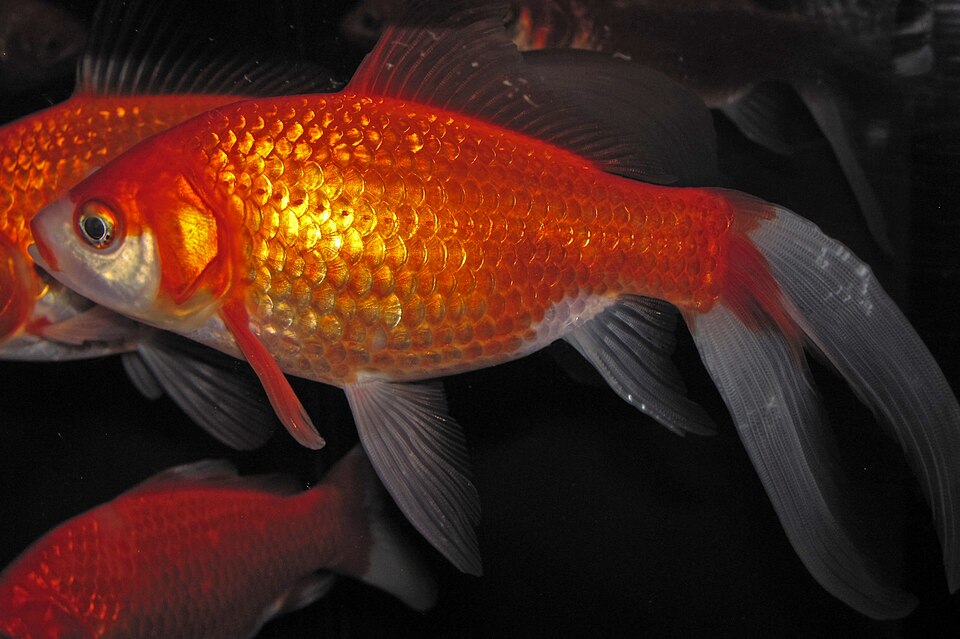
A small, round glass bowl on a shelf, with an orange fish going round and round inside. That's the picture of a goldfish most of us carry in our heads. According to the RSPCA, many people think goldfish live about five years and grow to around 12 cm. The reality is very different: goldfish are known to live up to 25 years, and some can grow beyond 30 cm. For an animal that grows this big and lives this long, a bowl is no different from spending a lifetime in a closet. In this article we explain, with sources, what a goldfish really needs.
- They grow: According to the RSPCA, some goldfish grow beyond 30 cm; according to OATA, it's common for them to reach up to 25 cm in an aquarium.
- They live a long time: According to the RSPCA, they can live up to 25 years.
- A bowl isn't suitable: According to the RSPCA, there's no room for a filter in a bowl, there isn't enough oxygen and the temperature changes quickly.
- They produce a lot of waste: According to RSPCA Australia, goldfish eat a lot and produce a lot of waste, so an efficient filter is a must.
- A coldwater fish: According to OATA, a heater usually isn't needed, but they can't cope with sudden temperature changes.
How big do they grow, and how long do they live?
The goldfish (Carassius auratus) is a relative of the carp. According to the RSPCA, it was first bred in China more than a thousand years ago, and today it's the most popular coldwater fish. The numbers the sources give differ a little, but they all say the same thing: a well-cared-for goldfish lives for many years and doesn't stay small.
| Source | Lifespan | Size |
|---|---|---|
| RSPCA | Up to 25 years | Some grow beyond 30 cm |
| OATA | 6–8 years is common; 20 years and more has been reported | Up to 25 cm is common in aquariums; fish over 40 cm have been reported |
| RSPCA Australia | 10–15 years on average; some varieties up to 30 years | Recommends choosing the tank based on adult size |
One finding from RSPCA Australia is striking: many goldfish never reach this lifespan because of inadequate care.
Why isn't a bowl suitable?
According to the RSPCA, bowls, jars and "fun" aquariums sold for children aren't designed with fish welfare in mind. The reasons:
- The volume is too small: A small volume of water doesn't give a fish a stable environment.
- No room for a filter: Since an efficient filter won't fit, waste can't be removed from the water.
- Not enough oxygen: A bowl has a small water surface; since oxygen enters water at the surface, not enough oxygen gets in.
- The temperature changes quickly: According to the RSPCA, these sudden changes can lead to stress and even death.
RSPCA Australia also considers traditional bowls too small for goldfish and recommends not using them. As a good alternative to a bowl, it points to aquarium kits that come with a filter and lighting already included.
How big a tank?
The sources give different minimums, but none of them comes anywhere close to a bowl. What they all agree on: the bigger, the better.
| Source | Recommended minimum volume |
|---|---|
| RSPCA | At least 60 liters of water per goldfish |
| OATA | At least 100 liters for one adult goldfish, plus 50 liters for each additional adult fish |
| RSPCA Australia | At least 50 liters; length at least 4 times the adult fish's length, width 2 times and height 3 times |
According to RSPCA Australia, slender, active goldfish varieties need a bigger and longer tank than you'd expect from their size. The RSPCA also points out that wide tanks are better than tall, narrow ones: the larger the water surface, the more oxygen gets into the water.
According to RSPCA Australia, whatever the shape of the tank, one side or one section should be covered; that way the fish isn't facing bare glass in every direction, has less stress and feels safer. Plants also provide hiding places; RSPCA Australia recommends covering about half of the space with plants.
Filter and clean water: goldfish make a lot of mess
According to OATA, goldfish can be "very dirty", and this quickly increases ammonia and nitrite in the water. RSPCA Australia also describes goldfish as fish that eat a lot and produce a lot of waste; an efficient filter of the right size is needed to keep the water clean and aerated. OATA's warning is clear: whatever the size of the tank, a filter is always a must.
- The filter's flow: According to RSPCA Australia, the flow should be adjustable and not too strong; fancy goldfish varieties in particular struggle to swim in a fast current.
- Air: If the filter doesn't move the water's surface, add an air stone.
- Testing: OATA recommends testing the water once a week; according to OATA, goldfish can become stressed by even very small amounts of ammonia and nitrite.
- Water changes: OATA recommends a partial water change of 25% at least once a week. How to do it: aquarium water changes.
If you're setting up a new tank, you need to cycle the filter first: setting up your first aquarium.
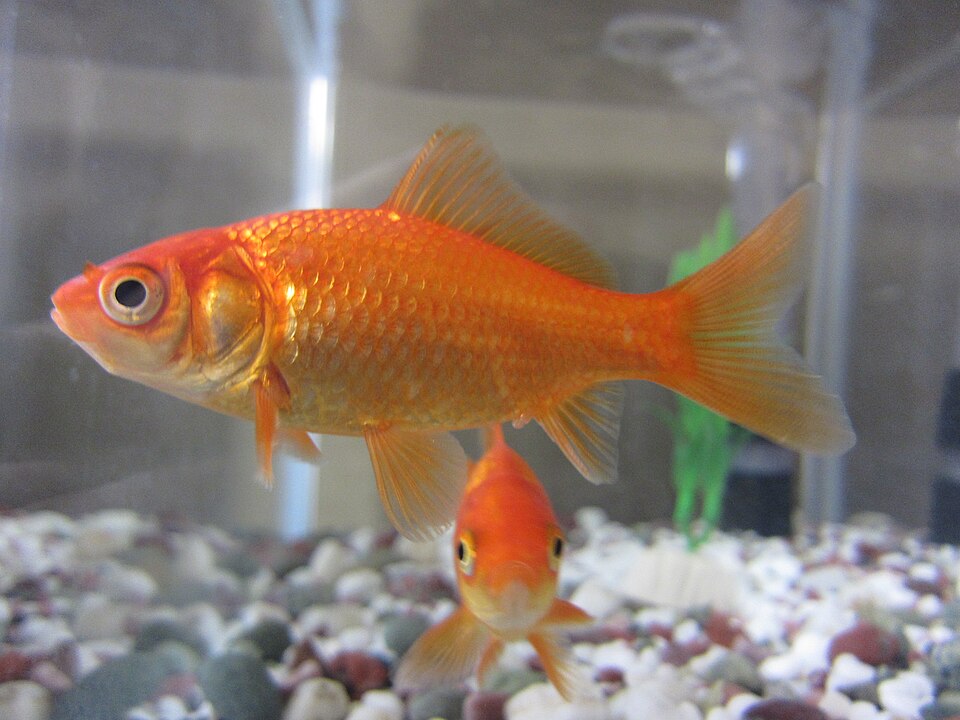
A coldwater fish: no heater needed, but...
Goldfish aren't tropical fish. According to OATA and the RSPCA, a heater usually isn't needed unless they're kept in a very cold room. But that doesn't mean temperature doesn't matter. According to OATA, goldfish can't cope with sudden temperature changes; these changes can lead to stress and disease. That's why their tank should be:
- Away from drafts and heat sources,
- Out of direct sunlight,
- In a spot away from loud noise, vibration and sudden movements.
The RSPCA says that if you're worried about temperature swings, a heater can be set to the lower end of the range the species tolerates.
Food and companions
According to OATA, goldfish never seem to feel full and are always looking for food, but that doesn't mean you should feed them all the time. OATA recommends giving as much food as they can eat in a few minutes, and reminds you that excess food sinks to the bottom, rots and releases toxic waste into the water. According to OATA, goldfish need more carbohydrates than other fish, so food made specifically for goldfish should be used. RSPCA Australia recommends adding variety now and then with extras such as boiled peas. More detail: overfeeding fish.
Be careful when choosing companions: according to the RSPCA and OATA, fast single-tailed goldfish and slow, fancy twin-tailed varieties shouldn't be kept together; the slow ones don't get their share of the food, and according to OATA, their fins can sometimes get nipped too. According to the RSPCA, common goldfish are the hardiest; fancy varieties selectively bred for exaggerated looks are more prone to inherited health problems, and that's why the RSPCA doesn't recommend them.
According to the RSPCA, some fish are sadly released into streams and lakes. A University of Florida (UF/IFAS) publication stresses that releasing aquarium fish into the wild or flushing them down the toilet harms both the environment and the animal. According to OATA, most fish released into the wild face an early and painful death, and those that survive can harm nature. Never release a fish you can't care for into the wild.
Frequently asked questions
My goldfish has lived in a bowl for years, so isn't everything fine?
A fish surviving doesn't mean it's doing well. According to the RSPCA, goldfish can live up to 25 years; according to RSPCA Australia, many never reach that lifespan because of inadequate care. Think about moving your fish to a large, filtered aquarium, and don't forget to cycle the new tank first.
Can a goldfish live alone?
The sources disagree on this. According to the RSPCA, goldfish don't need the company of other fish; RSPCA Australia, on the other hand, says goldfish are more active in a group of at least two. If you're thinking about a second fish, the tank needs to be big enough for both.
What should I do with a goldfish I can no longer care for?
Never release it into the wild or flush it down the toilet. According to UF/IFAS, you can try returning or trading the fish where you bought it, give it to another responsible fishkeeper, or ask an aquarium society for help. If your fish is sick, talk to a vet.

Keep track of your pet's care in TüylümLog vet visits, vaccine and medication dates, and we'll remind you when it's time. Share it all with your family in Home.
Sources
- RSPCA · Keeping freshwater fish as pets
- RSPCA · Choosing an aquarium for pet fish
- OATA · How to look after goldfish in an aquarium / fish tank
- RSPCA Australia · How should I care for my goldfish?
- RSPCA · Keeping fish together
- UF/IFAS Extension · The Ornamental Fish Trade (FA124)
By Tüylüm · Published and last checked: October 24, 2026. Spotted a mistake? Write to [email protected] and we'll fix it right away. Photos are from Wikimedia Commons, used under the license shown below each photo.