Why guinea pigs shouldn't live alone: choosing a friend and introducing them step by step
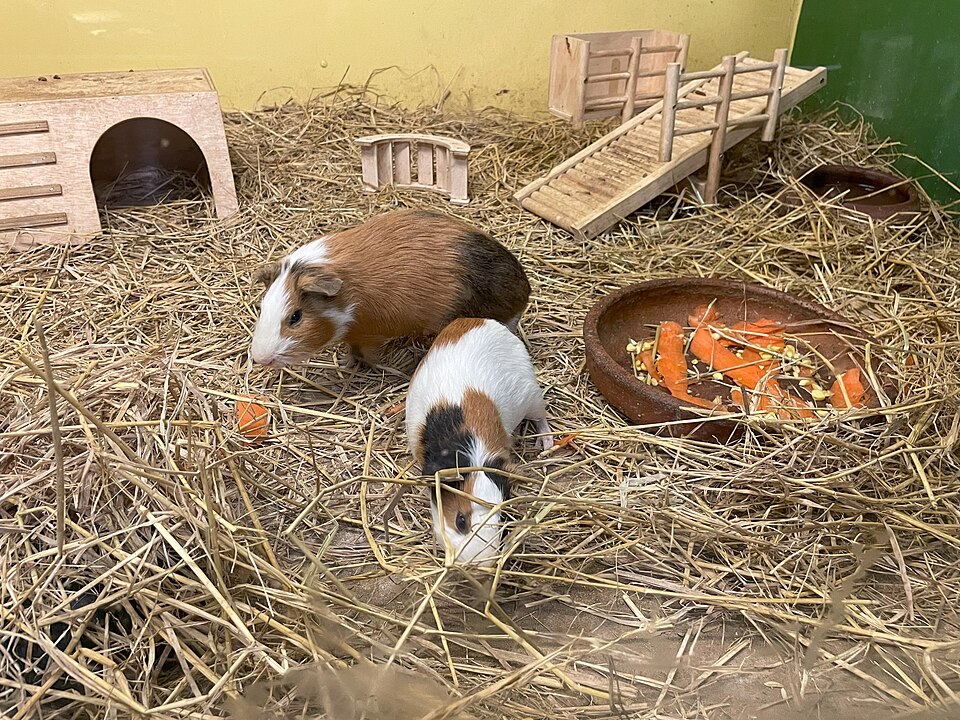
You may spend a lot of time with a single guinea pig and still not be what that animal needs most. According to PDSA, our attention alone isn't enough: we can't be with our pets 24/7, and a guinea pig needs a friend of its own species who understands it. The RSPCA also recommends keeping a guinea pig with at least one other friendly guinea pig. In this article we go deeper into the companionship topic we touched on in our guinea pig care guide: which pairings are more likely to work, how to introduce guinea pigs, and how to tell fighting from play. Our sources are PDSA and the RSPCA.
- Don't keep one alone: The RSPCA says to keep a guinea pig with at least one other friendly guinea pig unless a vet or clinical animal behaviourist advises otherwise. PDSA recommends groups of three or more.
- Pairings: Two females, brothers, or a neutered male with one or more females are good combinations; compatibility depends more on personality than sex.
- Go slowly: Scent and sight first, then short meetings on neutral ground, and only then a shared home.
- Two exits: Tunnels and boxes should have at least two openings so no guinea pig gets cornered.
- Not a rabbit: Both organizations say a rabbit isn't a good companion.
Why a friend of their own species?
According to PDSA, guinea pigs live in small family groups in the wild, so at home they should be kept in pairs or larger groups. The RSPCA notes that guinea pigs left alone for long periods can develop abnormal behavior and may suffer. PDSA adds that a guinea pig that is on its own, or has recently lost a friend, will often struggle.
Human contact still matters: the RSPCA says guinea pigs handled well from a young age can learn that people are friends, while those handled little or roughly may be afraid of contact. If a guinea pig does have to be kept alone, the RSPCA says daily interaction is vital.
Which guinea pigs are more likely to get along?
The RSPCA lists these good combinations: a neutered male with one or more females, two females, or brothers raised together. PDSA also lists two males or two females, siblings, or father-son and mother-daughter pairs, and says mixed-sex groups need neutered males. According to PDSA, females can get pregnant as early as three weeks old.
| Topic | What the sources say |
|---|---|
| What decides compatibility | RSPCA and PDSA: individual personalities more than sex |
| Guinea pigs raised together | RSPCA: they usually get on |
| Unrelated adult males | RSPCA: can be introduced but it may be tricky and take a few attempts; they may fight the first time |
| Mixed sex | RSPCA: the male should always be neutered; PDSA: neutering is essential to prevent unwanted litters |
| Three or more guinea pigs | PDSA: usually only one male is recommended, since wild groups are mostly one male with several females |
| Neutering and behavior | RSPCA: neutering a male doesn't change his behavior and won't resolve fighting |
PDSA also suggests thinking about personality: a very active guinea pig may suit a playful friend, a cuddly one a quieter companion, and a dominant, confident one a less opinionated friend. If you adopt from a rescue, tell the staff about your guinea pig so they can help match them. PDSA recommends getting guinea pigs that are already established friends, such as siblings or a previously bonded pair, whenever possible. For decisions about neutering, talk to your vet.
Introducing them step by step
The RSPCA advises introducing new guinea pigs gradually and under supervision, preferably somewhere new to both. PDSA describes this order, which we summarize here:
- Health and rest first: Keep the newcomer apart for a few days. PDSA says moving home is stressful, which can bring out illnesses that could pass to your existing guinea pig. If you see any signs of illness, have a vet check them before starting introductions.
- Scent and sight: Set up two separate homes where the guinea pigs can see each other but not touch, like opposite sides of the same room. Swap bedding and toys; PDSA also suggests switching the guinea pigs between the two homes each day.
- Meeting across a barrier: After a few days, move the enclosures together but keep a barrier. Remember they can nip each other through the bars, so watch closely at first. Scattering food nearby helps them link being close with something nice.
- Wait for positive signs: According to PDSA, squeaking to each other, sniffing, sitting on either side of the barrier, and "popcorning" (jumping in the air) are good signs.
- Meet on neutral ground: Use a space neither considers theirs, such as another room or the garden. Put out toys and a few safe veggies. Tunnels and boxes should have at least two holes so nobody is backed into a corner.
- Short sessions: PDSA suggests starting with supervised visits of 10 to 15 minutes and building up as long as they stay relaxed.
- Moving in: If they stay happy for long periods, PDSA suggests spending the first couple of weeks in a space neither has used before. If that isn't possible, use a setup both have lived in recently. Make the enclosure plenty big and remove enclosed houses with only one way in or out.
According to PDSA, don't put your hands between fighting guinea pigs; keep a clean dustpan or piece of board ready to slip between them, and a few towels to distract them. If they fight, PDSA suggests going back to the scent-swapping stage and trying again after a few days. If one is injured, talk to your vet.
Play or fight?
According to PDSA, playing guinea pigs usually follow each other at a slow pace, play with the same toys and "talk" to each other. One guinea pig mostly doing the chasing, backing another into a corner, or nipping can be signs it's escalating to a fight; if in doubt, PDSA suggests scattering food around to encourage them to spend some time apart. Teeth chattering shows they are threatened or angry. Mounting is, according to PDSA, very rarely sexual and is usually normal, but if it happens constantly, upsets one of them, or causes bald patches on the head or back, it may have become a problem.
The RSPCA says guinea pigs living together form a pecking order, and some become more dominant. If there aren't enough places to get away from each other they can become stressed and bully lower-ranking animals, so give everyone enough shelter, food, water and hiding places.
Once they are bonded, PDSA recommends keeping them together at all times unless the bond breaks or your vet advises otherwise; if one is unwell, take both to the vet unless your vet says not to.
Why a rabbit isn't the answer
The RSPCA and PDSA agree: rabbits and guinea pigs don't make ideal companions. The RSPCA says their needs (what they eat, for instance) differ, they behave and communicate very differently, and a rabbit may injure a guinea pig, deliberately or not. PDSA adds that rabbits can carry Bordetella bronchiseptica, a bacterium that usually doesn't bother them but can make guinea pigs very unwell. See also why rabbits shouldn't live alone.
You can keep each guinea pig's weight and health records as a separate pet in Tüylüm. Adding vet visits to My vet visits with a reminder helps you remember the "take both of them" rule.
Frequently asked questions
I have one guinea pig. Should I get it a friend?
PDSA says a guinea pig living alone, or one that has lost a friend, needs one or two friends of its own species. For questions about sex and neutering, ask your vet, and consider personalities when choosing.
Can two male guinea pigs live together?
According to the RSPCA, unrelated males can be introduced but it may be tricky and take several attempts; adult males may fight on first meeting. Guinea pigs raised together generally get on better.
How long does introducing take?
The sources don't give a set time. PDSA says some guinea pigs bond after a single meeting while others need several supervised sessions; don't rush, and if they fight, go back a step.

Keep track of your pet's care in TüylümLog vet visits, vaccine and medication dates, and we'll remind you when it's time. Share it all with your family in Home.
Sources
- PDSA · Introducing guinea pigs
- PDSA · Guinea pigs as pets
- RSPCA · Keeping guinea pigs together
- RSPCA · Guinea pig behaviour
This article is for general information only; it is not a diagnosis or treatment advice and does not replace a visit to a veterinarian. Talk to your vet about decisions on your pet's health. By Tüylüm · Published and last checked: November 9, 2026. Spotted a mistake? Write to [email protected] and we'll fix it right away. Photos are from Wikimedia Commons, used under the license shown below each photo.